.svg)

Coverage tips
Looking for inspiration, design tricks, how to make a great cover, promoting your yearbook and engaging your community?
Most recent

The one layout template you need
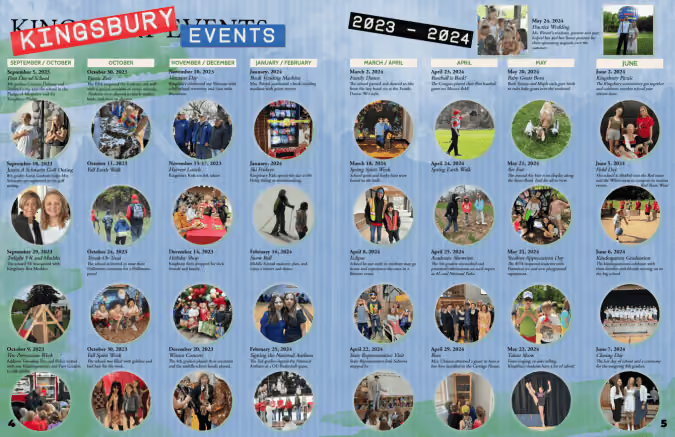
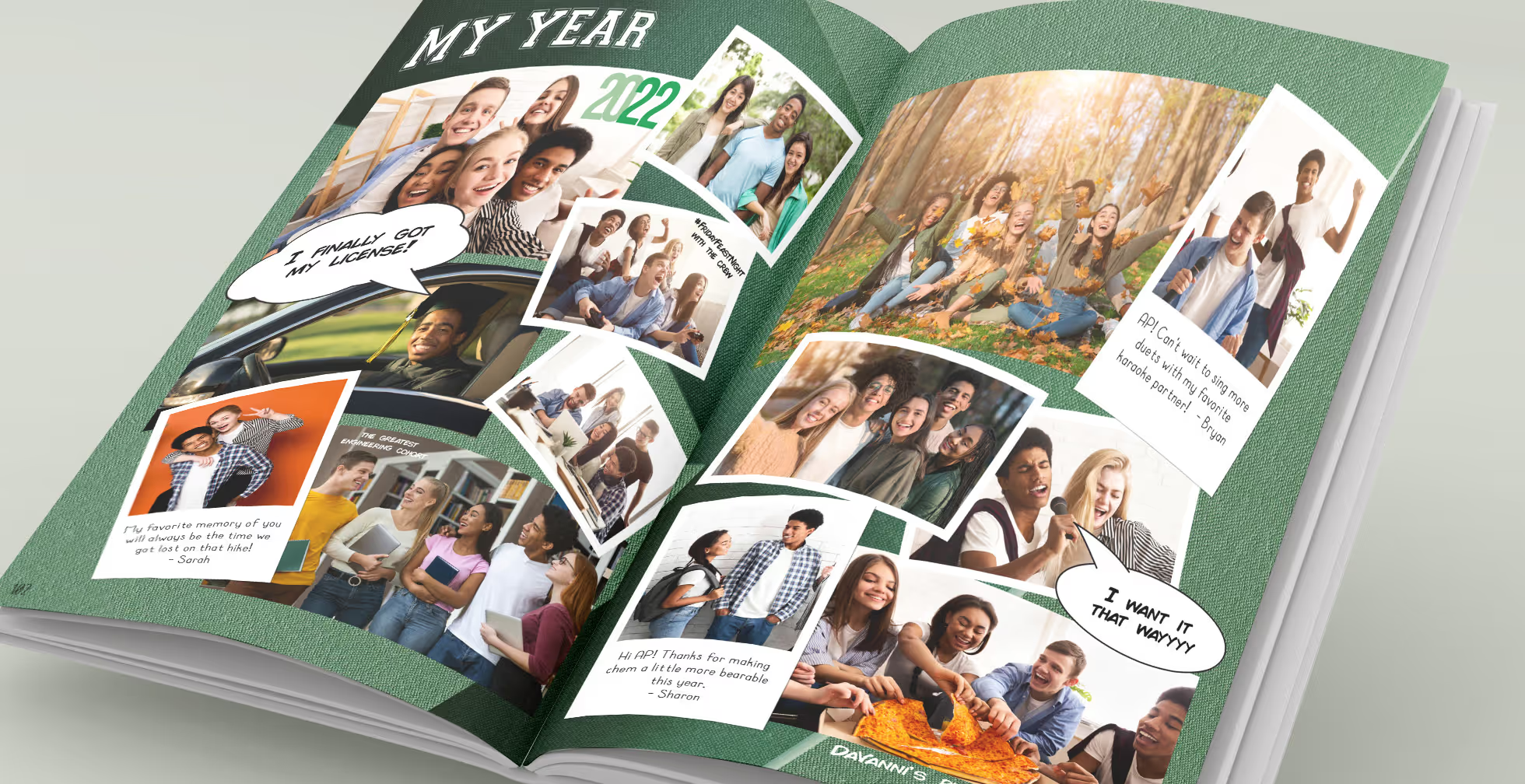
Yearbook coverage ideas might be our favorite topic: brainstorming ways to represent more students, resulting in a more authentic narrative of the school year. It could also mean more photos, interviews, and work for you. After a colleague shared Kingsbury Country Day School’s yearbook, a lightbulb went off. Yearbook coordinator Kara-Jane LaVoisne created the perfect layout that includes over 60 students, highlighting their impact and participation in school events.
Why we love this template
This spread packs a punch because it covers a large span of time in little space. It covers 24% of the school across two pages. It showcases events that would not be covered elsewhere. This template is also well-designed: it’s clean and has multiple reader entry points.
Home for smaller events
Oftentimes, we have several photos that don’t fit on a larger spread. This is especially common in books that do not take advantage of modular design. LaVoisne took advantage of those moments to create a means to include them.
Versatility
While LaVoisne used this template for a school-specific year-in-review, you can use it once per section or season. For example:
- Fall, winter, and spring PTA or ASB events
- An overview of the sports seasons
- Semester rundown of student life
If you’re feeling ambitious and have the content, an hour-by-hour review of a major school event such as the talent show or homecoming weekend could be a showstopper spread for your yearbook.
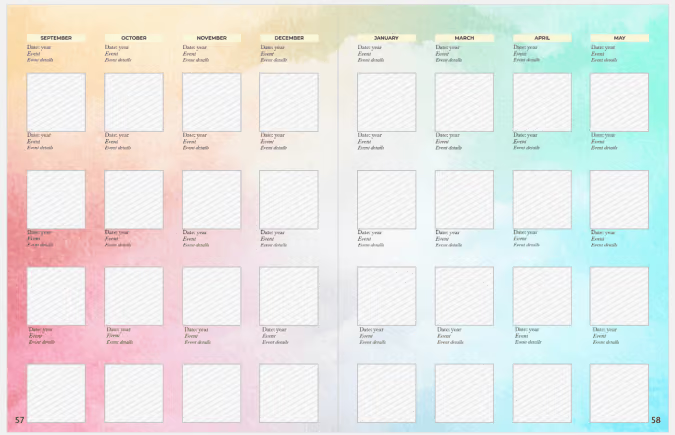
What’s most important: your yearbook team celebrates the people in your campus community. This layout is just one way to cover more students in your yearbook. For more creative yearbook coverage inspiration, check out:

90 high school yearbook article ideas
Some yearbook articles practically write themselves (looking at you, sports and activities), but a great yearbook will feature additional articles that give a holistic view of your high school’s student body. Coming up with ideas for these articles is as simple as considering what the students will want to remember. We’ve broken down some potential ideas into categories. Even if you don’t use any of these exact ideas, we’re sure they’ll get your brain kicking into high gear.
School life
Academics are important, but high school is also about socializing, gaining responsibility, and becoming an adult. Some of the most vivid memories are created outside of the classroom.
- Most embarrassing moments
- Hitting the snooze bar: do or don’t?
- Homework style: git ‘er done or procrastinate?
- Worst school-related nightmares
- Locker or backpack?
- Passing time during passing time
- This year I was proud of…
- Backpack must-haves
- Favorite class experience
- Lightbulb moments
- Making time for everything
- School uniforms: love or loathe
- What’s your commute: busing, driving, or walking?
- School rivalries: why we’re the best!
- Morning routines
Coming of age
Throughout high school, students are growing up. Each year brings unique challenges and changes. It’s fun to celebrate these milestones.
- First concert
- Getting your driver’s license
- Rock the vote: politics in school
- First jobs
- Taking the ACT/SATs
- What’s next?
- Summer job earnings: spend or save?
- Have you ever been grounded?
- AP classes or college in the schools
- Too old for toys?
- Childhood foods you’ll never let go
- Curfews
- Doing chores
- Naps: be a kid again
Leisure time
Sometimes school is more about the fun over the fundamentals. Reserve some space to tell the stories that are happening when the students are kicking back and listening to cassettes on their boomboxes (they still do that, right?).
- Gaming
- Fantasy football
- Favorite books
- Obsessions (Taylor Swift, TikTok, binge-worthy shows, etc.)
- Social media
- Hangouts
- Friday night social
- Garage bands
- Non-school sports (skateboarding, snowboarding, figure skating)
- How we shop: in-store or online?
- Constant communication: how many texts do you send in a day?
Current events
One of the most fun aspects of the yearbook is that it is essentially a time capsule. Up the ante by overtly including current events, music, and trends of the year.
- What’s in the news this year?
- Fashion trends
- Style inspiration
- All about hair, makeup, and beauty
- Favorite TV shows
- Music: best bands and favorite concert experiences
- Dance moves of the year (The Git Up)
- Knowing all the words to your favorite song
- Movies and blockbusters
- Seeing it first: midnight showings
- Your go-to memes/gifs
- New technology: wearable tech and hoverboards
Lunchtime
Whether it’s chatting with friends, playing games, or finishing up some late homework, a lot of stuff goes down in the cafeteria. With these ideas, you can focus on the food or the fun.
- Healthy or not?
- Best lunchtime traditions
- Droolworthy school lunches
- Who packs your lunch
- The best playground games
- Cafeteria workers tell all
- What school food will be missed the most?
- Who do you sit with during lunch and why?
- If you were cooking for the school, what would you make?
People
The most interesting part of anything (including high school) is the people. There are loads of fascinating dynamics, talents, and relationships to explore.
- Siblings
- Nicknames
- Unsung heroes: custodians, school nurses, and admin
- Friends since...
- Fresh faces: a spotlight on new teachers
- Who do you look up to?
- Hidden talents
- How did you become friends?
- Your biggest change in the last four years
- Legacies: kids who go to the same school as their parents
Places
Every story needs a setting, but these ideas turn the setting into the story.
- Rumors about the school: secret hallways, ghosts, hidden treasures
- If you could change one thing about the school, what would it be?
- The best restaurants in town
- Regional specialties (growing up near the beach, Texas football, big city living, etc.)
- Fun facts and quirks about the school building
- Spring break locations
- Where do you want to travel?
- Must-see locations in town
- Indoors or outdoors: where’s the fun?
Time of year and events
Over the course of the year, a lot of specific activities take place based on holidays or the season. You can use these triggers as a launch point to look back on the year.
- Homecoming parade
- Halloween: costumes and scares
- Thanksgiving and being thankful
- Seasonal activities: summer, fall, winter, spring
- New Year’s Eve: school resolutions
- Valentine’s day: love or loathe?
- Can we have class outside?
- Field trips
- Science fair
- Graduation
Categories lead to brainstorms
Hopefully some of these ideas will lead to some winning articles for your high school’s yearbook. If not, no biggie (we won’t take offense). You can still use these categories to springboard some new article ideas of your own design. Ask your students what they want to remember, and go from there.

Over 50 yearbook survey questions for better polls
Yearbook surveys and polls are a great way to get a pulse on your school community for a specific year.
Not just any survey will do that, though. Your yearbook poll results will be way, way better if you ask great questions and help people give great answers.
Inside this post, we’ll show you how to do just that. And, as if teaching you how to fish wasn’t enough, we’ve got Atlantic salmon on deck: over 50 of our most fantastic survey questions to get your gears turning. Read on to get them.
How to write yearbook survey questions
Yearbook survey questions should be low-stakes and, more importantly, fun. They shouldn’t relate to anything that might spark controversy or offend anyone --politics, religion, etc.--
Structurally, you want to create questions that pair obvious inquiry-based words (who, what, where, when, why, how, etc.) with a specific set of responses.
Questions can range from “what was the song of the year” to “best place to buy jeans” to “snacks the cafeteria should start stocking” (though that last one could start a small riot). These are fun questions, great for putting students at ease, and building trust before asking them to share personal opinions and anecdotes.
Recycling the same questions every year isn’t necessarily a bad thing (provided the list you’ve created is full of excellent options). And of course, it goes without saying, you’ll have to change the answers listed to reflect the inevitable cultural changes (hello 20-21 school year changes).
Source Multiple Choice Responses Like a Pro
You’ve got three phenomenal resources at your disposal when it comes to generating the response options for your yearbook survey questions. Let’s take a look at them:
- Last year’s book. As we mentioned earlier, re-using older questions is perfectly fine: using old response-options? Not so much. That being said, they’re a fantastic jumping off point. Maybe Justin Bieber isn’t one of the best male singers this year. Perhaps Chipotle will cede its crown as the go-to pregame dining spot.
- Your staff. You might think you’ve got your finger on the student body’s pulse, but your student staff members are infinitely more plugged in. Grab a couple of pizzas one afternoon and have a brainstorming session to come up with responses. Not only will this help craft great answers, it’ll let you find if your questions actually resonate with students.
- Social media. Simply by paying attention to what’s happening in the student version of the world you can generate oodles of survey response ideas. Look at what’s trending on Twitter or TikTok and start keeping a running list.
When it comes to good multiple choice questions, you want to make sure you limit your responses to no more than 5 choices. Any more than this and students could have a hard time selecting only one. It might also become hard to read when you transfer the results into your yearbook, thereby missing the benefit of capturing this information for your students.
Now, without further adieu, here’s our list of over 50 yearbook survey questions.
Over 50 yearbook survey questions for better polls
Perhaps the easiest way to tackle this big list of questions is to divide them up the way we divide all questions: Who, what, when, where, why, and how.
The biggest reason for doing it this way? Doing so gives you a bunch of options when it comes to laying out your yearbook polls spreads.
Who...
- Is the best male singer/band?
- Is the best female singer/band?
- Would you you like to see speak at graduation?
- Was the most memorable performer (student)?
- Was the best actor (professional)?
- Was the best actress (professional)?
- Had the best athletic performance (student)?
- Was your favorite professional athlete?
- Wrote the best book?
- Made you turn off the TV?
What...
- Were the biggest differences between this year and last?
- Is your favorite professional sport?
- Do you wish the cafeteria had served?
- Was the most difficult class you took?
- Was the most memorable quote?
- Subject do you wish you tried harder in?
- Food did you try for the first time?
- Genre of music was most popular?
- Word did you hear most often when roaming the halls?
- TV show was everybody talking about?
- Jingle gets stuck in your head all the time?
- Accessory can you not live without?
- Is your favorite school outfit?
- Is the weirdest trend of the year?
- Decade would you pick to grow up in?
Where...
- Did you go after prom/school?
- WOuld you like to go this summer?
- Would you most like to take a nap in school?
- Would your team go to celebrate a victory?
- Are you happiest?
- Do you like to shop?
- Is the best pizza in town?
- Should there be a field trip to?
- Would you spend a free period?
- Are the school’s most comfortable chairs?
- Did you spend most of your allowance?
When...
- Did senioritis set in?
- Did you submit college applications?
- Did you start considering what you’d like to do after graduation?
- Do you get to school in the morning?
- Did you stay up the latest?
- Are you most productive?
- Do you do your homework?
- Did you cheer the hardest (school event)?
- Was the student body most excited?
- Is it okay to stop playing Pokemon Go/scrolling TikTok?
Why...
- Should school start 30 minutes later?
- Do you want to go to college?
- Do you prefer books to screen-reading?
- Aren’t there more students on the yearbook staff?
- Did [thing] happen on [show]?
How...
- Many books have you read this year?
- Many social media platforms do you use?
- Often do you send Snaps?
- Can teachers better-use technology in the classroom?
- Should the school go about picking new electives?
Got all that? Good.
Great yearbook survey questions (and great multiple choice answers) will help you elevate any polling coverage you might include in your yearbook. Even better? It’ll help you spot trends that can lead to story ideas.

Crowdsource content for a more equitable yearbook
We see it all the time on our feeds: pics or it didn't happen. The same applies to your yearbook. According to adviser Lauren Casteen, Yearbook Hero and leader of Treering's Teaching Yearbook cohort, there are four reasons to crowdsource content:
- Equity: if you want your book to look like your school, your school needs to help you build your book.
- People are already familiar with documenting and sharing their lives via social media—it’s an easy next step.
- Your yearbook staff can’t be everywhere all the time.
- Less work for you!
What should you crowdsource?
The short answer is anything: photographs, survey/poll responses, and stories. Here are some of our favorites:
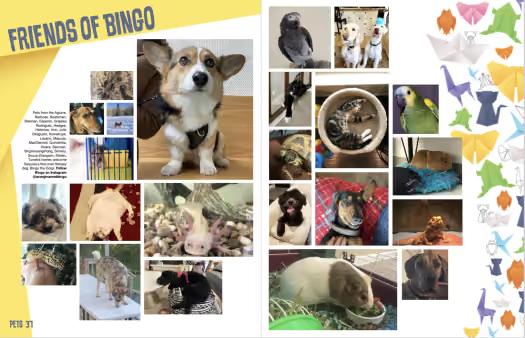
- Pet photos
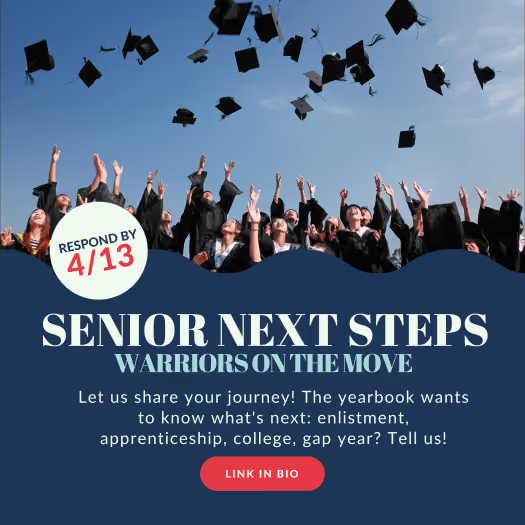
- Senior plans
- Student art
- Photos from away games and tournaments
- Classroom photos
- Field trip snaps
- Evergreen content
- Hoco/Prom-posals
Casteen puts it this way: "Everyone matters and has a story to tell. Storytelling is a way to incorporate different voices." Crowdsourcing for these stories is a start. Follow up with submissions with interviews to understand the process, history, or cause/effect of the photo.
If a tree falls in the woods...
And no one shares a pic, no one will know you're crowdsourcing. Something like that.
To start and maintain a solid crowdsourcing effort, create a plan for a series of time-specific asks. For example, if you need band photos from the regional competition, reach out to the director and boosters before the event to prep them. Then follow up the next day. Think about your own camera roll: how long does it take your weekend to be swallowed up with the screenshots and snaps you take Monday through Friday?
Assess your communication channels
What tools does your school have in place to communicate with staff and students? RenWeb may not be the cutest, but if that's how your parents receive messages from the school, stay the course. Active social media accounts are also great ways to meet specific users, especially if the robotics team has its own Facebook group or the PTG uses theirs to solicit members.
Check out this article if you need to see some more winning social posts to help you crowdsource and sell more yearbooks.
How Treering helps
Treering's crowdsourcing tools include integrations with Facebook, Instagram, and Google Drive as well as shared photo folders. Teachers, parents, and students can email photographs from their devices directly to the yearbook folders.
Custom pages or senior ads?
In a Facebook yearbook adviser group, I ran across the question: I’m confused by Treering users saying they can customize two pages for free. Don’t you start with an entire book of blank pages? Well, yes. And parents get their own two blank pages. And advisers can add in recognition ads. And… why don’t we break things down together?
Your yearbook your way
We have hundreds of blogs on how to design a yearbook from scratch and how to use auto-layout features. Let’s focus on the two areas that are student-centric; we are equally concerned about giving schools the ability to capture their story each year, while also providing students with the tools to tell theirs.

Custom pages: personalized school yearbooks
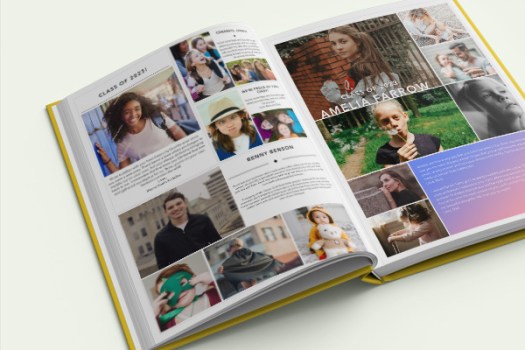
Custom pages are two free pages that are only printed in a student’s unique copy of the yearbook. This is just one way Treering aims to create a more inclusive yearbook for schools.
Treering’s personalized pages provide every student—for free—the opportunity to tell their story of the year.
“I created our custom pages to celebrate our activities, accomplishments, and accolades!”
Tawanna Edwards, 2022 Memory Maker Winner
“We take so many pictures that it’s hard to narrow them down. I usually start by choosing my favorites that give a good overview of our year, then ask my kids what information and pictures they want to include to remember for the future.”
Kirsten Megaro, 2022 Memory Maker Winner
Senior ads: parents celebrating students
When it comes to school yearbooks, whether it’s 5th grade, or senior year, promoting and graduating students deserve special recognition. That’s why schools have traditionally offered optional, for purchase senior ads in the yearbook. These ads appear in every single copy of the yearbook and they create an excellent way for parents to celebrate their graduating student and do it with the school community.
Revenue from ads can be used to upgrade yearbook equipment and fund celebrations throughout the year.
The case for offering both
You might be asking, “May I offer both?” That’s a big yes, and here’s why: proud parents will always want to share with the entire school how thrilled they are to see their student’s achievements. Traditional graduate ads in school yearbooks handle the job.
Meanwhile, thanks in no small part to all things social, students expect the ability to memorialize their very best moments, memories, and photos from throughout the year. Graduating seniors shouldn’t be the only ones. All students, from all grades deserve a home for their memories.

Including a diverse set of holidays and celebrations in the yearbook
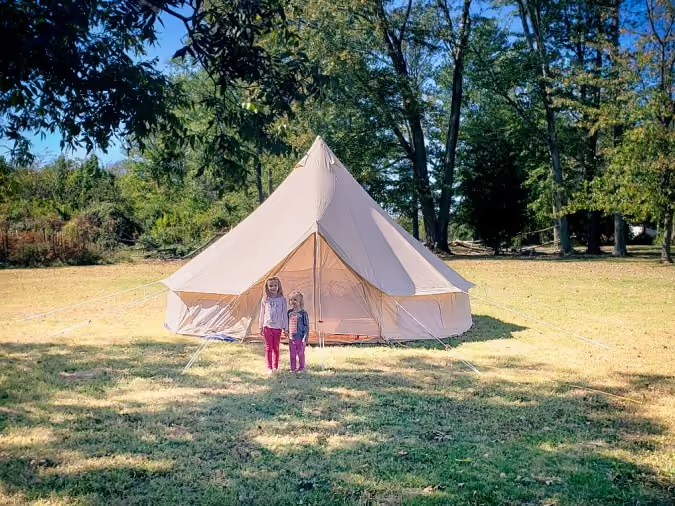
It all started with a yurt. A mom on campus posted a photo of her daughters in front of their temporary home in a field. As a part of their Sukkot observance, they lived, ate, and gave thanks in the yurt for nearly a week. After asking around, three other families on campus celebrated similarly. This sparked something in our yearbook program: who else lives a life about which we know little? (Answer: everyone!) And this became the catalyst to broadening the scope of our off-campus student life coverage. Read on for tips on inclusive coverage for diverse holidays and celebrations that reflect the individuals in your halls.
Make celebrations individualized
When we work with our students to learn from one another, we model and facilitate courageous conversations. Many of us parents grew up with the adage: politics and religion never make for polite conversation. By focusing your interviews on the individual—versus the religious or cultural practice—you will see it through his/her eyes.
That said, it is never one student’s job to be the “ambassador” for their faith or home country. That’s why we prepared this list of questions to focus on the individual’s celebration. (Just think about how even members of your extended family celebrate birthdays differently!) The narrative that will unfold is about the student or staff member rather than a book report on the celebration. Avoid comparing or contrasting.
- What does [celebration] mean to you?
- What traditions does your family have?
- What food do you eat on [celebration]? What ingredients make it special?
- How do you prepare for [celebration]?
- What music makes it special for you? Why?
Diverse coverage ideas:
Symbols spreads
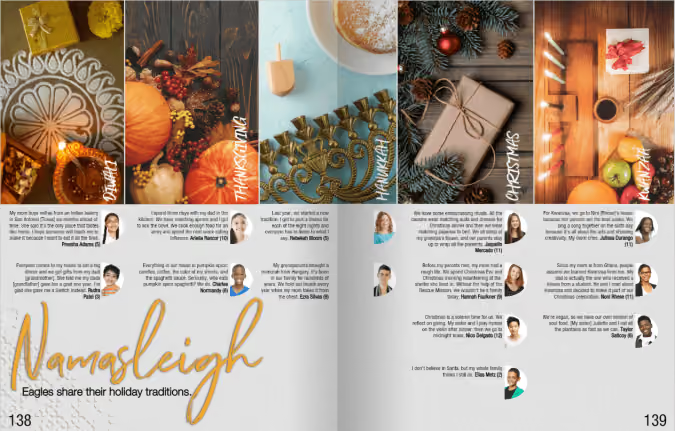
Ideally, you’d have photographs of the decor that surrounds your students during the season. If that isn’t possible, use some stock images and position pull quotes of students describing how they use them.
Mini-modules
Re-enactments of major events, such as Eid, that happen at a student’s place of worship can focus on the process, such as the challenges of memorizing lines or balancing rehearsals with school work. Lunar New Year festivals are another area to cover. Ask students about music, food, and decorations.
Winter or spring “specials”
Plan ahead for one of the holiday seasons by interviewing students about their celebrations using the questions above.
Spring hosts Easter, Holi, Passover, Ramadan, and Vesak. Fall and winter are the seasons for Bodhi Day, Christmas, Diwali, Kwanzaa, Hanukkah, and Thanksgiving. (Please note, these are in alphabetical order, by season, not chronological as some days change because they are on a lunar calendar, not our American solar calendar.)
Research first
There’s an iconic episode from The Office, “Diwali” that gives us a picture of what could go wrong (and oh-so-right). In typical Michael Scott fashion, he fills a meeting with inaccuracy, and his actions and lack of truth impact those around him. Moral of the story: be Dwight.

As you prepare to extend coverage to include diverse holidays and celebrations, do a brief study of the symbols and history of the event. These are great classroom opportunities to brainstorm questions and talking points. You can even give a few non-examples to help students filter.
We’ll leave you with this bonus fact: Cinco de Mayo is not Mexican Independence Day. It’s not even a national holiday in Mexico.
244 title ideas for your yearbook (and tips for writing your own)
People put a lot of thought into naming their children (and even their pets). Well, this yearbook is your baby, so you want to give it a name that lives up to its content. We’ve put together some tips for how to get the brain juices flowing when it comes to choosing your title, and also some great title ideas we’ve come across over the years.
Set some guardrails
The number of yearbook title ideas rivals the number of fish in the sea, so it helps to narrow your sights before you cast the net. One thing that helps is to pull the yearbooks from the last five years and take note of their titles.
You should also decide on the tone. Some like yearbook titles to be inspirational, while others like to provide a nod to the overall theme. And for some, being straightforward works best. Regardless, it’s helpful to set the scene in your mind so you can measure your options against your expectations.
Different approaches to yearbook titles
There are a few different routes to take when pursuing a title:
- Tie it to your School. You can use the school’s name, colors, mascot, or location as a jumping off point.
- Time-Specific Title. Make a reference to this current point in time, by calling out the year, referencing a sign of the times like sustainability or social media, or by using a current song lyric or movie quote.
- Timeless Titles. These ideas capture the overall intention of a yearbook by speaking to nostalgia, memories, and the passage of time.
Whether you build on your school’s spirit or pay tribute to the collection of memories within, your yearbook’s title should capture the essence of your book and give the reader a sense of the journey to come. Select a few ideas and try them on for size. Share them with your committee and gather some feedback. After you let them marinate, you’ll find that one perfect idea, and it will practically jump onto the cover itself.
Yearbook title ideas
Interested in a few examples? We’ve compiled several options from the types of covers mentioned above. Feel free to poke around, and take whatever inspiration this list offers.
School-Inspired: Mascots
- The Year of the {School Mascot}
- The Shine of the {School Mascot}
- From the {School Mascot}’s Den
- The Eye of the {School Mascot}
- This is {School Mascot}Country
- {School Mascot} Territory
- {School Mascot} Pride
- In Our Hearts | On Our Sleeves
- Peace Love & {School Mascot}
- Keep Calm & {School Mascot} On
School-Inspired: Colors
- {School Color} Memories
- Seasons of {School Color}
- Seeing {School Color}
- A Splash Of {School Color}
- Better In {School Color}
- In Color
- Color Commentary
- Showing Our True Colors
- Showing Off Our Colors
- {School Name} In Color
- Life In {School Color}
- These Colors Don't Run
- More Colorful Together
- In Living Color
School-Inspired: Location
- From the Heart of the Rockies
- From the Desk of {School Name}
- {School Name} Presents…
- United States of {School Name}
- {School Name} Is Buzzing
- If These Walls Could Talk
- The Writing On The Wall
- Inside {School Name}
Time-Specific: The Year
- 202X Voices
- We Are #202X
- 20/20 Vision
- The Stars of 202X
- Reward: 202X
- Rocking 202X
Time-Specific: Pop Culture
- The Pensieve
- Snapped
- Blank Space
- 100% Home-Grown, Farm-Fresh {School Name} Memories
- See You Again
- The {School Mascot}: Age of {School Name}
- Reduce, Reuse, Remember
- #No Filter
- Picture This
- Instant Reply
- Filtered
- Catching Fire
- 201X-202X: A Lot To Like
Evergreen: Nostalgia
- Encore
- No Place Like Home
- Total Recall
- Sand Through the Hourglass
- Good Times
- Wouldn’t Change a Thing
- Wrapped Up
- Old Stories
- A Time To Remember
- As Time Goes By
- A Picture In Time
- A Year In Review
- Reflections
- Sands Of Time
- A Point Of View
- A Look Back
- Always and Forever
- Anthology
Evergreen: In the Moment
- It’s Our Time
- Viva la Vida
- Time of Our Lives
- Perspectives
- Meanwhile
- More Than Words
- Side by Side, Hand in Hand
- Nothing But the Truth
- Scratching the Surface
- Our Year
- Highlights
- Living The Dream
- This Is It
- Profiles
- A Closer Look
Evergreen: The Future
- A Future So Bright
- New Traditions
- A New Day
- Bright Futures
- Finding Our Way
- New Takes | Old Traditions
- Unlocking The Future
- Endless Memories
- Into The Future
- The Road to Tomorrow
- Make Your Mark
- Chapter Infinity
- Gateway
- No Turning Back
- Take a Chance
- The Best is Yet To Come
Evergreen: Showbiz
- Welcome To The Show
- Under The Big Top
- The Main Event
- In Lights
- Headliners
- Bright Lights
- Behind The Scenes
- Action!
- Showstoppers
- A Fresh Take
- All Stars
- Stars of {School Name}
Evergreen: Social Media
- Leaving Our Mark on the World
- [Year] Notifications
- Follow Us
- Shareworthy
- For the Likes
- #NoFilter
Evergreen: Documentary
- Write It Down
- For All To See
- A Blank Slate
- The Whole Picture
- Our Story To Tell
- Put It In Ink
- Not Just Another Year
- Take Note
- A Year In Pictures
- Words Aren't Enough
- A Look Inside
- A Story All Our Own
- Quoted
- (Re)Writing History
- Another Chapter
- Newsworthy
- Headlines
- Signed Sealed Delivered
- Memories: Delivered
- Noted
- Pass It On
Evergreen: Technology
- A Bright Idea
- Keyed Up
- Wired For Success
- Pushing Buttons
- Always On
- Press Play
- Plugged In
- What Makes Us Tick
Evergreen: Nature
- Rising & Shining
- Where The Grass Is Greener
- Life's A Beach
- Riding The Wave
- On The Vine
- In Bloom
- Roots
- Planting A Seed
- Watching {School Name} Grow
- Out of Our Shells
- In a Nutshell
- What's the Buzz?
Evergreen: Journeys
- The Road Less Traveled
- Off The Beaten Path
- Over The Hills & ...
- {School Name} Marks The Spot
- In Flight
- Expanding Our Horizons
- New Views
- Out Of This World
- Unchartered Territories
- Horizons
- Setting Sail
- The Sky’s The Limit
- Going Places
- Have Education Will Travel
- Beyond The Shore
- A Bigger World
- Headed In The Right Direction
- Onward & Upward
Evergreen: Adventure
- Amazing Adventures
- Tall Tales
- A Wild Year
- {School Name}'s Safari
- The Sights We've Seen
- The Amazing Adventures Of 2016
- Super {School Mascot}
- The Incredible Story Of {School Name}
- Oh, the Places We've Been!
- {School Name} Superheroes
- Our Heroes
Evergreen: Inspirational
- Better Than Ever
- Naturally Awesome
- Loud & Proud
- Dream It | Do It
- Shooting For The Stars
- Be Happy
- What A Wonderful World
- How Sweet It Is
Evergreen: Success
- Whatever It Takes
- Tricks Of The Trade
- Pulling It All Together
- It's How You Play
- A Whole New Game
- A Streak of Good Luck
- Wired For Success
- Coming Up Aces
Evergreen: Building
- Blueprints for the Future
- A Year of Building
- Building Towards the Future
- Planning Ahead
- Future Plans
- Blueprints for Life
- Blueprints
- Just Like We Drew It Up
- Dreaming Big
- Towering Memories
- Skylines
Evergreen: Individuality
- Express Yourself
- Expressing Ourselves
- Individuals Together
- Just Like This
- Formalities Aside
Evergreen: Community
- It Takes All Of Us
- How We've Grown
- Coming Together
- Putting It All Together
- Pieces Of The Whole
- Parts Of A Whole
- Done Our Way
- What Makes Us
- Who We Are
Evergreen: Creativity
- Hand-Drawn
- Breaking The Mold
- Drawing It Out
- An Artful Year
- Painting A Picture
- A Colorful Take
- Paint The Town
- Strokes of Genius
- A Picture Of Success
- The Fabric of Our Year
- Tightly Knit
- Painting Memories
- Focus
- A Different Perspective

Anatomy of an elementary school yearbook
This is the time of year when all those shared photo folders are filling and your spreads are mostly blank. It’s time to build the book. And if you don’t know where to start, check out a sample yearbook ladder to see how one of our Treering schools organizes its book.
Principal’s letter
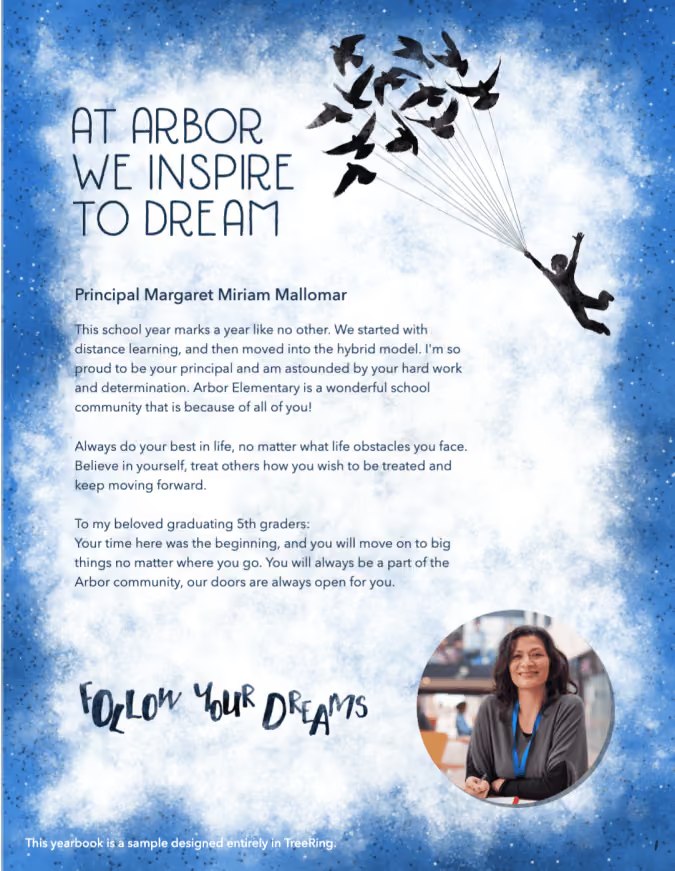
Some of the best advice I ever received on principal letters came from a veteran adviser: “Connect to the theme.” The yearbook theme serves as the unifier between all the clubs, activities, sports, and classes that take place throughout the year. So it makes sense that, as the leader of the school, the principal’s message both unifies and sets the stage for that theme. Incorporating the theme is a way to also recognize the hard work of your yearbook team and a subtle show of support.
When meeting with your principal, communicate:
Depending on your relationship with your principal, you may be able to present a first draft for him/her to finesse. Generally speaking, the principal’s letter appears at the opening or closing of the book or in the staff section.
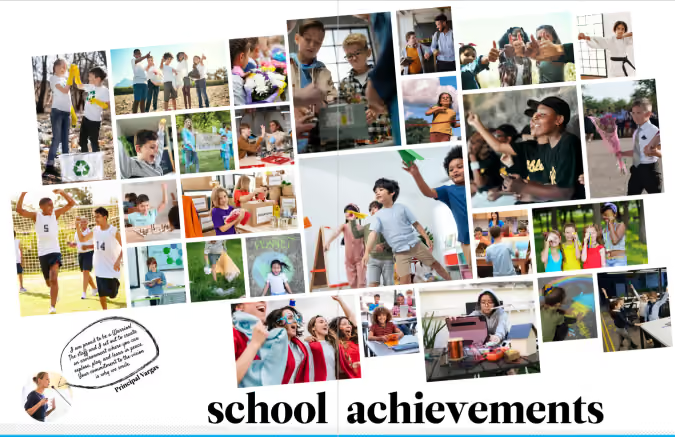
Classroom photos
Photographs of students working in the classroom give a true portrait of their day. (Lame pun intended.) American students spend roughly a quarter of their day in school. Let’s showcase their contributions and celebrate their achievements.
Elementary school events
Fundraisers, dances, parades–oh my! These all-school events showcasing your student body's unity are must-haves for your yearbook, as are the class distinctions: 5th/6th grade trip, 100th Day of school, faculty vs. parents soccer game, reading buddies, etc.
Don’t feel like you have to devote a double-page spread to each! One spread can feature all the class parties, and another the fundraisers.
Candids/Lunch
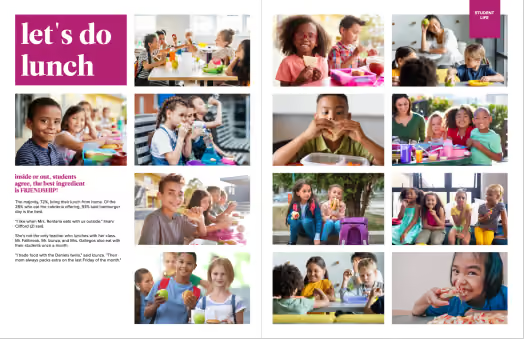
Just as the academics photos are valuable, so are the in-between moments when students are at lunch or during transition periods. Playgrounds and lunchrooms are daily photos ops for volunteers and teachers to snap these carefree moments. You may want to include photo collages between grades (i.e. upper and lower school recess and lunch) or as the perimeter for autograph pages.
Portraits
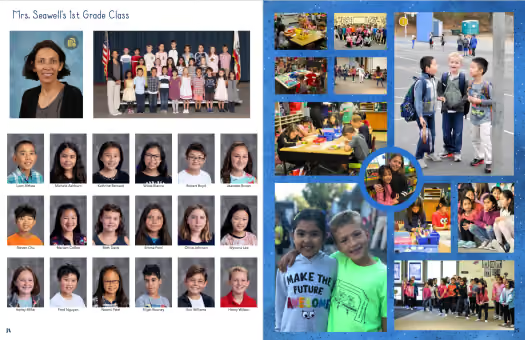
Much of your elementary school yearbook will be portraits–these tend to take up an average of 40% of the book! You can organize these:
- By grade and feature some fun facts about each group (e.g. miles run at the Jogathon)
- By grade and teacher with classroom candids sprinkled in
Heads up: this is where you want to be extra diligent with your proofreading strategy. We suggest handing out your PDF proofs to each teacher to approve or hanging them in a conspicuous place to make sure names and classes are correct.
Extra ideas for your elementary school yearbook
Table of contents
In an elementary school book of 20 pages, will you need a table of contents? Probably not. If you want to help guide your readers, add a small one to your title page. Larger books should divide themselves into sections. A table of contents is a great place to drop in some extra photos of students.
Special recognition for promoting students
Parents love bragging about their children. (Present company included!) If they are not adding copious custom pages, they may appreciate the opportunity for a recognition ad. You'll appreciate the opportunity to raise some additional funds for your program.
Because you know your elementary school community best, you know what they will want in the yearbook. We're here to help!

Why I stopped publishing senior quotes
Unpopular opinion: senior quotes are problematic because they are unoriginal and full of risk. Before you click away from this perceived pessimistic view, put on your journalist hat and look at the facts. This position is not an anti-expression rant but a push to develop original, authentic content for our yearbooks. Here’s how I replaced senior quotes 15 years ago.
Three reasons to start a new senior tradition
1. Participation and originality
A struggle we see from advisers is a small percentage of students submit their senior quote. Those who do use a quote from a movie, song lyric, or timestamp, not their own thoughts. That’s not journalism. These pop culture references may have a place in a module or personality profile elsewhere in the book if it relates to your theme.
2. Vetting process
Do you know the periodic table? Are you fluent in slang, TikTok trends, drug euphemisms, and veiled sexual references? Does your district have a hard line on what is free vs. hate speech?
3. Senior quotes can equate to bad PR
A quick news search for "yearbook senior quotes" yields myriad results of senior quotes gone wrong. Allegations of bullying in the yearbook and “unlawful accessing” the online editor abound. Schools have even cut the pages from their books due to the quotes in print.
Ideas to replace senior quotes
Thanks for sticking with me. Below are ways to celebrate the seniors on your campus and capture their voices (rather than Michael Scott’s).
Brag sheets
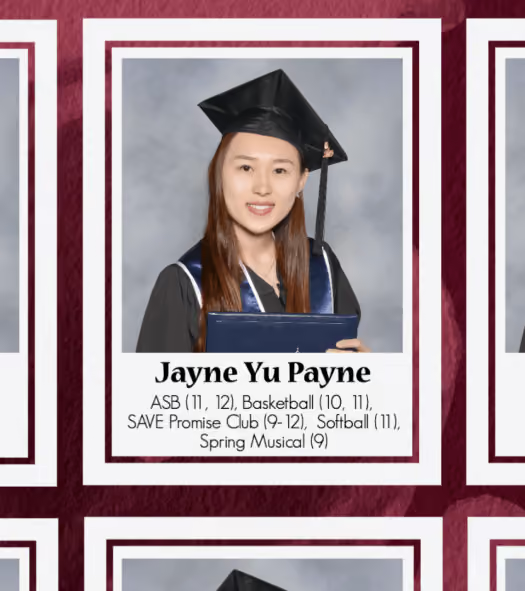
If your seniors want to leave their proverbial mark, include their school contribution with their senior portrait. A Google Form listing all the activities, clubs, and teams offered on your campus makes it quick for students to click through. Partner with a department and ask for it to be the bell ringer or exit ticket for a day.
You could also include class stats, such as athletic participation rate, percentage of students in leadership, and volunteer hours.

Include more quotes with expanded captions throughout the book
If your yearbook program is journalistic, it should have storytelling and reporting at its heart. Expanded captions include direct quotes. By using them, you are creating a yearbook full of original voices and senior, junior, eighth grader, etc. quotes. Here’s how it works:
- Identification information: who is doing what when and for what purpose? (Use present tense.)
- Secondary information: what is something you wouldn’t know from looking at the photo? (Use past tense.) This could be the result of the play or experiment pictured or the relationship between the students.
- Quote and attribution: include a direct quote from the subject that adds emotion, opinion, or information that isn’t obvious. Identify the quote with last name (grade) said.
Create a survey based on thematic coverage
Theme is king in yearbook. You selected it because it was the guiding story and look for your book. When you are developing your theme, create interview questions using this language.
For example, Rock Academy’s theme “Give + Take” yielded interview questions such as “What’s your take?” or “Give me five…” (songs, class activities, places you go on campus, etc.). Pro tip: use an idiom dictionary to search for such spin-offs for your theme.
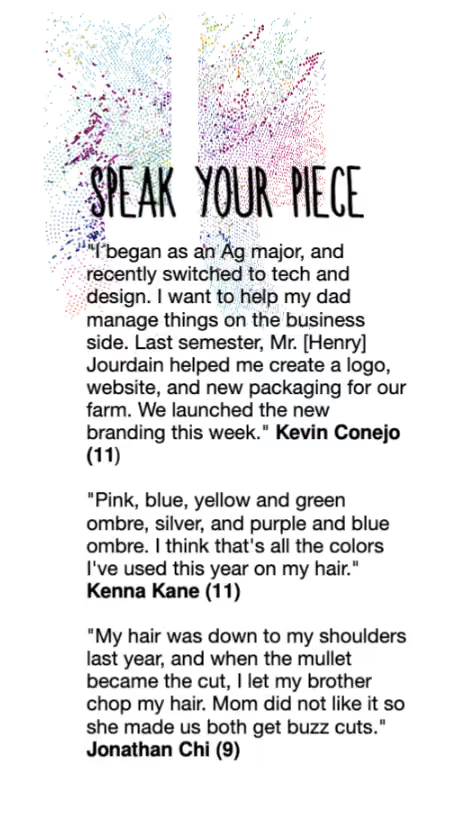
For their book “Speak Life,” Sequoia High had a running module throughout the book called “Speak Your Piece” with quotes from students about a specific moment.
Sell ad space
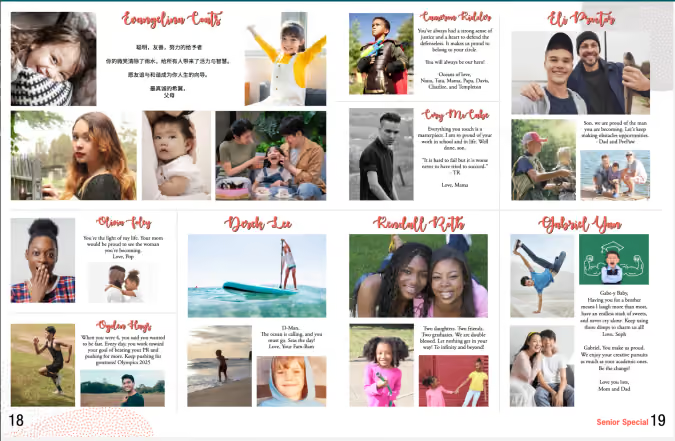
Yup. I said that. When you pay to play, there is a little more consideration and propriety. Some schools offer 1/8 page to all their seniors and give parents the option to pay for upgraded space. (You'll have to get creative with the alphabetizing.) Others create a section with the index to feature ads.
With Treering Yearbooks, families also have two free customizable pages that print only in their book.
Stay the course
Full disclosure: my first year, there was a little heat from students and a petition. By year two, students (of all grades) saw their voices in every corner of the yearbook, and no one questioned it. The standard response became "We have senior quotes on every spread in the yearbook."

Coverage ideas: how to get more students in the yearbook
Thinking critically about yearbook coverage is an editorial mind shift. Shiny things such as theme art and backgrounds often take precedence. Yearbook coverage highlights all the memorable people and events. And there is a flip side: planning yearbook coverage is also a conscious decision on what you’re not going to cover.
Coverage limitations
Yearbook price, page count, and–gasp–traditions limit coverage. For Treering schools, page count directly influences the price point. Your per-book price is based on the core page count (does not include custom pages), and cover finish.
Page count and coverage budgets
For those with a class or club, a coverage budget helps you and your team be intentional. Start by listing the sections in your book. Then budget spreads to each section.

Yearbook traditions
We don’t mean the fun ones like Yerdsgiving or distribution. No matter the school size, there is an element of expectation on you as the adviser. Be aware of the sacred cows of your yearbook program. These can range from color palettes to the ultimate sacred cow, senior quotes. (We interrupt this blog to give you the resource you didn’t know you needed: three reasons to get rid of senior quotes and how to replace them.)
If you're willing to take the energy to fight tradition, and have a clear reason, go for it.
For example, when my school hit 11 years, my students deviated from alternating purple and black covers. They created a blue and red book, with PK-6 on one side and 7-12 on the other. Their reasoning? For the first time in school history, there were separate principals for the upper and lower schools.
My students wanted to highlight how each grew independent of the other, and instead of pushing to do two smaller books, recognized the power of us all still being in one building. The yearbook students saw it as a picture of unity; the other students saw it as the school spirit equivalent of treason. Bottom line: blue and red make purple. Once that line made it around campus, everyone loved the book. Ten years later, we have not published a purple or black book.
Change takes time.
People over events
This is our coverage mantra. When you highlight people, your yearbook develops an emotional connection as students see their art, stories, meaningful quotes, and photos of their experiences. Every student wants to know they were in it. They were included. Their story was deemed valuable enough to be in the yearbook.
We're always going to highlight people over the events. People happen in the context of the events, and in each event, highlight those behind the scenes, up front, and watching. Remember:
- Set up and take down
- Fan and audience reactions
- Snack bars, spirit shops, and the bench
- The booth: announcers, tech crew, coaches, press
You need not think each will get a spread. Modular design is a way to fit more content in and do it stylishly. (If you don’t want to start from scratch, Treering themes “POV,” “Tied Together,” and “Crafted” have modular layouts from which you can model.)
People first ideas
We want to move away from students opening the book, finding their name or face, and moving on. Below are some ideas to help you add stories and make them dynamic so people pause their perusal to get personal.
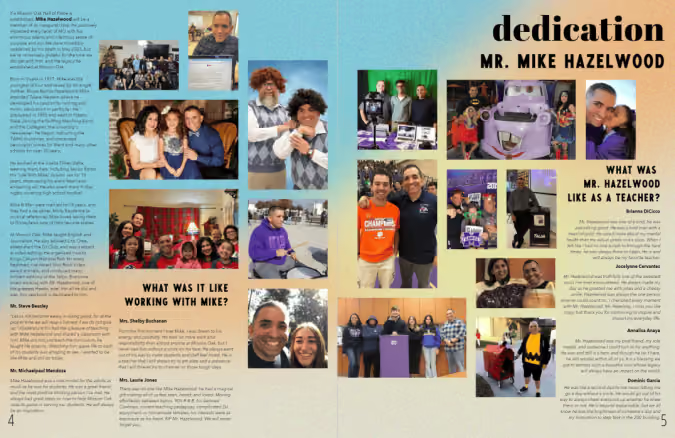
Dedications, Retirements, and Unsung Heroes: Every school has one teacher, volunteer, or student leader who positively impacts school culture. Honor their impact with a small write up or a full-spread dedication.
Future Plans: Publish elementary school “What I want to be…” and high school post-graduation plans.
Trends: Waterbottles, fashion, and laptop stickers are great. The stories behind them are better.
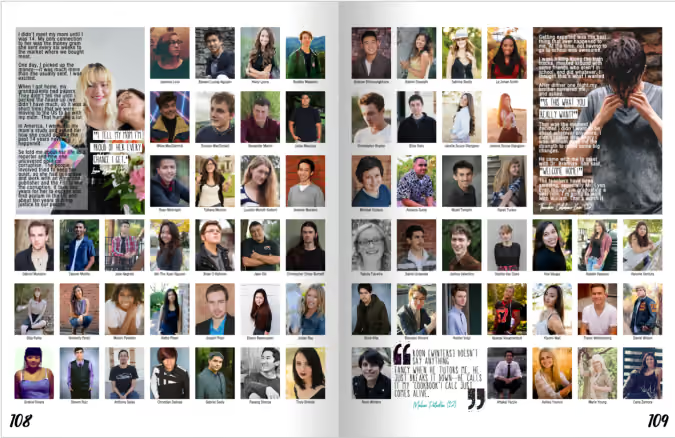
Personality Profiles: We love making room for additional stories by shrinking portraits and adding content.
Pets: Pets are an easy way to cover camera-shy students or get families started with crowdsourcing.
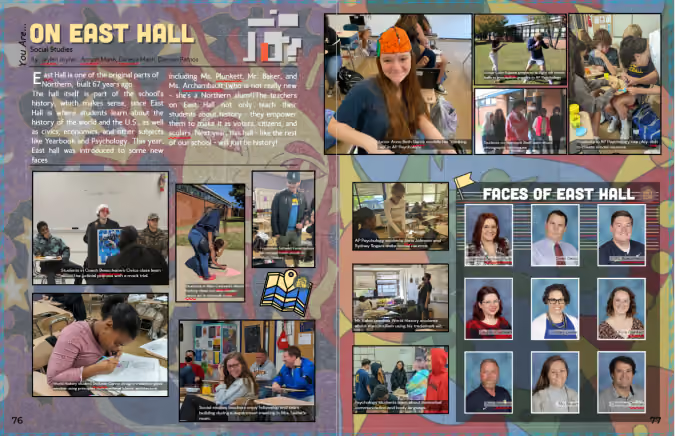
School Map: Students spend 8-12 hours on campus. Find out where the best study and nap locations are. Interview athletes from each sport who practice on the turf.
Interactive Pages: One thing we saw multiple times during the duration of TRL 24 was “Guess Who?” spreads and modules:
- Guess Whose… eyeglasses, water bottle, ect.
- Match the baby photo to the 5th grader or teacher
- Match the teachers to their first job
People also loved the Treering About Me pages.
Yearbook blacklists and BOLO boards
Many students are easy to cover three times because they fell into the 1-2-3 coverage pattern:
- Portrait
- Extracurricular
- Academics
For those who do not, use the coverage ideas above to get them in the book.

We understand that the same events occur year after year. Challenge yourself to cover them in two new ways. How will you and your yearbook team give a fresh take on the students on your campus this year?
This blog is adapted from Brent Mikolaycik and Erika Lin Payne’s Coverage Ideas session from TRL 24 POV: I’m on the Yearbook Team. Mikolaycik and Payne came to Treering Yearbooks after nearly two decades as classroom teachers and high school yearbook advisers.

Why you need evergreen content for yearbook
Like its namesake, evergreen content stays fresh for a long time, unlike the tie-dye loungewear we are still trying to forget. While you should definitely include polls and trends in your yearbook (it is the story of the year after all), open-ended interview questions (such as the 40+ we are giving you below) should remain in your repertoire for three reasons:
For ease of use, we organized these interview questions by yearbook section. Grab your editorial team and create your list!
Student Life
Because some of your formative moments occur outside the classroom, be sure to include all that goes into the school day.
Campus Life
Routine
People
These questions make great sidebars to go along your portrait pages.
Milestones
Interests
Academics
Athletics
Bonus: Trending Topics
Add content on the following to complement the evergreen content in your yearbook.
For even more interviewing tips, check out the yearbook storytelling module from Treering's free curriculum.

3 content ideas for portrait pages
When “outsiders” think of yearbooks, they imagine little beyond the portrait pages. They see the obligatory blue background and big grins that accompany a moment in time many of us, as students, dreaded. (C’mon, we all didn’t receive the Glamor Shots by Deb experience!) Since this is a part of students’ permanent record, it's a necessary component. It is a part of the historical record of the school year. It’s also not our students’ favorite. Long ago, this adviser decided to decrease the size of yearbook portraits, while increasing specialized content. Here are three ideas to break up your portrait pages by adding rich, personal content.
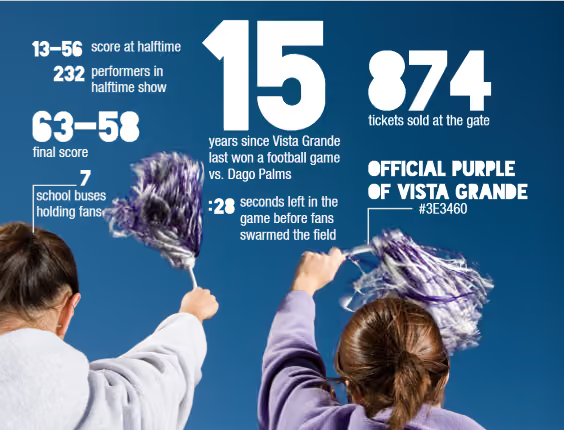
1. By the numbers
Use stats and surveys to provide a quantifiable portrait of the students pictured on your pages. Begin by understanding what is important to your students and then ask questions. For example, if your school’s focus is on health and wellness, break down how students and staff contribute to that goal by including content such as
Pair the numbers with photographs of students engaging in the activities and quotes for an even more personal approach. What does it mean to be a part of a community so encouraging of physical activity? How do students balance their school work with tournaments and performances?
2. Keep content class-y
Grade spreads in your portrait section are ideal for academics or class-specific coverage. Highlight the unifying aspects of school life, such as class trips or advisory periods, and then ask students about their individual experiences with each. Grade sections could also include:
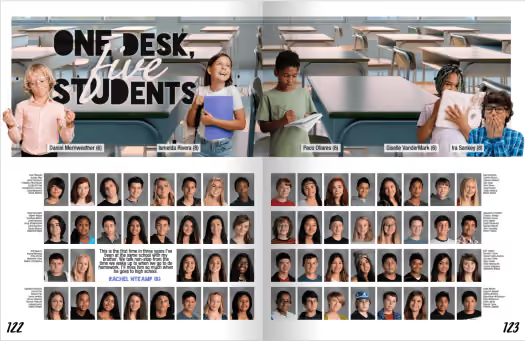
3. Get personal with portraits
Personality profiles and student life modules both create opportunities for an inclusive yearbook by targeting lesser known students or students with interests outside school-sponsored arts and athletics. These content modules add voices to the portrait section of your yearbook!
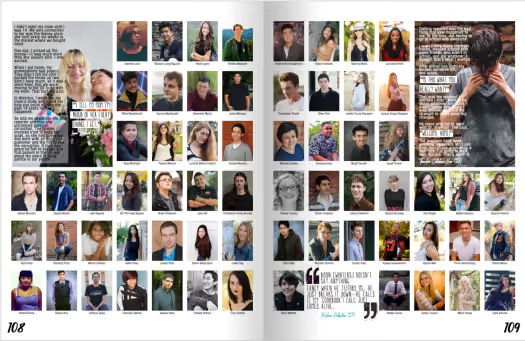
Take advantage of the additional space you'll create by shrinking portraits to pull out more content from your student body.