.svg)

Yearbook curriculum
Looking for inspiration, design tricks, how to make a great cover, promoting your yearbook and engaging your community?
Most recent
5 things to do to sell more yearbooks… in the fall!
Back to school means back in business. Selling your yearbooks should start as soon as you do! Here are five easy ideas to immediately implement to gain sales momentum at the start of the school year. Plus, we're giving you a social calendar and slew of sales flyers you can customize, then share.
1. Stick it to them
K-12 yearbook adviser Erika from California goes sticker crazy: “Our class meets 7th period, and with end times being staggered, my students run to the lobby and place a sticker on each [elementary] student as they head to the pick up lines.” The stickers have purchasing info on them.
In Georgia, adviser Dara does the same, then takes it one step further by sending a humorous follow up email:
We didn’t want you to get stuck without a yearbook, but if you accidentally ran the reminder sticker through the wash, here’re some handy tips to take care of it.
Consider designing your stickers to match the yearbook theme for a branding tie-in.
2. Plan posts
We all know the cliché: failure to plan is a plan to fail. Use a promotions calendar to diversify your posts and make sure your yearbook sales and marketing strategy match your audience.
We’ve created a free social media calendar to promote your yearbook and your program.
Bottom line: parents buy the books. They’re mostly on Facebook and Twitter, so angle your yearbook sales posts to them. Unless you’re a huge *NSYNC fan, reading buy, buy, buy is not going to get the job done alone:
- Use #throwbackThursday as a feature for campus leaders and parent volunteers to pose with an old yearbook
- Ask parents to share their advice to seniors
- Do a guess the teacher feature with senior photos
Social proof is one way you can positively encourage others to support your program by buying a yearbook.
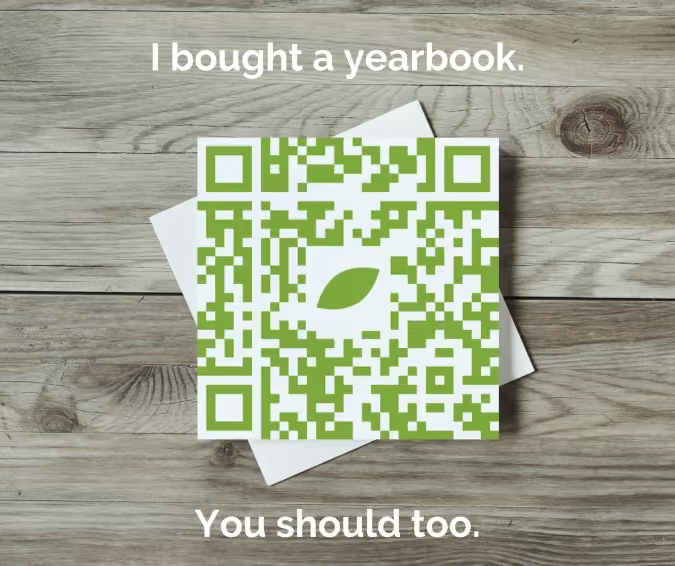
We trust our mom friends, so let’s give them a social badge to share.
We want students to want the book. Mix in student-centered messaging on Facebook and Twitter, such as reasons to buy a yearbook or highlight yearbook photos from a recent event that showcase non-buyers. Also, focus social media efforts on TikTok and Instagram to:
- Play up a trending sound or duet with a popular video
- Post a variety of messages to increase engagement
- Partner with campus influencers (ASB, PTA/PTO accounts, athletics) to hype your yearbook or upcoming event
3. Sell your program
One step beyond using social media to post links of how parents can buy yearbooks or recognition ads, is to show people the value of your yearbook program. The people who help make the book are just as important as your product.
- Show behind the scenes work: time lapse Photoshop work, someone hand drawing a layout, the yearbook committee meeting up for lattes and layouts
- Have the student body vote on a dominant image for a spread
- Reveal sneak peeks of the book
- Share your goals (e.g. 200 new followers, 60 books sold by December, 10 photos submitted) and, more importantly, how you celebrate
- Thank the yearbook heroes publicly on a #thankfulnessThursday
4. Simplify your yearbook sales processes
When someone says, “I need to buy a yearbook,” then you should be ready to sell it, not hand them a flyer. Repeat after me, “Sell the book.”
Evaluate your yearbook sales platform
Your yearbook program is a business whether you have a multi-year contract with book minimum orders or not. Therefore, one way you can serve your customers aka mom and dad is to make it easy for them to buy your product!
- How many clicks does it take to go from home to checkout?
- Do you have to scroll for days?
- When you share an ordering link, it is two miles long?
- Can you link directly to your school’s store or do families have to search?
- Are the sales reports easy to find and read?
Crowdsource efficiently
Parents want to buy your yearbook because they know their child will be in it. Make it easy to contribute:
- Add a specific, bi-weekly call-to-upload to your social calendar
- Pass out cards at games and events with your yearbook email to that mom with the camera
- Give shout outs to people who send you photos
- Use QR codes
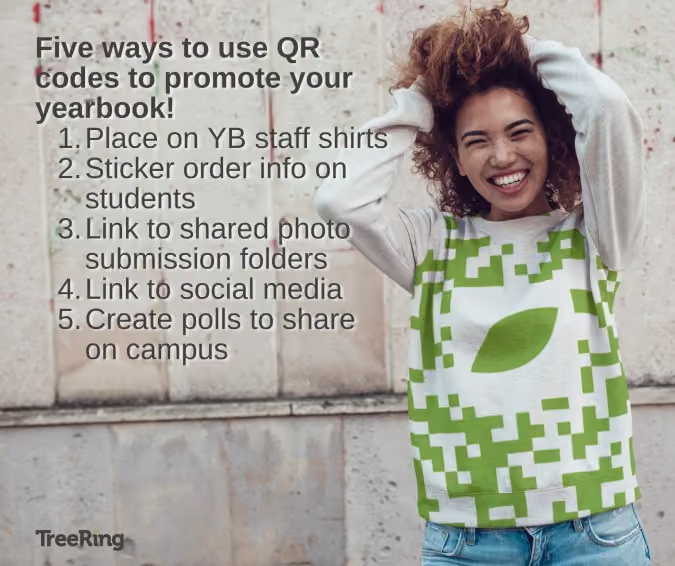
Use QR codes on all. the. things.
5. ReMEMEber the posters
Texas PTA mom Rachael said she drives past her children’s school every week. When there’s a big announcement, such as yearbook sales, her school puts a banner on the fence or a series of yard signs. Because it happens intermittently, she knows it’s valuable.
Old school paper posters can be effective (just don't be wasteful!) if the messaging is correct and the location is on point. While we love a good yearbook meme, keep it clean, positive, and fun—just like your yearbook!
QR Code is a registered trademark of DENSO WAVE INCORPORATED.

Yearbook job descriptions
A common mistake is to hand out titles. (Think of that Oprah meme, "You are a yearbook editor, you are a yearbook editor...") Before you go crazy with inventing a structure, create job descriptions for each position. The benefit: staff members can focus on their designated areas of expertise, resulting in a more organized and high-quality yearbook production. Emphasis on the organized. We created these yearbook job descriptions to help prevent misunderstandings, reduce conflicts, and enhance communication within the yearbook team.
What jobs exist on a yearbook staff?
From editors to photographers and every copy-editing, photo-tagging contributor in between, yearbook staffs can be specialized or comprised of generalists. The most important things are to
- Recruit a team reflective of the community you cover
- Communicate the roles and responsibilities early and often
Editor in chief
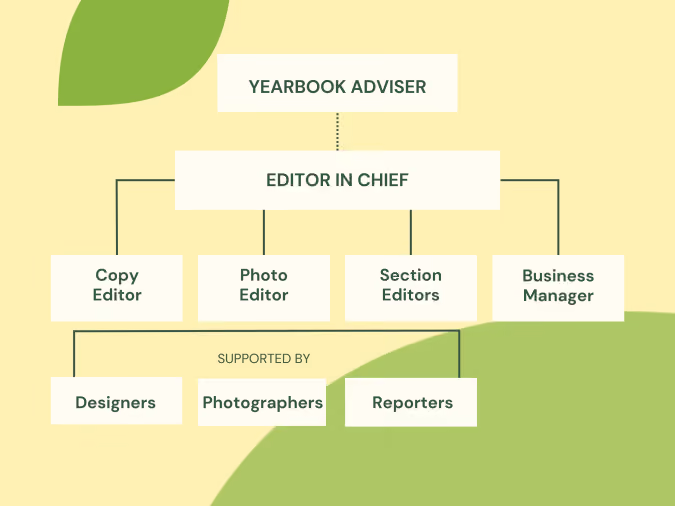
As captain of the proverbial ship, the editor in chief (EIC) oversees the entire yearbook production process. (This is not to be confused with the yearbook adviser; more on that below.) The EIC manages the team and ensures the yearbook meets quality standards.
Daily duties include checking in with the editorial board (large staff) or coordinating with staff members to communicate yearbook progress and assigning tasks such as mini deadlines or photo assignments.
A successful EIC demonstrates leadership and talent.
Yearbook editorial board job descriptions
Your editor in chief will oversee the team that shapes the theme and coverage of the yearbook and helps train new students. This editorial board can be as large or small as your staff necessitates, and may vary from year to year.
Beyond the big picture design and team harmony goals, the day-to-day duties of editorial board members consist of:
Copy editor
Accuracy in grammar, spelling, and facts are the hallmarks of a successful copy editor. While the entire project does not rest on this one person’s shoulders, all section editors should do their due diligence to ensure their teams’ submissions are beyond the first draft phase prior to submitting.
Photo editor
Ensuring that the images meet quality standards and deadlines are met, the photo editor organizes uploaded images, ensures they are tagged accurately, and schedules photographers.
Section editors
Section Editors oversee specific sections of the yearbook, such as sports, academics, clubs, or student life. They coordinate with photographers and writers to ensure comprehensive coverage and consistency within their assigned sections. While the tasks of section editors may vary depending on the size of the yearbook team and the specific guidelines set by the yearbook advisor or school, below are some examples of team members and their section-specific duties.
Sports editor
- Obtain rosters and schedules for each team
- Coordinate team photos with the coaching staff
- Schedule photographers for practices, tournaments, and games
- Work with Booster organizations or parents to crowdsource photos
Reference/people editor
- Coordinate with the photo editor to ensure all photos are tagged
- Run index and/or flow portraits
- Create opportunities for storytelling throughout the reference or people section
Student life editor

What do yearbook editors do?
Content planning
Section editors need to plan the content for their assigned sections. This involves brainstorming ideas, scheduling events or activities to cover, and extending the yearbook theme through sidebars, body copy, and headlines.
Communication
Editors must ensure each team member knows their responsibilities and deadlines for the week. Some staffs find a weekly staff meeting where the editors detail the week’s events and assignments plus overall book progress keeps things moving.
Reviewing and editing content
It’s important to match seasoned staffers with new ones to provide useful feedback and coaching through regular checks for accuracy, clarity, and adherence to the yearbook's style and guidelines.
Meeting deadlines
The editorial board must monitor the progress of their team members and ensure that all content and materials for their section are completed on time. They also review the overall progress of the section and address any potential delays or issues that may arise.
Business manager
Working with the adviser to coordinate sales, track orders, manage budgets, and organize advertising and fundraising initiatives, the business manager helps to ensure the yearbook's financial success. (This sounds scarier than it is.)
Social media manager
Yearbook teams use a social media manager to handle the yearbook's online presence and engagement. Daily tasks include:
- Managing social media accounts
- Posting updates
- Sharing previews of the yearbook
- Interacting with the school community
Job descriptions for yearbook staff members
The majority of your students will fall into this category. These are the frontliners who cover events, write headlines, interview students, submit stories, re-write those stories, and make your team’s vision come to life. They collaborate with the editorial board to develop story ideas, learn to tell stories through photos, and fit layout schemes and page designs to content. Students will get experience with varied responsibilities. For example, having a basic understanding of photography can enhance the team's capabilities and contribute to equitable yearbook coverage.
Large staffs have the luxury of further specializing their teams.
Designers
Their specialty is arranging photos, text, and graphics to create appealing and organized page spreads that use theme elements. They are flexible and see how the part (a photo) contributes to the whole (your school’s story).
Photographers
Photographers capture high-quality images of various events, activities, and individuals throughout the school year. They aim for story-telling photographs, zoom with their feet, and show up. Oh yeah, and they tag their pics.
Reporters
Students, teachers, and staff members share their stories with your reporters who then create engaging narratives. They pre-plan open-ended interview questions, listen, and dive deep.
By establishing roles and responsibilities, your yearbook staff will work in roles suitable to their experience and interests, giving them an opportunity to experience personal growth and develop a skillset that interests them.

Teaching yearbook: digital escape room
Unlock the mysteries of yearbooking with this classroom-ready lesson plan. We designed this yearbook escape room to kick off the school year or to serve as an informal assessment. With yearbook vocabulary at the core of this activity, students progress through a task to “unlock” another. When all four keys are complete and correct, they unscramble the final code. Cue crowd cheering noise.
Escape room activities
Students progress through the following four activities to stretch their knowledge and application of yearbook terms.
Task 1: Yearbook lexicon
Find words related to yearbook terms within the jumbled letters horizontally, vertically, and diagonally. After finding all 21 words, the unused letters in the grid will spell out a hidden message which will unlock the next stage of the escape room.
Task 2: Emoji combinations
Analyze the emojis' meaning in the context of yearbook-related activities and concepts. After entering all the words, students will find a three-digit code used to unlock the next task.
Task 3: Yearbook riddles
Solve six riddles based on the who, what, and when of yearbook creation. Once solved, a hidden word will reveal the next clue.
Task 4: Identification station
Examine two yearbook spreads and identify the elements of design and yearbook hierarchy. Students’ answers will produce the last three letters needed to unlock the final puzzle.

Teacher instructions
This electronic escape room works best in student pairs. Students enter their responses on a self-checking Google Form to advance through the activity while collecting letters to unscramble for the final code. (This also works well if you have a sub covering your class and want to leave a low-prep, meaningful activity.)
Because you know your class best, you can hand out tasks one-by-one or distribute them in a packet. Both require the trifecta of teamwork, collaboration, and content knowledge to be successful.
To use the yearbook escape room,
- Download the task cards; print one copy per group of 2-3 students
- Share this Google Form with your students via Google Classroom or email.
The Google Form is how answers are vetted, and is a necessary component. If you would like to manually verify answers, please contact marketing@treering.com for the teacher key.

When the escape room is finished
Determine the goal: completion and material mastery or friendly competition? Based on the desired outcome, you may want to have directions ready for one of the following activities.
By extending this yearbook-related activity, students can further develop and demonstrate their skills in communication, utilizing technology tools, and applying visual arts principles. Extension ideas include creating layouts, capturing and editing photos, and using digital tools for design and presentation.
Another consideration is how, and if, you will grade the escape room activity. Some teachers award points for completion and bonus points for the first, second, and third-place teams.
Educational standards for this escape room activity
The yearbook-related activity can meet several national standards. We’ve listed some below; please note specific standards may vary depending on the framework or guidelines followed by your educational institution or state. Your district curriculum or CTE coordinator might help you align your usage of the yearbook escape room with the appropriate standards and objectives in your specific context.
Common Core State Standards (CCSS) for English Language Arts
- CCSS.ELA-Literacy.RI.7.4: Determine the meaning of words and phrases as they are used in a text, including figurative, connotative, and technical meanings; analyze the impact of specific word choices on meaning and tone.
- CCSS.ELA-Literacy.SL.9-10.1: Initiate and participate effectively in a range of collaborative discussions (one-on-one, in groups, and teacher-led) with diverse partners on grades 9-10 topics, texts, and issues, building on others' ideas and expressing their own clearly and persuasively.
National Association of State Directors of Career Technical Education Consortium (NASDCTEc) - Communication:
- Standard: Apply verbal, nonverbal, written, and visual communication techniques to create, express, and interpret information and ideas.
International Society for Technology in Education (ISTE) - Technology Operations and Concepts:
- Standard: Use digital tools to gather, evaluate, and use information.
- Standard: Use technology tools to enhance learning, increase productivity, and promote creativity.
National Core Arts Standards - Visual Arts:
- Standard: Generate and conceptualize artistic ideas and work.
- Standard: Organize and develop artistic ideas and work.
- Standard: Reflect on and evaluate artistic work.
Remember, our primary goal in creating this escape room is to foster collaboration, critical thinking, and problem-solving skills within your yearbook students. Collaborate, listen, enjoy the adventure, and be sure to tag @treering on Facebook and @treeringcorp on Instagram.

Teaching yearbook: 60 bell ringers
How different would your yearbook class or club be if you had ten minutes at the start to focus your team on the day's objectives and transition them from hallway to classroom mode? Working with middle and high school yearbook advisers, we created 60 Bell Ringers to do just this. Use the prompts below to teach and strengthen skills by dropping them in Google Classroom, displaying them in a slide deck, or writing them on the board.
- Why Do You Need Bell Ringers for Yearbook?
- Teambuilding
- Bell Ringers to Teach Writing
- What’s Happening Here?
- Brainstorming Bell Ringers
- Use These Bell Ringers to Model a Yearbook Critique
- Writing Prompts for Reflection
Why do you need bell ringers for yearbook?
While we often pump the intro to design and copywriting lessons the first few weeks of the school year, the overwhelming nature of organizing photo shoots, liaising with club sponsors or athletic coaches and scheduling picture day take precedence. (Validation: those things are vital for the success of your yearbook–keep doing them!)

If you’re submitting documentation for WASC or your admin, bell ringers activate learning by giving students a quick thought-provoking question, problem-solving exercise, or yearbook critique activity. Some bell ringers encourage critical thinking, and others serve as an anticipatory activity because they stimulate students’ curiosity.
TLDR? Use bell ringers to set the tone.
Teambuilding
Yes, you’ll have your group games, yearbook weddings, and human knots. And no, that’s not all you’ll need to forge connections and build trust. These prompts help students share and learn about each other’s interests, preferences, and experiences and teach empathy for those they’ll interview in the weeks ahead.
- “Emoji Introduction”: Share three emojis that represent different aspects of your life. (Afterward, students share their emojis with the class and explain their choices, providing insights into their personalities and experiences.)
- “Time Capsule”: Describe five things you would put in a time capsule for yearbook students 10 years from now.
- “Do-Over”: What is one thing you wish you had done differently this year and why?
- “Influencer”: Share a book, movie, or song that profoundly impacted you and explain why it resonated with you. (If appropriate, you may want to create a yearbook team playlist for motivation, or when it’s time to celebrate good times… come on!)
- “Self-Promotion”: What role does the yearbook play in fostering a sense of community and collective identity within the school? How are you contributing?
- “Dear Younger Me”: Reflect on your overall personal growth and development throughout your time on the yearbook staff and how it has shaped you as an individual. What did you wish you knew at the start of the year?
- “Mind Shift”: Describe a class or subject that you initially didn’t enjoy but ended up loving and why your perspective changed.
- “Second Life”: What is something you are proud of accomplishing outside of academics this year?

Bell ringers to teach writing
Quick math lesson: one five-minute writing bell ringer debrief a week will give your students an additional 200 minutes of writing practice. With these short writing tasks, advisers can also provide more immediate feedback to students when they share their work. Don’t think of it as an informal assessment that requires a line item in the grade book, but rather as facilitating continuous growth.
Ledes and captions
- What is the importance of a compelling lede in a piece of writing? Share an example of a lead that successfully captures your attention and explain why it stands out to you.
- Think about a memorable article or story you’ve read recently. Analyze the lede and discuss how it effectively hooks the reader and sets the tone for the rest of the piece.
- Choose a recent photo from your phone and write three possible ledes: one pun, one using your theme, and one three-word attention-grabber.
- Reflect on a nearly finished spread and revise at least one lede. Share how it improved the overall impact of your writing.
Feature stories
- Think about a significant moment or event from your school year that you believe would make a great yearbook story. Outline the key elements of the story, including the people involved, the emotions experienced, and the impact it had on the school community.
- List potential angles, interview questions, and storytelling techniques you would employ for a personality profile for a student you do not know.
- Interview another yearbook student about a personal experience or accomplishment from this school year. Write a brief summary of the story, including the central theme, key moments, and the message or lesson it conveys.
- Brainstorm ideas for a yearbook story that celebrates the diversity and inclusivity of your school community. Share potential story angles or interview questions that would help capture the richness of your school’s diversity.
- Have students gather in small groups and share one memorable experience or event from the school year. Each group should choose one story to develop further as a potential yearbook feature. Encourage them to discuss the key moments, people (directly and indirectly involved), emotions, and impact of the story.
- Provide students with a collection of unused photographs from a specific school activity. In pairs or individually, students should select one photo that catches their attention and write a brief story idea based on the image. Encourage them to consider the context, characters, and potential narrative elements.
- Organize a “Story Pitch” session where students can present their yearbook story ideas to the class. Each student should prepare a short pitch, explaining the central theme, key moments, and the significance of their chosen story. Encourage constructive feedback and discussion among the students.
What’s happening here?
These yearbook caption bell ringers work best when paired with a photo of a prominent event on campus or one from history or pop culture. The goal is to unpack the action and the story within the image. For consistent practice, make a weekly event, such as “Photo Friday,” to cycle through these prompts.
- List the who, what, when, where, why, and how of this photo.
- List 10 or more verbs to describe the subject’s action or state of being in this photo.
- List 10 or more emotions to describe the subject’s action or state of being in this photo.
- Create a caption using only emojis.
- Caption this in five words.
Do you need photo inspiration? We love the New York Times.
Brainstorming bell ringers
Sometimes a five-minute brain dump is all you need to break out of a slump.
- Looking at the school events calendar for the week, list different approaches you could take to cover each event in a table labeled before, during, and after.
- Design a unique “map” page showcasing the school campus and highlighting key locations, such as classrooms, the cafeteria, and outdoor spaces.
- Create a visual timeline of major school events throughout the year, using icons or symbols to represent each event.
- List 10 “hacks” that make school easier for you.
- Create a mini infographic showcasing interesting statistics or facts about an aspect of the school year.
- Design a series of icons or symbols to represent different academic subjects, extracurricular activities, clubs and organizations, and sports teams in the yearbook.
- Sketch a “Behind the Scenes” spread showcasing the yearbook team’s work so far.
- List teachers, labs, projects, field trips, and assignments that challenged you to think creatively or outside the box.
- [Display unused yearbook photos of note in a “Yearbook Story Idea” station.] Consider uncovered aspects of the school year and brainstorm three ways to get them in the yearbook.

Use these bell ringers to model a yearbook critique
Every student (and adviser) who helps produce the yearbook puts their work on display. No other group of students’ homework is hanging around 10, 20, or 50 years later like a yearbook. Boom. That said, use these critique prompts to reinforce positive comments.
- [Display a spread] Sketch the layout and identify each component (e.g. gutter and caption).
- List the elements we used to create a sense of unity and flow throughout the yearbook. What are there recurring visual motifs or elements that tie the pages together?
- [Display three spreads from your yearbook] Give five specific examples of how these spreads carry out our theme.
- Using an in-progress spread, give five examples of how your design connects to the remainder of the yearbook.
- [Display a spread] Sketch the layout. Identify the primary and secondary design elements and explain whether the hierarchy of information is clear.
- Reflect on a memorable moment from a previous yearbook. Analyze the elements that made the module, spread, or story engaging.
Two things:
- Start with examples of strong design from your students to highlight the wins.
- Keep it technical. When students use terms like eyeline, dominance, and alignment, there is a specific element to which we can attend versus “I don’t like it.”
Writing prompts for reflection
Sometimes, students need time and space to be introspective. These bell ringers are less about the how of yearbook and more about the why. After answering them in class, try using them for interview topics for other students to use in personality profiles or sidebars.
- If you could give one piece of advice to future students, what would it be and why?
- What is one thing you learned about yourself this year that you didn’t know before?
- Describe a moment when you felt proud of yourself and explain why it was significant to you.
- If you could choose one word to summarize your overall experience in this school, what would it be and why?
- Share a story about a time when you overcame a challenge or obstacle and what you learned from it.
- Describe a teacher or staff member with action words and explain how they influenced you.
- Share a funny or embarrassing moment that happened to you during the school year.
- Share a piece of advice you received from someone that changed your mind.
- If you could create a new school tradition, what would it be and why?
- Describe a time when you felt like you made a positive difference in someone else’s life.
- What is one thing you wish you had known as a freshman/sophomore/junior that you know now as a senior?
- Describe a moment when you felt like you truly belonged and were part of a community.
- If you could interview any historical figure, who would it be, and what five questions would you ask them?
- Share a piece of advice you would give to incoming freshmen and explain why you think it’s important.
- Reflect on a moment when you felt inspired or motivated by someone else’s actions or achievements.
- Share a quote or motto that has guided you throughout this school year and explain its significance to you.
- If you could go back and change one decision you made this year, what would it be and why?
- Describe a meaningful friendship.
- Reflect on a time when you had to step out of your comfort zone and how it contributed to your personal growth.
- What would you want to ask or know about your future self?
- Describe a memorable moment from a school event or celebration and why it was special to you.
By choosing to incorporate bell ringers, you’re optimizing instructional time by utilizing the initial minutes of class effectively. By engaging students immediately, you’ll minimize transitional periods and idle time, ensuring that yearbooking (and learning) begin promptly.
Free yearbook syllabus template & course description tips
It doesn’t matter if you’re teaching World Literature, AP Chemistry, or (you guessed it) a yearbook course, creating a syllabus can be a bit of a time suck.
There’s a fine line between including enough information to answer students’ questions and providing the kids in your class with an intimidating tome they’ll never glance at again. This presents a special sort of problem for yearbook courses, since the endgame isn’t a term paper or oral presentation or lab but, rather, a physical product.
If you’re a veteran yearbook teacher, you’ve probably got your syllabus ready to rock; a few tweaks here and there to reflect date changes and updated requirements and you’re all set. If you’re new to the game, though, where on Earth do you begin?
Why, right here. (Of course…)
Inside this post, we’ll share a free yearbook syllabus template with you and walk you through the most important components to include. That way, you’ll know exactly what your students need for a semester (or year) of success.
Use the information we’ve laid out in this post to fill in the particulars and your students will be ready to get to work on the best book your school’s ever seen.
Yearbook syllabus component #1: course description
We’ll start out with something simple: The course description, simply put, exists to explain to students exactly why they’ve stumbled into your classroom.
In your yearbook syllabus, that description should provide a quick snapshot of your course. Students should have already seen the course description when they decided to sign up during course selection, but including it here gives both participants and their parent/guardian an idea of what to expect without having to dig through your syllabus.
In the philosophy and goals sections that come after the course description, you’ll elaborate on the why and how of your yearbook class. Here, however, your goals is to simply impart what the course is.
If you structure your class in such a way that all students try their hand at everything, mention that here; if your class tends to run like a newspaper or publishing house, in which students identify a specialty and work towards their individual craft, that’s important to note, too.
Yearbook syllabus component #2: course philosophy
Your course philosophy is another important piece of your yearbook syllabus. While you may have included an instructional philosophy on syllabi for other classes you’ve taught, your approach towards creating one for this class in particular requires an additional layer of thought.
Why, you might ask?
Because you and your students are creating something that their peers will fawn over for days and then cherish for decades.
Your yearbook course philosophy should provide answers to the following questions:
- Why are students here?
- How will they accomplish the monumental task set before them?
- What will learning look like in this course?
The key here is brevity. While you could ramble across a dozen pages explaining the intricacies that underpin every assignment the majority of your students would either ignore them or flee at the very sight. Keep it simple.
Yearbook syllabus component #3: course objectives
The final introductory component of your syllabus, before we get into the technical stuff, is your list of course objectives.
The trick here is formatting: Think back to your own educational experiences, the path you took to becoming a teacher. Remember those pedagogy classes you had to take before standing in front of a classroom? We sure do. (Yup; some of us here at Treering were education majors.) And the thing that’s stuck with us best is the scientific-sounding SWBAT, or “Students will be able to” format in which our professors insisted we frame course goals.
By creating between five and ten goals, laid out in a numbered or bulleted list, you make it clear exactly what your students will walk away with. You know, other than a yearbook.
Since yearbook classes have such potential for variance on a student-by-student basis (a graphic designer, a journalist, and a copy editor will have vastly different, albeit equally important, semesters) there are a couple of ways to approach goal creation. You might choose to make your goals broad enough to capture the experiences all members of your course will have. You could use each goal to highlight what you expect from photographers, writers, designers, and so forth.
Spend some time thinking about which method will work best in the context of your course, and don’t be afraid to modify goals (using student feedback) once your yearbook is published.
Yearbook syllabus component #4: resources
While it’s highly unlikely that you’ll be leaning on a clunky textbook to impart yearbook wisdom on your students, there will undoubtedly be a set of materials and resources that are necessary for both student success and yearbook creation.
Again, there will be variance here based on the roles each student assumes on your yearbook staff. It might be helpful to divide your “Resources” section up into sections based on these roles (for example, a journalist isn’t going to need a camera, but they will need a notebook and pen and perhaps a voice recorder to ensure accurate quotes and a record of useful details that will bring the retelling of a school event to life).
If your school provides students with laptops—or if you’ll be using a computer lab—be sure to spell out exactly which pieces of software they’ll be required to use in order to perform within their given role. If your school doesn’t possess some of the fancier, more expensive resources, like professional design software or professional-model cameras, get creative by discovering free browser-based tools and leveraging the power of the smartphones nearly every kid has in their pockets to create great content.
(Note: don’t forget to include a note on lost or damaged school property!
Yearbook syllabus component #5: student evaluation
Ah, grades… every student’s favorite subject.
Spelling out exactly how your students will be assessed is a really important part of establishing expectations for the upcoming semester. While you might not want to come right out and say “to get an A, you need to do…”, it is important to break down the factors that contribute to student evaluation. If participation and attendance account for 20% of a student’s grade, mention that; if attending out-of-class events for the purposes of content creation is necessary in order to earn an A, make that clear, too.
You’ll notice in the syllabus template that the “Student Evaluation” section has been left blank; that’s because every school uses a different set of standards by which to measure student success. If your school uses a rubric-based grading system, include an example, detailing the various levels at which students are to be evaluated (and what success should look like for each one).
Yearbook syllabus component #6: course rules & requirements
Laying out exactly what’s expected of students in terms of behavior is foundational to their academic progress and your yearbook’s success.
If you tend to run an open classroom, spell that out; if students can come and go as they please, which may very well be the case given the nature of a yearbook course, tell them. Conversely, if you’re looking to foster a more structured environment, one with more instruction than content generation, you might want to explain the role of participation and importance of active listening.
While it may seem redundant to spell out behavioral expectations, it can’t hurt to hammer home how students should act in class. A yearbook course teeters somewhere between a traditional academic environment and a publishing house; respect for ideas and the structure you establish is paramount. This goes without saying, but don’t forget to highlight the importance of academic honesty. It’s one thing to plagiarize a book report; it’s another thing entirely to steal from uncredited source material and then publish it in a yearbook.
Yearbook syllabus component #7: attendance policy
While “come to class” should seem obvious, there’s always some smart alec who will consider using “it didn’t say so in the syllabus” to weasel his or her way out of showing up.
It’s likely that your school has its own attendance policy; if this is the case, simply copy, paste, and call it a day. In the event it’s up to you to decide on an attendance policy, carefully weigh how many tardy arrivals and absences you’re willing to afford your students.
There’s one specific area in which an attendance policy for your yearbook course will differ from that of calculus or chemistry or any other subject for that matter: out of class time is necessary. Students will need to spend time at school events or working on completing your book as deadlines approach; be sure to spell this expectation out in your syllabus.
Yearbook syllabus component #8: course calendar
Your course calendar is the scaffold for the semester, the year, and your yearbook production cycle
While it may very well be subject to change based on the pace at which your students learn and subsequently complete the work, you’ll want to make sure that your course calendar includes:
- Weekly goals and subjects covered in class
- Important publishing-related suspenses
- School events that will require coverage
- Required after-school workdays
Yearbook syllabus component #9: parent/guardian acknowledgement
This final component of your yearbook course is an affirmation that both your students and the people at home are on the same page as you. While this is standard for a syllabus at the high school level, it’s extra important that parents/guardians understand the importance of the out-of-school component of your course.
Ready to create your own yearbook course syllabus? Does the thought of staring at a blinking cursor on an empty word document incite procrastination or fear (or both!)? Thankfully, you don’t need to start from scratch. Download our free template and use everything you just learned to jumpstart your yearbook course syllabus creation.

This is the trick to a great yearbook principal message
When it comes to the yearbook principal message, there’s a trick we often see with the best ones:
Involvement from the yearbook adviser.
We know that might sound a little odd, since your principal is the head honcho, and, let’s face it, none of us like to tell our bosses what to do (#Awkward). But the trick to a really good yearbook principal message isn’t just to let your principal write whatever it is he or she feels like. It’s making sure you help shape that message.
Think about it: You’re the expert on the yearbook. You know the book’s theme, and how it’s being carried through on all the pages. Your principal doesn’t. That makes your viewpoint a good one for the principal to hear. Look, we know that every yearbook adviser is going to feel a different level of comfort when it comes to telling your principal what to write. If that’s not for you, there’s another way to help. Helping them how to shape what they want to say. And that’s what the rest of this post is about.
Read on, and we’ll explore the most important aspects to writing a good yearbook principal message.
6 tips for writing a better yearbook principal message
1. Start with a story.
Did you know that there’s science behind storytelling? Seriously. Our brain actually reacts differently when it receives information as plain ol’ data than it does when information is delivered in a story-like format. That doesn’t mean a principal’s message needs to start with “Once upon a time…”It simply means that using more adjectives, including metaphors and sharing personal anecdotes are techniques that help a message connect with the reader—so start your message with a story.
2. Connect to the theme.
There is a lot going on at your school, right? That’s exactly why your yearbook has a theme. The yearbook theme serves as the unifier between all the clubs, activities, sports and classes that take place throughout the year.So it makes sense that, as the leader of the school, your message both unifies and sets the stage for that theme. Plus, tapping into the theme is a way to recognize the hard work of your yearbook team -- and a subtle way of supporting them.
3. Write like you talk.
This is your principal's message, and it should sound like them. Don’t be afraid to let your personality shine.Avoid long words, formalities and clichés that wouldn’t be part of your vocabulary in everyday conversation. One of the benefits of keeping your language simple is that it will be easier for readers to remember and connect with your message. And that’s exactly what you want.
4. Show gratitude.
Remember to thank the people who worked really hard to make the yearbook—and the school year—amazing. This recognition of a job well done goes a long way, especially if you rely on a group of volunteers throughout the school year.
5. Be concise.
Attention spans are shorter than ever. For most people that means shorter than a goldfish.There’s a better chance that people will read your message if they can see that it won’t take much of their time.
6. Find an editor.
This is where you, the yearbook adviser, get to play a really big role again.Once your principal has created a message they're happy with, it's your turn to step in, and give it a good edit. Check for the other five tips, then proofread it. Doing so will ensure that their message is clear and error-free. It's the best way to make your principal's message stand out (and to save them unwanted embarrassment).Your yearbook principal message isn't just the responsibility of the principal. And it's not just letting your principal write whatever it is he or she feels like. You need to step in and help shape that message. If you use these tips, your principal will deliver his or her message better than they would have done on their own. And that'll make you a hero.
Virtual PD: Camp Yearbook 2025
We always say we will get started on yearbook planning over the summer. Raise your hand if you follow through. (My hand is down too.) Camp Yearbook, Treering's two-day virtual yearbook planning course, is back. It's part large-group training, part small-group mentoring and idea sharing. And it's 100% live.
The goal: have the first six weeks of yearbooking planned.
Register for an upcoming virtual session. Treering's Yearbook Club features virtual workshops on theme, design, and team training. Bring your questions.
What to expect
Treering's Camp Yearbook is a cameras-on, all-in yearbook planning experience.
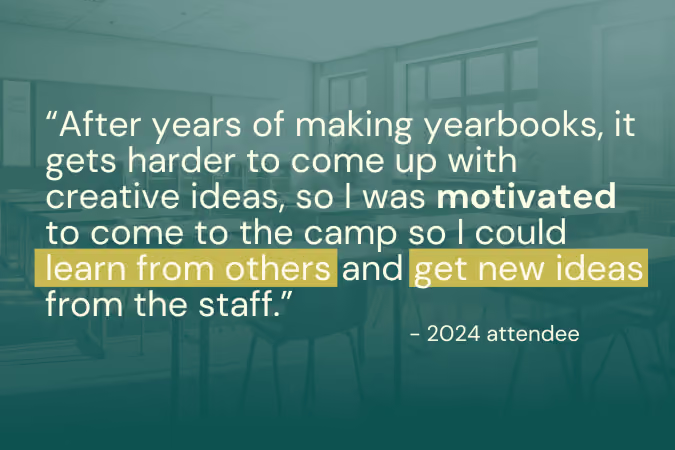
Event structure
Both days are three hours of large-group training and smaller breakouts designed for you to get all your questions answered.
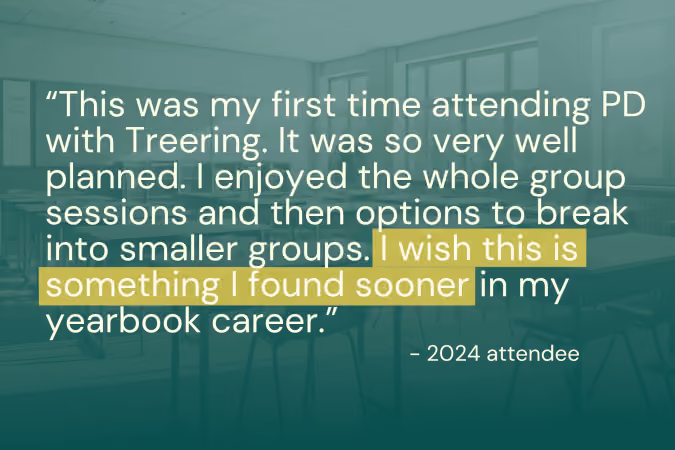
We'll provide the goal-setting worksheets, ladders, idea decks, and resources because we want you to finish Camp Yearbook with your first six weeks of yearbooking planned.
Based on your feedback, Camp Yearbook’s sessions are even more specialized:
- Getting Rooted: designed for yearbook creators with fewer than three years with Treering, this session is focused on time-saving tips, design basics, what to do in class, and all the must-know info to create and market your yearbook.
- Branching Out: for experienced advisers looking to level up their yearbook design or classroom pedagogy, this session is all about intermediate and advanced features such as creating styles, adding content to portrait pages, yearbook staff structure, and problem-solving.
Register via the Yearbook Club webinars page.
Treering mentors
All attendees will be in a small group led by a Treering staff member who served—or currently serves—as a yearbook adviser. In groups specific to school style and yearbook team structure, you can ask questions about grading, crowdsourcing, club structure, page count, and whatever else you need answered. (Your camp counselors aren't Treering life coaches, but close.)
Grow together
Breakout groups for parent volunteers, solo yearbook coordinators, educators, and club leaders mean you get meaningful support and specific-to-you resources.
Register NOW for Camp Yearbook 2025
Camp Yearbook 2025 FAQs
Your questions deserve answers!
How is Camp Yearbook different from Treering Live (TRL)?
TRL is Treering’s flagship event. During National Yearbook Week, TRL will have all the design training, coveted prizes, and organization inspiration yearbook advisers have come to expect. We look forward to it as much as you do!
Camp Yearbook is a summer PD program for yearbook coordinators and advisers who want to get more from their program through professional mentoring and collaborative idea-sharing. It’s a cameras-on, all-in yearbook planning experience.
How do I know which session to attend?
Camp Yearbook is structured differently this year: based on your feedback, we have the yearbook overview to support newer advisers and a second session to challenge the veterans.
BOTH have sneak peeks, specialized group training, and breakouts with Treering mentors.
What do I need to prepare for Camp Yearbook?
Make sure Zoom is up-to-date. This helps with breakout sessions and sound quality.
If possible, have previous copies of your yearbook and the 25-26 school calendar.
How much is it?
Free ninety free. Charging extra for support and training is not our thing.
Will I get CE/PD hours for attending?
Yes! Upon request, attendees will receive a certificate for six hours of yearbook production and classroom planning.
Can students attend?
Nope. Consider this a break… a working break.
Will Camp Yearbook be recorded?
Camp Yearbook is an interactive, experiential event. Recordings will not be made public.

How to structure your yearbook staff to fit your needs
For a lot of yearbook advisers, the question of which students end up on their yearbook staff is outside their control—even if they don’t want it to be.
And while you can do a lot to influence that question, it’s still the teacher’s equivalent to rolling of the dice. Which means you could spend a lot of time focused on building your dream yearbook staff, only to find out it can’t happen for a number of reasons outside your control.
When it comes to your yearbook program, then, don’t just ask, Who are the right students for my yearbook staff? Make sure you ask, What’s the best way to structure my yearbook staff for my students and my goals?, as well. Because that second question might set you and your yearbook staff for success in more ways than the first question ever could.
Focusing on the right structure for your yearbook staff will provide these advantages:
- Ensure the work your students do is aligned with your goals for the book, giving you a better chance of meeting your goals for the book.
- Ensure your students work in roles suitable to their experience and interests, giving them an opportunity to experience success early and learn a specific set of skills that interests them.
Inside this post, we’ll explore how to organize your yearbook staff for these advantages, plus the basic positions you’ll need to fill for a successful year. Read on.
Making your yearbook staff structure fit your needs
When organizing your yearbook staff, you have two choices for structure: organize your staff by responsibilities, or organize your staff by sections of the book.
Understanding the advantages (and disadvantages) of both types of yearbook staff structures will make picking the right one for your team easier. That being the case, let’s break them down.
Organizing by responsibility.
A more traditional structure for large yearbook staffs, this approach mimics the type of organizational hierarchy that students will find out in the real world. It provides each member of a staff the opportunity to work on a core responsibility, giving them better experience in a select area.
If you have a large returning group of students, this can be an easy organizational structure to implement. You’ll know your students’ strengths and interests, and you’ll be able to match them to roles that will be the best fit for them.
The advantage here is clear: Your students will become rockstars in their given roles. As the year progresses, so, too, will your students skills. The layouts and designs will get better, the photos will get better, the writing will get better. Hard to turn down, right?
There are, though, a couple drawbacks to organizing your staff in this fashion. For one, you need a decent sized yearbook staff—and that’s something not every yearbook adviser has. If you don’t have a class smaller than 12 students or so, you’ll likely be asking students to focus on multiple responsibilities.
For another, your job as a classroom manager will get a little hectic. Each responsibility on a yearbook staff—layout and design, copy, photography—could be taught as year-long, stand-alone courses. And if you’re students are diving deep on a specific responsibility, they’re likely to want the knowledge and challenges that come along with that deep dive. Figuring out how to teach three different subjects to three different sets of students for the entire year, then, can be challenging.
Organizing by sections of the book
When you’re running a lean and mean yearbook staff, everyone needs to get their hands dirty on everything. And that’s exactly what this organizational structure allows.
For small yearbook staffs and for staffs where you know little about your students’ strengths and interests, giving everyone the chance to design, write and photograph allows for more exploration, skill development, and overall interest in the book.
Organizing your yearbook staff by sections of the book will give everyone a specific task, keep them focused, and help ensure each section (if not the whole book) has a cohesive feel. Pretty much everyone we’ve ever talked yearbooks with would agree it’s nice when that happens.
The biggest downside to this organizational structure is actually it’s strength: Students will get experience with lots of different responsibilities, but not a lot of experience with a single responsibility. That’s a problem, if one of your goals as a yearbook adviser is to help students develop a specific skill.
For student-run yearbook staffs, either of these organizational structures will help you set up your yearbook staff for success.
Basic positions for any student-run yearbook staff
Just like there’s no single, perfect organizational structure for your yearbook staff, there’s no single, perfect set of roles. There are, though, a few roles that are good starting points for shaping your staff.
Here’s a breakdown of yearbook staff positions to consider:
Editor-in-chief
Because of the huge list of responsibilities that come with the title, nearly all editors-in-chief are returning students. Experience alone isn’t enough.
They’ll need all the tools: dedication, talent, leadership. Your editor-in-chief will be part of a small team that shapes the theme and coverage of the yearbook, and will help train new students, provide you with feedback on how the yearbook program is being run, and be part of the team that signs off on the book before it goes to print.
Editor
How you decide to structure your yearbook staff will impact how you define your editor roles. If you choose to organize your staff by responsibility, you’ll want an editor for each core area of the book: layout and design, writing, and photography. If you choose to organize your staff by sections of the book, you’ll want an editor for each section of the book.
Regardless, your editors will be lead-by-example types who are also comfortable providing guidance to staffers and younger students. They’ll serve as coaches, and make sure students stay on theme and within the style guide constraints you and the editor-in-chief put in place. They’ll keep their pages moving or make sure their responsibilities aren’t blocking pages from being finished on time. And they’ll copy edit and proof pages before submitting to you and the editor-in-chief for final sign off before submission.
Staffer
With few exceptions, the majority of your students will be staffers.
Their primary responsibilities should include choosing the right layout for the write spread, taking photos, covering events, and writing headlines, captions and stories. Because many of your staffers will be new to yearbook, your editors will need to help guide with them. They'll work together on developing story ideas, learning to tell stories through photos, and fitting layout schemes and page designs to content.
There's plenty of work to go around when it comes to yearbook (as you know); so, making sure you have a sizable staff is worthwhile—even if that means your editorial staff is a bit smaller.
Spending more time on structuring your yearbook staff to best fit your students and your goals will do more than help you create a better book; it’ll help you deliver a more rewarding experience for the students in your program.

7 yearbook templates to add to your google drive
Whether you just inherited the yearbook or are a seasoned adviser, the need to streamline processes is very real. We collaborated with middle and high school advisers, copy editors, marketing pros, and PTA officers to create free, editable yearbook templates to help you stay organized in your yearbook program.
Yearbook planning templates
Yearbook ladder template
Think of your ladder as your yearbook itinerary: it’s where you’re going to go and when. Using the school calendar and last year’s yearbook (or a few prior years’-worth), chart what will go on which spread.
We like to take our ladders and create a content calendar from there. Is the Turkey Trot scheduled for November? Well, so is Mrs. Jimenez who volunteered to take photos. Are track and swimming beginning in February? Then Jayne knows to contact the coaches in January.
Does pre-planning equate to inflexibility? No. It just means you’re ready for whatever comes your way.
Editable yearbook syllabus
From course objectives to parent acknowledgment, we have you covered. We’ll walk you through how to make it your own. And if you’re using Treering’s free yearbook curriculum, we’ve already aligned it to the national CTE standards.
Yearbook staff application
How do you separate the wheat from the chaff? An application helps. Staff recruitment might be the second-most important planning piece.
Yearbook grading templates
Spelling out exactly how your students will be assessed is a really important part of establishing expectations for the upcoming semester. A yearbook grading rubric is a perfect way for teachers to give students the grades they earned as well as the feedback they need to make a better yearbook. There’s no guesswork for them and your expectations are clear.
We made two rubrics for your yearbook class (heads up, they are in the same spreadsheet).
- Design rubric
You might be tempted to break the elements of design into a handful of granular rubrics (one for photography, another for layout: you get the picture, pun intended). While there’s nothing wrong with doing this, ensuring that the individual elements work in concert is as important as the quality of those elements in their own right. Your end product is a spread, therefore, it’s graded as such. - Copy rubric
By assessing the writing on each page, you achieve two things. First, you give your students a tangible grade for their hard work. Second, you can vet the copy on every page of the book, which gives you an idea as to how everything fits together tonally and whether the book as a whole adheres to your established style guide.
Yearbook marketing templates
Because everyone needs to see your yearbook team’s work, you need to get the word out. Marketing the yearbook is not just about sales: we have two templates below to help you get books in the hands of your school community and get more assistance in building an inclusive yearbook.
The only yearbook sales flyer you’ll need
Yes, you should have a table at registration, parent conferences, and any all-school event with laptops or iPads so parents can shop on the spot. Many parents have yearbook sales as part of their back-to-school to-do list.
For those who don’t, we’ve heard year after year: this is the greatest flyer. It assures buyers they are in the book. Pair this with custom yearbook pages that print only in your copy of the book, and you truly have the story of your year.
Social media calendar
To market your program, you have to—to (mis)quote Ariel, “Be where the people are.” Use our social calendar to market to parents on Facebook and Twitter and pump up students on Instagram and TikTok.
We hope these customizable templates help propel your program to the next level. Keep it simple and happy yearbooking!

An organized yearbook adviser: how to create a yearly calendar that works
Although you’ll likely take the month of June to relax and rejuvenate after a long year in the classroom, you’ll eventually want to start planning for next year’s yearbook. One of the tools that you should begin building during these months is a calendar that tracks all of the dates that affect your role as yearbook adviser throughout the year. From brainstorming to editorial due dates to when your committee members will be on vacation, this will become essential to planning your content.
Below, I’ll walk you through the most important things to include on your calendar, and how to utilize this important tool for success throughout the school year.
Start with a project timeline
Before you build your calendar, create a project timeline in a spreadsheet or Google Doc to plan your year. This allows you to first detail out each of the small projects and features that will become part of your publication. Once your timeline is complete, start adding those dates to your yearbook calendar, so that you’re always aware of what’s coming up across all of the projects your team is working on, with one glance.
Add important dates from the school calendar
As you’re thinking through the specific projects you’ll assign to your committee, start adding some of the more important school events to your calendar. This includes big fundraisers, the school art fair, sports events, dances, etc. Anything major that you want to cover in the pages of your publication should wind up on your calendar. This helps you plan out who will cover big events in advance, instead of leaving everything until the last minute.
You should also include any dates that are important to your committee, so that you can recognize what your team has going on as you’re assigning out content. This includes birthdays, vacations, and events that they’re participating in themselves, and therefore can’t cover. If three of your students are part of the school’s show choir, mark out their major performances. If one of your students is in the school play, make sure you note that on your calendar. This keeps all of your important date information in one centralized location. You can then use this information to plan out a month of committee activities in advance, including who will cover specific stories, knowing who has time to edit content, and more.
Once you’ve assigned out content, make sure you add the name of the responsible committee member to each of the deadlines in your calendar--or, better yet, 'invite' them to the event! Now they'll get an email reminder of this event, and can add it to their own calendar, so they know.
Include ideas
If you have an awesome activity or exercise that would be perfect for a specific committee meeting, add it to the “notes” section of your calendar appointment. This helps you stay organized, so that you’re not constantly searching for the sticky note with that great idea at the last minute, or worse, forgetting to use it all together. To add notes to your schedule in a Google calendar, just open up the appointment and add your idea to the “Description” section, then click “Save.”
To do this in your Outlook calendar, use the notes section at the bottom of your appointment. Then click “Save.”
A calendar for the yearbook adviser
As the yearbook adviser, you have the most dates and timelines to keep track of. Having this information in two locations--your calendar and your Google Doc timeline--makes your job easier. With your calendar, you can see exactly what’s happening for your publication on a particular day, week or month. Your timeline is more project-specific, so that you can track what’s been assigned out to your committee within each of your features, and help each committee member stay on track with their assignments. Both are important in their own way. By utilizing these two great tools together, you’re sure to be the most organized yearbook adviser on the block. And that translates to a much easier process for pulling your publication together!
Yearbook debriefing: a summer reflection
Now that your yearbook is a wrap and there’s nothing but sunshine ahead, it’s nice to take some time to reflect on your achievement. You may not want to spend all summer analyzing your yearbook (and who does?), but here are some quick "yearbook debriefing" tasks to help set yourself up for the new school year:
Bask in your success.
You did it! We hope you feel accomplished, proud, and gratified. First and foremost, this is the perfect time to round up your team to celebrate a job well done. Whether it’s a picnic in the park, a backyard super soaker battle, a trip to a local amusement park, or a pizza party at the pool, gathering everyone together is a great way to close this chapter (pun intended!).
A shared celebration is a morale boost, a “thank you,” and a fantastic way to show everyone how fun yearbooking is as you ride that wave of camaraderie into the upcoming year.
Solicit and evaluate feedback.
Whether utilizing an informal compilation of comments or a more formal survey or meeting, it’s helpful to evaluate the yearbook from the experience of your school community. This process can include everything from design and content to distribution and will be invaluable during your yearbook debriefing.
While we all would prefer kudos to criticism (here are some tips for dealing with complaints), your audience's honest feedback is crucial to improving and enhancing your yearbook program. Additionally, considering suggestions and allowing people to feel heard goes a long way toward creating a solid yearbook culture.
Analyze growth opportunities.
When doing your yearbook debriefing, looking for ways to refine your process is essential. Did you and your team encounter any challenges building or marketing your book? Can you enhance your collaboration process? Is there room for improvement in your workflow or organization? If your timeline proved challenging, have you considered a company that allows you to control your deadline?
Lay the fall foundation.
Remember to take a few minutes to set yourself up for fall success by verifying details with your publisher (e.g., logging in to confirm your account for next school year). And if you would like to spend some time planning for your next yearbook over the summer, here are three steps to kick off another fantastic year of capturing your school’s spirit. Here’s hoping you can do all your prep work poolside!

The one-stop yearbook rubric shop: grading tools for design & copywriting
A yearbook grading rubric is the perfect way for teachers to give students the grades they deserve and the feedback they need to make a better yearbook.
Heck, even if you’re working with a bunch of volunteers and want to formalize your process around feedback, a yearbook grading rubric is pretty much the way to go: it’s the most holistic way for you, the adviser, to provide critical feedback to your staff. For the younger students you’re working with, this will lead to growth; by their senior year, these kids will be ready to skip right over college and head straight to Sterling Cooper.
To help give your grading and feedback game a jump start, we’ve developed two free yearbook grading rubric templates that you can use for your class or club. One’s focused on yearbook copy, the other’s focused on yearbook design.
Before we jump into the templates themselves, though, we’ll break down why we’ve structured the rubrics the way we did and what you can gain from using them. So, read on.
Anatomy of a yearbook rubric
If you’re a teacher, you’re probably familiar with rubrics. (In fact, if you’re a teacher who uses rubrics, you’re probably more familiar with them than we are; you’re also probably able to skip this section.)
If you don’t know rubrics, though, this section here is a short crash-course for you. I’ll be helpful for understanding the templates we’ve put together for you.
Generally speaking (and specifically speaking in terms of our yearbook rubric templates), a rubric consists of three core areas: Scale, criterion, and performance level descriptions. Let’s break each of them down.
Scale
The scale represents the total number of points available in each category as well as the aggregated total (the final grade). Instead of just applying numerical values to each level of performance, pair each possible point on the scale with a narrative equivalent. For example, if the maximum number of points that can be earned in a given criterion is 4, then 4 = Exceeds Expectations. Conversely, in the same scenario, a 1 would be equivalent to “Does Not Meet Expectations.” You can play around with the actual wording in the scale you choose.
Criterion
Where the scale represents the number of points, criterion are the categories by which a piece of student work is assessed. They can be altered , as long as you can clearly distinguish between the levels of accomplishment on your chosen scale. For example, if we’re assessing a student’s ability to write a headline for a page, there should be a way to objectively measure what an “A” headline looks like versus what a “C” headline looks like. If there isn’t, reconsider including it as a criterion (perhaps it can be combined with one or more other facets of the page instead).
Performance Level Descriptions
A rubric is broken into quadrants. In the examples we’ve provided, the vertical headers represent the criterion and the horizontal headers represent the scale. The points of intersection are the Performance Level Descriptions, or PLDs. These are the characteristics that make up a grade. Try to use highly-specific language so that students are clear on what separates good work from work that will truly blow you away.
If your PLDs are fully fleshed out, we suggest giving your students your yearbook rubrics in advance. This gives them an idea of what they need to do in order to earn the grade of their choosing, which can positively impact the quality of their work.
Miscellany
Don’t forget to include:
- The student’s name
- Page numbers, or spread, being assessed
- Total points
With that quick review out of the way, let’s dive into the actual yearbook rubrics.
Yearbook rubric for grading copywriting
When it comes to yearbook copy, striking a balance between originality and uniformity is key: Too rigid and your yearbook won’t engage. Too much creativity expression, and it could end up looking like an anthology of erasure poems.
In the downloadable template we’ve created, the categories for assessing yearbook writing are: headlines and subheads, body copy, captions, adherence to style guide, and originality. Let’s take a closer look:
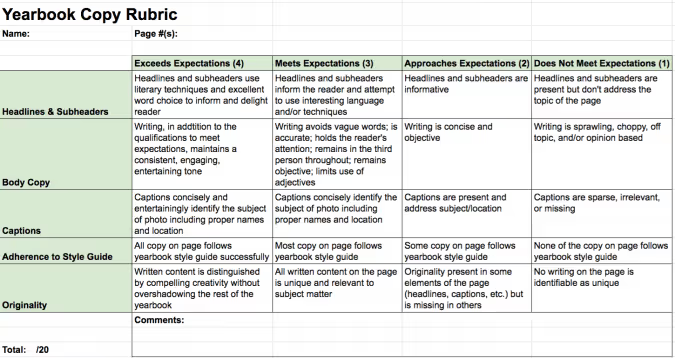
Get the Treering Yearbook Copy Grading Rubric here.
By assessing the writing on each page, you achieve two things. First, you give your students a tangible grade for their hard work. Second, you can vet the copy on every page of the book, which gives you an idea as to how everything fits together tonally and whether the book as a whole adheres to your established style guide.
Yearbook Rubric For Grading Design
While assessing writing is straightforward, design can feel subjective; we can’t all be trained art critics, creative directors or teachers, after all.
In the downloadable template we’ve created, the categories for assessing yearbook page design elements are: typography, color, photographs, adherence to style guide, and cohesiveness. Let’s take a closer look:
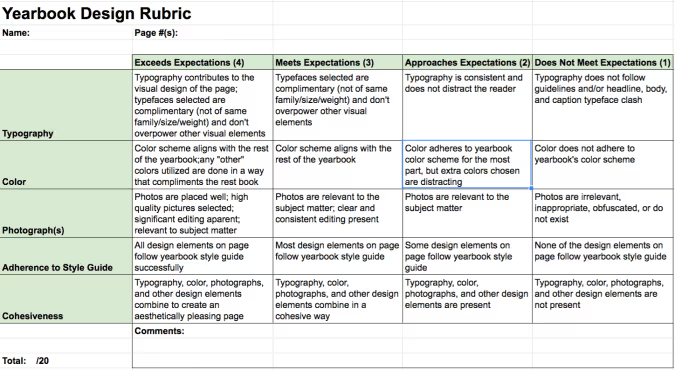
Get the Treering Yearbook Design Grading Rubric here.
As a result, you might be tempted to break the elements of design into a handful of granular rubrics (one for photography, another for layout: you get the picture). While there’s nothing wrong with doing this, developing a rubric that takes everything into account is a better approach.
Here’s why:
Ensuring that the individual elements work in concert is as important as the quality of those elements in their own right. For those for those classes where the principles of design are just beginning to be explored, this is important. Focus on the whole first, then the specifics later.
If you’re teaching a yearbook course and need to grade your staff on their work, rubrics are the perfect way to do it. If your staff is composed of after-school volunteers who won’t be graded on their work, rubrics like the one’s we’ve included above can be a fantastic way to provide actionable feedback and ensure high quality design and copy on every page.