.svg)

About Treering
Looking for inspiration, design tricks, how to make a great cover, promoting your yearbook and engaging your community?
Most recent
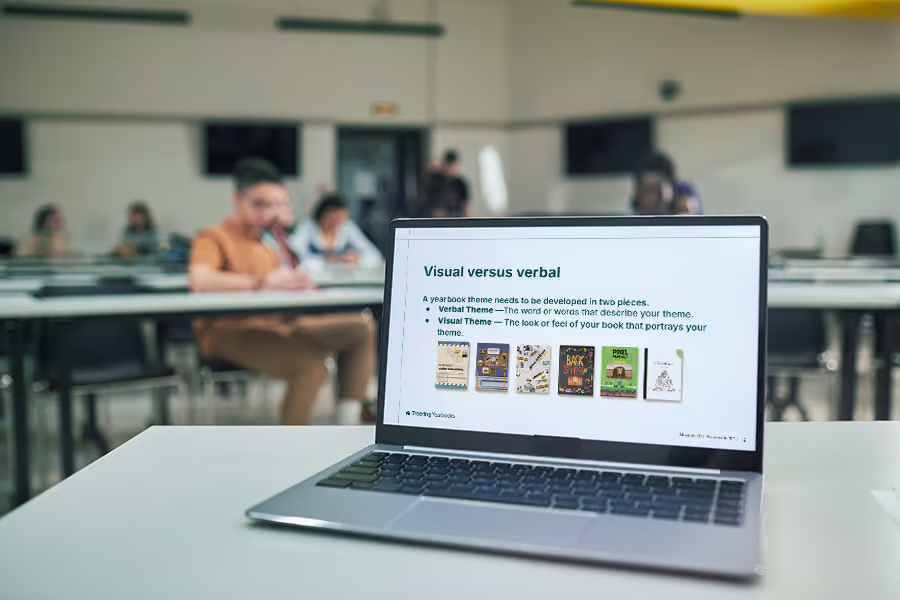
A yearbook curriculum you’ll love teaching
New for the 2025-2026 school year, Treering’s free yearbook curriculum has expanded. From a new adviser handbook to 40 standalone lessons, you can take a recess from yearbook planning stress and put effort into yearbook production.
What’s new?
Teachers updated Treering’s previous curriculum. Another group of teachers tested it. We can confidently say it is teacher-authored and teacher-approved.
Each of the eight student-facing modules has a pacing guide and instructional slides. The pacing guides give you an overview of each module’s five grab-and-go lessons, including teaching resources, should you choose to expand instructional time. If it’s your first time teaching yearbook, the pacing guide also breaks down terminology used and shows connections between lessons.
Each lesson also includes Google Slides with
- Learning target
- Bell ringer
- Interactive lesson with guided student practice
- Exit ticket
You do enough. However, Treering knows no two schools/classes/clubs are alike, so we made our free curriculum 100% editable.
Curriculum FAQs
What’s free?
Everything. Charging extra for resources and support isn’t our thing.
How can I use the curriculum if I only have a club?
The first lesson in each module is a standalone one designed to give you the foundation for teambuilding, theme, design, writing, photography, marketing, and proofing. We recommend club groups do these eight lessons throughout the year.
Is Treering’s curriculum only for new yearbook students?
No, it is for yearbook creators of all backgrounds.
If you have mixed abilities in your class, we suggest:
- Using leaders to teach the first lesson in each module
- Flipping instruction: ask students to go through the slides on their own and be prepared to do the practice session in class
- Use mentor pairs for hands-on activities
Do I have to use Treering to use your yearbook curriculum?
Some theme, design, marketing, and editing lessons involve Treering tools.
Get Treering’s free yearbook curriculum
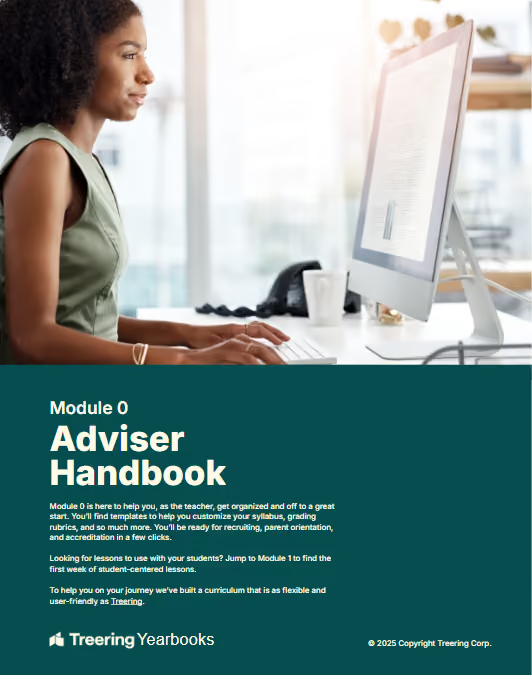
Module 0: adviser handbook
This handbook also contains all your yearbook prep templates: a student application, syllabus, grading rubrics, and staff manuals. It’s formatted vertically for printing.
Access the Adviser Handbook
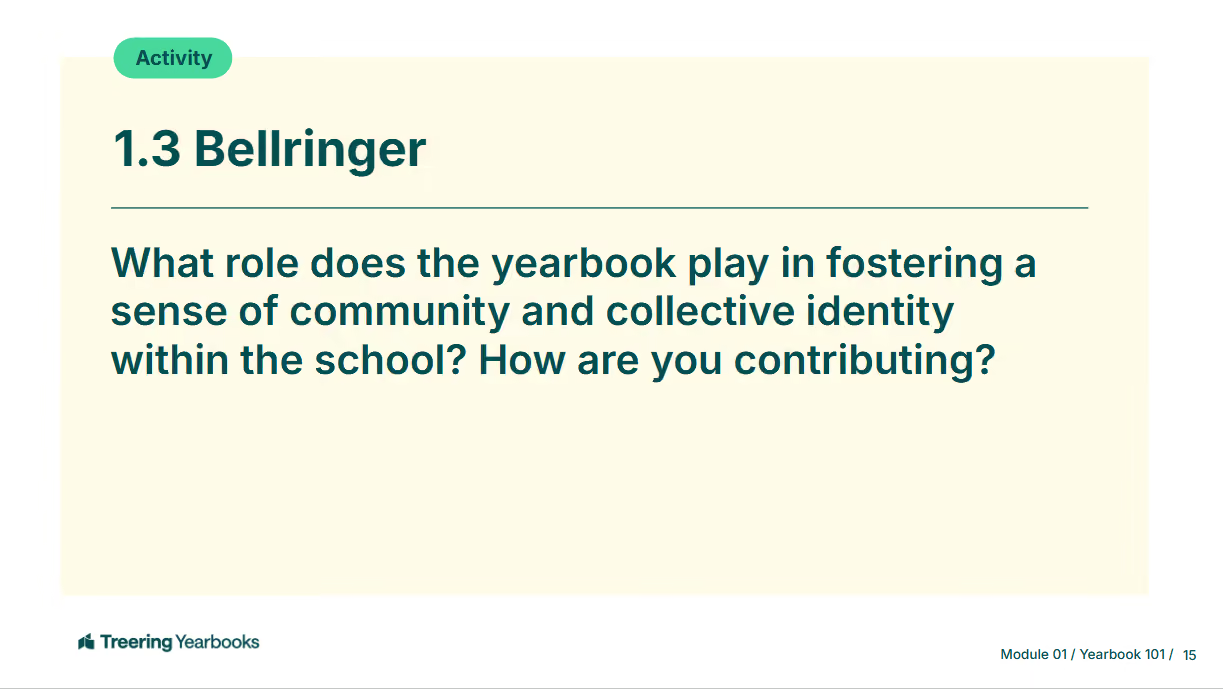
Module 1: yearbook 101
Building a yearbook culture on campus starts with your club or class. Each lesson in Module 1 focuses on team building, establishing clear expectations, and how students can use their individual strengths to build a unified product. This module builds a foundation for the following seven.
Module 1 learning targets:
- Understand the yearbook advisor’s expectations and the class structure
- Locate key information in the syllabus related to grading, expectations, deadlines, and responsibilities.
- Reflect on their personal strengths and interests related to team roles
- Identify and define core yearbook design terms by analyzing real spreads.
- Write specific, measurable, achievable, relevant, and time-bound (SMART) goals for the school year.
Access the Module 1 slides / Module 1 pacing guide
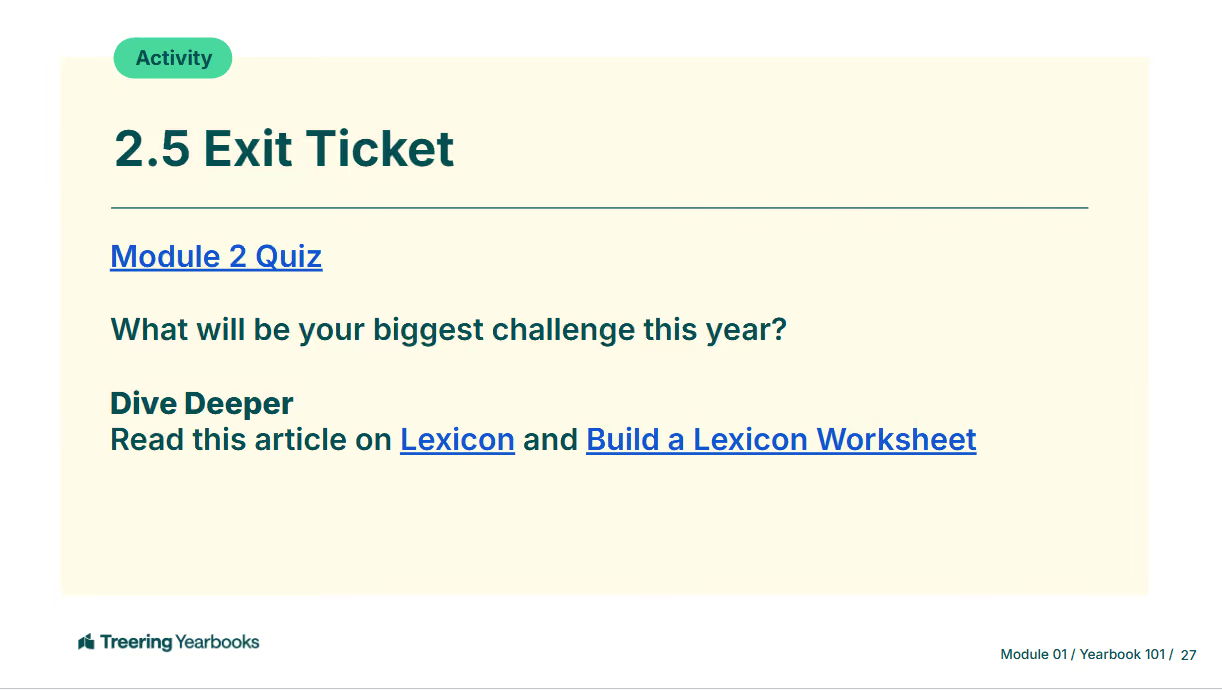
Module 2: kicking off the year(book)
Because yearbooks are part history book and part narrative, Module 2 helps students understand how and why the book they will create will stand the test of time. They will spend time creating a structure for their book and sharing their own stories through an “About Me” yearbook spread.
Module 2 learning targets
- Explain how yearbooks act as historical documents and cultural artifacts.
- Collaborate with peers to build a cohesive and well-organized ladder.
- Understand where and how to store content throughout the school year.
- Use yearbook vocabulary in context while giving and receiving peer feedback.
- Determine the central theme or message being communicated through advertisements.
Access the Module 2 slides / Module 2 pacing guide
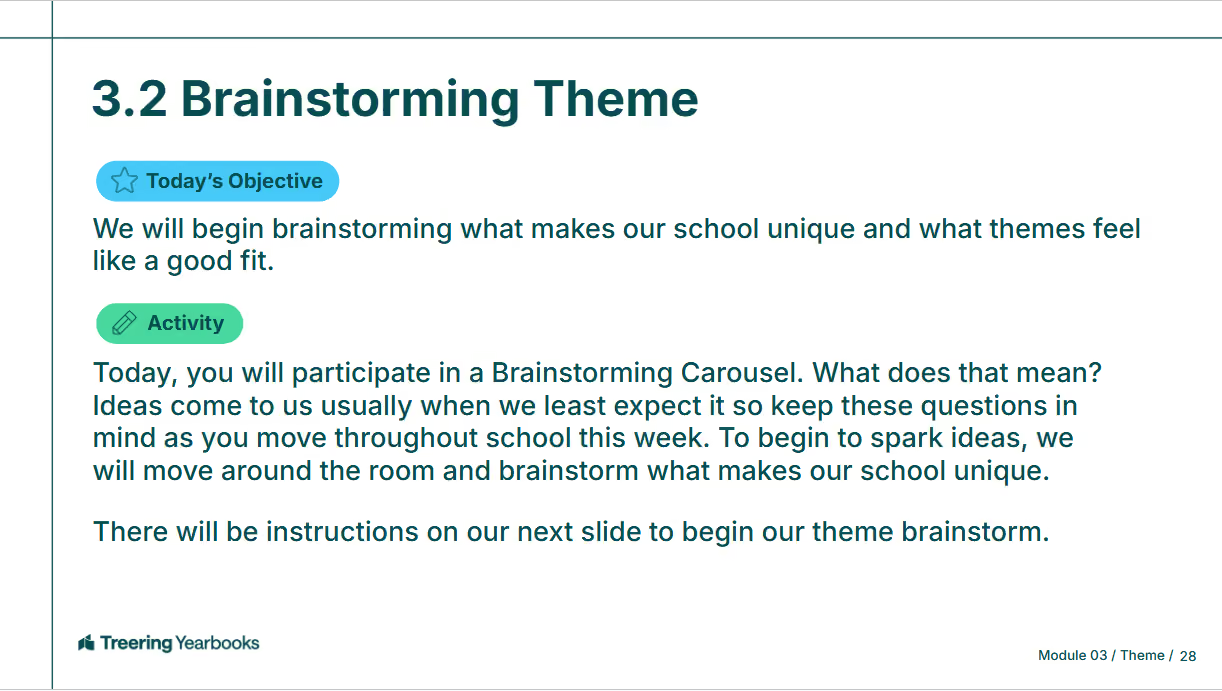
Module 3: theme
Theme is more than just a visual concept, and Module 3 will help you and your yearbook team create one that looks, sounds, and feels like the story of their year.
Module 3 learning targets
- Understand the purpose and components of a yearbook theme.
- Collaboratively brainstorm relevant and original theme ideas.
- Connect theme ideas to the student body and school year.
- Explore the tone, personality, and voice of themes in a creative way.
- Create a plan to apply the theme across content areas.
Access the Module 3 slides / Module 3 pacing guide
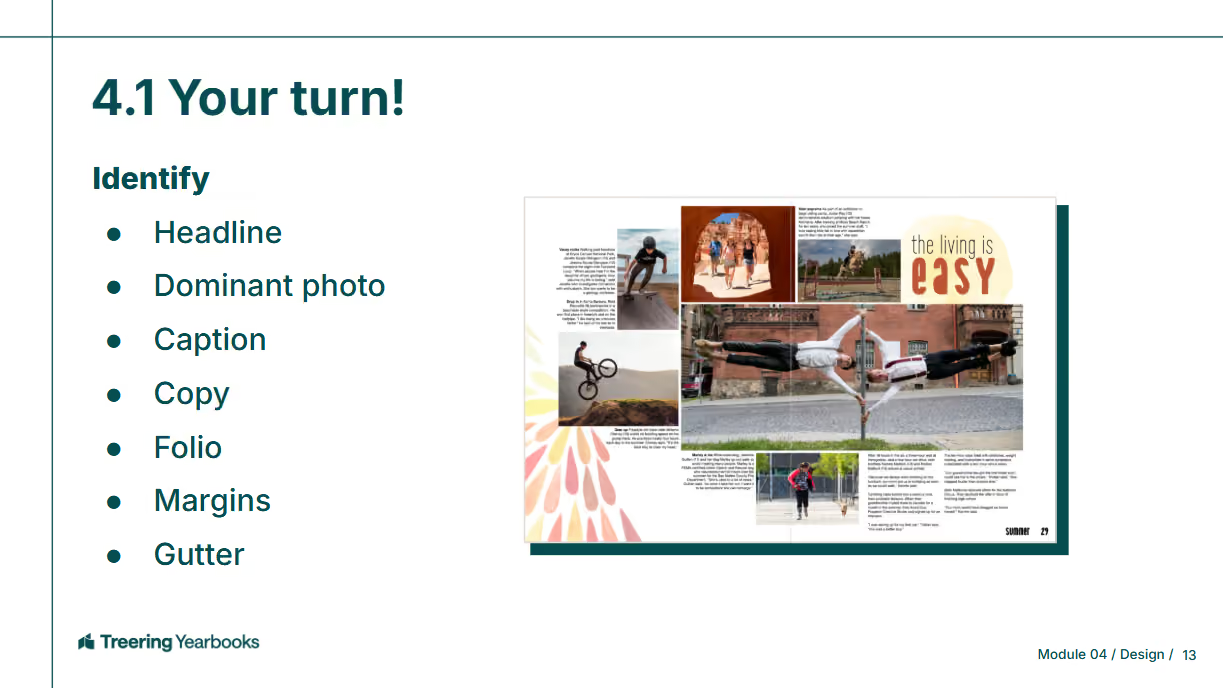
Module 4: design
Building upon the theme developed in Module 3, Module 4 is all about bringing that theme to life and learning how to design yearbook pages that guide the reader on a visual journey. Intentional design is the core of this module.
Module 4 learning targets
- Identify the building blocks of design.
- Use Treering’s design tools to create a yearbook spread.
- Create a color palette to express the yearbook theme’s tone and personality.
- Explain the impact of font family, size, weight, and contrast in yearbook design.
- Create text styles to support the visual theme.
- Identify and apply principles of design hierarchy by organizing visual elements (text, images, and white space) on a yearbook spread to guide the reader’s attention effectively and create visual flow.
Access the Module 4 slides / Module 4 pacing guide
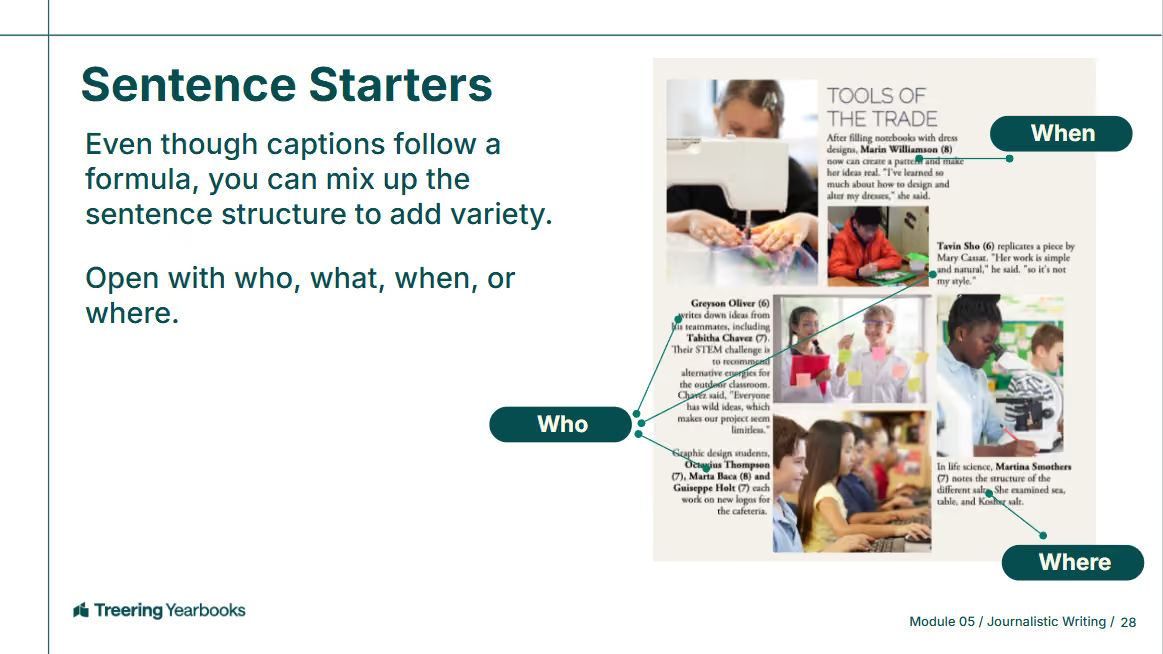
Module 5: writing
Many times, students tell us they don’t want to add copy to the yearbook because “no one reads it.” Captions, stories, and pull quotes add to the visual story. These voices provide the context, insider information, and even names for your photos.
They are worthy of pursuit.
Module 5 learning targets:
- Identify the different forms of captions: ident, summary, and expanded.
- Examine photographs to identify key information to craft summary and expanded captions.
- Define the five common topics.
- Structure an interview.
- Synthesize and interview by writing body copy and captions.
Access the Module 5 slides / Module 5 pacing guide
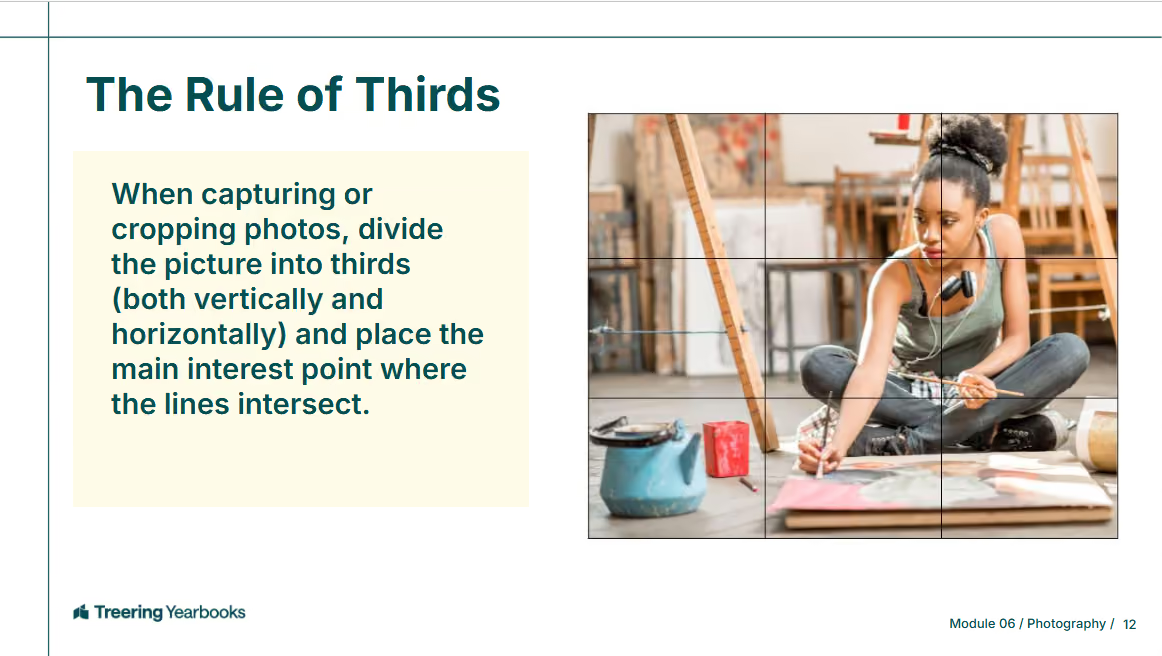
Module 6: photography
Transform an ordinary photo into an extraordinary visual story through hands-on activities and real-world applications. With your class, explore how angles and lighting and exposure settings can drastically alter a photo’s impact on a yearbook spread.
Module 6 learning targets:
- Identify the composition elements of a photo and evaluate.
- Photograph a subject using six angles.
- Compose an image using natural and artificial light sources.
- Recall the three parts of the exposure triangle and how they work together.
- Use Treering tools to present a photograph to its advantage in a layout.
Access the Module 6 slides / Module 6 pacing guide
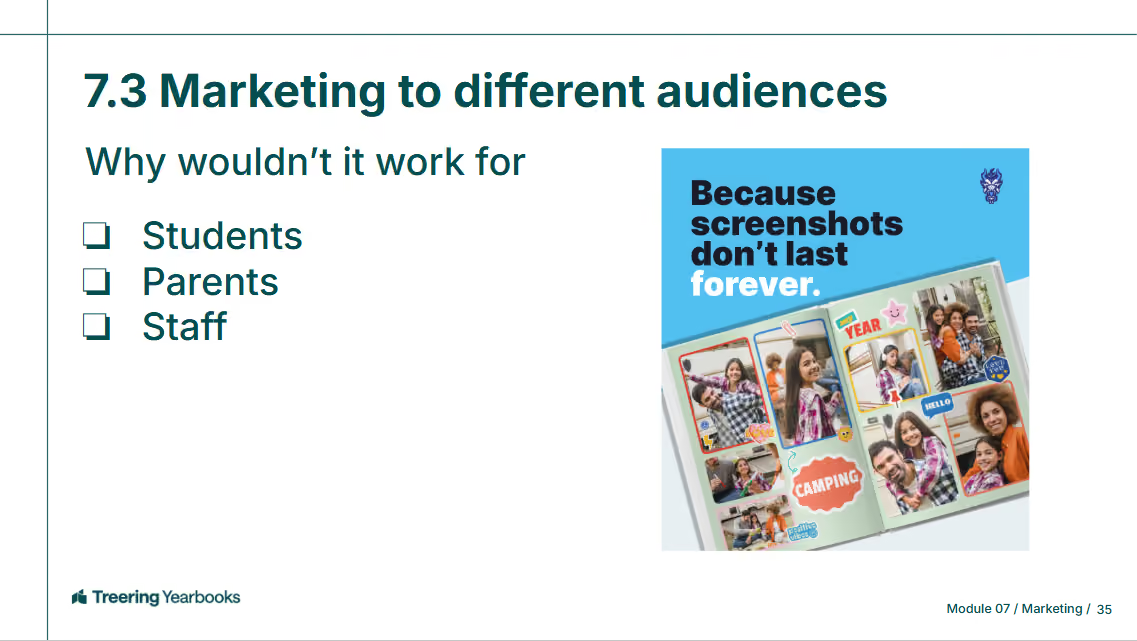
Module 7: marketing
Learning targets:
- Identify the components of a marketing campaign.
- Identify, classify, and rank yearbook value props.
- Differentiate marketing messaging based on audience.
- Initiate community participation in yearbook creation.
- Plan milestone celebrations for reaching yearbook creation goals.
Access the Module 7 slides / Module 7 pacing guide
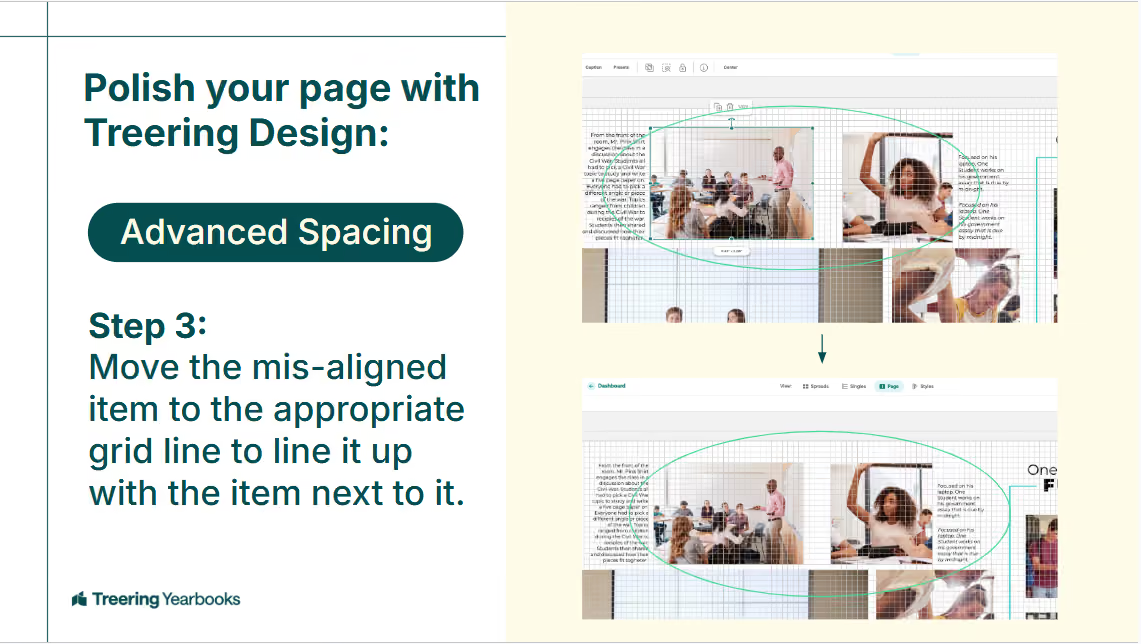
Module 8: proofing
Learning targets:
- Discuss and develop a consistent framework for all copy elements and community-submitted content.
- Review editing guidelines to help catch errors and maintain consistency by reviewing content early and often.
- Identify tools and methods to carefully proof both visual and written elements for accuracy and clarity.
- Use checklists and tools to ensure every page aligns with your yearbook’s design standards.
- Learn to use Treering’s editing tools to establish and maintain clean lines and a polished, professional look.
Access the Module 8 slides / Module 8 pacing guide
Happy New Year from Treering: 2025 was a record-breaking year of creativity
For sixteen years, you’ve trusted Treering to capture and print your school’s memories, and every December, we pause to reflect on what a privilege that truly is. What started as a simple idea (that yearbooks should be easier, more affordable, and more personal) has now grown into a movement powered by editors, teachers, parents, and students who care deeply about preserving their school stories.
This year, that movement reached new heights.

In 2025, Treering helped schools raise $2.9 million, printed our 10 millionth yearbook, and earned a place on the Inc. 5000 list of the fastest-growing companies. But behind every milestone is a more meaningful truth: editors and advisers across the country continue to create smarter, stronger, more student-centered yearbooks. We’re honored to support them every step of the way.
Below is a look back at the innovations, stories, and community moments that shaped Treering’s 16th year plus a peek into what’s coming next.
A creative community that keeps growing (and inspiring us)
Each year, the Treering community grows not only in size but in creativity and confidence. In 2025, our community passed 12 million members, representing schools in Australia, Canada, and the US. Behind every login is someone with a vision: the first-year adviser walking into a new school year, the senior editor rallying a team of ninth graders, the parent volunteer learning design terms for the very first time.
Helping schools raise a remarkable $2.9 million
Fundraising continues to be one of the biggest stress points for schools, and Treering schools love receiving a yearbook check instead of a yearbook bill. By choosing their fundraising amount and adding it to the total cost of the book, schools raised $2.9 million in 2025.
Instead of paying a yearbook invoice, schools are putting real dollars back into their budgets, funding what matters most: field trips, clubs, student journalism programs, arts initiatives, athletic equipment, spirit events, classroom resources, and yearbooks for students in need.
A major milestone: Treering’s 10 millionth book
Some milestones call for a moment of awe — and this was one of them.
This winter, we printed Treering’s 10 millionth yearbook. That number represents millions of stories, academic achievements, halftime huddles, first days of school, senior dedications, hallway friendships, and portraits of students who will one day show the book to their own kids.
For us, it also represents innovation: we’re one of the only companies able to produce fully custom books, with custom pages for every student, in under three weeks. When every book is uniquely theirs, yearbooks celebrate students in a way that is meaningful for them.
How we supported editors this year
If we had to choose a theme for 2025, it would be editor empowerment. Every enhancement we built this year was designed to support the people who power the book, especially advisers and student editors who juggle deadlines, clubs, homework, coverage gaps, and the joyful yet chaotic reality of school life.
Your feedback, questions, wish lists, and creativity drive every improvement we make.
1. Faster, smoother, more confident onboarding
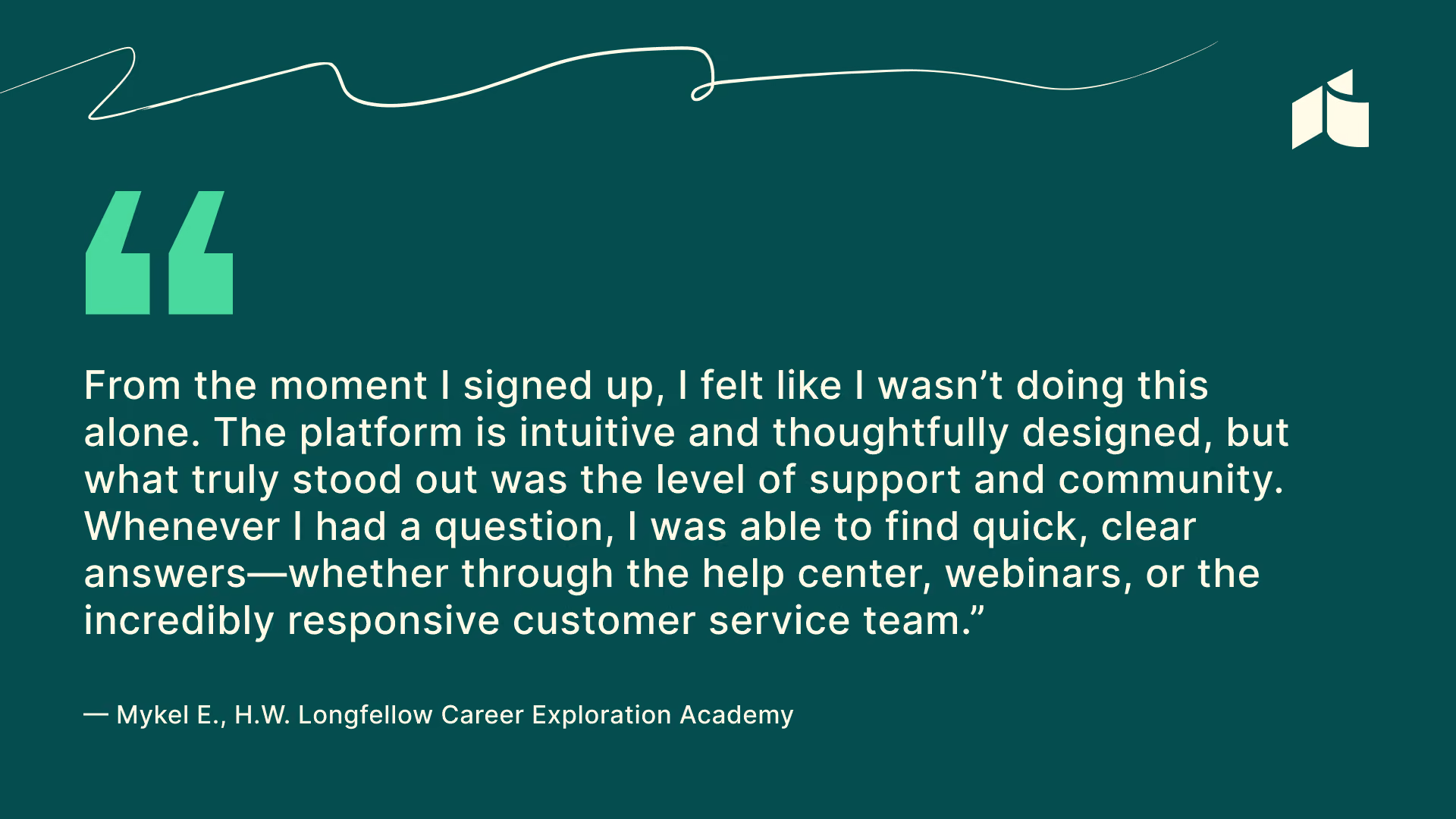
This year, we expanded the Treering onboarding experience. Whether you were learning the platform for the first time or returning after a few years away, Welcome Walkthrough calls with the Community Advocate Team and communications from L1FT helped create a clear roadmap for setting up the book, customizing pages, inviting editors, collecting photos, and aligning your timeline.
Many schools reported that this shifted their entire experience, turning what once felt intimidating into a confident first step.
2. A bigger, better year of contests
We heard your requests for contests that spotlight page design talent and also inspire creativity during key moments of the production cycle.
This year, Treering contests included:
- Inaugural cover contest
- Instagram photo contests
- Parent and editor design contests
- Seasonal challenges that aligned with design checkpoints via pop-up giveaways on Instagram and Facebook

3. Camp Yearbook: our annual two-day summer conference
Camp Yearbook launched in 2024 as a way to help advisers and editors start strong before school even started. Schools joined us for two days of themed workshops, live design sessions, team-building exercises, and planning challenges.
It quickly became one of our highest-rated programs of the year, and many schools left with their theme locked, their ladder built, and their editors trained before the first bell rang.
4. Updated yearbook curriculum
A team of former classroom teacher-slash-yearbook advisers and a group of current yearbook advisers completed a complete overhaul of Treering’s free yearbook curriculum. The updated curriculum is now grab-and-go. Instead of long, one-size-fits-all sessions that advisers have to divide and support, lessons are now broken into focused segments that can be taught in short class periods, advisory blocks, club meetings, or asynchronous settings.
Each module now includes five lessons with
- A clear objective based on Common Core and/or CTE Career Ready standards
- Bite-sized instruction that fits real bell schedules
- Bell ringers, student-facing slides, activities, and exit tickets
- Practical examples pulled directly from real Treering schools’ books
- Action steps students can apply immediately to their pages
This structure made it easier for advisers to meet students where they are, whether they’re first-time editors learning the basics or experienced leaders ready to push design and storytelling further.

5. More real-life examples shown across our socials
Editors asked for clearer examples of real pages created by real schools. This year, we overhauled our social strategy to prioritize:
- Regular showcases of elementary, middle, and high school spreads and cover ideas
- Behind-the-scenes process videos
- How to use Treering’s complete themes
- “Fix this spread” mini-tutorials on TikTok
- Real portraits and coverage examples to inspire editors
- Creating a private Facebook group for advisers to support and inspire one another
This shift helped new advisers see what’s possible. It also helped experienced teams level up their work.
Looking ahead: what to expect in 2026
As we enter year seventeen, we’re more committed than ever to supporting editors with tools, training, and community spaces that make yearbook creation easier:
Superior support as you design, market, and distribute your best yearbook yet
- Clear how-to guides for marketing your book
- Expanded training calendars
- New resources for student leadership teams and editing workflows
Yearbook Club workshops
Our virtual Yearbook Club is expanding to twice-monthly sessions, including:
- Design labs
- Editor leadership coaching
- Photo submission strategies
- Theme development deep dives
- Marketing walkthroughs
- Distribution planning in real time
Print ready to delivery: still three weeks or less
We remain committed to fast, predictable, high-quality printing.
Templates editors have asked for
Yearbook advisers met with the design team for three focus groups to evaluate this year’s crop of themes and predict design trends for 25-26. Based on early feedback, to support schools that want clean, easy, plug-and-go options, we are releasing ten theme packages in fall.
Treering theme packages will continue to be complete, coordinated yearbook design systems with a customizable cover, matching interior layouts, 100+ coordinating graphics, and a curated color palette. They’re designed to make yearbooking easier and faster.
Thank you for an amazing year
Thank you for another year of creativity, passion, and partnership. Whether you built your first book this year or your eleventh, whether you’re a student editor, a parent volunteer, a journalism adviser, or a school leader, your work matters, and we’re honored to support it.
Sixteen years in, and every new year feels like the most meaningful one yet. The number of books we’ve printed, the awards we’ve received, the millions raised matter. What matters most is the trust you place in us to help you preserve the moments that shape your school communities.
We wish you joy, rest, and inspiration this holiday season. We cannot wait to create with you in 2026.

Double your donations 2025
In honor of the season of giving, Treering will match up to thirty yearbook donations per school account. From Tuesday, December 2, 2025 through Tuesday, December 31, 2025, one community book donation equals one Treering book donation. Editors can re-assign these books to teachers, promoting students, the principal, or students in need.
How the donation match works
- Enable the Book Donation option on the dashboard
- Let your campus community know 'tis the season to share the (yearbook) love
- Re-assign the yearbooks so recipients can customize or order non-custom books to hand out

This promotion ends at 11:59 pm PST on December 31, 2025. Matched yearbooks will automatically be added to your account by January 30, 2026.
The Fine Print
- Maximum of 30 donated books will be matched per Treering school
- Promotion ends at 11:59 pm PST on December 31, 2025
- Matched yearbooks will automatically be added to your account by January 30, 2026
- Donations may not be combined with any other promotions
- Donated yearbooks cannot exist on ship-to-home, invoiced, or PO orders; credit card or PayPal orders only
- Ordering donation books will not be available for After Deadline Orders
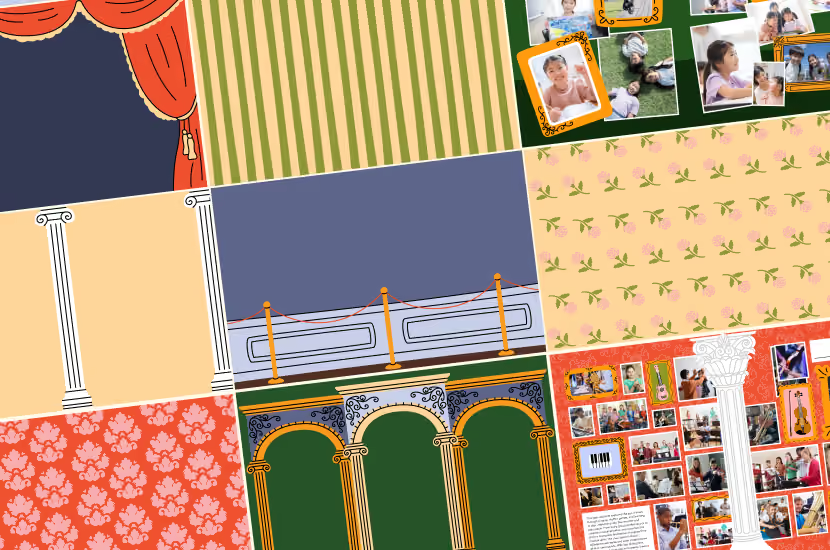
Turning feedback into yearbook theme magic
People often ask about the process behind creating yearbook themes—how we come up with ideas, what inspires the designs, and what steps go into making them both creative and versatile. To help answer those questions, I’ve gathered the most common ones I hear, along with insights into how we approach theme development.
– Allison Vecchio, Design Director
– Ashlyn Wong, Associate Graphic Designer
Q: What’s the first step you take when creating a theme for a yearbook?
Allison: The very first step is listening. We start with focus groups, inviting editors and advisers to react to early design inspiration and share what excites them. That feedback becomes ourcompass—it points us toward where to explore next. From there, the design team dives into inspiration.
Q: Where do you look for inspiration?
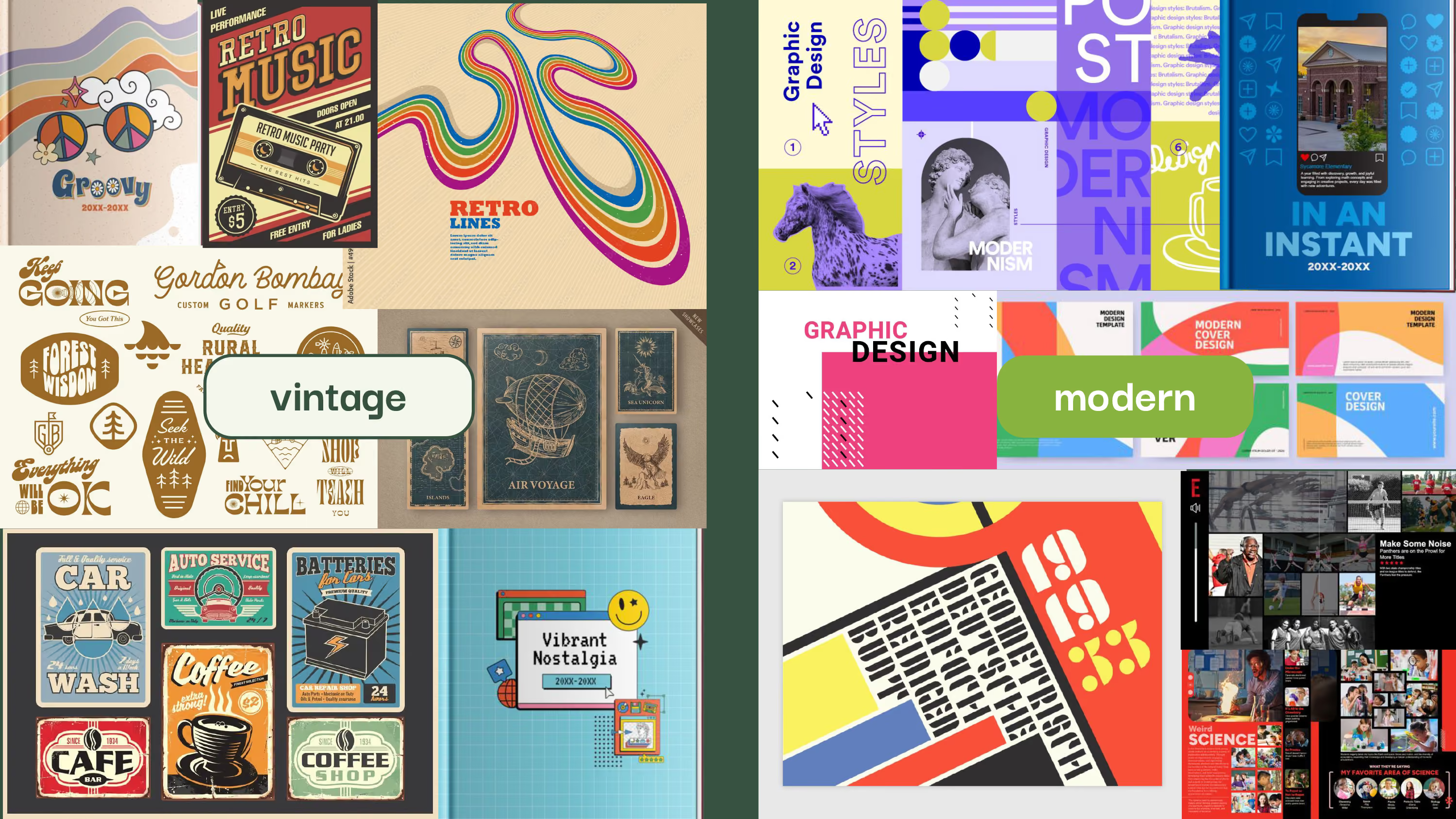
Allison: Inspiration comes from anywhere and everywhere—online platforms like Pinterest and Designspiration, opening credits in films and series, the type treatments on city signage, or the latest work from leading agencies like Pentagram. We also keep a close eye on current graphic design trends. Those pieces come together in a mood board, much like a collection of magazine tears, so we can see the direction starting to take shape. We cast a wide net at first, then refine and narrow down as we go.
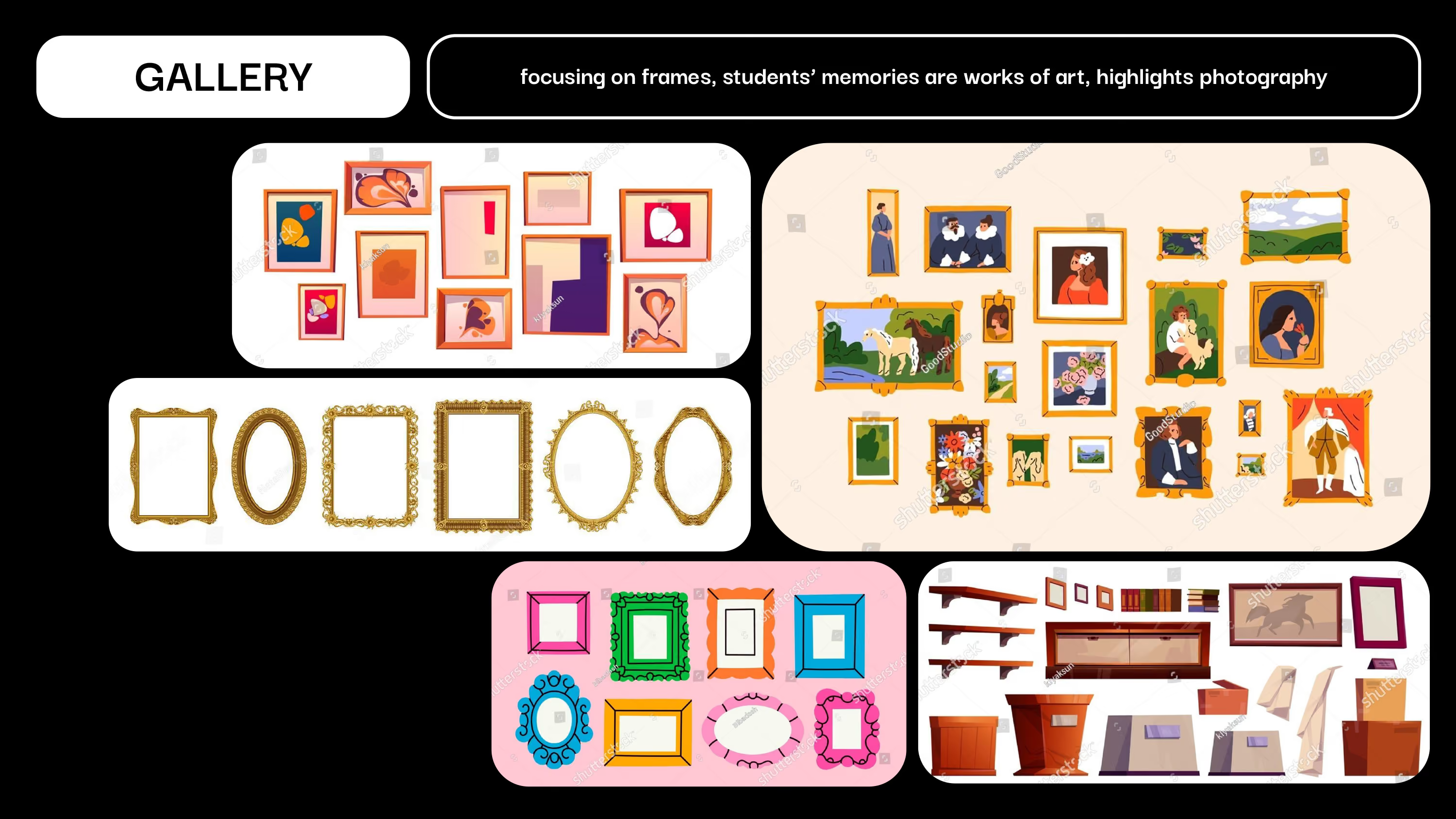
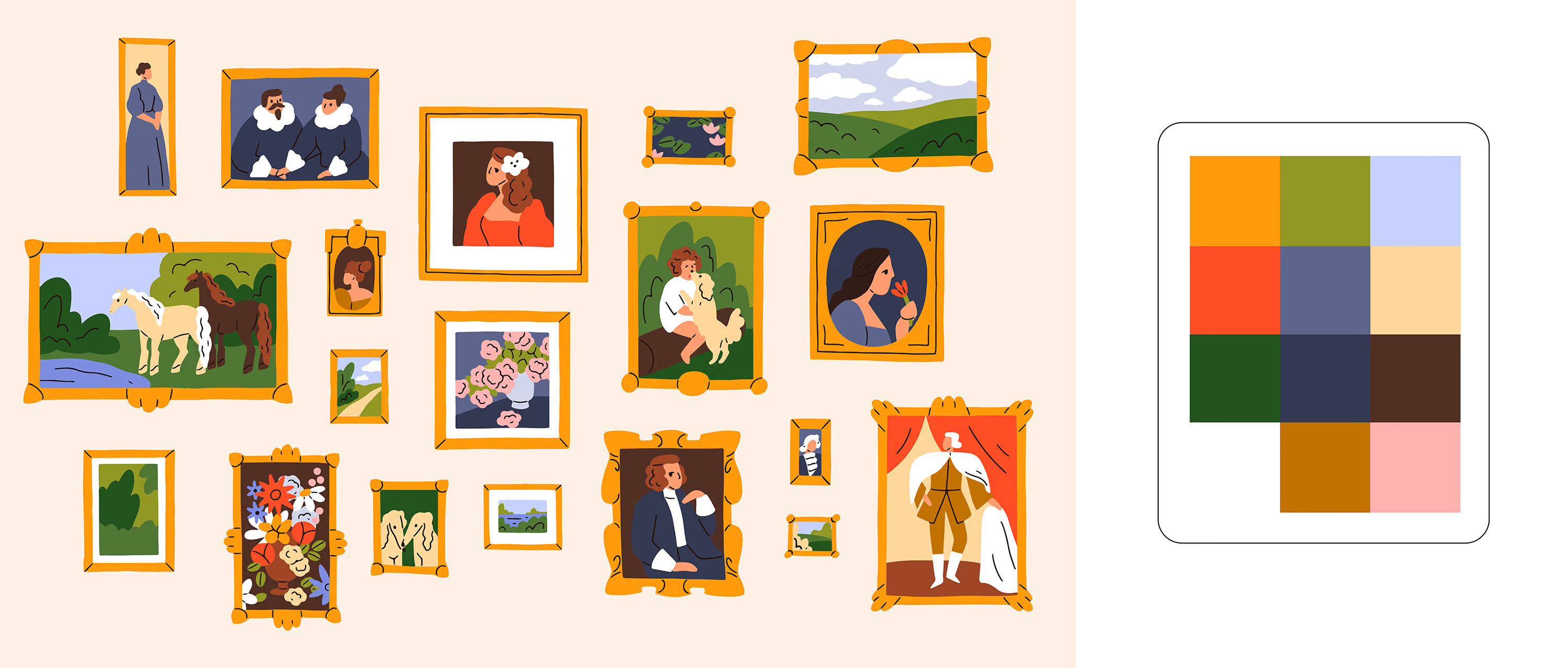
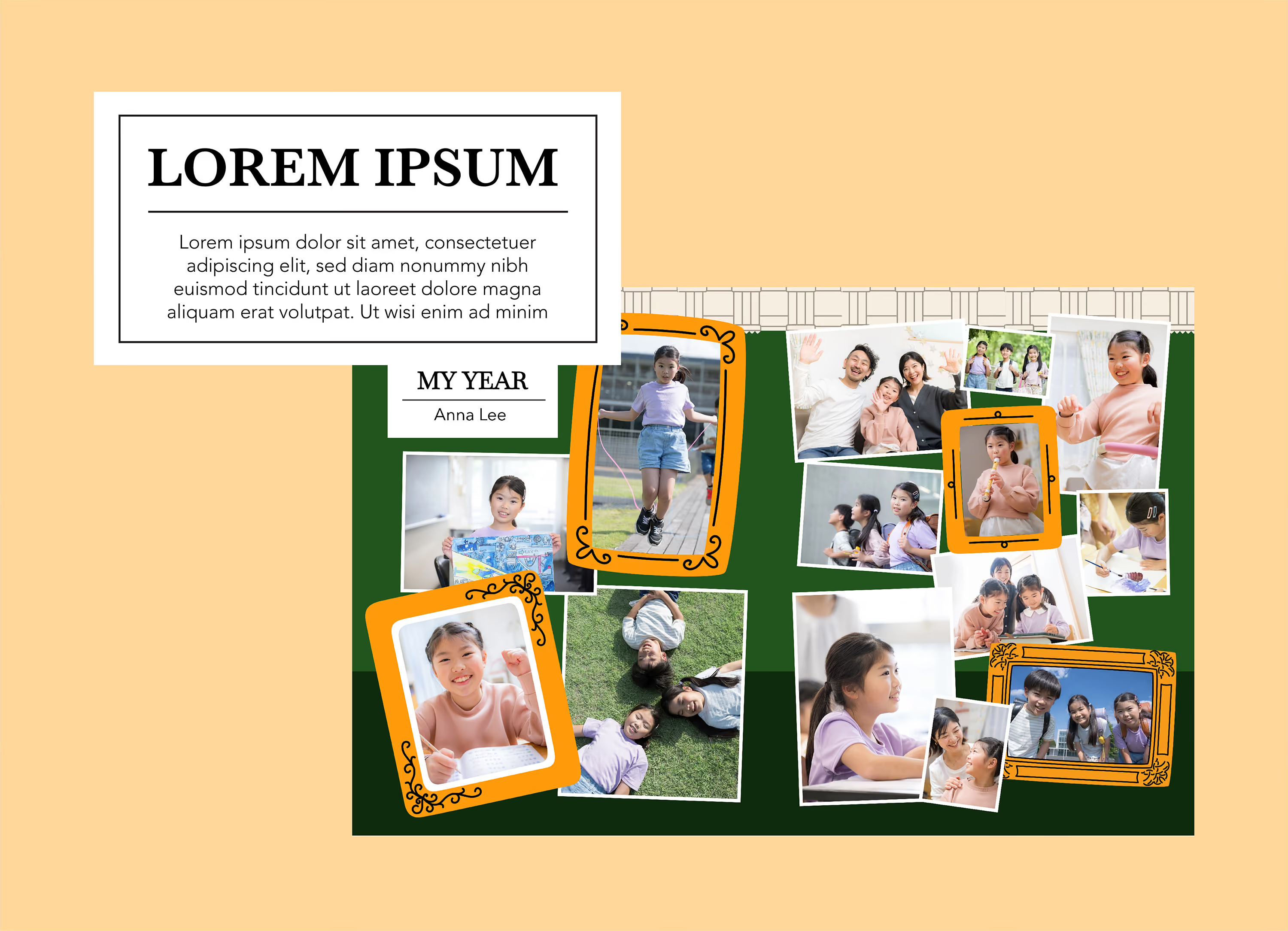
One of the biggest themes actually came directly from our users during a focus group. The Gallery theme idea originated in a focus group session where a few customers described looking through a yearbook as feeling like walking through a gallery.
And, the idea for Gallery was born!
My most recent spark came during a trip to Madrid, where I visited the Museo del Prado, and the Museo Reina Sofía. My creative mind expanded tenfold viewing works by the old masters whom I studied years ago, such as Caravaggio, El Greco, Fra Angelico, and Heironymus Bosch.
Q: How do you decide what to design?
Allison: Our process is customer-focused and data-driven. After running focus groups, we analyze the usage data in our application to see which themes are trending across schools. We combine that with customer feedback to understand why something resonates. Once we have that insight, the design team begins exploring themes that can work across different grade levels and schools.
Many questions come into play when we think about what to design. Does the theme make sense for all genders? Will it look too feminine, or too masculine? How can we achieve a healthy balance? Is this primarily for an elementary school, or could it be designed in a manner to apply to all grade levels?
Q: How do you choose your color palette and typography to match the theme?
Ashlyn: Color and typography decisions always begin with exploration and testing. We build out several palette and type combinations, then test them — dropping them into sample spreads, pairing them with backgrounds, and checking legibility. We look at how bold or neutral tones interact with student photography, and we make adjustments based on feedback from internal collaboration. It’s a cycle of experimenting, testing, and refining until the theme feels balanced and cohesive.
Q: How do you create the artwork?
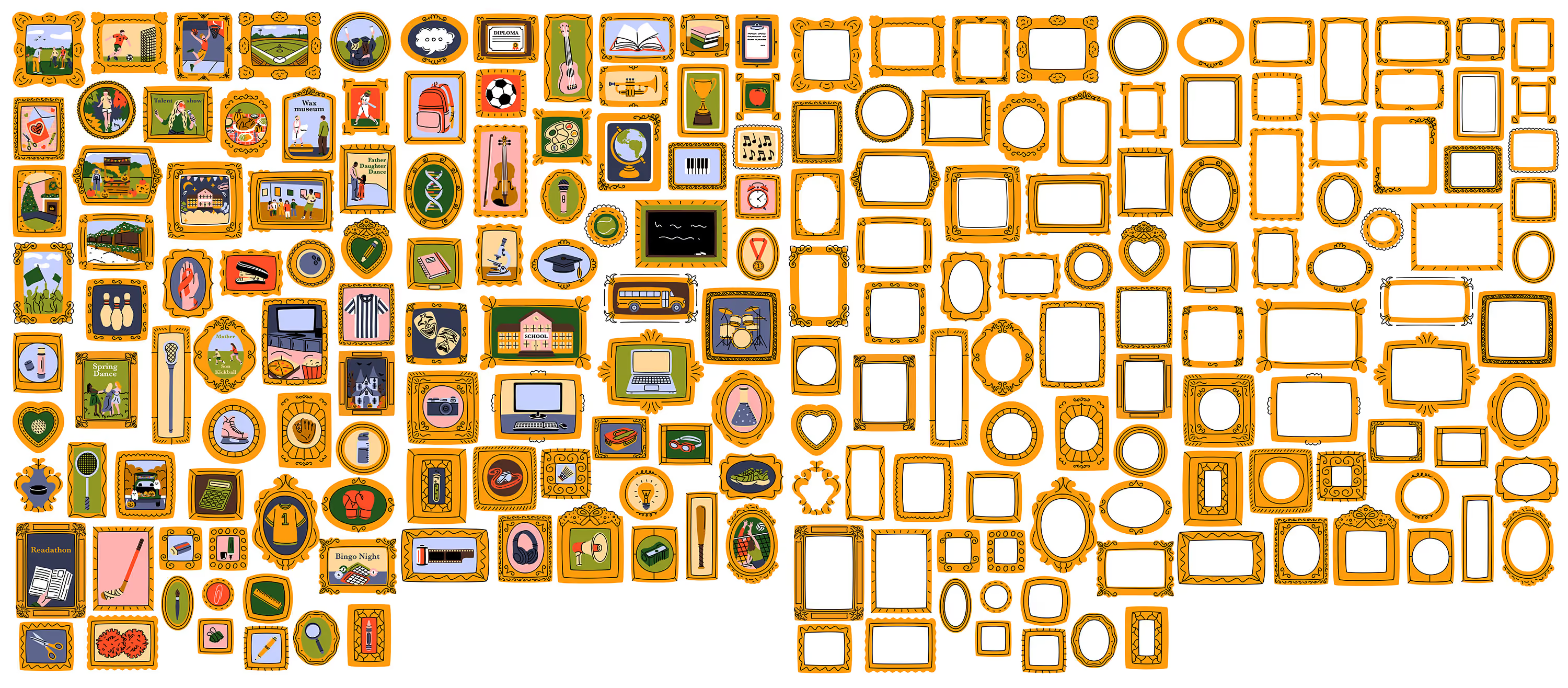
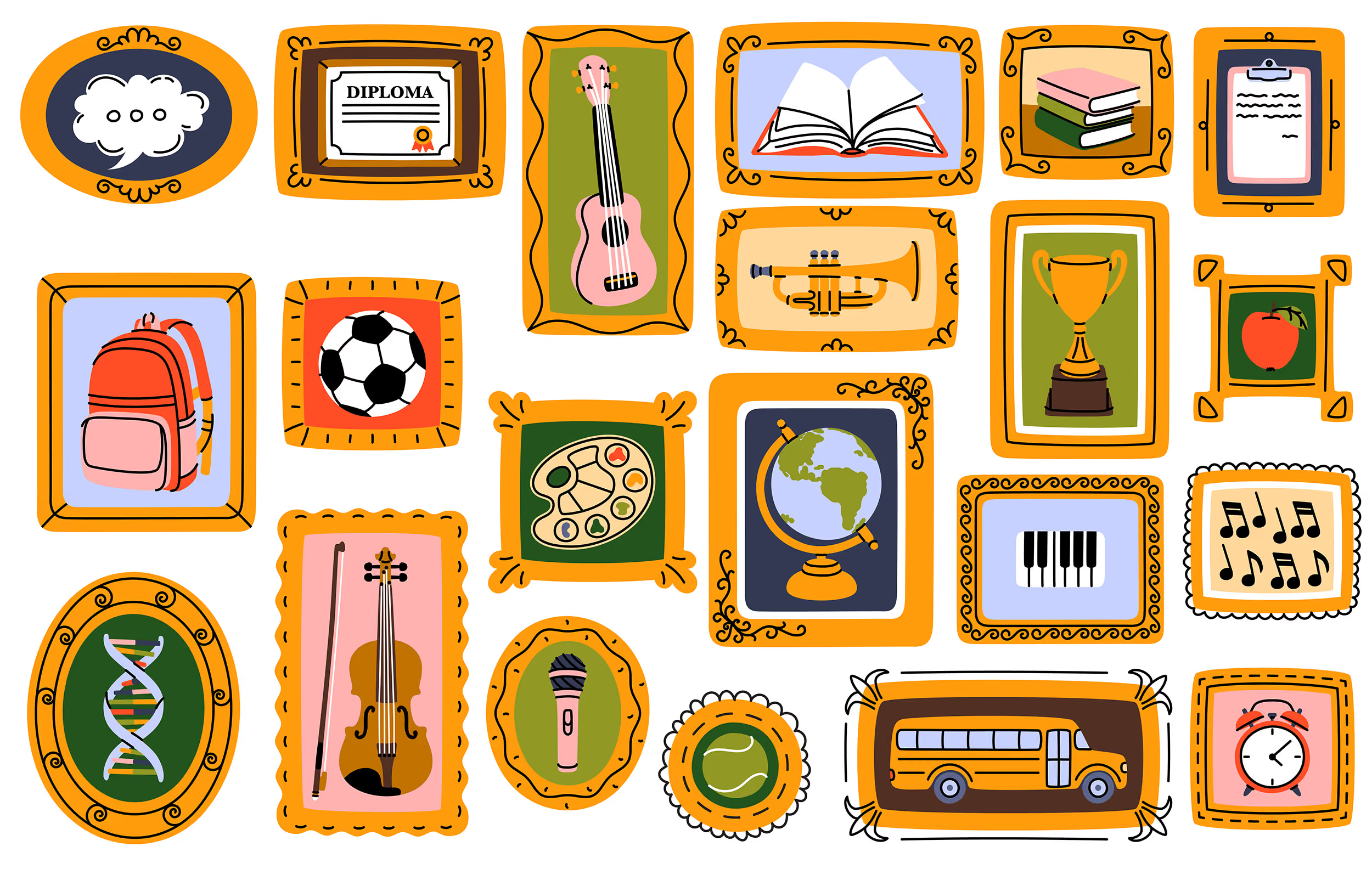
Allison: In our focus groups, customers told us they wanted the same collection of graphics across every theme. We set out to do this by working with illustrators to create bespoke artwork. Finding the right illustrator takes time. We review portfolios until we find one whose aesthetic aligns with the concept. For example, with the Gallery theme, we partnered with illustrator Ekaterina, whose warm, approachable style was a perfect fit. She created more than 100 illustrations that together gave the theme the feeling of walking through a gallery.
Q: Which past theme are you most proud of and why?
Ashlyn: The focus groups revealed that records and decades were popular, and we really wanted to give our users a full, cohesive theme that could synthesize these concepts. For the Record stands out because it challenged us to unify five distinct decades into one cohesive theme. Although we hit roadblocks and had to pivot several times, the final product was something fun, flexible, and unique. I’m proud of the way our team was able to not only fulfill our customers’ requests despite challenges, but problem-solve to create something revolutionary.
Allison: The themes that stand out most for me are the ones I see schools using again and again. Dream Big is one that always gives me the feels. It carries the charm of a children’s book, with richly illustrative backgrounds I created in Photoshop. Small details—a child holding a kite or soaring into the sky—symbolize limitless potential, inspiring students with the idea that they can achieve anything they set their minds to.
Talking hops and ops with Yearbook Hero Justin Warren
Treering Yearbook Heroes is a monthly feature focusing on yearbook tips and tricks.
Financial constraints in college led Yearbook Hero Justin Warren to a warehouse job where he unexpectedly began a career pathway in a print shop, eventually becoming the operations manager. Rooted in his love of learning, his passion for innovation, and challenging industry standards, he moved from the print floor to directing Treering Yearbooks’ domestic, coast-to-coast print network. Early this year, Justin worked with cross-functional teams to introduce tactile elements through the Treering Heritage Collection.
How do you respond when people tell you print is obsolete?
I’ve been told that my whole career. Something physical in someone’s hand is so valuable, even though it may sit on a shelf for a bit. It’s so much easier to pull it off the shelf to relive the memories in a beautiful, full-color book than it is to dig through your phone and find a photo you think you took seven years ago.
It’s morphed, definitely, and that’s the great thing about Treering: we’re innovators. We anticipate what the future brings while maintaining that physical connection to our memories.
Speaking of physical connection, what inspired the development of studio-designed, textured yearbook covers?
Touch is a huge component of child development. You remember something you can touch.
One of my biggest “brings” to the company was to bring a more tactile element to our printed yearbooks. It really does bring a new dynamic. Texture has always done super well in print and is difficult to implement. I said, "We're doing this," and collaborated with our print network to create a thick, glossy polymer that extends to the end of the cover and the spine, of which we are proud. The Heritage Collection showcases the possibilities that we have in front of us. All it takes is great development and some research before we execute.

People ask all the time how we manage to have a three-week turnaround. What makes it possible?
It takes a lot of strategy. It takes a lot of preparation. It takes a lot of commitment in order to turn a digital file into a printed file, and it really comes down efficiencies. Being digital, we reduce waste and errors. If there is a problem, we can catch it immediately. We don’t have to remake or rehang plates to do a full run.
We're not going to store any inventory or print extras. Print on demand allows us to personalize and print your custom yearbook as the order comes in. That takes time. Real people look at the yearbooks (it’s not all automated) to check for quality.
Our printing network is coast-to-coast, so we are geographically positioned to service our schools with shorter transit times and increased flexibility. We are striving to be both eco-friendly and economically friendly to pass on savings to schools.
What other innovations set Treering apart?
Personalization, it’s what our thing is. Personalizations changed the world. When I first heard about it, frankly wasn't sure how, on the production side, I was going to produce it. It brought challenges and through discussions and brainstorming, we came up with a product that we can then continue to enhance.
Portrait autoflow is another. Treering utilizes technology to solve an old school problem and be able to bring our little twist to it. Without revealing too much, this is just the beginning.
Rumor has it, that you’re also a master brewer.
My dad and I own it together. We both have full-time careers, but after work, we do sales calls and on the weekends we brew beer. No advertising. It's just literally dad and I all the way from ops to janitor. We have 30 recipes that we rotate we keep five or six going year-round. Living in the Pacific Northwest, IPAs really are the huge driver: really bitter, really floral. Those are the king of beers over here. So we have quite a few of those. We just pick and choose what we're feeling and what our customers want. I mean it's a wonderful experience and it's taught me a lot about smaller companies because I've lived in the corporate world for so long that I get to see the smaller craft of a business. It keeps me out of trouble.
Yearbook hero Nick Pasto engineers success
Treering Yearbook Heroes is a monthly feature focusing on yearbook tips and tricks.
Meet the man who created Treering's new color picker. Engineer Nick Pasto grew up among cherry, walnut, and apple growers in Stockton, CA. In addition to his swoon-worthy homemade lasagna (yes, Pasto makes pasta) inspired by his time studying cuisine with Italian grandmas, Nick led the teams which developed many of Treering's other editor favorites:
- Recognition ads
- Spell check
- Marking pages "done"
- Polls
- Language support for Arabic, Chinese, and Hebrew characters
- Alignment tools
- Package tracking improvements
(This is not an exhaustive list by any means.)
How did you move from the classroom to the backroom?
Back then, Treering’s design software was Flash-based, and that was going out. I saw a message that they were looking for developers to change it to HTML5. The opportunity spoke to me because there was a lot of overlap between my professional career and personal interests.
While earning my art education degree, I worked as a graphic designer and animator for my college. I’ve also been an indie game developer.
[Editor's note: Nick made Super Chibi Knight with his eight-year-old daughter who served as the voice actor for the main character; she's now 18.]
How does your background as a classroom teacher make you a better developer?
So many people who work at Treering are currently making yearbooks at their kids’ schools. I’m one of the only engineers who’s served as an adviser. It helps to have real-world experience with our product because I can see it from both sides.
The leadership at Treering looks for a breadth of experience to remain customer-focused and make the best product. The strength of our team is our diversity–our experiences help with ingenuity and problem-solving.
We build in a ton of automation and templates to make things less intimidating. You don’t have to know Photoshop, Illustrator, or InDesign to do desktop publishing for your yearbook design. Treering’s software is the bridge.
If you could tell our editors anything, what would it be?
The most impressive part of Treering as a user is the customer service.
Like many first-time advisers, I missed our deadline. The pressure of making sure kids had their books before summer was stressful. As a new teacher, it was too much on my plate.
I picked up the phone and just communicated with the CAT team and they helped me work it out by using my fundraiser to pay for expedited shipping. My students received their books on time, and I determined this is a company I am interested in learning more about. It was then I knew I wanted to work here.

How to make a yearbook with Treering
Making a yearbook with Treering's online software is as simple as drag and drop. Options such as portrait autoflow and auto layout make anyone look like a professional designer, and integrated professional tools, including a color picker and page designer, give you the flexibility to create from scratch.
Watch a brief software demo.
What editors love
Teachers, parents, and students enjoy using Treering's free online creation software to collaborate on their yearbooks. They also enjoy
- Flexible deadlines
- Three-week turnaround
- Custom pages
- No order minimums
- Ease of use
Why principals choose Treering
School administrators and the front office team appreciate
- No contracts
- Inclusive pricing: 100lb. paper, software, curriculum, bulk shipping to school, themes
- E-commerce tools that collect payment and show real-time order reports
- Fundraiser capabilities
- Parents can order after the deadline (no one ever misses out!)

Treering + sandy hook promise
This year marks one of changes for Treering. To go with our new look, we have a new philanthropic partnership. Treering Yearbooks is taking another step towards promoting inclusion through partnering with Sandy Hook Promise. By choosing Treering to print your school's yearbook, you not only have access to crowdsourcing options and custom pages, but your purchase is also contributing to the “Know the Signs” prevention programs and K-12 instruction on empathy and inclusion.
Treering Yearbook's custom pages changed the way students tell their own stories: by providing an opportunity for families to upload photos and create their own pages in their student's book, we accurately showcase each student's interests and contributions. Then, crowdsourcing options widened the narrative to include more angles and perspectives from the year.
The "Know the Signs" programs include:
- Start with hello: For students in grades K-12, Start With Hello teaches youth how to minimize social isolation, marginalization, and rejection by creating an inclusive community that reaches out and connects with at-risk individuals.
- Say something: For students in grades K-12, Say Something teaches youth to recognize warning signs, especially in social media, from individuals who may be a threat to themselves or others and Say Something to a trusted adult or report it using our Anonymous Reporting System.
- Say something anonymous reporting system (SS-ARS): For students in grades 6-12, SS-ARS enables youth to easily submit safe, anonymous safety concerns through a mobile app, website, or hotline number. SHP’s highly-trained, multilingual Crisis Counselors respond to tips 24/7/365, engaging youth in dialogue to assess and substantiate the tip, provide immediate crisis/suicide intervention, and triage the tip to local school and/or law enforcement response teams as needed.
- Students against violence everywhere (SAVE) promise clubs: These student-led clubs empower students in grades K-12 to champion violence prevention in their schools and communities.
Join us to create inclusive yearbooks while teaching compassion and looking out for one another–together, let’s create a culture change!
Can a yearbook company save lives? We're sure going to try!
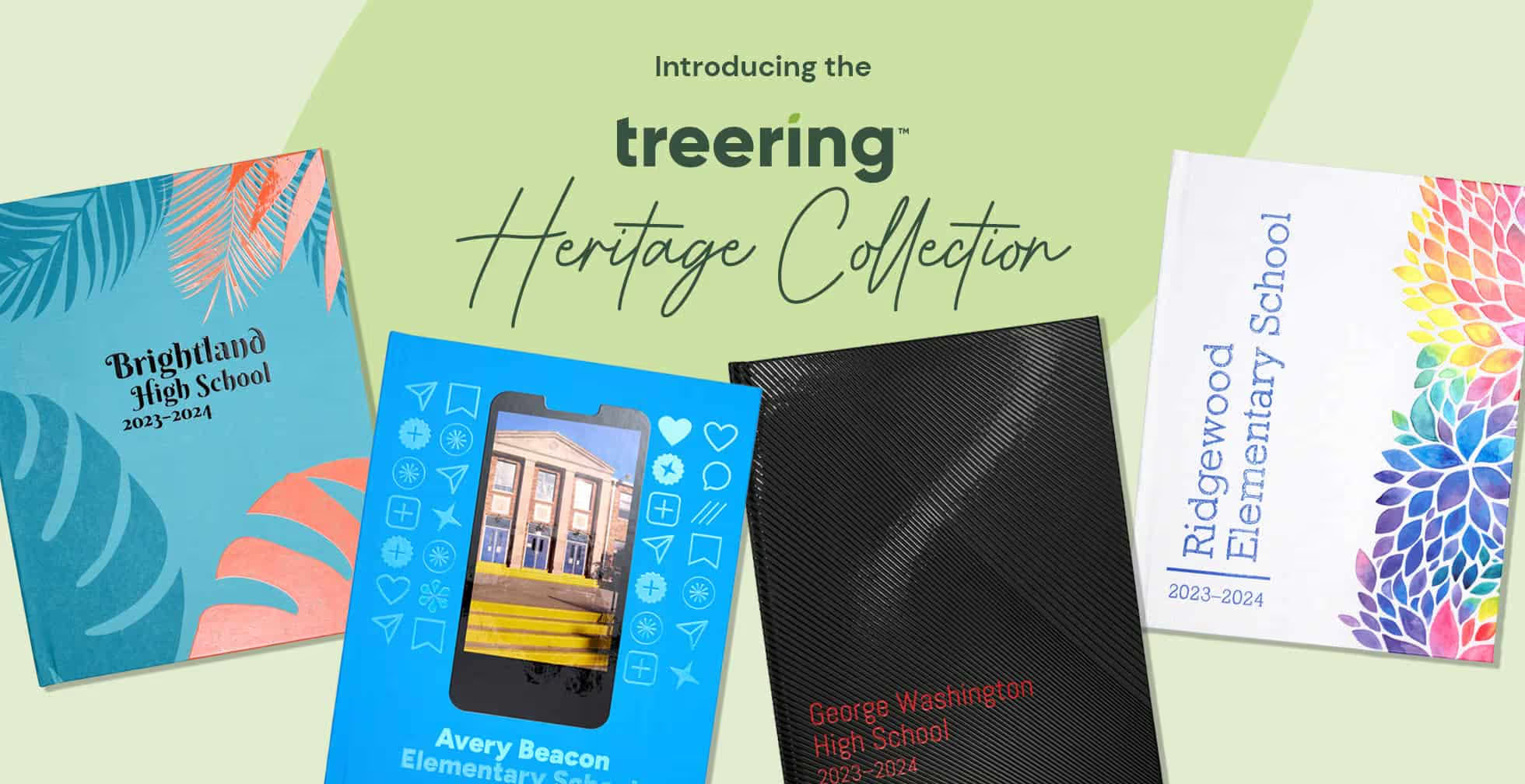
Introducing Treering's heritage collection
If there is one thing we’ve learned in our 15 years, it’s that memories are important. And just like our software, we’re continuously upgrading how we preserve them for you. We spent our summer vacation designing new archival cover options. The Treering Heritage Collection is comprised of six new bespoke designs to enclose your memories from cover to cover.
What’s in a name?
Often associated with strength, longevity, and wisdom, the mighty oak became the symbol of these studio designs. Like your stories, they are treasured.
Heritage oaks are highly resilient trees that can withstand harsh weather conditions—including droughts and storms—due to their deep root systems and sturdiness. Like your memories, they stand the test of time.
We find these oaks in urban, rural, and suburban areas alike. And because of their age and size, they process more carbon while serving as a home base for many animals. Like your school community, they affect their surroundings.
Heritage Collection designs
The Heritage Collection is available in 8.5 x 11 hard- and softcovers.

From the Treering design studio to your school
It’s a cliche for a reason: we truly judge books by their covers. That’s why Treering answered the question, “What if I could have a professional designer create my yearbook cover?” Eliminate the what-ifs: you can.
Each Heritage Cover is 3D in texture and covered in our signature gloss. This raised polymer coat acts as a shield, protecting your yearbook from scratches, tears, and fingerprints. Because of it, the ink colors are more vibrant, and your school story is more tangible. Pair your heirloom cover with our fully editable layouts to create a truly unique and long-lasting school treasure. It’s as easy as click, drag, drop, and done!
Kinesthetic memories
Yerd alert: we’re going to get deep on the science of touch.
Tactile experiences influence memories due to the intricate ways our sensory experiences are woven into the fabric of our memories and emotions, shaping our perception of the world around us and our sense of self. Handshakes and hugs readily come to mind. What about yearbooks?
The short answer: yes!
The scientific one: yes, mechanoreceptors (aka the specialized nerve endings in our skin) respond to specific touch sensations such as pressure, temperature, and texture. They send electrical signals through nerve fibers to the brain, particularly to the somatosensory cortex, which processes tactile information.
How to use a Heritage Cover in your yearbook
It's easy: from the Book Settings editor on your Dashboard, change your cover finish to Heritage. The full instructions are in the Help Center.
Remember, when we touch something, our brain keeps an imprint of it. The raised texture of a Heritage Yearbook Cover can sustain its impact.

New school year, new us
We’ve got something exciting to share: Treering just got a bold new look.
After months of collaboration, exploration, and a lot of thoughtful design work, we’re thrilled to unveil a refreshed brand identity, one that better reflects who we are today and where we’re headed.
Turning the page
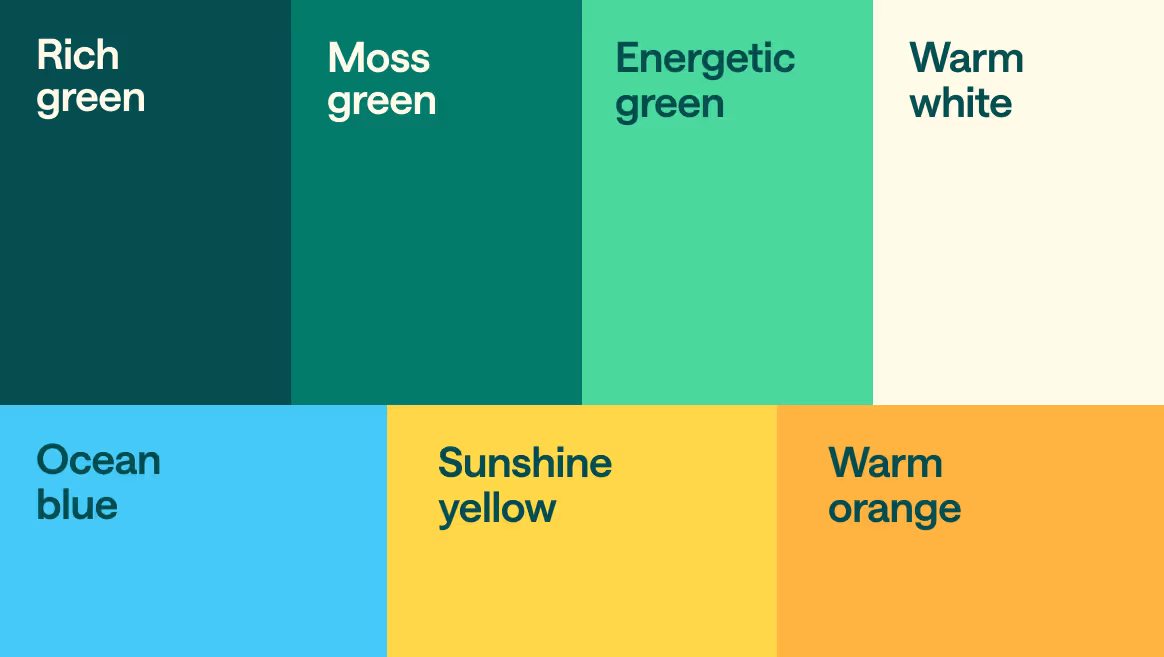
We’ve moved away from the softer, muted tones of the past and embraced a more vibrant, energetic palette that speaks to the creativity and joy at the heart of what we do.
Our new logo is a small thing that says a lot—it’s clean and modern, but it also holds meaning. The icon forms a “T” for Treering, doubles as an open book, and symbolizes our approachable, flexible platform. It’s our mission, captured in a single shape: helping people turn everyday moments into memories that last.

Why we did this
This wasn’t just about updating fonts and colors. We took a step back to reflect on who we are as a team, what makes Treering unique, and how we want to show up — for schools, parents, and now, for travel brands through Treering Memories.
After 16 years of innovating how memories are captured, shared, and preserved in the school space, we’re expanding our vision. Treering is evolving into a full Memory-as-a-Service platform, extending our technology and expertise beyond yearbooks to meet the growing demand for smart, personalized memory solutions across industries. With Treering Memories, we’re bringing the same intuitive experience, powerful AI, and just-in-time printing to the travel world by helping brands turn unforgettable trips into meaningful, lasting keepsakes.
The new visual identity balances the warmth of nostalgia with a fresh, modern sensibility. Our photography style is more candid and vibrant, our typography is clean and bold, and everything is built to work seamlessly—whether in a yearbook or in a photo memory book from a travel adventure.
What’s next
We’re heading into the school year with renewed energy, and now a look that matches it. But while our visuals have changed, what we care about hasn’t. We’re still the same team, focused on helping people capture and celebrate meaningful moments with care, creativity, and technology that makes it all easier. This year, we’re rolling out smarter tools to simplify yearbook creation, along with fresh new themes designed to give schools even more ways to personalize and elevate their books. It's all part of our ongoing commitment to making yearbooking easier, more intuitive, and more inspiring for everyone involved. We can’t wait to show you what’s next. Let’s make this school year unforgettable, together.

Making yearbooks more accessible with opendyslexic
Fonts can be the Marsha Brady of the yearbook world. Overshadowed by epic theme packages and color palettes, the power of typography cannot stay silent. (In fact, the correct font can be louder than your graphics.) With 44 new fonts in the Treering catalog, you can share your story with boldness or a touch of whimsy. It can be focused or zany, handwritten or high-tech.
“Typography, like other design elements, evolves over time. Keeping up with current trends ensures that your designs feel fresh, relevant, and aligned with contemporary aesthetics,” Treering’s Director of Design, Allison V. said. “Typography also strongly impacts how a message is conveyed and perceived. More importantly, we listen to our users and try to accommodate their needs and wants. We often receive requests for fonts and appreciate the input from you.”
One such request came in the form of a text.
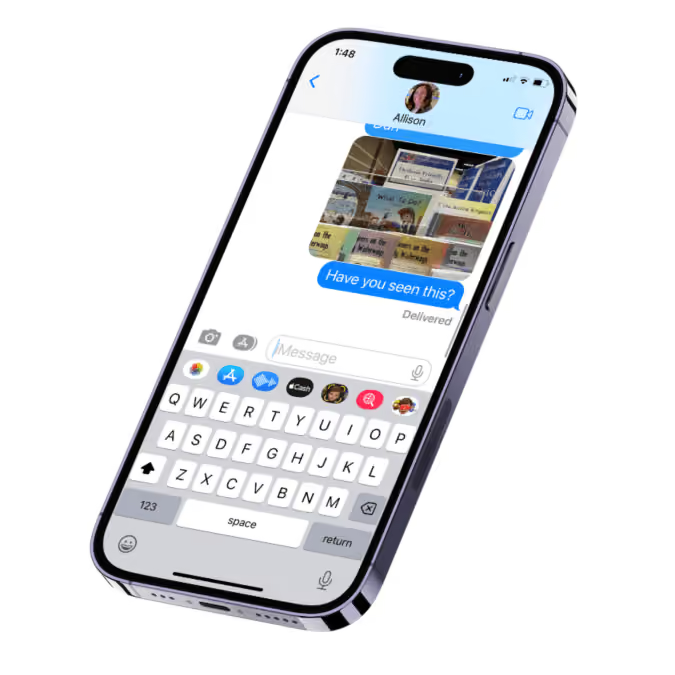
Meet OpenDyslexic
Since origin stories are a big deal in the superhero world, here is OpenDyslexic’s: app and game designer Abelardo “Abbie” Gonzalez developed the font in 2011 to help people with dyslexia improve their reading experience.
OpenDyslexic’s design addresses common challenges faced by many readers with dyslexia:
- Letter Weight: OpenDyslexic uses a slightly heavier letter weight, which helps the letters stand out more clearly on the page and reduces letter crowding. When designing for readers with dyslexia, avoid using italics or underlines because they cause letter crowding.
- Bottom Heavy: The base of the letters is slightly thicker, which provides better anchoring for letters. This can reduce the chances of them being flipped or reversed.
- Distinct Letter Shapes: The font uses distinct letter shapes to minimize letter confusion, such as avoiding mirror-image similarities between letters like "b" and "d."
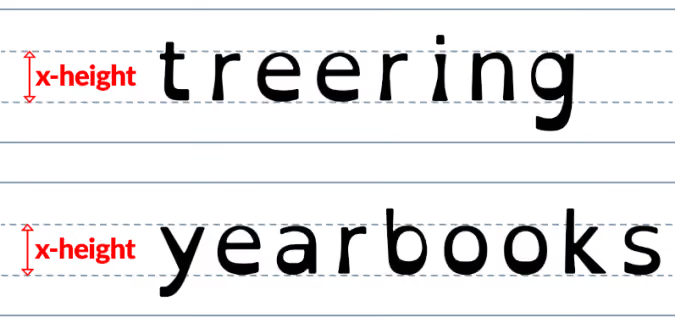
Because it’s an open-source font, it is freely available. You can even make it your web browser’s font.
How would you use OpenDyslexic in yearbook design?
The short answer: headlines and captions.
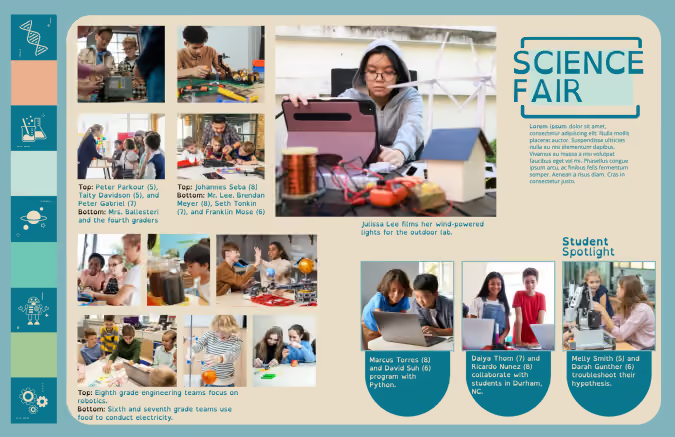
The British Dyslexia Association and the UX Movement established Dyslexia-Friendly Style Guides. Summed up, the following tips can increase the readability of your spreads:
- Modular design: use negative space to break up content into meaningful chunks
- Keep backgrounds to a single color, ideally cream or pastel peach, orange, yellow, and blue
- For text, ensure there is contrast between the background and words on your yearbook spread
- Left align text
- Use font size 12-14 pt.
As with anything, it is essential to note that while dyslexia-friendly fonts and design can be beneficial for some individuals, there is no one-size-fits-all solution for all learners. If possible, seek stakeholders' feedback during the design process to identify potential improvements.

How flexible is your yearbook?
As the student rising to the call of leadership, the teacher who is a champion of her students, or the parent hero stepping in, you should have a say in your schedule. You can work out on-demand, watch TV on-demand, why not publish on-demand? Adhering to multiple deadlines while committing to book sales and page counts is impossible when you don't even know how many events will take place this year. At Treering, we believe that schools, parents, and students should be given the flexibility and freedom to build a yearbook without the stress of ANY commitments.
Flexible deadlines: finish your book when you're Ready
With Treering there's only one deadline: the day you want to finish your book. Three weeks from that day, your books will arrive to your students. Period. Want to change that date, no problem. The date can be moved at any time, to any date you need. The choice is yours.
Flexible distribution: ship your yearbooks to your school or directly to each student's home
We offer free sorting (alphabetical, by grade, by classroom) and free bulk shipping to the school. If you want more time to capture prom or graduation, you can have the books shipped directly to each student's home for a flat-rate shipping fee. It's your choice!
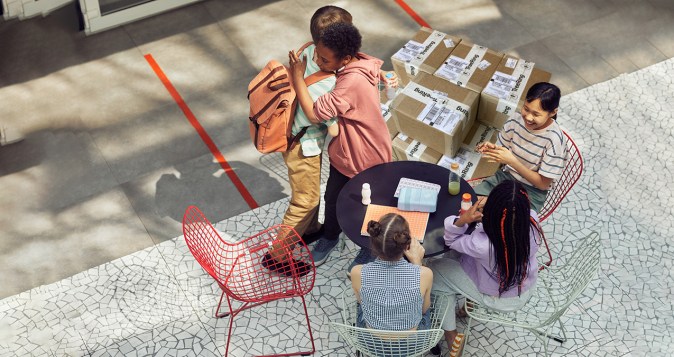
Flexible details: decrease (or increase) your pages
Should something change and you need to decrease your page count, we will let you do that anytime before you hit print ready! Need to cancel your school's book altogether (we hope not), you can do that without worrying about incurring any fees. Your school never pays us anything, and your parents only pay if they decide to buy a book.
No contracts and no minimums mean no worries and no stress.
Flexible collaboration: collect content from your school community
For the sake of inclusivity and to capture all aspects of school, it's important to get photos and help from your community. (Repeat after us: "I can't do it all!") Our shared folders and mobile app make it extremely easy to collect content from your school. By making it simple for everyone to submit photos, you're guaranteed to have everything you need to build a unique book this and every year.
Flexible Designing: thousands of innovative page ideas at your fingertips
Complete book looks, including layouts, fonts, graphics, and color palettes, are free for all Treering customers. Don't worry, they are flexible enough that you can make them even more to your liking. You can even upload your own spreads.