.svg)

Most popular




Subscribe to our blog
Most recent

How to write a yearbook story people will love to read
A good yearbook staff needs to know how to write a yearbook story, but that can be easier said than done. After all, writing something that people enjoy reading takes a lot of practice—even more than yearbook design and photography. And by the time you're done working with your students on all the other aspects of creating a yearbook, well, there's not a whole bunch of time left to spend practicing how to write a yearbook story.
That's why we wrote this post.
In it, you'll learn five easy-to-follow tips you and your yearbook staff can start using to improve all the copy in your yearbook, especially the copy that makes up your yearbook stories. We have pointers on improving headlines, writing ledes, finding your voice, and laying out your yearbook stories.
Before we get to those tips, though, we want to spend a minute on the big reason knowing how to write a yearbook story is important. And that's this: If you overlook your yearbook copy in favor of bold designs and strong photos, your yearbook is incomplete. That's because your written yearbook stories put memories in context. They tie your narrative together. They make readers want to spend more time on your pages. They make readers revisit your yearbook over time.
Let's get on with those tips, then, shall we?
5 tips for how to write a yearbook story
1. Power up your headline
A strong headline can make or break your yearbook story. Headlines draw readers in with a promise or a bold claim. They hold attention and create anticipation. The best yearbook story headlines are:
- Short – they quickly summarize the content to come
- Specific – they tell readers exactly what to expect
- Standalone – they make a statement on their own
- Special – they are unique, powerful and interesting
Headlines have the power to transform a mediocre story into something truly spectacular.
For example, instead of using a straightforward headline such as:
"The Blue Hawks’ Memorable Season,"
add excitement with a headline that pops:
"The Blue Hawks Swoop In For an End-of-Season Win!"
The second option ups the emotion while giving readers a reason to find out more about how the Blue Hawks overcame challenges during the season. You can even try to switch up the format of your story by using a “list headline”, such as:
"5 Times the Blue Hawks Surprised Fans This Season"
Or:
"10 Reasons We Love Cheering for Our Blue Hawks"
Your yearbook story’s headline not only sets reader expectations, but also sets the tone for your following narrative. Which leads us to…
2. Take a strong lede
Lede is a journalism term for the opening section of a news story. (Need a primer on yearbook terms? Check out this blog post and interactive quiz to keep fresh.) Reporters start their articles with the most critical information, enticing readers to continue and ensuring readers grasp the story’s main message. Think about this when you write your yearbook story’s introduction. The beginning of your story should:
- Deliver on the promise made in your headline
- Give readers the critical information they need
- Introduce action, conflict or emotion
- Prompt readers to continue to learn more
Need an example? Go back to the lede of this blog post. In it, we tell you exactly why yearbook story content is critical, and how this article will help you write better stories. (If you’re reading this right now, our lede worked!)
3. Be an active writer
To write active and entertaining yearbook stories, you need to use active and entertaining language. And this means writing in the active voice. For those who need a refresher, active voice is when the subject of a sentence is doing the action, while passive voice is when the subject of a sentence is being acted upon. An example of passive voice:
"The team was cheered on by hundreds of fans."
This sentence falls flat, because the fans are acting upon the subject (the team). It’s easy to switch to active voice, however:
"Hundreds of fans cheered on the team."
In this new sentence, the subject of the sentence (hundreds of fans) performs the action.
Another way to keep your writing active is to use strong verbs. Verbs are words used to describe an action – and they can be strong or weak. “To be” verbs such as “am, is, are, was, were” often weaken a sentence. Here’s an example of a weak verb at play:
"The debate team is responsible for researching their topics."
Here’s the same sentence, using a strong verb:
"The debate team investigates their topics."
Strong verbs convey more meaning than weak verbs, and help bring a yearbook story to life.
4. Give it some voice
Quotes and testimonials from students, parents, faculty and staff are great ways to bring both personality and personal meaning to your yearbook stories. Whenever possible, include statements from the individuals who were directly involved in the stories you’re recapping.
- Interview the swimming star on her big win.
- Ask a science student about his favorite experiment.
- Talk to a teacher about how her students changed over the year.
These individual moments will give your yearbook stories more context and emotion.
5. Design your yearbook copy
While you may think of copy and design as two separate entities, design plays an important role in your copy's readability. The right fonts, layout and sentence structure all work together to move a reader easily and comfortably through a yearbook story. Here are some ways to better design your content:
- Keep sentences and paragraphs short.
- Cut out unnecessary words.
- Add subheads to divide stories into sections.
- Break up text with call-out quotations or facts.
- Use bullet points to list short moments or stories.
- Keep fonts simple – select one font style for headlines and one for body copy.
Finally, in both content and general page design, be aware of white space. Don’t fill every blank spot with text or imagery; let your story breathe. Take time to write focused, meaningful and engaging yearbook stories. You'll end up with a stronger picture of your school year.
When it comes to creating a yearbook, knowing how to write a yearbook story is important stuff. Even if great writing takes a lot of practice, there are some easy-to-follow tips that will get you closer by the day. Follow them, and your yearbook is sure to succeed.
Teaching yearbook: 24 yearbook terms
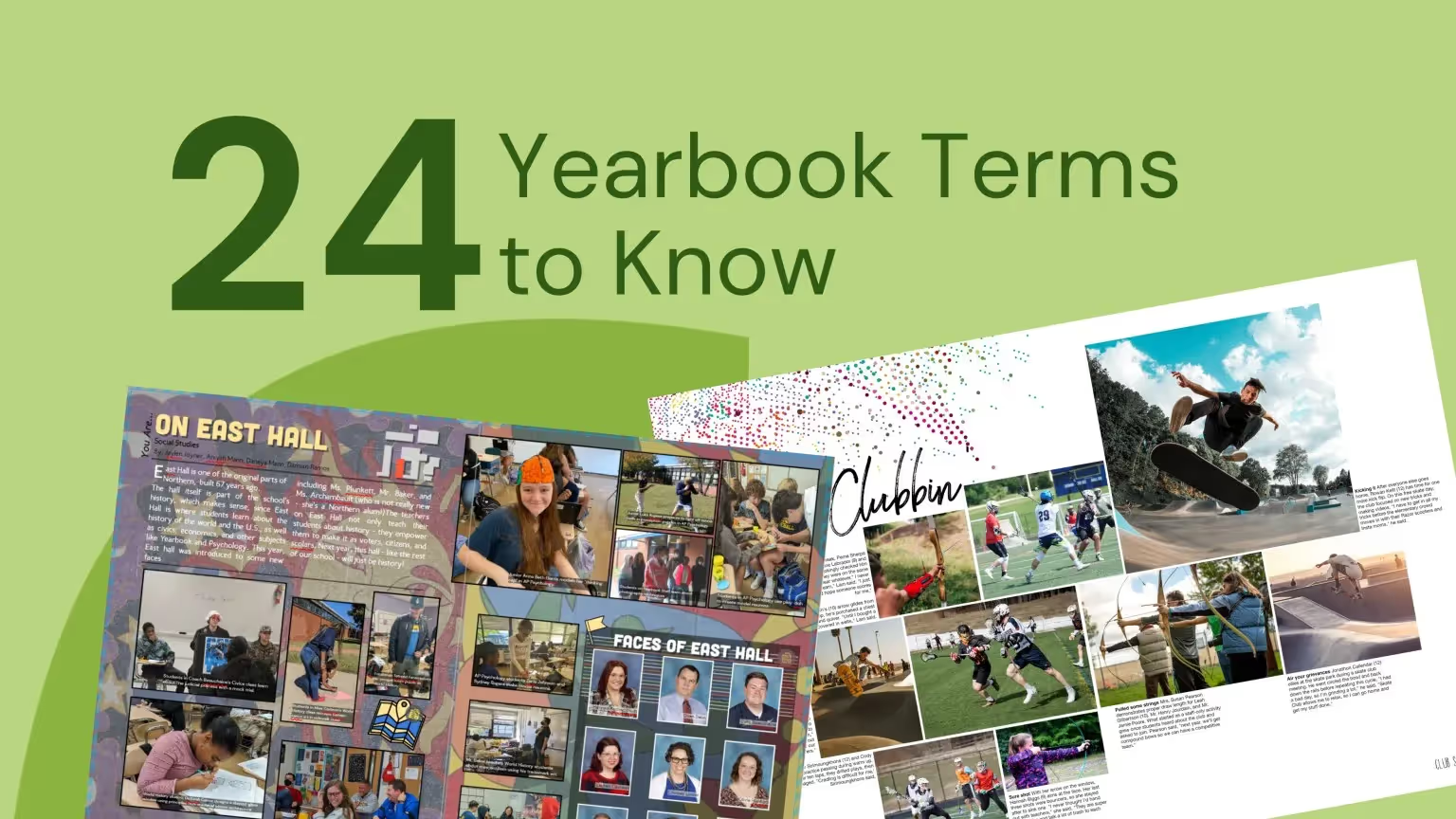
Stuff. Thingamajig. Whatchamacallit.
If your day job isn’t in desktop publishing or graphic design (or teaching it), you and your yearbook team probably use those words to get across what you’re trying to say. You know what it is you’re trying to say, but you just … can’t … find … the yearbook terms you need to do it in a way that makes sense to everyone.
So, you use filler that causes more confusion than clarity.
We’ve talked to a bunch of yearbook advisers, and a lack of proper yearbook vocabulary is a common problem. Especially when new people join the team. We figured, then, that it would be good to pull together a list of yearbook terms everyone needs to know (and a whole bunch more that just about everyone should know).
Study up, and you could be skipping this type of painful conversation in nearly no time at all:
“We need to get that thing on page 8 done, so we can get those pages proofed?”
“What stuff?”
“You know… the… the… It’s right next to the whatchamacallit.”
“I’m not really sure what you’re talking about… You mean the thingamajig that I was working on?”
(Ouch.)
And, besides avoiding a conversation as bad and confusing as this, who doesn’t like learning new… uhh… stuff?
A list of yearbook terms everyone needs to know
- Bleed. The bleed is extra space around your page that is intentionally printed, then trimmed by the printer. The standard bleed size is 1/8 inch, and is usually used to allow for movement the paper during printing.
- Byline. A byline is a line that gives credit to the author of a story. It can appear either at the beginning or end of copy.
- Candids. Candids are photos that are captured without posing your subjects or distracting them from what they’re doing. They’re great for capturing everyday aspects of school life.
- Caption. A caption is a page element that explains the who, what, when, where, and why of a photo. Captions can also be used in the yearbook to tell readers something they would not otherwise know when looking at a photograph.
- Copy. Copy is the content of an article or news element. (Basically, it’s the words used to tell a story.)
- Copy Editing. Copy editing is work done to improve the format, style, and accuracy of a story. Though copy editing can involve correcting grammar and spelling, the primary reason to copy edit a story is to improve its clarity and ensure it aligns with a yearbook’s style.
- Dominant Element. A dominant element is the element on a page that immediately attracts a reader’s attention.
- Drop Cap. Drop cap is a design treatment used to introduce copy. It is distinguishable by a large letter (usually capital) that appears at the beginning of a text block and has the depth of two or more lines of regular text.
- Folio. Folio is page numbering that appears on the outside portion of pages, usually at the bottom. A folio may also contain the title of your yearbook or your section title.
- Gutter. No, it’s not attached to your roof. And, no, you don’t have to keep your mind out of it. When it comes to yearbooks, a gutter is the space between two facing pages (an important place to keep clear, because, when a yearbook is bound, the space between the pages shrinks). It’s best to apply a 1/2 inch margin to both sides of the gutter, or 1 inch in total.
- Headline. A headline is a line (or lines) of large type used to introduce the most important fact to the reader.
- Kerning. Kerning is the space between two letters that are next to one another. You can adjust the kerning to avoid gaps in your text (for example: if character pairs are spaced too far apart).
- Ladder. A ladder is a chart that represents the pages in a yearbook. It can be helpful when planning section placement and page content.
- Layout. A layout is a design plan for a page or spread in a yearbook. It accounts for the size and position of all elements on a page.
- Lead (or Lede). The lead is the introductory portion of a news story; usually the first sentence or paragraph. It relays to the reader the most essential information. In traditional journalism, it is spelled “lede.”
- Leading. Leading is the space between lines of text. You can adjust the leading of a text block to increase its readability or to squeeze more text onto a page. (Rule of thumb: The more space there is between lines of text, the easier that text is to read.)
- Modules. A module, also called a “mod,” is, essentially, the yearbook equivalent of a sidebar. It is a smaller amount of text with accompanying photos that supports a page’s main story.
- Portraits. Portraits are posed photographs of individuals. These photos are the photos that are usually being referred to when someone is talking about their “yearbook photo” or “school portrait.”
- Proof. A proof is a copy of the yearbook’s final pages that are sent to the staff for a final review and approval.
- Proofreading. Proofreading is used to catch any typos before sending a yearbook to print. It’s the last read of the yearbook and should be done on a printed proof.
- Pull Quote. A pull quote is a phrase or quote pulled from a story and used as a graphic element. It highlights a key topic or point in a story and is usually placed in larger, more distinctive type.
- Spread. A spread refers to two pages that face each other in a yearbook.
- Theme. A yearbook theme is an idea or concept that’s used to tie together the various sections and stories found throughout the yearbook.
- Template. A template is a predesigned layout that helps maintain visual consistency throughout a book. Different sections may have different templates.
Some more yearbook vocabulary for overachievers
- CMYK. CMYK is a color model traditionally used in printing. Printers use subtractive color, or CMYK, where cyan, magenta, yellow, and black inks are applied to paper. The color of the inks is altered by subtracting (or absorbing) light wavelengths.
- DPI. The abbreviation for dots per inch, DPI is a measurement of an image’s resolution. The higher the DPI of an image, the clearer and more detailed that image will print.
- Golden Ratio. The Golden Ratio is a mathematical rule that’s used to repeatedly create visually pleasing designs. In yearbooks, you can use it to create different layouts, and it’s best to visualize the Golden Ratio as a rectangle with its length (side B) being roughly one and a half (1.618) times its width (side A).
- Monospaced Fonts. Monospaced fonts are fonts that have equal width for each letter. They can be serifed or sans serifed.
- Orphans. Orphans aren’t just in Annie or Charles Dickens’ books. In yearbook publishing, they’re also a word, part of a word, or a small line of text that falls at the end of a paragraph on a line by itself. These “hangers” (if you will) create unwanted white space and are distracting to readers.
- Pica. A pica is a unit of measurement, often used to determine the width of an element on a yearbook page. It is equal to ⅙ inch (or 12 points).
- Resolution. Resolution is the sharpness of an image. In print, resolution is measured in DPI. In digital, it is measured in pixels.
- RGB. RGB is a color model traditionally used in digital publishing. Colors are created in the RGB color model by adding red, green, and blue pixels to a black base.
- Rule of Thirds. The “rule of thirds” is a guideline in photography that encourages a photographer to move the primary subject of the photograph away from the center.
- Sans Serif Fonts. Sans serif fonts lack the decorative elements found on serif fonts. They’re great for digital projects, since they are easy to read on computer screens, but are also very popular for printed headlines.
- Serif Fonts. Serif fonts have small decorative elements (called serifs) at the end of letter strokes. These fonts are more legible at smaller sizes and are great to use in large bodies of text, like the body copy in your yearbook.
- Style Guide. A style guide is a set of standards used to create consistency in your yearbook. Also known as a style sheet, it can be used for typographic, graphic design, and copywriting.
- White Space. White space, also known as negative space, is the empty area around an object. White space can be used to draw the viewer into a particular spot in the design. It prevents content from overcrowding the page.
- Widows. A widow is a word or line of text that sits alone at the start of a column or page. They’re similar to orphans in that they are distracting to readers.
Got ‘em?
Though it might seem like a waste to study these terms, we promise it’ll prove helpful in the long run. Just imagine how much more sense it will make to talk about finishing your “mod” (instead of “thingamajig”) or how you need to find someone to do “copy editing” (instead of “editing all this stuff”).

Advice for dealing with complaints
When a parent, staff member, or student approaches with a complaint about the yearbook, it can be challenging not to react or take it personally. Common yearbook complaints range from missed order deadlines to incomplete coverage (e.g., “I’m not in the yearbook enough”), and typos. Taking the right approach will help you validate the concern and move to a proactive solution for your yearbook program.
Listen to the complaint
“Take a deep breath, remain calm, and remember it's not personal,” Abby Oxendine, Treering’s Community Advocate Team (CAT) Director, said. “The person is angry with the product, policy, or process, not you.”
Give the person making the complaint your full attention and listen carefully to what they have to say. Allow them to express their concerns without interruption and empathize with their situation.
“The reality of their concern is real to them,” Yearbook Hero Chris Frost said. “It is important to understand that while your world includes every student, to the parent their kid is their world.”
Ask for specific details
Ask the person to provide specific details about what they're unhappy with in the yearbook. This will help you to better understand the issue and to determine the best course of action. Oxendine suggests summarizing their main points in a confident, positive tone to show you are listening. This also ensures you know exactly what the complaint entails.
Sample starter sentences include
- "I understand your concerns…"
- "Thank you for sharing your concerns with me…"
- "We will do all we can to fix these issues..." (Only use if you can fix the issue, e.g., ship a yearbook home to someone who missed the original deadline.)
Offer a solution
Frost said, “Sometimes just being able to express the frustration is resolution enough. They may not want your solutions, just to voice their concerns.”
In the case a solution is warranted—and feasible—commit to what is possible. If you set a follow-up action, make sure you call or email back by the scheduled time. It’s important at this stage you never overpromise.
Document the complaint
Recording the complaint and the steps you took to address it will help you to track patterns and improve future yearbooks for future editions.
Follow up
Send a follow-up email detailing the resolution. You might even consider offering the student or parent a position to help the yearbook team to help avoid issues in the future. This will show that you care about their opinion and are committed to improving the yearbook.
Personal anecdote: I had a teacher complain once about the portrait section who became the official portrait proofer for the yearbook.
Avoiding the top 3 yearbook complaints
When your hard work is on display and is a lasting keepsake, you want it to be the best reflection of your school community and your yearbook team. Here are ways to avoid the big three.
1. Missed order deadlines
We know: you sent emails, used a school-wide robocall, posted on social media, made a viral video with your principal, and someone still didn't know when, where, or how to order the yearbook.
How Treering can help
"Volunteering to create my kids’ yearbook is a lot of work, but with Treering I never worry about the outcome. I know Treering will help me anytime a problem arises."
Erin M., Treering Yearbook Specialist and elementary school yearbook coordinator
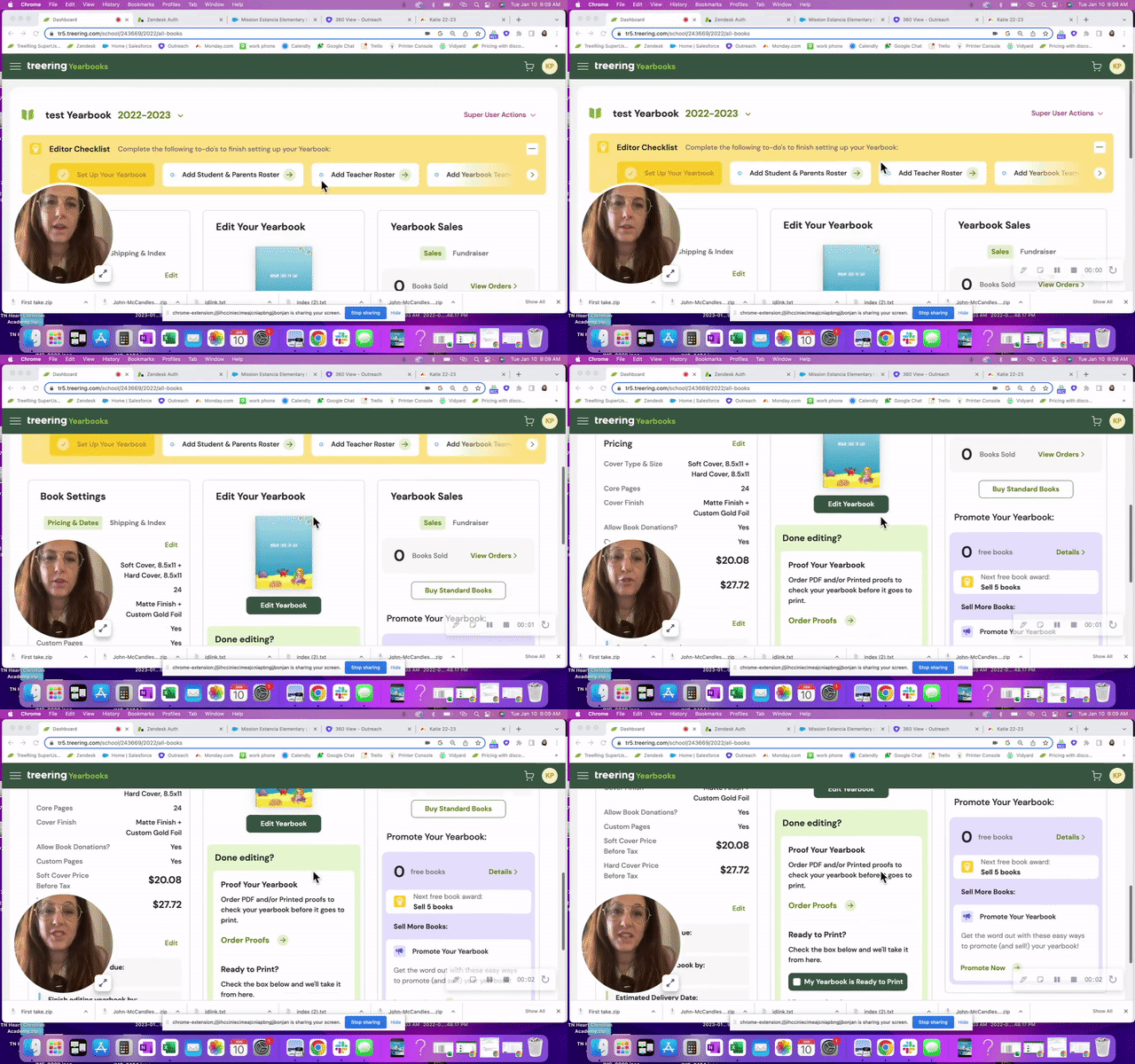
- The integrated marketing suite in each Treering account allows editors to send purchase and customization reminder emails, order free flyers, download social graphics, and share purchase links.
- Never tell a parent or student no again: your storefront is always open, and they can purchase an old yearbook, even years later.
- Mix up your marketing campaigns with our social calendar.
2. Incomplete coverage
Some parents and students may feel that the yearbook did not adequately cover certain students, events, or activities. To ensure that all events and activities are adequately covered in the yearbook, you can create a detailed coverage plan when drafting your ladder at the beginning of the year and assign staff members to cover each event.
Consider adding a note to acknowledge those who did take advantage of the opportunities to submit content and photos. (This is also a subtle reminder parents and students had opportunities throughout the year to be more involved in coverage.) A simple “Thank you parents and students who shared their photos and completed our surveys. We love telling your stories.” will go far.
How Treering can help
- Shared folders provide your stakeholders with opportunities to share their photos. Yearbook Hero Lauren Casteen uses these photos that the yearbook staff may have missed, such as a band event hours away.
- Community portraits allow parents the opportunity to upload a portrait of a student who may have missed picture day or joined in the second semester.
- Tag your photos and monitor coverage with the index report, a real-time listing of who is in the book.
- Parents and students can tell the story of their year with custom pages, two free pages that appear only in their copy of the yearbook.
2. Missing or incorrect information
One of the most common complaints is when a student's name, photo, or information is missing or incorrect in the yearbook.
When applicable, remind parents that this is a student-published item, while you do your best to facilitate the book, students have creative control and lead how the book is done. It’s their homework that is on display for a lifetime.
If it’s a volunteer job to create this living, breathing historical document of life for hundreds of kids at a moment in time. That is a heavy burden to carry alone. (Most professional journalists work in a team!)
“Parent volunteers have enough on their plates with being good parents, spouses, employees of their jobs, and volunteers to boot! Having to field phone calls from confused parents shouldn’t be another feather in their cap—unless they want it.”
Katie P., Customer Success Manager and elementary school yearbook coordinator
Yearbook disclaimer
Even the New York Times has a disclaimer. The yearbook colophon is a great place to add yours, whether you are a volunteer army putting together the book or a group of student journalists. It can be as simple as "We have done our best to ensure the accuracy of the information in the yearbook and apologize for any errors."
Tips for next year
To proactively combat errors, you can check your records and the student's school records to ensure all the information is correct. Another resource is the ever-changing school calendar.
Treering’s Customer Success Team recommends having a second set of eyes proof your book. If that’s not possible (we know a lot of yearbook heroes who do it solo), walk away for a few days then come back fresh. It's hard to see these little mistakes when you have been staring at the book for days.
How Treering can help
Remember, the key to handling complaints about the yearbook is to remain calm, professional, and focused on finding a solution that works for everyone. By addressing complaints positively and constructively, you can improve the yearbook and build trust with your yearbook stakeholders. Remember, in the end, you cannot please 100% of people 100% of the time.

Five yearbook activities not to miss
“Just putting pictures on pages” and other misleading statements about yearbook production do not capture what happens in the newsroom. However, it’s easy to take a heads-down approach to design as the deadline approaches. We all just want to finish! Nevertheless, amidst the rush, there are essential skills that you shouldn’t overlook. You’re going to want to save these activities.
1. Teaching yearbook
Because no teacher program provided the comprehensive graphic design, marketing, journalism, editing and proofreading, photojournalism, contract negotiation, and volunteer management training that makes a great yearbook adviser. Breathe! (Club leaders, you too need to facilitate students’ creative and collaborative development.)
We created the Teaching Yearbook series so you would have grab-and-go resources to enhance your yearbook classroom.
2. Speaking the language
Understanding yearbook and design terms means the team can have a conversation about the effectiveness of a dominant bleeding into the gutter without raising (too many) eyebrows.
3. Creating a plan to cover everyone
Creating a plan to cover everyone involves more than just taking photos. It requires thoughtful consideration of how to represent the entire student body in your yearbook, even if you don’t offer custom pages.
Every student is more important than every activity.
4. Teambuilding activities
Yes, games are important. Those forced fun activities help you break down the proverbial walls. (That’s the introvert talking.) More important: building a team of the right people.
Time spent investing in the right people and building healthy relationships will only benefit your book.
5. Managing yearbook complaints
Ouch. No one wants to field criticism of the yearbook when it is in print for all to see. No one volunteers to field emails with “friendly suggestions” for next year. From active listening to clear and transparent communication, having a plan in place for managing complaints ensures that any issues are addressed promptly and professionally.
This is one of those “better to have it and not need it” kind of things.
A pro photographer's playbook for perfect team shots
Our guest expert is David Burns, President of Color Portraits - a longtime Treering school photography partner servicing Illinois and Wisconsin. He's been framing perfect team shots since back when "post-game snacks" meant a chocolate bar with nougat and parents weren't yet reading ingredient labels.
After 20+ years and thousands of school photo sessions across the Midwest, I've seen it all—from squinting soccer teams in harsh sunlight to last-minute makeup photo scrambles for absent students. At Color Portraits, we've mastered the art and science of school photography, turning potential chaos into seamless operations that produce stunning results. These battle-tested strategies will transform your yearbook from good to unforgettable—without the headaches, delays, or disappointed parents.
Efficient scheduling strategies
For group photo days, we recommend scheduling one group every five minutes. This allows photographers to:
- Set up each group while the next one arrives
- Arrange students in height order for quick positioning
- Maintain a smooth flow throughout the day
For larger groups (school plays, entire grade levels), allow 10 minutes to prevent scheduling backups.
Middle school/junior high considerations
Middle schools typically schedule sports pictures three times yearly (fall, winter, spring). We recommend:
- Scheduling after school to accommodate parent-volunteer coaches and uniform changes
- Taking pictures during each sport's season for proper uniform distribution
- Capturing individual photos as athletes arrive in uniform, followed by group shots when coaches arrive
Composition tips for various group sizes
Create rectangular rather than square compositions to properly fill the frame. For optimal results:
- Utilize stairs, risers, or bleachers to ensure every face is visible
- Incorporate props for club photos to add character and personalization
- Consider photographing sports teams in their natural environment (soccer teams by goals, track teams on the track)
Lighting techniques: indoor vs. outdoor
Indoor photography:
- Provides consistent controlled lighting
- Allows for fixed flash distance and stable exposure settings
Outdoor photography:
- Cloudy days offer less light variation but muted skies
- Sunny days provide vibrant backgrounds but create shadows and squinting
- Position groups with the sun behind them and use flash to reduce shadows
- Avoid direct sunlight into the lens
Student identification strategies
Send digital images to coaches or club sponsors for proper student identification. Maintain basic row formations to facilitate easy identification.
Balancing posed and action photography
Our standard sports shoots focus on group and individual photos outside of game days. For action shots:
- Collect images from parents or yearbook staff taken during actual games
- Create collage pages featuring action shots from different grade levels
- Position these collages before or after formal group photos
Handling makeup sessions
When students miss the original photo day:
- Leave space in the original formation to add missing students via Photoshop
- This approach looks more natural than retaking group photos
- Retakes often create new absences, compounding the problem
File organization recommendations
Create an intuitive organization system:
- Establish separate folders for each team and club
- Request proper labeling (team grade level or club name) when parents submit photos
- Always back up all images to cloud storage or external devices
Accommodating photo restrictions
For students with privacy concerns:
- Ask parents if listing the child as "Not Pictured" is acceptable
- Omit names completely when parents request
- Prioritize parental decisions regarding their child's privacy
Timeline planning for yearbook deadlines
Plan your photography schedule strategically:
- Capture club photos early in the school year when groups form
- Take sports team photos during their respective seasons when uniforms are available
- Complete all team photography by February at the latest
- This timeline provides yearbook editors ample preparation time
This comprehensive approach ensures your school's sports and club photography will be efficient, professional, and ready for yearbook publication.
.avif)
4 tips to get you print ready
As soon as January rolls around, teachers, students, and parents begin the countdown to summer vacation. Are we thinking of finishing the yearbook yet? Before the glorious moments of sunshine, vacations, and empty calories arrives, the myriad end-of-the-year festivities dominate our, ahem, social calendars. From Teacher Appreciation Week and school elections to school carnivals and yearbook singing parties, the final days of school life are packed. In between all the things, the yearbook is awaiting its final moments of the design cycle. Working with the Treering Community Advocate Team (CAT), we put together this list of things to know before flipping the switch to go print ready.
1. Help is here!
Really, help is here, here, and here:
- On the blog, find ideas.
- In the Help Center, receive 24/7 support including video tutorials so you can move at your own pace. Additionally, over the phone, live agents will help you flow portraits, set up your cover art correctly, apply theme packages, update your page count or deadline, upload your own designs, and do anything else you ask.
- In live Yearbook Club webinars, learn and connect with other yearbook coordinators.
2. Before you go print ready, proof in print
A month before you expect to finish your yearbook, order your printed proof. A printed proof is an exact copy of what your yearbook will look like once you toggle the Print Ready switch and send your book to print. Works in progress are welcome! We encourage you to double or triple check
- Portrait names and class/grade assignments
- Cover art alignment
- Formatting and page count
3. You have options: sorting
Every school handles yearbook distribution differently, that’s why we let you choose how you want your books packed. You can opt for books sorted
- Alphabetically by last name
- Grade, then alphabetically by last name
- Teacher, then alphabetically by last name
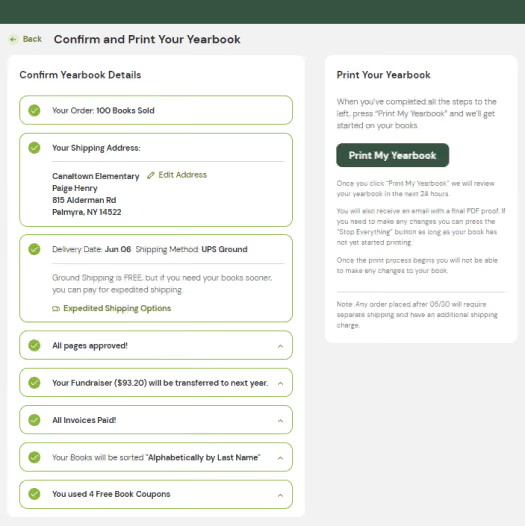
Are you ready to make your yearbook dreams a reality? Tick the boxes to send your hard work to production.
4. Cross the finish line
You tell us when you’re ready to go to print. With flexible deadlines and no late fees, you can take all the time you need to make sure your book is absolutely perfect before sending it off to be printed. At this time, you will confirm the bulk shipping address, approve all the pages for printing, and decide how to use or receive your fundraiser earnings.
As soon as your book is set to Print Ready, you'll receive the Final PDF of your yearbook directly in your email inbox. Take a few minutes to carefully review the PDF and make sure everything is exactly as you want it. Look out for any errors or mistakes that might have slipped through the cracks. This is your chance to give your book one last look before it goes to print and to make sure that everything is exactly as you want it. If you find something that needs correcting, you can choose to pause production for a short period of time during the review process to make those changes.

35 super awesome teacher superlatives ideas for your yearbook
You probably know by now that a good yearbook superlatives list is enough to get your whole school talking. But you know what really get your readers to crack some smiles? Teacher superlatives.While many schools have traditions of turning their faculty portrait pages into light-hearted affairs, nothing gets your teachers and faculty a spotlight in the yearbook quite like an awards or superlatives section just for them. And for good reason:They’re an opportunity to celebrate the hard work and dedication teachers put into the school year while giving a nod to the character traits and quirks that make your faculty so memorable. (Plus, nothing beats the feeling you’ll get when you’re able hand a superlative certificate to the winner of “Most likely to win a rap battle.”)It doesn’t matter if teacher superlatives are voted on by students or by faculty themselves, if they’re straight-up funny or just plain interesting, this is a feature that’s hard not to love.Read on, as we unveil our list of 35 teacher superlatives ideas and tips for writing your own.
35 super awesome teacher superlatives
While we’ll spend some time shortly talking about how to write your own yearbook awards for teachers, we figured we would dive right in with some ready-made ideas:
- Most likely to have a new hair style/color
- Most likely to be your friend on Facebook
- Most likely to be found enjoying nature
- Most likely to bring a pet to school
- Most likely to be seen on the big screen
- Most likely to win Jeopardy
- Most likely to pack their bags and travel the world
- Most likely to win a rap battle
- Best advice and wisdom
- Most friendly
- Most enthusiastic
- Mostly likely to create world peace
- Best storyteller
- Funniest
- Most distinguishable voice
- Most school spirit
- Most likely to break out in dance
- Most artistic
- Best smile
- Most likely to not give weekend homework
- Most likely to have a desk full of apples
- Most likely to know the score of last night's game
- Most inspiring
- Most quotable
- Most intimidating vocabulary
- Best beard
- Best wardrobe
- Scariest death glare
- Most likely to make sarcastic comments
- Most likely to scold you and give you a detention
- Most likely to be mistaken for a student
- Most likely to scold you for eating food near the computers
- Most likely to be accidentally called mom/dad
- Most likely to catch a student texting in class
- Best taste in music
Of course, some of these might do the trick for your teacher superlatives and some of these might not. That’s why it’s a list of ideas. If you’re more the do-it-yourself type, we’ve got some helpful tips below on how to write your own superlatives. In either event, we’ve created a free template for you to use as you build your superlatives list. Check it out here.
Writing your own yearbook awards for teachers
To generate your own list of teacher superlatives, sit down with your staff and begin with an old fashioned brainstorm. Starting with your existing senior superlatives list or yearbook awards list makes the most sense, so simply reframe your list of superlatives so that they’re teacher focused. For example, “Class Clown” becomes “Funniest Teacher” and “Teacher’s Pet” becomes “Favorite Teacher.” A lot of the same rules apply to yearbook awards for teachers as they do for students, especially if you’re trying to write funny superlatives: Which teachers are fair game? Are the superlatives funny? Or are they mean? It can be a fine line, so be careful and get a second opinion if you think something’s pushing it a little too far. From there, add to your list using some school-specific superlatives:Does someone embody school spirit like no other? Do some of your school’s teachers have idiosyncrasies so well-known around the building that they’re a shoe-in for one superlative or another? As you work through the logistics of who’ll do the voting (Just faculty? Just graduating students? The whole school?), you’ll know you’ve hit the right mark when you hear the chatter start in the hallways and see the smiles creep across students’ faces. That’s because including teacher superlatives and other types of awards in your yearbook is an easy way to give special recognition to faculty—a group who help make the school year what it is, but often aren’t recognized in the yearbook.

Tips for yearbook advisers: spring clean your work space for lower stress

5 graduation photo and caption ideas
It's that time when end-of-the-year events on campus dominate our social calendars and social feeds. Whether you're doing a quick post-ceremony graduation photoshoot with friends or snapping last-minute custom page poses for the yearbook, here are five graduation photo ideas plus some fun Instagram captions to use. I met up with my neighbor, Avery who is a high school senior, varsity athlete, super babysitter, and future marketing professional for these video tutorials and inspirational photos.
Remember, the best photos are the ones that align with your personality.
Pose 1: looking forward to looking back
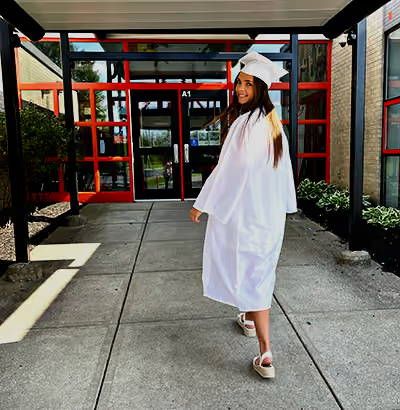
A simple graduation pose you can do pre-ceremony is the over-the-should smile. Set a "mark" for your subject to do the look so you can focus there. The concrete in front of the school helped us time the shots. Unless you use a telephoto lens on a proper camera, ensure your background is more interesting than that parking lot.
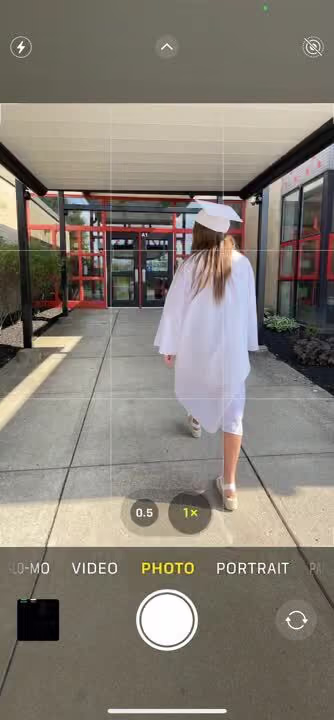
In the video above, notice the multiple flashes. This means the cell phone is on "burst" or "multi-shot mode" which gives you more options with which to work.
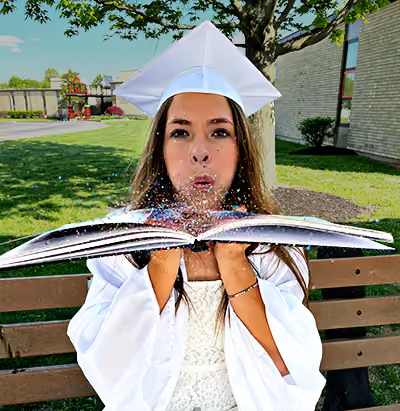
Pose 2: all that glitters
Your first day of grade school probably involved some glitter, so why not celebrate the final day of grade school with it?
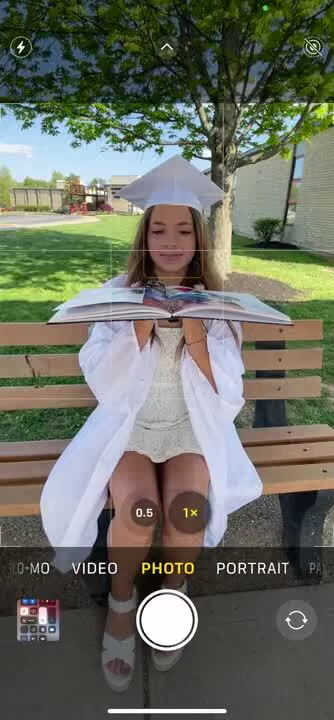
During the shoot, Avery and I found coarse glitter has more movement and picks up better with a cell phone. (It still wasn't fun to clean up.)

Pose 3: portrait perfection
Portrait mode on a cell phone improved our Insta-presence by adding depth to photos.
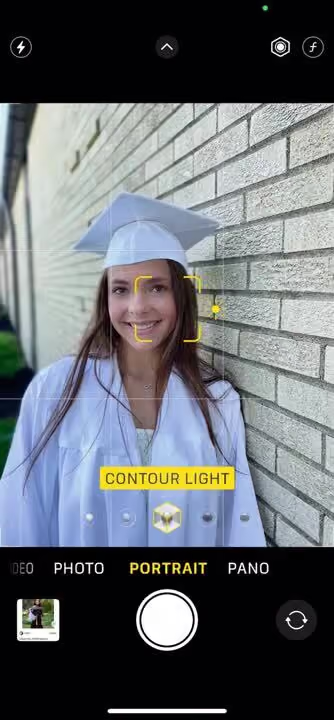
To get the most from portrait mode, add space between your subject and the background. I had Avery lean against the wall in a relaxed standing pose. at an angle. The angle allowed for the mortar lines (leading lines in photography) to draw the viewer's eye to her face.
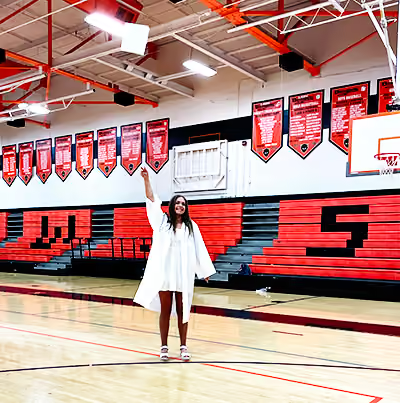
Pose 4: MVPose
The cap toss is the image most of us think of when we picture graduation. Using burst mode, snap several photos of your senior doing his/her own version.
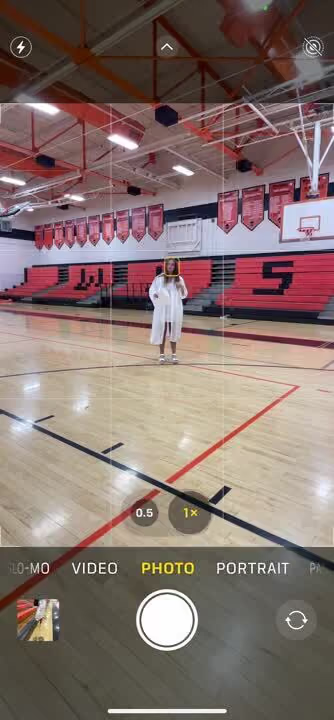
Because yellowish-green gym lighting is notoriously tricky, you'll want to use your in-camera photo editor to reduce the warmth and add a slight coolness to the tint. This pose also works well on the football field because there is plenty of overhead clearance.

Pose 5: cap it off
Remember our discussion of depth of field and portrait mode? Another application is for the cap. Many students decorate theirs, so make it the focal point of an image.
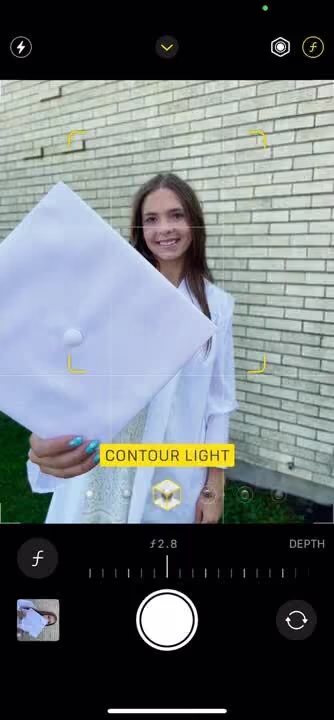
In the video, you can see how raising the phone just a bit flattered Avery more. My yearbook adviser always said, "Zoom with your feet," and it's stuck with me decades later.
Tips to capture a great graduation photo
Because authenticity goes a long way, here are a few ways to make the poses below your own.
- Try to avoid stiff or unnatural poses. Instead, move around and experiment with different angles until you find a pose that feels comfortable and looks good.
- The background of your photo can add interest and depth to your pose. Look for interesting locales that complement your outfit and pose. Off-campus, visit community murals, local landmarks, and parks as your graduation photo spot.
- Props can add visual interest and help tell a story in your photo. Consider using props like sports equipment, a yearbook, confetti, or a graduation cap.
- Experiment with different angles to find the one that flatters you the most. Try shooting from above, below, or at eye level.
- You can sit, stand, jump, walk, or even lie down for your senior photo.
If you're saying cheers to the end of an era and the start of a new one, may your memories be filled with joy.

The 5 game-changing blog posts you’ve (somehow) been missing
You might be missing these favorite yearbook ideas. If any part of your yearbook process feels stuck, scattered, or stale, one of these posts is probably the solution you didn’t know you needed. Read them. Share them. Build them into your curriculum or club routine and watch your yearbook program transform.
1. Easy +1: a guide to leveling up your yearbook
This comprehensive guide outlines five key ways to elevate your yearbook beyond collage pages. It provides practical steps to add something new to next year’s book: a focus on storytelling, expanded coverage, better photography, or modular design.
Use the five focus areas to create
- Rotating workshop stations early in the year to build foundational skills.
- A self-assessment rubric for your team.
- A “Level Up” day where each leader identifies one area to improve in their section.

2. How to choose a yearbook theme
This piece walks you through the theme process without relying on chaotic verbal brainstorms. (Some yearbook creators even find its anti-brainstorming angle a little divisive. And we liked it.) It provides teaching support to non-designers and new advisers with practical, flexible guidance.
It includes prompts, real-world examples, and tips for involving students at all grade levels.

3. 10 people to thank
Yearbook creation doesn’t happen in a vacuum. This gratitude-focused post highlights the unsung yearbook heroes, including the front office staff, IT teams, principals, coaches, and more. Yearbooks are a high-stress, deadline-driven project; injecting gratitude is a reminder that the yearbook extends beyond your class or club.
Make gratitude part of your yearbook culture:
- Include a recurring “Who Helped You This Week?” check-in during staff meetings.
- In the yearbook, you can include a “Behind the Book” thank-you spread.

4. Adviser advice: keep, change, stop
One of the few tools that seamlessly transferred from student teaching to the newsroom is “Keep, Change, Stop,” a structured reflection tool. It helps teams evaluate the yearbook process with three simple prompts: what to keep, what to change, and what to stop doing. (Clever name, eh?)
It’s an adaptable debrief for editors, staff, and advisers alike.
In this blog post, four yearbook advisers share their POV. Based on their real-life examples, we have a framework to drop what’s not working and preserve beneficial habits each school year.
Doing this exercise with middle and high school yearbook creators encourages student voice and leadership in shaping the next year’s book. “Keep, Change, Stop” promotes a healthy, intentional yearbook culture.

5. Yearbook debriefing: a summer reflection
This five-minute read outlines a strategic, low-stress way to reflect on the yearbook process over the summer. It offers questions and prompts to help advisers and returning staff capture what worked and what needs to shift before the next yearbook creation cycle begins.
This post helps you process what happened while it’s still fresh, and with a little distance.
To use it now, assign editors a summer reflection form based on the post’s questions and use their input to build your back-to-school agenda.
We all want our yearbooks to stand out, and sometimes the best yearbook ideas (wink, wink) are hiding in plain sight. We hope these five blog posts deliver the clarity, creativity, and strategy you and your staff need.

Can our school afford to start a yearbook program?
Financially risk-free and school programming don't intersect often. When they do, pay attention. Traditionally a yearbook program begins with a deposit, requires minimum orders, and ends with an invoice. That's no fun! Certain schools cannot pay to play. Others can't afford to remain in the (yearbook) game. Would you believe there is another way? (Say yes, and keep reading.)
Does my school need a yearbook program?
Teachers, administrators, and parent groups seek opportunities to enhance the student experience, foster community spirit, and leave a lasting impact. A yearbook program checks all those boxes at once. A yearbook isn’t just a book; it’s a time capsule. It captures the essence of each school year— friendships, achievements, trends, and more. Whether it’s the class photo or the quirky candid shots from the pep rally, the yearbook immortalizes memories that would otherwise fade away.
How to get started
Here’s a handy checklist to get your yearbook program off the ground:
- Gather your team: assemble a yearbook committee—teachers, parents, and students who share a passion for preserving memories.
- Find a publishing partner: the right fit here can make all. the. difference. Talk to company representatives, ask for a sample to see the quality, and be sure you understand what you can afford.
- Arrange training for your yearbook team.
- Spread the word: let everyone know about the exciting yearbook project. Generate buzz among students, parents, and staff. Treering has plenty of free marketing tools and ideas. (Even if you don't choose us!)
- Plan Ahead: set deadlines for photo submissions, design, and ordering. Keep everyone in the loop.
- Celebrate the Unveiling: host a yearbook reveal event. Popcorn, excitement, and memories galore!
The Treering difference
Just thinking yearbook, may be overwhelming. It's one more proverbial ball to juggle. That’s why Treering focuses on making things as easy as possible for everyone involved: yearbook team members, front office staff, teachers, parents, and students.
No deposits, contracts, or minimimus
Schools can afford Treering's financially transparent and risk-free approach because we don't saddle schools with yearbook debt, contracts, guaranteed minimums, or hidden costs. Phew. Removing those huge hurdles at the outset lets you focus on creating a high-quality yearbook highlighting the best moments and events.


Yes to personalization and support
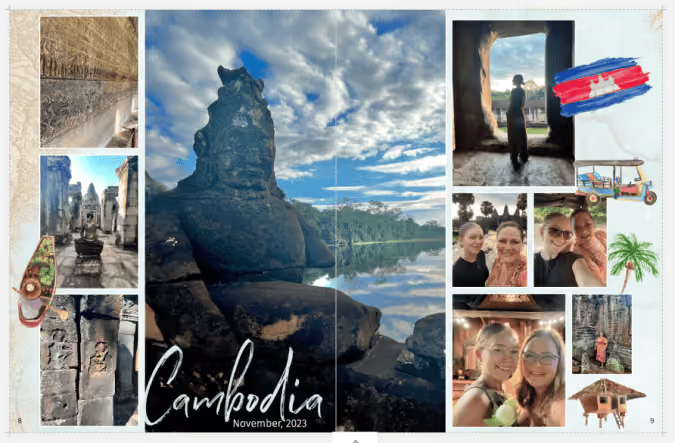
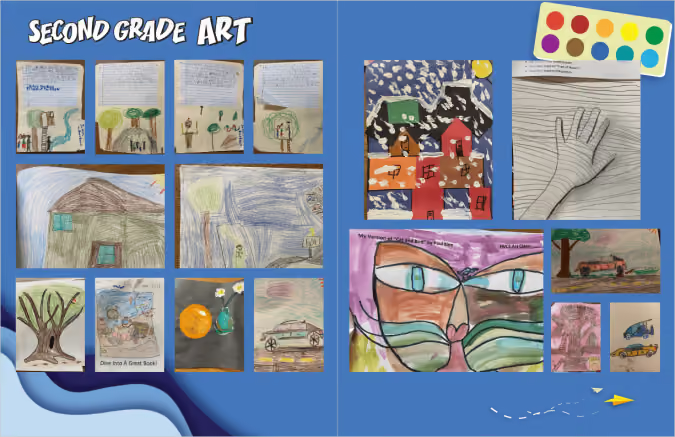
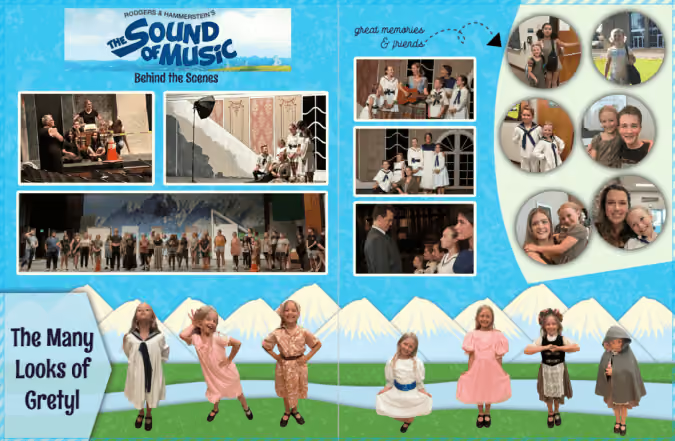
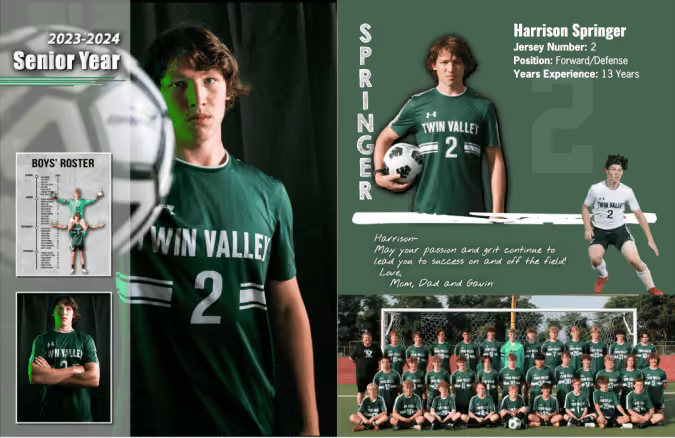
Custom pages are a hit with students and families who have the option to include two free personalized pages that appear only in their copy.


Treering schools never pay extra for
- Training and support
- Moving deadlines
- Yearbook themes, clip art, and fonts
- Creating a custom yearbook cover
- Using portraits from any photographer
Additionally, the on-demand printing process means you’ll get lots more coverage of spring events and sports. Treering only prints what you order, so there are no overruns.
A tradition worth starting
Starting a yearbook program establishes a special tradition within your school community. Imagine the excitement during the yearbook reveal, the buzz as students eagerly flip through its glossy pages and the pride of seeing their own faces alongside their peers.
Remember, a yearbook isn’t just a book; it’s a legacy. So, go ahead—start your school’s yearbook journey with Treering. Your families and students will cherish the memories and you’ll be able to showcase all the great things happening in your school community! You’ve got great stories to share and Treering can help.
Treering would like to thank Dara Arouh, a Georgia-based yearbook mom of two, for contributing this blog.

The only yearbook page template you need
A yearbook page template is one of the best ways to save time (and a ton of sanity) during the yearbook layout process.
All too often, though, we talk to yearbook advisers who are skipping them for the same reason: They don’t want to use the same template over and over and over again, on every page. They think that’d be boring.
Fair enough.
In fact, we won’t even try to argue. That would get boring. But you know what? There’s a way to fix that.
You can take one yearbook page template and turn it into four different ones that’ll give your yearbook pages that cohesive, but not boring, look. The trick is so easy you’ll be laughing, and so effective you’ll pinch yourself.
What is it? Why does it work? We’ll get to that. But let’s start by looking at what makes page templates so valuable in the first place.
Why yearbook layout templates are a go-to resource
When yearbook design is done well, the pages flow, the photos stand out, and the copy complements the visuals.
If you try to achieve all this from scratch, you’re looking at an huge amount of work that requires pro-level design knowledge and a significant time investment. (And let’s be real: You can’t always find that on your yearbook committee.)
That’s why page templates have become a go-to resource. Yearbook page templates:
- Simplify the design process: Templates allow you to drag and drop photos into placeholders, add copy, and… that’s it. No need to stress about page setup or search for a volunteer with a design background.
- Control the overall book design: Templates give you a set structure. This means yearbook advisers can control the layout process without micromanaging or limiting the people who help out with design.
- Save time: Templates require less prep time and overall work. Plus, the learning curve is minimal—anyone with even a small amount of computer savvy can use page templates.
- Help teach design principles: Templates can help students volunteers learn the principles of great design. Students can express their creativity within the template structure, and gain more responsibility as their skills progress.
Since page templates are so helpful and there are so many options available, it’s tempting to fill your yearbook with a variety of layout styles. But that makes more work, and—good news here—it’s not necessary.
The solution—one that saves even more time and stress—is to get creative with just one template.
Sounds crazy, right? It’s not. One template, flipped into four, can result in a far better outcome than a variety of templates. Here’s how to do it.
How to create four unique layouts from one yearbook page template
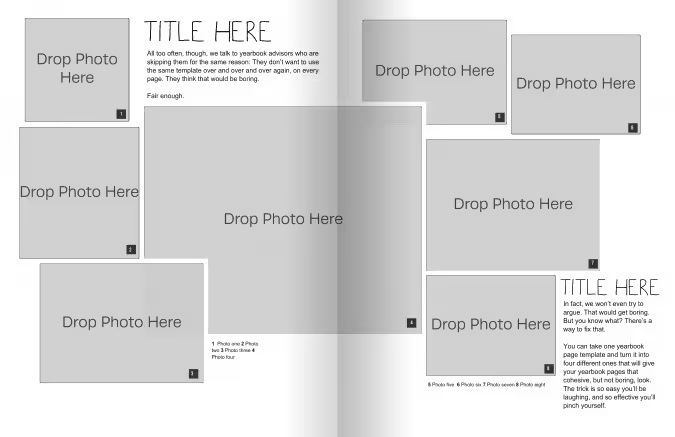
Find a yearbook page template you love, and make multiple new ones by recreating it in three rotations. Because this type of thing can sound confusing, here’s a visual example of how to do it.
Original:
Now, let’s flip it vertically:
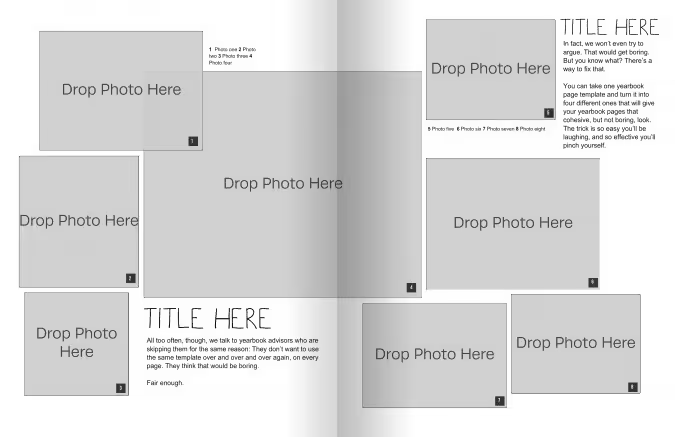
Then, we’ll take that template and flip it horizontally:
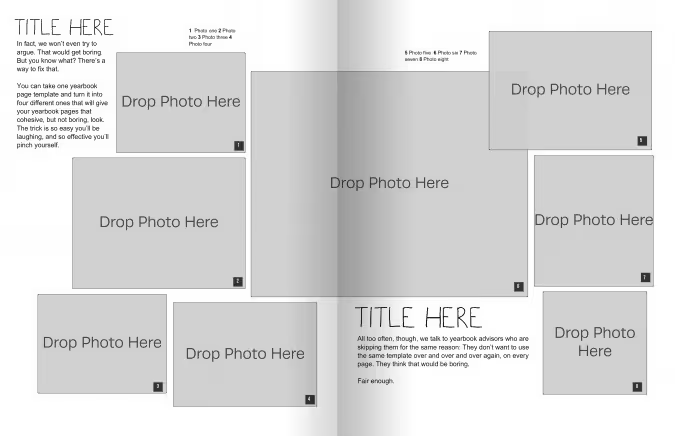
Last, let’s go back to the original template and flip it horizontally:
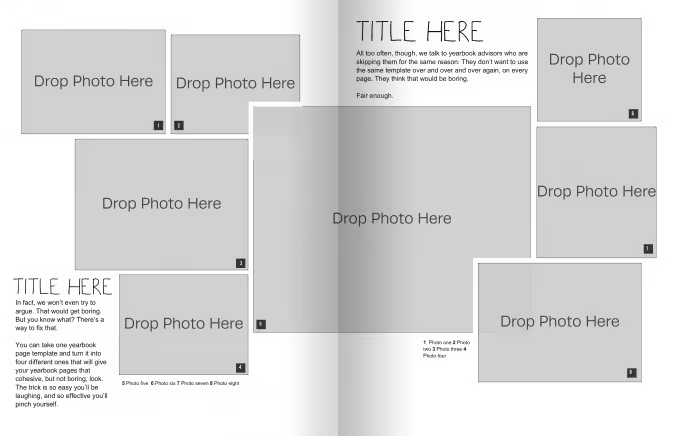
Notice how each one looks similar to the other, but still different enough to give some variety? That’s exactly what we’re going for.
By re-drawing the original template in different directions, you end up with four page layouts. Each one is unique enough to add variety to your pages, yet similar enough to give your yearbook a cohesive feel.
If you want more than four options, you can further adjust each template by adding or removing text or photo boxes to create new layouts. Or, you can mix up the portrait and landscape orienttaions of the photos.
These small alterations don’t take much time, but they give your entire yearbook a fresh feel. By approaching your yearbook layout this way, you get all the benefits of a yearbook page template—without the repetition.