.svg)

Most popular



Subscribe to our blog
Most recent

The one-stop yearbook rubric shop: grading tools for design & copywriting
A yearbook grading rubric is the perfect way for teachers to give students the grades they deserve and the feedback they need to make a better yearbook.
Heck, even if you’re working with a bunch of volunteers and want to formalize your process around feedback, a yearbook grading rubric is pretty much the way to go: it’s the most holistic way for you, the adviser, to provide critical feedback to your staff. For the younger students you’re working with, this will lead to growth; by their senior year, these kids will be ready to skip right over college and head straight to Sterling Cooper.
To help give your grading and feedback game a jump start, we’ve developed two free yearbook grading rubric templates that you can use for your class or club. One’s focused on yearbook copy, the other’s focused on yearbook design.
Before we jump into the templates themselves, though, we’ll break down why we’ve structured the rubrics the way we did and what you can gain from using them. So, read on.
Anatomy of a yearbook rubric
If you’re a teacher, you’re probably familiar with rubrics. (In fact, if you’re a teacher who uses rubrics, you’re probably more familiar with them than we are; you’re also probably able to skip this section.)
If you don’t know rubrics, though, this section here is a short crash-course for you. I’ll be helpful for understanding the templates we’ve put together for you.
Generally speaking (and specifically speaking in terms of our yearbook rubric templates), a rubric consists of three core areas: Scale, criterion, and performance level descriptions. Let’s break each of them down.
Scale
The scale represents the total number of points available in each category as well as the aggregated total (the final grade). Instead of just applying numerical values to each level of performance, pair each possible point on the scale with a narrative equivalent. For example, if the maximum number of points that can be earned in a given criterion is 4, then 4 = Exceeds Expectations. Conversely, in the same scenario, a 1 would be equivalent to “Does Not Meet Expectations.” You can play around with the actual wording in the scale you choose.
Criterion
Where the scale represents the number of points, criterion are the categories by which a piece of student work is assessed. They can be altered , as long as you can clearly distinguish between the levels of accomplishment on your chosen scale. For example, if we’re assessing a student’s ability to write a headline for a page, there should be a way to objectively measure what an “A” headline looks like versus what a “C” headline looks like. If there isn’t, reconsider including it as a criterion (perhaps it can be combined with one or more other facets of the page instead).
Performance Level Descriptions
A rubric is broken into quadrants. In the examples we’ve provided, the vertical headers represent the criterion and the horizontal headers represent the scale. The points of intersection are the Performance Level Descriptions, or PLDs. These are the characteristics that make up a grade. Try to use highly-specific language so that students are clear on what separates good work from work that will truly blow you away.
If your PLDs are fully fleshed out, we suggest giving your students your yearbook rubrics in advance. This gives them an idea of what they need to do in order to earn the grade of their choosing, which can positively impact the quality of their work.
Miscellany
Don’t forget to include:
- The student’s name
- Page numbers, or spread, being assessed
- Total points
With that quick review out of the way, let’s dive into the actual yearbook rubrics.
Yearbook rubric for grading copywriting
When it comes to yearbook copy, striking a balance between originality and uniformity is key: Too rigid and your yearbook won’t engage. Too much creativity expression, and it could end up looking like an anthology of erasure poems.
In the downloadable template we’ve created, the categories for assessing yearbook writing are: headlines and subheads, body copy, captions, adherence to style guide, and originality. Let’s take a closer look:
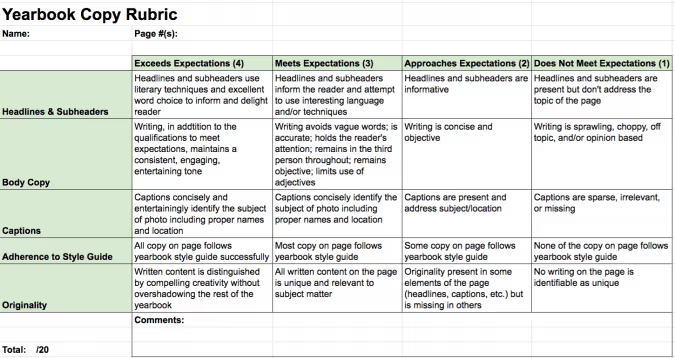
Get the Treering Yearbook Copy Grading Rubric here.
By assessing the writing on each page, you achieve two things. First, you give your students a tangible grade for their hard work. Second, you can vet the copy on every page of the book, which gives you an idea as to how everything fits together tonally and whether the book as a whole adheres to your established style guide.
Yearbook Rubric For Grading Design
While assessing writing is straightforward, design can feel subjective; we can’t all be trained art critics, creative directors or teachers, after all.
In the downloadable template we’ve created, the categories for assessing yearbook page design elements are: typography, color, photographs, adherence to style guide, and cohesiveness. Let’s take a closer look:
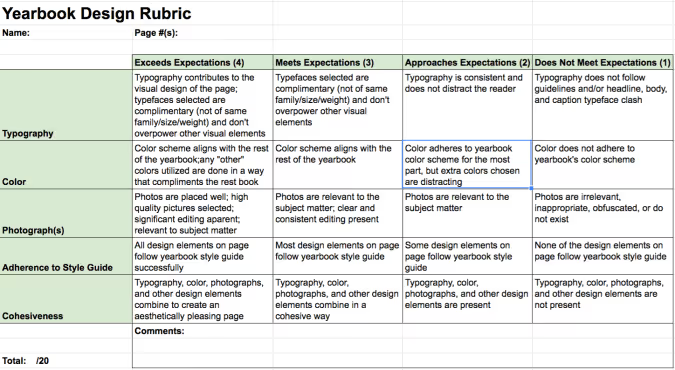
Get the Treering Yearbook Design Grading Rubric here.
As a result, you might be tempted to break the elements of design into a handful of granular rubrics (one for photography, another for layout: you get the picture). While there’s nothing wrong with doing this, developing a rubric that takes everything into account is a better approach.
Here’s why:
Ensuring that the individual elements work in concert is as important as the quality of those elements in their own right. For those for those classes where the principles of design are just beginning to be explored, this is important. Focus on the whole first, then the specifics later.
If you’re teaching a yearbook course and need to grade your staff on their work, rubrics are the perfect way to do it. If your staff is composed of after-school volunteers who won’t be graded on their work, rubrics like the one’s we’ve included above can be a fantastic way to provide actionable feedback and ensure high quality design and copy on every page.

6 threats to productivity for yearbook teams
Certain activities and behaviors drain time and diminish returns. If the goal is to do your best book yet, and you struggle through the process, check out the advice below from current advisers on being more productive. Select one or two areas to tackle immediately and watch your yearbook program become more organized and your team more aligned.
1. Lack of clear deadlines
Without clear deadlines, yearbook tasks can drag on indefinitely. This lack of structure can lead to procrastination and missed milestones, ultimately delaying the entire yearbook project.
It’s essential to make a plan for success based on/around your school's calendar. Find out when significant events will happen and assign someone to them to ensure you'll get great coverage (photos and interviews).
Party
OK, party may be a misnomer.
Celebrate milestones to keep students motivated. Whether completing the first draft of a section or reaching a major deadline, acknowledging these achievements can boost morale and keep the momentum going.
Full disclosure: I used to think when I wrote on the board something like, “All fall sports due 10/18,” students would break that down and create their own copy, interview, and game photo mini-deadlines. I didn’t realize I had to teach project management as well.
By determining productivity milestones such as mini-deadlines for setting up photo folders, getting layouts on pages, and finalizing spreads, students knew the necessary steps. We celebrated every 15 books sold, 10 spreads completed, and when there was a yearbook presence at all-school activities.
2. Inefficient meetings
Meetings without a clear agenda or purpose can consume a lot of time without yielding productive outcomes. Long, unstructured meetings can drain energy and focus. Short, pointless ones detract from a purposeful project.
“Acknowledge and accept conversations that should be held ‘offline,’” Yearbook Artist Tevis D. said. She also advocates for shorter, more efficient work sessions with a time at the beginning to identify areas of focus.
Stand up meetings
Before the thought of another meeting makes you scroll away, consider why some meetings are time sucks: ill planning, no agenda, better off as emails… Now consider an alternative.
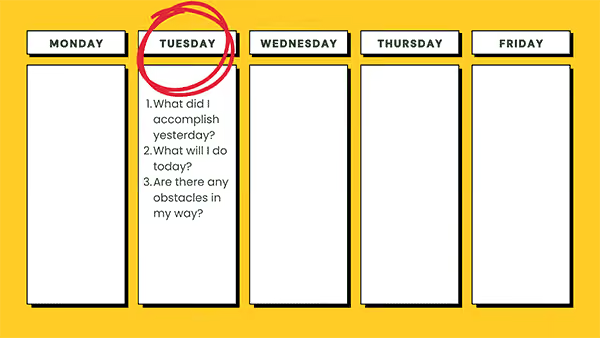
Stand-up meetings are brief, daily meetings where team members share their progress and challenges. Their effectiveness comes from actually standing. No one is overly comfortable, so dismissing and getting to work is easy.
Here’s how to make them worth your time: set a timer for 15 minutes and have everyone answer the three key questions:
- What did I accomplish [since the last meeting]?
- What will I do today?
- Are there any obstacles in my way?
Tips for teachers leading Sstudents
Teachers can use stand-up meetings with students for accountability and track progress. It helps students develop a routine and stay focused on their tasks because they will each take a turn verbally stating their goals and accomplishments.
Application by parent volunteers
For parent volunteers, stand-up meetings can be conducted at the start or end of each work session. This keeps everyone aligned and aware of challenges that need addressing.
“It is always a good idea to follow up on these tasks in an email or handout after the meeting,” veteran yearbook adviser and Treering Yearbook Evangelist Ed G. said.
3. Over-editing
Constantly revising and over-editing pages can eat up valuable time. While some revision is necessary, excessive tweaking can lead to delays. Establish clear guidelines for when a page is considered "final" to avoid endless editing cycles. Unless your yearbook tradition includes a fall delivery or ship-to-home, you want to make your final deadline.
“If students get the yearbook later than expected, they won't care how perfect it is,” Ed G. said. “They will remember getting it late and not being able to get all of their classmates' signatures.”

He advocates for sharing a disclaimer so students and families know it is a volunteer-driven effort. (You can make it your own by editing it here.)
4. Disorganized assets
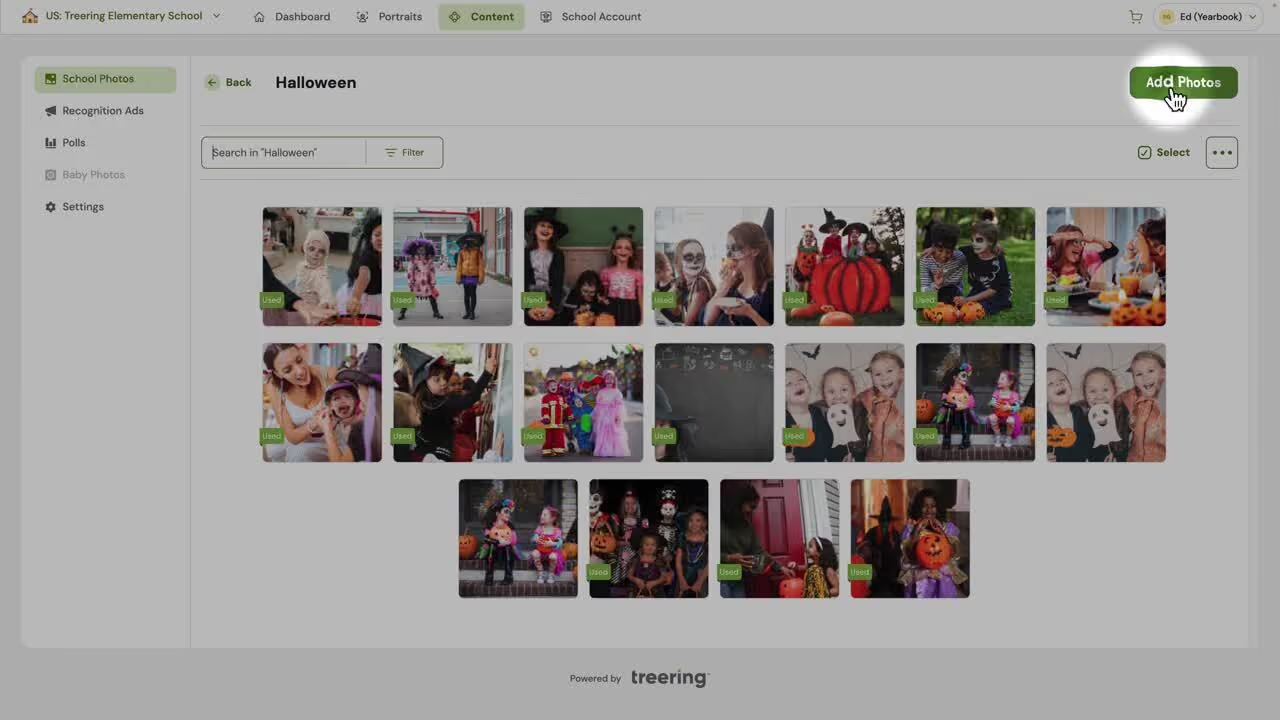
Managing photos, articles, and other yearbook content without a proper organization system can lead to wasted time searching for files. A well-organized photo management system is crucial.
“Upload photos as soon as possible after an event and use tagging and folders to keep organized,” Kate H. said. (She leads two volunteer yearbook teams for her son’s elementary school and daughter’s dance company.) “Bonus points if you can add your photos to the spread at the same time too.”
5. Unclear roles and responsibilities
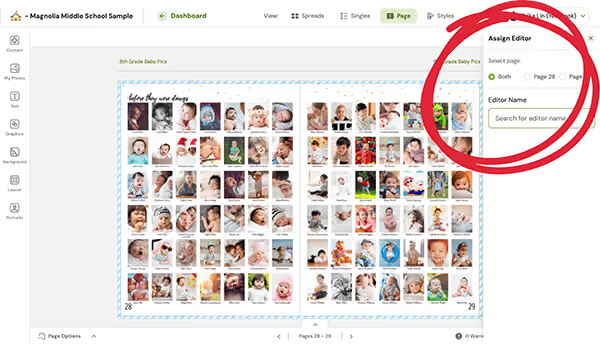
When team members are unsure of their roles and responsibilities, tasks can fall through the cracks or be duplicated. Clear role definitions help ensure accountability and productivity.
“I think every kid on the team was assigned to the same pages this year so it was unclear who was actually in charge of it,” middle school club leader Ali J. said.
Tips for leading students
While it’s important to allow students to take ownership of the project, they will still need guidance and support. You can do this by:
- Assigning yearbook spreads to one or two students max
- Having pre-assigned job descriptions/roles
- Being available to answer questions
- Providing actionable feedback
- Teaching them to use the Help Center
Application by parent volunteers
Clarity in roles helps prevent duplication of effort and ensures that all aspects of the yearbook are covered. Teams should have codified expectations for:
- Who will photograph each event
- When photos should be in their folder
- What activities will be open for submissions and how this will be communicated
Regular productivity check-ins (see stand up meetings, above) either in person or via video calls, keep everyone informed and engaged.
6. Unresolved conflicts
Interpersonal conflicts that are not addressed can create a toxic environment in the yearbook club, lowering morale and productivity. Addressing issues promptly is key to maintaining a productive team.
Early detection, while uncomfortable, can eliminate problems later on. Address it (kindly) as soon as it happens so your team can press forward.
When you do get that face-to-face moment, maintain your professionalism:
- Communicate with specifics: instead of “You’re always unreliable,” try “You volunteered to take Fun Run photos and did not have a backup in place when you were a no-show. What is your plan to get pictures?”
- Keep it focused: the conversation should center around yearbook responsibilities and not on personal issues. You’re not meeting to be a relationship counselor, life coach, or even a friend. You’re a project manager looking to complete a job.
- Be proactive: document what will happen next. If your yearbook volunteer wants to remain in the role, write out what it will look like with clear expectations and deadlines. Also include an “out” clause if your volunteer continues to be unreliable. Share a copy with school administration if your volunteer is a student or co-worker.
Teambuilding
Obvious statement: effective teamwork makes for a successful yearbook project. Here are our favorite ideas to improve rapport and trust up front.
Tips For Leading Students
Formal activities, such as an exercise, and informal ones, such as a bell ringer, help students open up. Debriefing can also increase empathy: ask students what they can do to make yearbook interviews less intimidating for students outside of the yearbook team.
Application by parent volunteers
Parents aren’t going to want to sit around constructing marshmallow and spaghetti towers. Instead, schedule some forced fun:
- Pickleball and a playdate at the park
- Share team members' baby on the parent group's social media channels and ask followers to guess who (while asking for baby pics for the yearbook)
- Coffee after drop-off
- Yearbook Team Night Out at ax throwing, a driving range, or a craft café
Careful refinement of your workflow and the elimination of yearbook productivity blockers will reduce stress and improve morale. By identifying and addressing these common barriers, you can significantly increase productivity and ensure the smooth and timely completion of your yearbook.

4 ways to shake up your end-of-year yearbook party
As the end of the school year approaches and yearbooks get delivered, it’s the perfect time to throw a yearbook party. What better way to remember the year than to go through your yearbook and host a signing party?! We know when it comes to throwing a school party that everyone just thinks of one thing – pizza – but yours can be so much more. A class party should be about celebrating and making memories, not just eating food (to be honest food is always the first thing that pops into my mind, but I digress).
As this year has been so different, we wanted to make sure you had some ideas on how to celebrate the memories made in the yearbook, whether you were in school or virtual, and for students who bought a yearbook or not. If this year taught us anything, it's that you have to find the time to be present and live for the moment - celebrate with one another. Social distancing can, in fact, be social!
Here are a few in-school party ideas:
Throw a blast from the past party
As a parent volunteer or teacher, there are a lot of ways you can take your students back in time. So when you’re ready to throw your yearbook party, set the scene by printing out some fun pictures you’ve taken throughout the year and hang them around the room. Or, if you’ve kept any previous party decor from other celebrations like Halloween or pie day, you can create themes throughout the room to reflect the year that has passed. Decorating the room with old photos and decorations is a great way to remind your students of all the good times and bonus, you get to recycle old projects, while keeping party expenses down!
To liven up the party and get the students excited, have them bring in their favorite projects of the year to reminisce on all the great things they’ve learned. This party will encompass all the memories from the yearbook, the decorations, and even their learning experiences. While all the fun is happening, students can sign yearbooks and share something nice about each project they brought in.
If you can, really blast to the past by bringing each student in fake feather quill pens for them to sign each other’s yearbook.
Host pop-con with popcorn
A fun way to throw a party in the classroom is to get students involved in a craft and whether they bought a yearbook or not, throwing a yearbook party is about celebrating memories and making more. A similar craft to a yearbook that elementary students can make is a comic strip! Give each student some time to go through the yearbook and then celebrate by letting them create their own mini-book or comic strip of their favorite school-year memory. Letting them create this craft on their own will help them develop mentally, socially, and emotionally.
And everyone loves a good play on words, so add some popcorn for everyone to enjoy while they make their Pop-Con comics! Even if you still have to be socially distant, separate the popcorn in individual cups or baggies. After everyone has enjoyed their popcorn and drawn their comic, have them go around the party and sign their yearbooks (or comic strips) as they chat about all the good times. This party gives all the students an additional souvenir of the year and more fond memories of their classmates.
Make a magnet memory
If you work in the classroom, you know students love to bring something home to show off. This yearbook party, which involves making a mini book magnet, creates another memento for students to bring home celebrating their year – just like the yearbook. You’ll need some more supplies for this craft including a hot glue gun and magnets. Similar to the last craft, start your party off by letting the students explore the yearbook to find what memory they want to recreate. Provide 3x4” cardstock paper for students to fold and draw pictures of recess, lunch time, masks or anything else that sparks excitement.
After the students get their time to cut out and color a little mini book, let them sign their mini yearbook and send them around with their own pens to sign everyone else's real-sized yearbook. Make sure everyone turns in their drawing, so you can glue the magnets on and return their crafts before summer break.
This party ensures all students have a memento for the year!
For those celebrating the end of the year virtually, here are a few remote party ideas:
Throw a yearbook reveal party
When you’re celebrating school milestones virtually, it can be tricky. But a fun way to experience the yearbook is to reveal it! Using Zoom or another platform, take your students through each page of the yearbook, almost as if you are reading a story aloud. Another way to liven a yearbook reveal party is to have a surprise guest come in to share a few pages. You could use someone like the principal or another teacher as long as your school’s guidelines permit.
Give the students time to see each page, comment on its contents and share excitement about the inclusivity of themselves and their classmates, which will likely be the pages they love most. If you throw any kind of contest for your students’ drawing to be on, give them a shoutout. Some yearbook companies even have features that allow you to sign yearbooks digitally, which is definitely a perk with schools having to do many things virtually this past year.
This year was a challenging one that resulted in many unique moments for students. Because of this, the yearbook will be looked at for many years to come. Take time to celebrate the fact you and your students have made it! Congrats Students, teachers, and parents... you did it!

The one set of yearbook flyers that can boost your sales by 50%
We all know it: yearbook flyers are one of the best ways to market your yearbook. They’re cheap, they’re fast, they’re easy to make (in fact, really awesome yearbook companies will give you templates to use). And they’re really effective.
That one sheet of paper can tell each member of your school community everything they need to know about the yearbook: when it goes on sale, how much it costs, how they can order it, when they need to order it by.
But, as much as they work, yearbook flyers do fall short in one key way; they don’t do a great job of convincing people why they should buy the yearbook.
See, the traditional yearbook flyer is designed to be an announcement. It’s not designed to be persuasive. If you really want to give your yearbook sales a boost, you need to change that.
The great thing is, it’s very easy to do. In order to persuade people to buy your yearbook, you need to do three things:
- Answer their question of “What’s in it for me?”
- Only give them enough of the answer that they’re oozing with curiosity.
- Make buying the yearbook the only way to get the rest of the answer.
When you do all that, you have a yearbook flyer that looks like this:
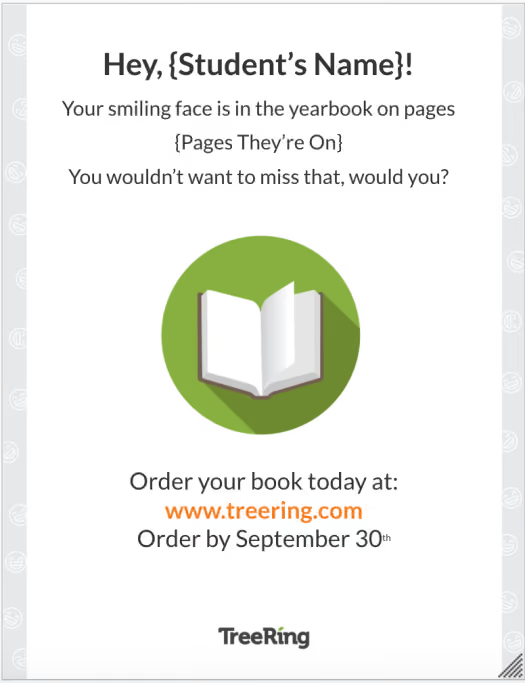
Maybe you’ve seen this type of flyer on Pinterest or heard about other schools using something like this. We certainly had. But what we hadn’t seen (or heard) was how well they worked.
So, we reached out to Angie Allen, the yearbook adviser at Elizabeth Lenz Elementary School in Nevada, to talk to her about this type of flyer. She’s used it for two years and, this year, this approached to her flyers boosted her sales by 50%.
What we’re going to do in the rest of the post is to tell you why these flyers work and, with the help of Angie, share the steps you can take to create them yourself.
The science behind why these yearbook flyers work
Before we go any further, here’s Angie on why she created the flyers:
“I thought, if we told the students and their parents what pages they were on, it would feel more concrete than a ‘You’re probably in the yearbook.’ message... It works. We sold 227 yearbooks prior to the flyers going out and we ended up selling 370.”
Angie’s instinct was dead on. Interestingly, though, there’s a scientific reason behind it.
Think about all those headlines you see on Facebook and Twitter: “...You Won’t Believe What Happened Next” and “How I {insert amazing feat} In Just {insert ridiculously short time frame}” It’s nearly impossible not to click on those headlines, right?
If they almost feel like an itch that needs to be scratched, that’s because there’s a scientific reason for that: Those headlines are creating a
(or, if you’re being scholarly, an information gap).
Here’s the curiosity gap, as illustrated by a nine-year-old on a playground:
The theory behind the curiosity gap is based in psychology and goes like this: when we’re confronted with a gap in our knowledge, we feel a primal urge to close that gap—and we’re willing to take any action to do so.
"Such information gaps produce the feeling of deprivation labeled curiosity," wrote George Lowenstein, the psychologist who developed the theory in the early 1990s. "The curious individual is motivated to obtain the missing information to reduce or eliminate the feeling of deprivation."
More recently, a curiosity gap study has shown that we’re most curious when we know a little about a subject, but not too much. In other words, something’s been done to raise our level of curiosity.
So, how does all this science relate to your yearbook flyers?
You can use your flyers to create that curiosity gap.
How to make yearbook flyers that create a curiosity gap
- Tag your photos- This is prep work, and it might sound like a lot of work, but it’s not too bad if you stay on top of it. The trick is finding someone who knows all the students at your school. (Angie was able to work with her school’s librarian to identify all the students she didn’t know.) Also, tagging photos makes life a lot easier in the end. You can automatically create index pages off that data and make sure you’re including every student a minimum number of times.
- Create Lists- To start work on the actual flyers, Angie created a list of students who hadn’t purchased a book. She then used that list to check against her index and make sure she had candid photos of those students in the yearbook. (Angie also did the same for students who already purchased a yearbook.)
- Take Extra Photos- By cross-checking a student’s name against the number of times he or she appeared in the book, Angie discovered that some students were underrepresented in the first draft. So, she went to school and specifically sought out pictures of those students to include in the yearbook.
- Fill out & Distribute Flyers- After she added her extra photos to the yearbook, Angie sat down with her flyer template (which is really similar to this free one you can grab from us!) and filled out the information found on her index. Each flyer had a student’s name, the pages on which he or she appeared, and instructions on how to buy the yearbook. Then, she distributed the flyers to each student who hadn’t bought a yearbook.
Angie’s flyers did just that.
They answered the “What’s in it for me?” question by telling the student how many times he or she was in the yearbook and where he or she appeared. The trick is the second part of the flyer (where the photos are in the book), because, at that point, you’ve given the person everything but the photo.
This is where the curiosity kicks in.
(Real world example for you: Have you ever had a friend say, “Oh, my gosh! You have to see this photo I have of you. It’s so funny!” Piques your interest, right? This is the equivalent of that.)
So, how did Angie do it?
We asked her about that, and she shared her tips.
Angie said she’s found waiting to send the yearbook flyers until shortly before the order deadline is the best way to provoke someone to take action.
“We’ve had a hard time with sales at beginning of the year. People aren’t as interested then,” she said. “We’ve flooded them with flyers in the backpack and that sort of thing, but, at that time of the year, they can say, ‘Oh, I can wait.’”
By waiting until the end of the ordering window to distribute the flyers, Angie is able to create a curiosity gap and a sense of urgency. In other words, Angie is warning everyone: if you don’t act right away to find out what photos of you are in the yearbook, you might not have the chance to find out.
That’s a pretty tough warning to ignore.

2025 Yearbook cover design contest
Scoop, there it is! You covered the year, and now it's time to show off your work. With the books printed, passed out, and signed, we're kicking off our first-ever cover design contest. What's even cooler: Three yearbook teams will win Back to School Bashes for their entire school!
Cover contest entry period
Treering will accept submissions in each of the three categories from May 27 to June 10, 2025. The submission window closes at 11:59 PM PT.
Who can enter?
Entrants must be 18 or older and a Primary Chief Editor or Chief Editor at a US Treering school for the 2024-2025 school year. The school must also have an active Treering account for the 2025-2026 school year to redeem the prize package.
The winning schools must also submit three videos and six photos using a provided shot list for use on Treering's social media. A school official must sign a release to redeem the prize package.
To participate, complete the submission form and share a screenshot or photograph of the front and back of your yearbook cover.
Incomplete and multiple entries will not be considered.
Winner selection and notification
A panel of yearbook parents, journalism educators, and graphic designers will select the winners. Judging criteria include wow factor and creativity in one of the following three areas:
- School Spirit - mascots, school colors, and anything else that shows off your community
- Theme Development - an introduction to your visual and verbal theme
- Elementary Student Art - original art by K-6 students
We will notify all the finalists via email and phone on Monday, June 16, 2025. To meet prize eligibility, a representative from each school must complete the media release and agree to share video and still photos from their Back to School Bash.
Winners must redeem their prizes by October 31, 2025.
Prizes
All winners and finalists will receive 10 free yearbooks for the 2025-2026 school year.
The grand prize winner in each category (School Spirit, Theme Development, and Elementary Student Art) will also win a Treering-sponsored Back to School Bash.
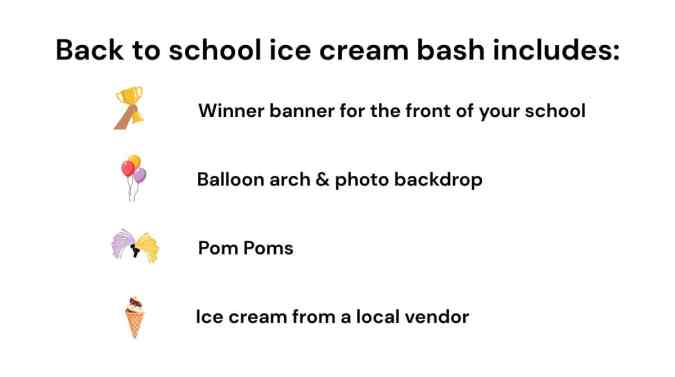
*Quantities based on the enrollment reported in your 25-26 Treering account.
Release
By submitting your yearbook cover, you have verified the approval of the original artist and anyone pictured, and you approve Treering to use your name, write-up, and school name for any marketing purposes, including but not limited to treering.com, social media, and mass media.
Contest FAQs
Didn’t you guys already do a design contest?
Yes! We wrapped it up a in April. The focus of this contest is yearbook covers.
Our cover is a secret until we pass out the books. Can we still enter?
Of course! Keep in mind, if you win, we will show off your cover on social media and our blog starting July 1, 2025.
I’m not 18. How can I enter my cover design?
Only Primary Chief Editors or Chief Editors who are 18+ may enter on behalf of the school.
A student designed our cover. How can we participate?
We will require a signed media release from the designers’ parents before a winner is announced.
Do I have to have social media to enter?
You do not need social media to enter our inaugural cover contest.
Can I enter more than one category?
No, you may only enter your yearbook cover in one category. Please choose School spirit, theme/visual identity, or elementary student art on your entry form.
How do I get a list of all the winners?
Treering will publish the winners between July 1-3, 2025, on the blog, Facebook, and Instagram.
Do I have to purchase a yearbook to enter?
No purchase is necessary to enter.
Can I enter any yearbook cover?
The contest is for 2024-2025 school year covers.

Yearbook staff application template: sign-up volunteers now!
A yearbook staff application might seem like an overly formal, entirely unnecessary step when recruiting students to help with the yearbook on a volunteer or after-school club. It’s not.
Sure, an after-school yearbook club creates a low-stakes environment for students to unleash their creative energy and to learn some awesome new skills, but it can also create problems: One, you could end up with more students than any sane adult could ever hope to manage; two, without a grade hanging over their heads, students could lose the motivation to finish their work. In some cases, you might end up dealing with both.
That’s why you need to use a yearbook staff application.
A yearbook staff application is essential to putting together a dedicated, enthusiastic team of student volunteers, and it lets you achieve four key things related to your yearbook recruitment and planning before you even have your first meeting:
- You identify the yearbook club roles you need, and how many people you need to fill them.
- You limit the size of the staff you need to complete the book.
- You attract students who are actually interested in doing the work needed for the yearbook.
- You find out what your students are good at and interested in before getting started.
Read the rest of this post, and you’ll know exactly when you should use a yearbook staff application and what to look for in student volunteers. The payoff? A yearbook staff that’s exactly the right size and that will stick around until it’s time to hand out the yearbooks.
When to use a yearbook staff application
In a perfect world, yearbook club would be an open door, where anyone who wants to participate could just walk in, take a seat at a computer and start plugging away at whatever needs to be done. But we know that can’t always be the case.
Here, then, are the times you’ll probably find yourself needing to use an application process as you recruit your students:
- Demand outweighs supply. As in you have too many students interested in the yearbook. We’ve seen this happen at schools where the yearbook is a big part of school culture. So many students are geeked up about the yearbook that it seems like nearly everyone at the school is itching to help make it. But if you have everyone help and there’s not enough work to really go around, you can end up with disgruntled group. Not fun.
- Eager starts end with empty seats. As in you have the right amount of students at the beginning of the year, but they drop off, one by one, until you’re left with a few dedicated (and soon to be overworked) students. If you’ve ever experienced this situation, you know how stressful it can be.
- Everything feels like a disorganized mess. As in you know what you need to get done—and you’ve got the students to help you—but you don’t know who’s going to do what or how anything’s going to get done. It’ll sort itself out, like it always does, but for a few days, maybe even weeks, it’s a nerve-wrecking beginning to yearbook club.
In these situations, a yearbook staff application can sort of serve as a bouncer at your open door.
You’re not necessarily using the application to weed through students and pick your dream team; you’re using it to find out who’s really into the yearbook and who isn’t. By giving students a little extra work up front, you’ll more easily find those students who are ready to do the work and you’ll more easily know which parts of the yearbook they want to help with.
Sure, it’ll reduce the number of student volunteers, but it’ll also increase the likelihood of you having a highly motivated team.
The 3 things to look for in yearbook staff applications
Just because the yearbook staff application is serving as a “bouncer,” it doesn’t mean you should review them. There’s lots of good stuff in there, and it can help you better understand your students and their motivations for joining the club.
So, you should read them. And, when you do, look for these things:
1. Did they complete the application?
This is fairly basic, but check over the whole application to make sure it was actually completed.
If a student scoffs at the idea of applying to work on the yearbook, or they crumple and toss the application into a backpack abyss, what are the chances that they’d be a committed contributor?
Sure, you could have an incredible photographer in the building who shuns formalities like “applications” and “attendance” in the name of art. By and large, though, an application is a great way to gauge future commitment and get to know your staff.
2. How do they fit the puzzle?
You need a diverse yearbook committee. Roles you need to fill include (but are by no means limited to):
- Photographers
- Designers
- Sales & Marketing Pros (those kids tweeting in the hallway between classes are about to become your best friends)
- Editor(s), for written work and images
- Interviewers/journalists in training
- Jacks & Jills of all trades
These students are going to be the lifeblood of yearbook, and getting to know their strengths and weaknesses at the beginning of the year can save you major stress down the road.
On your application, make sure you create a space for students to designate any skills or interests they might have. It’s also helpful to ask students which skills they’d like to develop.
Not only does this help you get to know your staff: it give you an idea of the roles underclassmen could fill the following year, too.
3. Is yearbook a priority?
Students are spread pretty thin. With stuff like school work, sports, Pokemon Go, and part-time jobs and at-home chores, it can be hard to commit to another activity.
Your yearbook staff application should ask students to be honest with the amount of time they can give. Just because a kid is busy doesn’t mean he or she can’t contribute in a unique and useful way. By using the information provided on the application you can set realistic expectations on an individual basis, ensuring a well-rounded, happy staff.
Set the tone when distributing applications
When students come to you for applications (you know, that time in the day when you tell them just how fun yearbook club is), be sure not to sugarcoat the experience.
You should absolutely highlight the fact that working on the yearbook is rewarding and allows for the application and development of skills (photography, editing, design, interviewing, and so many more), but this shouldn’t be an outright sales pitch. Be open and honest. Your goal should be to build enthusiasm amongst your prospective staff members while also making it clear that creating a yearbook takes work.
If you think that attending every club meeting is important, make that clear; if you want students attending as many school events as possible, tell them upfront; if you’re willing to be flexible on attendance, but expect work gets done at home instead, let them know that, too.
Setting expectations, in terms of attendance or general contributions, is a great way to establish which students are going to take things seriously and who’s on the fence before you even hand them an application.
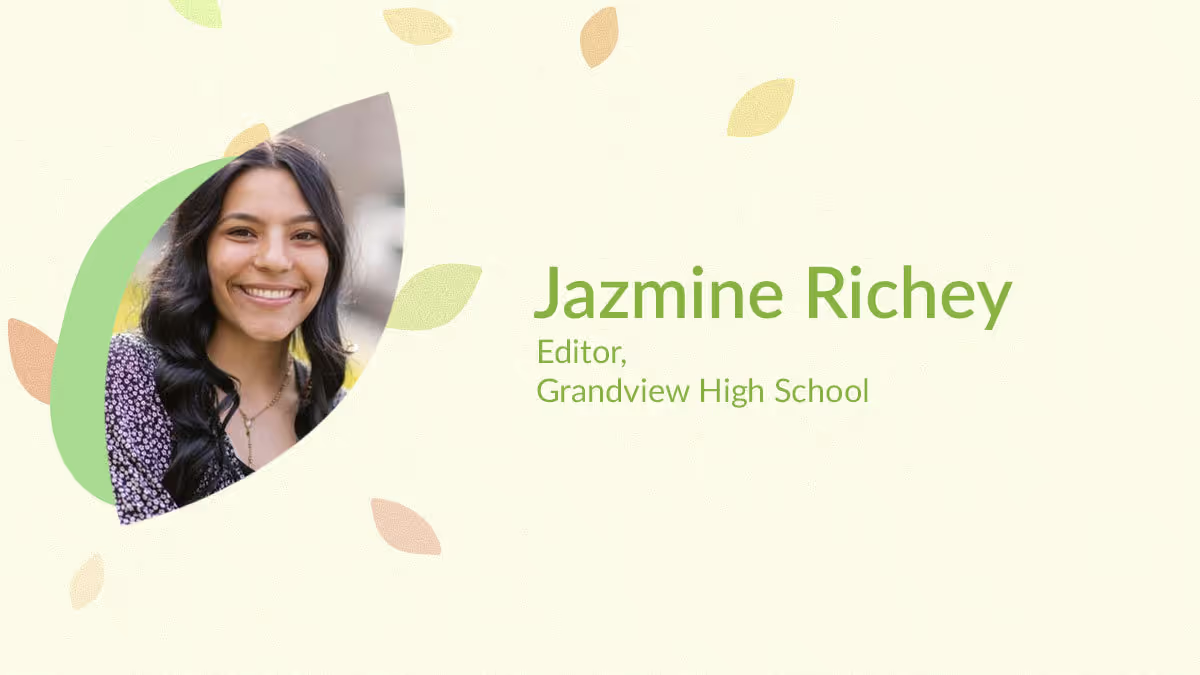
Yearbook hero Jazmine Richey and her editor share their vision
Treering yearbook heroes is a monthly feature focusing on yearbook tips and tricks.
In March, Treering Yearbooks announced its 2022 #TreeringMemoriesMatter Design Contest for yearbook advisers, coordinators, and editors to share their unique perspectives from their campus community. It’s time to meet the winners and glean their best practices for yearbook spread design.
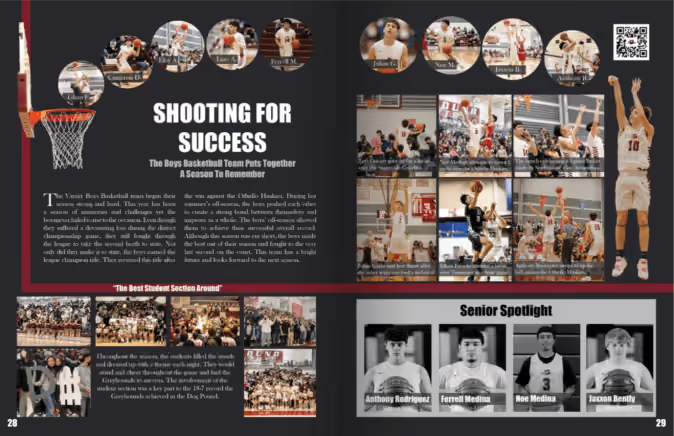
Jazmine Richey is a student editor from Grandview High School in Grandview, WA who was nominated by her editor-in-chief Lilly Kassinger for her basketball spread. This spread caught our eye and became the one to beat for several reasons: it shows basketball season from the fans and team’s POV, it’s modular, and there’s a highlight reel produced by Jazmine linked to the QR code.
Jazmine, what all went into creating this spread?
I wanted to create a spread with not only the sports players included but the huge student section our school held. I created a highlight video for our boys' basketball team and wanted it to be included on my spread to show parents, students, or anyone who buys a yearbook. I took a picture of our own basketball hoop and wanted to incorporate each of our boys by giving them their own basketball.
It was an exciting year for you: national recognition for your yearbook staff, basketball state tournament playoffs, a crowd in the stands, and a new campus building!
They're pretty excited, especially because it's everyone's first year in the yearbook class. We're all really glad our hard work has paid off like this. More than anything, this yearbook spread represents both the creativity of our yearbook team and the passion our school showed during the winter sports season.
Lilly, please describe your relationship with Jazmine and why you nominated her.
Jazmine is one of our spread developers. In addition to creating her spreads, she does photography and edits videos to create content for our school. My role as editor-in-chief is to edit the spreads made by our team to make them fit together and take care of the rest of the book's loose ends.
How does your team design the book?
Our team makes all our spreads in Adobe InDesign and everyone creates their own layouts. As the editor, it's always nice to see the way each person on the team likes to design their spread, because once they make a couple you can see what their style is. Then I get to make the little tweaks to tie them all together for our book
Explain the big tie-in: the red line.
The spread is built around what we call the Red Line of Equity, which is a red line that is on our hallway tiles in real life. As this is our first year in our new building, we decided to incorporate it into our yearbook as a design element featured on every page, tying back into our theme of "Paving The Way" as we take the new parts of the school and turn them into traditions. The line represents not only the presence of the Red Line of Equity in our everyday lives but the beginning of the creation of traditions here at GHS.
Our school's yearbook's main strength is our theme and the way it is present in all aspects of our design. Our Red Line doesn't run through every page just because. We gave it a meaning. Just think about what story are you trying to tell about your school and dive right into making it into a reality.
What advice would you give to another student who is just getting started?
The most important thing is to have a vision.
QR Code is a registered trademark of DENSO WAVE INCORPORATED.
Yearbook hero Grace Montemar's show-stopping design
Treering Yearbook Heroes is a monthly feature focusing on yearbook tips and tricks.
In March, Treering Yearbooks announced its 2022 #TreeringMemoriesMatter Design Contest for yearbook advisers, coordinators, and editors to share their unique perspectives from their campus community. It’s time to meet the winners and glean their best practices for yearbook spread design.
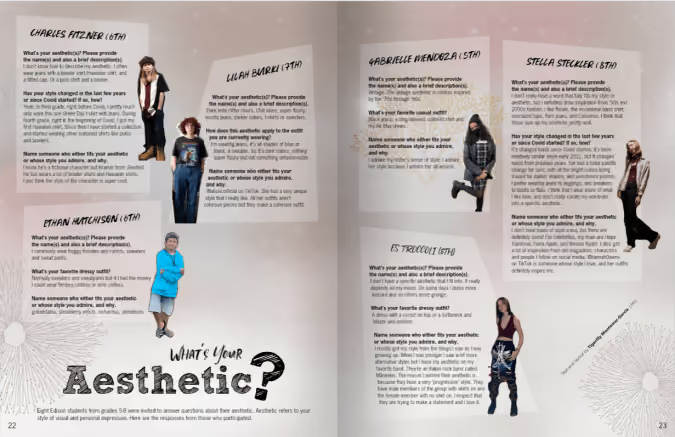
Grace Montemar is the Yearbook Club Adviser from Edison Regional Gifted Center in Chicago, IL. Her team earned first place in the middle school division for their “Aesthetic” spread. The reporting and design distinguished this spread.
Tell us about this show-stopper.
While we like to include several recurring spreads that appear in our school’s yearbook each year, we still like to introduce a few new features as well. This fresh feature allowed Yearbook Club to spotlight classmates from various grades whose fashion sense stood out from the crowd. The students who were invited to participate enjoyed answering a brief questionnaire that helped to illustrate their distinctive style.
How does Edison RGC design the book?
I typically like starting with a general template but then customizing it to suit the needs of the specific spread. Some of my yearbook students prefer creating a layout from scratch, which takes much longer. But if they’re committed to doing it this way (and time allows for it), then it’s totally fine.
I also try to manage expectations upfront so they understand that there will usually be a lot of polishing involved before their spread is fully ready for publishing in the yearbook. One thing that my yearbook students love is seeing their names attached to their work. It gives them a sense of pride to see their byline displaying their name and grade on any spreads that they’re involved in.
What does your role look like as a club adviser?
My responsibilities include recruiting and training the 6th-8th graders who join Yearbook Club, running the weekly meetings, empowering the students to help build the ladder and decide content, art directing them in designing their layouts, and helping them to proofread, edit, and write copy.
I also handle the marketing aspects––sending announcements to key channels for sharing with the intent of promoting sales with parents, as well as encouraging photo submissions.
How do you gather photos?
Pre-pandemic, the majority of photos were taken by myself, and/or I recruited parents who had an eye for photography to cover events that I couldn’t attend. With in-person events slowly starting to happen this school year, I’ve been able to resume taking some photos but we’re still relying more on community submissions than we have in past years. In order to keep the submissions coming, we periodically request specific photos throughout the year (to avoid receiving an onslaught of images too late in the production timeline).
What advice would you give to another person who is just getting started?
Congrats on accepting your role with the yearbook! It can feel overwhelming to take on this endeavor but you’ll do just fine. Here are some tips to help you:
- Take things one step at a time––but don’t wait. If you work on the yearbook little by little, regularly, and continuously, it’ll be much easier to produce, as opposed to cramming and rushing everything all at once at the end.
- Ask for help from your community when you need it. Need more photo submissions? Be sure to ask for help from the room parents and PTO in spreading the word. Still trying to recruit students? Ask for help from the principal or certain teachers in drumming up interest. You’d be surprised who’s willing to help (and how) if you just ask.
Yearbook hero Elyse Hernandez: she did it again
Treering Yearbook Heroes is a monthly feature focusing on yearbook tips and tricks.
In March, Treering Yearbooks announced its 2022 #TreeringMemoriesMatter Design Contest for yearbook advisers, coordinators, and editors to share their unique perspectives from their campus community. It’s time to meet the winners and glean their best practices for yearbook spread design.
Last year, Elyse Martinez from Del Norte Heights Elementary School in El Paso, TX submitted a face mask fashion spread for the inaugural #TreeringMemoriesMatter Design Contest. The spread won second place. Fast forward a year, and her design earned the top prize among the elementary schools.
Congratulations, Elyse!
I believe that two years of national recognition tells the community that our yearbook is timely and a great representation of current events. It lets the community know that much love and intent goes into the creation of a book that they can cherish as they look back on the memories of their child.
I am very competitive and I'm also very proud of the work I put into the yearbook. I also love to win stuff! The option to win additional free yearbooks allows us to provide books as an incentive and a reward for students who otherwise might not have the opportunity to purchase the yearbook.
Tell me how your school community responded.
We are excited and proud! As I began sharing with students, they cheered—especially the class that was key in planning the Sept. 11 tribute. They were the ones who read special excerpts to commemorate the event. One wrote a poem she read out loud, and our Music teacher played a special musical selection. We invited our local fire department as well as the JROTC unit from our high school, Bel Air High School. It was an exceptional morning that didn’t leave a dry eye on the field.
What does your position as Campus Reporter entail?
My role is to document the activities on our campus that celebrate our students and then I post them on our social media accounts. Because I take copious amounts of photos, I have an ample supply to use in the yearbook. I have learned that it is important to create folders for each event and drop them in as soon as possible. That makes it so much easier to create the pages as I already have the pictures grouped by event.
Once you have the photos, how do you begin the design process?
I start with the Treering Yearbooks templates to lay out the photos. Then I add or adjust as necessary to fill it up with all the pictures I’ve taken. When I design my yearbook, I try to include as many events that happened on campus as possible. Because when families look back at their yearbook, I want them to have fond memories of their experiences.
What advice would you give to another yearbook coordinator who is just getting started?
If someone was just starting out on their yearbook, I would tell them, “You can never take enough pictures!”
It is so easy to snap a photo with our digital cameras (especially our phones!) and you can easily cast aside those that don’t come out. You can never recapture a moment that has already passed.
Secondly, although seeing and capturing your students engaged in an activity is easy and fast, parents can not resist when you capture their child looking at the camera and smiling as they enjoy whatever it is they are doing. Those smiles—they are priceless!

5 yearbook volunteers to recruit
The first step in creating the perfect yearbook is recruiting your ideal yearbook volunteers. In a perfect world, each group member will bring a unique set of strengths to the table while working cohesively with one another. We’ve identified five personality types to consider as you begin assembling your “dream team,” along with best practices for guiding them along the path to print-ready.
1. Mom-a-razzi
There may be a parent or two on campus with professional photography experience, and that’s super. It’s no longer a requirement with many smartphones. For the scale of your yearbook project, you may need a class or grade parent (think an old-school journalism beat).
These parents are taking photos already, so you’re not challenging them beyond a simple, “Please take photos of other people’s children.”
Remember, you can easily build a yearbook if you have the content.
2. The Gatekeeper
If your team is not comprised of students and fellow staff members, you need an on-campus stakeholder on the VIP list. This person will be able to get you the inside scoop on school happenings, including the best way to sneak into classrooms for academics photos or how to set up shared photo folders with the faculty.
3. The Social Maven
Part yearbook hypeman, part yearbook marketer, this person will be in the know: stories, events, and students. She will take care of your sales campaigns and make sure everyone knows how, when, and where to buy the yearbook.
4. The Type-A Virgo
Do you want your yearbook to have a cohesive look? Do you want pages proofed and copy-edited? The Type A Virgo is your go-to for organization and project management.
5. The Cruise Director
While this yearbook volunteer isn’t the captain of the proverbial ship, his role as designated fun officer is clutch. He’s collaborating with the Social Maven on your next marketing campaign and coordinating a yearbook distribution party with school staff. (More than likely, this person is also in charge of several other committees to build community and school spirit.)
Managing Yearbook Volunteers
Now that you’ve identified your dream team, here are a few tips for managing the workload.
1. Create and Communicate the Plan
Build a project plan to determine your deadlines, tasks, and roles. We love beginning with a yearbook ladder to identify coverage and determine the yearbook page count.
2. Follow Up, Follow Up, Follow Up
Monthly check-ins, volunteer work nights, and ongoing communication help ensure the job you started will be completed. We’ve heard from volunteers that they feel their work is valuable with regular communication and seeing their contributions in action. Because their time (and yours) is valuable, make sure communications
- Are timely: give yearbook volunteers what they need when they need it. Only the Type A Virgo needs her March responsibilities on September 14 (and we love her for it).
- Have a set goal: predetermine the action(s) the team should take as a result of your communication. Do you need responses for the potluck or help tagging photos?
- Demonstrate appreciation: while I’ll never grow weary of hearing I’m awesome, meaningful feedback resonates much more. In your communications, try to highlight contributions often (e.g., “Because of all the Fun Run photos Tameka and Evelyn uploaded, Javier is now designing the layout! Thanks, team!”) and show how they benefit the yearbook.
3. Celebrate Often and Address Problems Early
When pages are locked, celebrate! When portraits are uploaded, celebrate! These festivities can be as simple as meeting for coffee after drop off or a dessert night in someone’s home.
Conversely, if things aren’t working out, be like Vanilla Ice and solve it.
Yearbook Hero Tina Schumacher tackles turnover
Treering Yearbook Heroes is a monthly feature focusing on yearbook tips and tricks.
When the yearbook adviser left St. Francis, a new teacher inherited the job. Then another. And another. Then, it was Tina Schumacher’s turn. She inherited unsold books and a program that was in the red. School leadership charged her with getting the yearbook program out of debt.
What did you discover when you became the adviser?
With our previous publisher, you had to sell a minimum number of books. And we weren't always selling that minimum, but we had to buy that many. In a closet at the school is anywhere from eight to 15 yearbooks, depending on the year. And then the kids would sell ads to go in the back, which didn’t make up the difference.
How did you turn things around?
I started hunting. I thought, there's gotta be a different way. When I found Treering, it was too good to be true. Those are the words that I said to the principal. I told her I found a way we can make our yearbooks and make money doing it.
Our first year we did a tiered sponsorship for local businesses. We just made platinum level, gold, etc. donor levels and put a list of names of supporters rather than ads to save on pages. I told them it would probably be the last time we would ask them, and we have been out of debt ever since. I was able to buy a new camera and a couple new lenses.
We are never in any kind of a money crunch, which is great, but on top of that we have really great books.
You create an elementary yearbook, a secondary one, and a book for the One Act. How do you balance multiple books at once?
When we started using it, the kids knew more than I did. They showed me around and taught me how to do things. I'm not necessarily the one making the high school yearbook: it's theirs, so they can do with it as they see fit provided as long as it's acceptable by me.
For eight years, I’ve made a book of still photos from our One Act; I moved that over to Treering. It's got pictures of the cast and crew working on things. It's mostly a book of the story of the play.
I think this is my fourth elementary book. Parents loved it. It started because I had too many students in journalism class and they needed something to do. I really kind of handle that book myself now.
How does Treering Yearbooks support you?
It is nice to be self-sufficient. If we continue to use this company we will not have to worry about being in debt.
Also, if I don't know what to do or forget how to do it, I contact support and they walk me right through it and ask if I need additional help, No one acts like I should know this by now.

Traditional vs. trendy
When beginning to develop your yearbook theme, the choice of a traditional or trendy theme determines the layout design and the overall feel of the book. Many see traditional and trendy as opposing ends of a design spectrum. We hope to show you how you can fuse them as you create your yearbook theme.
Traditional design
Traditional yearbooks can be timeless. Their design structure is safe and predictable, easing readers through each turn of the page. Their appeal is not limited to students: parents, teachers, and alumni also feel included.

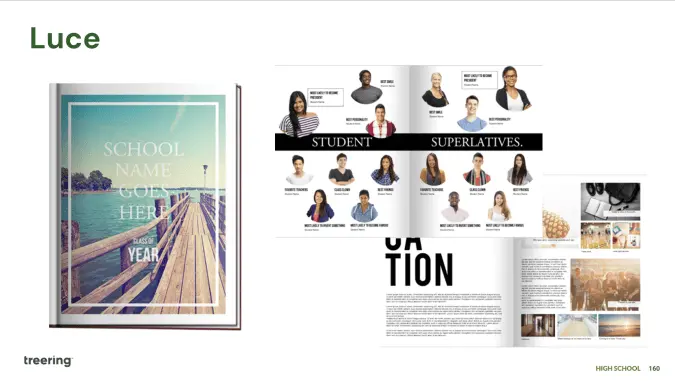
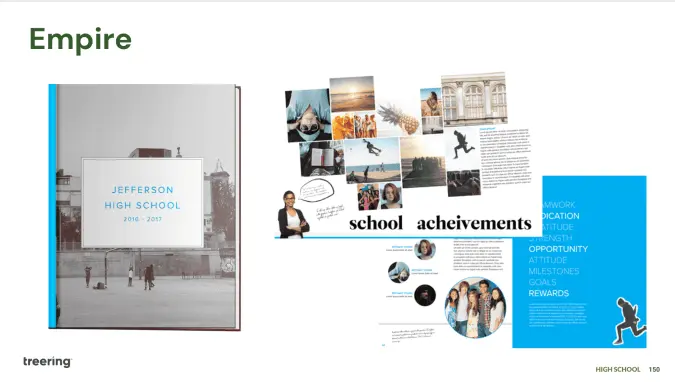
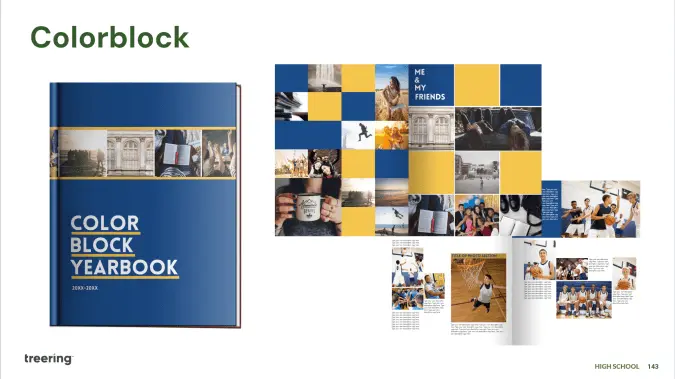
When following traditional design, design elements such as consistency, repetition, alignment, and proximity bring beauty and order to the design. Everything has a place and a purpose.


Some may argue that traditional design takes away from creative freedom, and they opt for the opposite: a yearbook led by a visual trend.
Trendy design
Inspired by a new social media platform or pop culture movement, trendy yearbook themes can be the creative equivalent of a blank check. Graphics and layouts can be playful, dynamic, buzzworthy, or a combination of all three! The immediate response from the student body is reactive, in a good way, because a trendy theme is an in-the-moment one.
Beyond hashtag sensations, fashion and art trends may drive the visual concept. Retro, scrapbook, and organic yearbook themes capture the spirit of students. Each conceptually has an authentic vibe and pushes traditional design norms by being more aligned with a DIY ethos.
Cons of using a trendy yearbook theme
Because they are deeply connected with a visual concept, they may not be fully developed verbally, leaving the theme concept feeling unfinished. While trendy yearbook themes immediately connect with the student body, they may also quickly feel outdated.
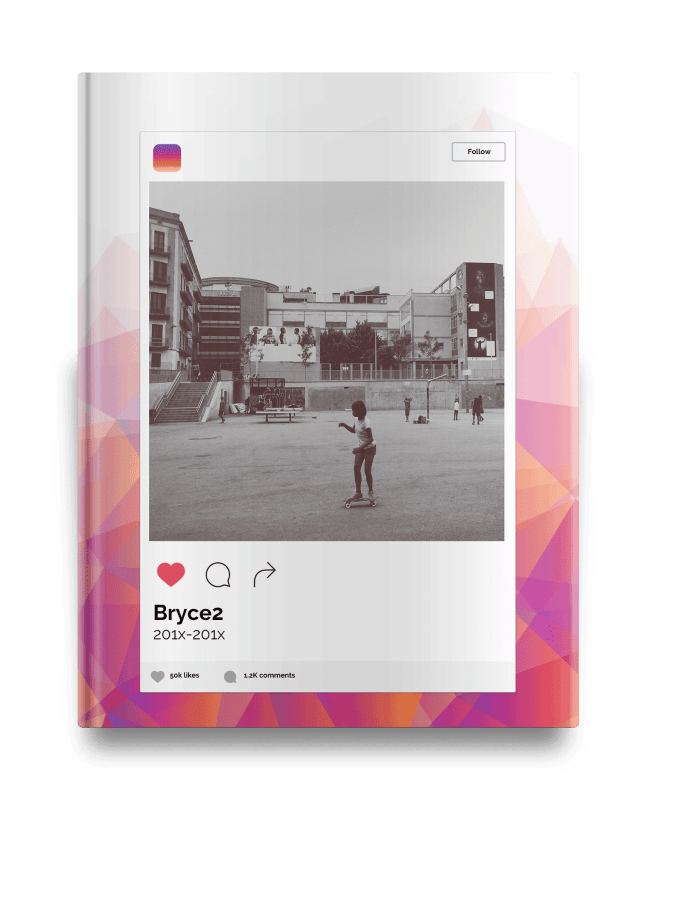
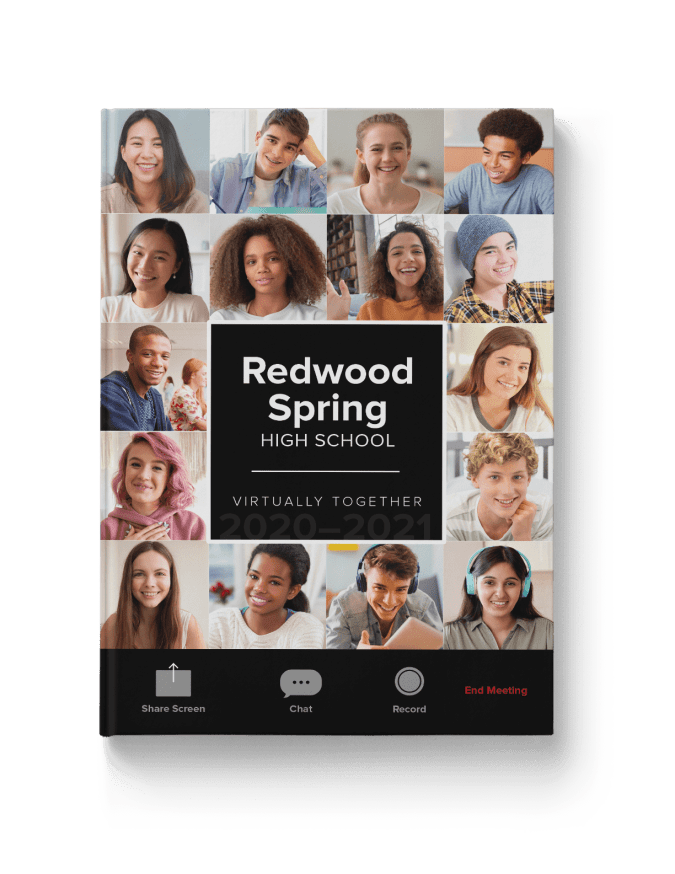
Take a look at these three tech-inspired Treering themes. Each captures a specific moment over the past ten years: the advent of "likes," virtual classrooms, and a glow up.

How to choose?
The best way to select a visual identity is to begin with the verbal. What story do you want to tell? Why?

Think about longevity and what value you want the yearbook to have in ten years or more. Determine if you want to create another volume in your school’s legacy or capture a specific moment.
Classic and current: a blended approach
A traditional book can feel dull with page after page of safe design. Conversely, a trendy book without proper hierarchy and balance feels chaotic. That’s why we advocate for trend-forward with timeless structure; it’s the Hannah Montana of yearbooks. Traditional design grounds the book, and trends bring it to life.
Ideas to blend traditional and trendy design:
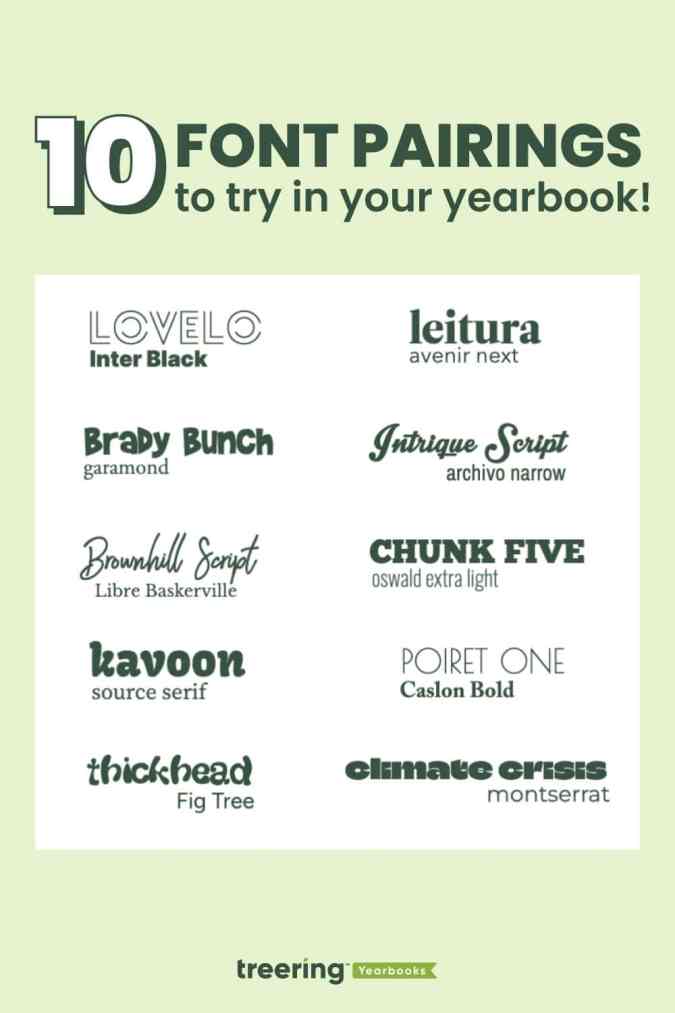
1. Font pairings: Use contrast to create your headlines
2. Color palette: Add a pop of color to a traditional color palette
3. Visual “hits”: Use up to three elements throughout the book to add variation

4. Showstopper spreads: Punctuate portrait pages with a highly visual spread
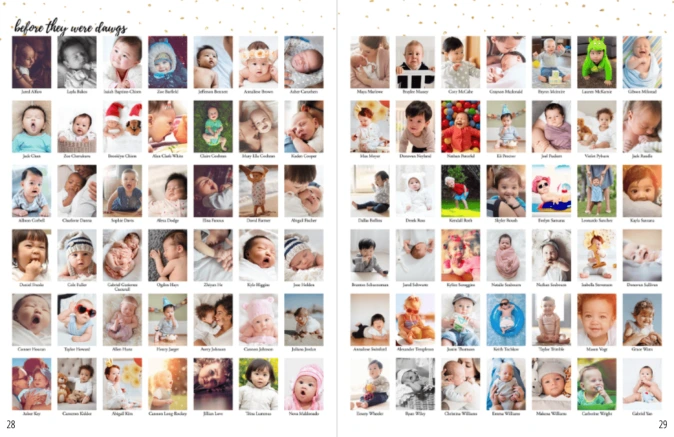
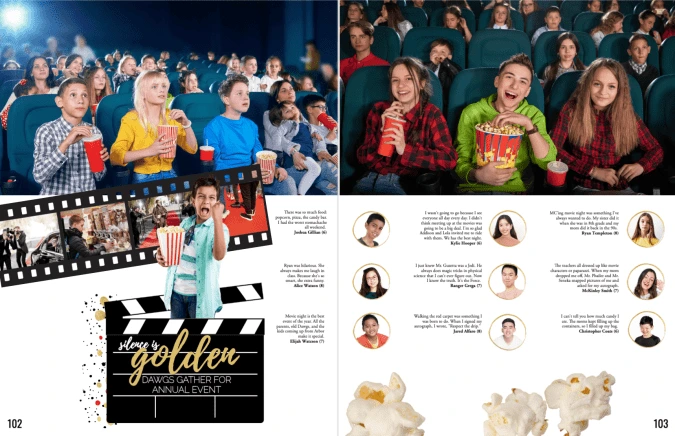
5. Trending treatment: Add a photo treatment to break up a traditional layout

Keep in mind, great design never goes out of style. And, when paired with quality captions and copy to tell the story of the year, that’s what makes your yearbook stand the test of time.