.svg)

Coverage tips
Looking for inspiration, design tricks, how to make a great cover, promoting your yearbook and engaging your community?
Most recent

What should I do with all my child's art?
Dear Mama, you're not alone. Many of us look at the creations in our children’s portfolio and think, “Now what?” The fridge is covered. The more ambitious among us swap out art in frames, while others load up bin after bin (or just chuck it in the bin). We have an art display idea to help you preserve your child's memories.
How to photograph your child’s art
The number one rule in photography applies here: get your lighting right! Eliminate shadows and flares by having multiple points of lighting. Natural lighting by a window is best.
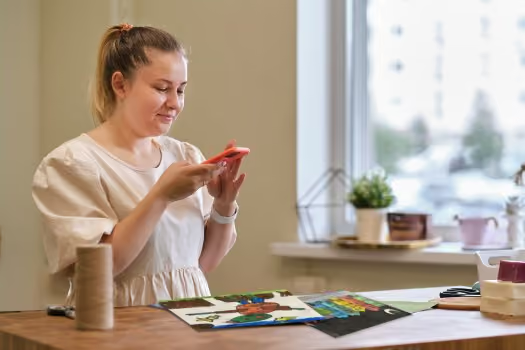
Second, you’re going to want to make sure your camera angle is congruent to your art. (See, that high school geometry class has real world application!) This gets rid of distortion. You can make slight adjustments using your camera app.
Personalized pages
Now that your child’s art is digitized, do something with it!
Since every Treering yearbook comes with two, free personalized pages that print only in your yearbook, you can create a mini-gallery to display paintings, sculptures, and sketches without giving away more real estate in your home. (You can also add more pages for homework, family vacations, and events.)
Fast forward to high school graduation: all your yearbooks are lined up and you can show off your child's progression in penmanship, Scouting, or science fair.
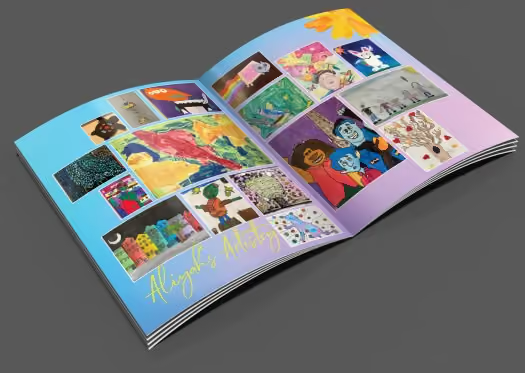
Instead of suffering from mom guilt, you can display your child's year in art forever.

Yearbook in 60 days - part 3: yearbook design
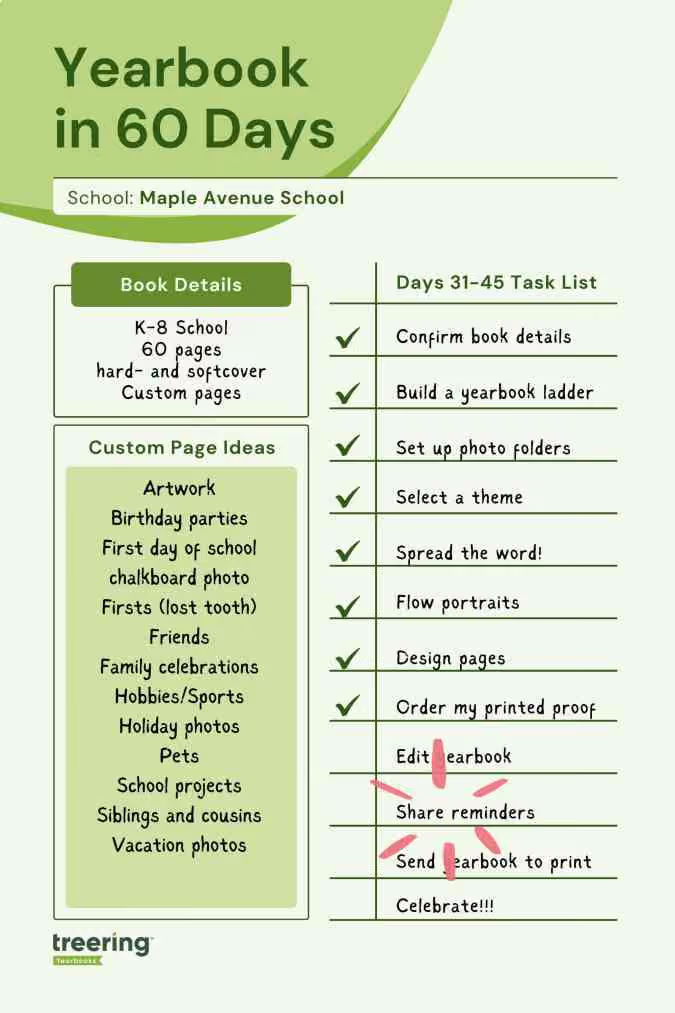
Two blogs ago, we began our journey to start and finish a yearbook in 60 days. From establishing a ladder and crowdsourcing structure to flowing portraits and adding in fall events, the first month yielded a near-complete yearbook. These next fifteen days of our adventure include proofing, promoting, and packing in spring events. All the resources you need are linked below (for help center articles, you will need to log in to the editor help center).
Yearbook (yes, it is a verb) along with us on Facebook, Instagram, and TikTok.
1. PDF proofing
Just because we are speeding through the yearbook creation process doesn’t mean we will be careless. Proofing tools such as downloadable PDFs and a free, physical cover-to-cover proof of your yearbook are free through Treering.
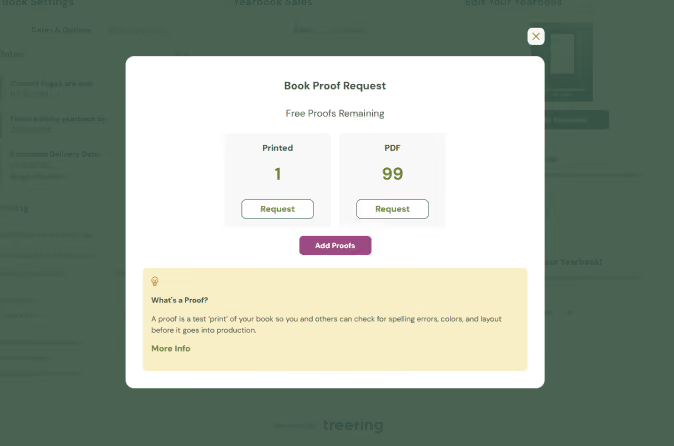
Let’s start with PDFs. English teachers everywhere will tell you errors that are missed on the screen often pop on paper. Read any copy (stories and captions) aloud to assess for tone and errors that digital proofing tools missed. These are low-resolution (the actual print file size might crash your computer), so you can download them quickly.
Use your PDF proofs to also
- Triple-check your portrait pages: correct spelling of names, the accurate placement of students and teachers in classes or grades
- Ensure faces aren’t lost on the edges (margins) or in the middle (gutter) of your spread
- Students are visible in the photos: sometimes, a photo box is the wrong size, and the faces are either huge or unrecognizably small. When possible, try to make all faces on a collage spread the same size.
- Show sneak peeks to your buyers - when parents see their child is in the book, they will buy the book!
Pro tip: use as many of your 99 PDF proofs as possible!
Yearbook editing resources
2. Design pages (spring/second semester events)
Last time, you learned two ways to design. Because the second semester is unfolding as you build your yearbook, it may be easier to collect photos. This is the time to evaluate those first semester spreads: if they are not full by now, combine events and re-allocate space.
Coverage resources
- Blog: Six Ideas to Fill Pages in Your Yearbook
- Article: Adding Pre-Designed Pages (You must login to the editor Help Center to view)
3. Purchase reminders
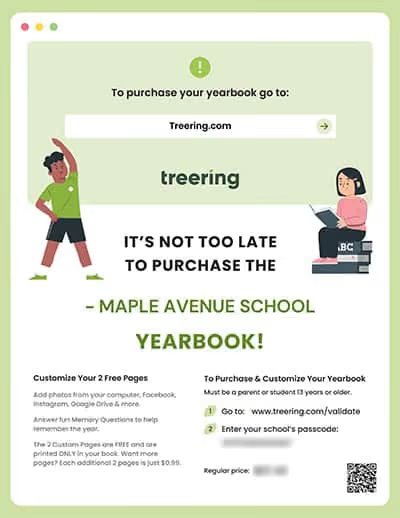
In these remaining 30 days, up your promotion game by doing at least one thing a week to share about the yearbook:
- Reach out after each school event with the appropriate photo share link and email
- Call or email parents of students who are in the book three times and have not purchased
- Have a contest: the grade or homeroom with the largest percentage of purchases earns extended recess
- Remind purchasers to customize their yearbooks (more on this next time)
- Ask campus influencers (ASB, PTA/PTO accounts, athletics) to hype the yearbook
- Have flyers at a school-wide event, such as the band showcase
Yearbook sales resources
- Google Slides: Customizable Flyers
- Article: Tools for Promoting Your Yearbook
- Blog: 5 Social Media Posts to Sell Yearbooks
4. Printed proof
Treering’s Marketing Manager Megan P. likes to say, “Works in progress welcome!” Because you need your printed proof in hand before your final deadline, order it now. It can take up to 18 business days for this yearbook freebie to arrive.
With portraits and fall events in the book, there is plenty to evaluate. Use your remaining PDFs for copy and photo edits.
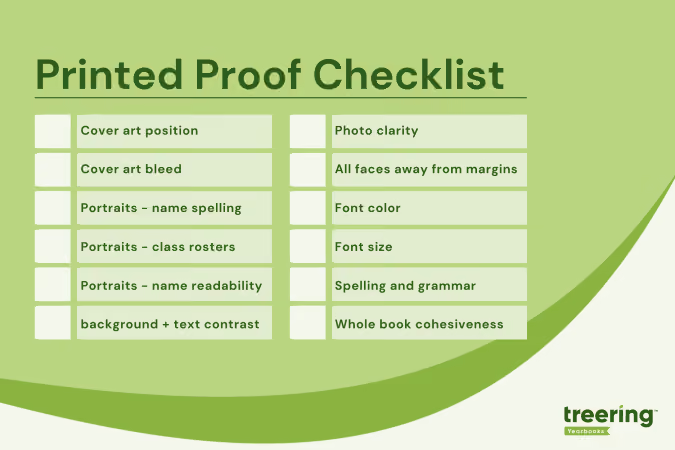
Pro tip: When my printed proof arrives, I take a Sharpie and mark it up. Then, I use it as a tool to clean up each spread one by one.
Proofing resources
Yearbook with a friend
Involve a second or third set of eyes during the proofing process. Potential yearbook proofing heroes include:
- Front office staff (they know all the things)
- Student TAs
- The secretary of the parent group
- Coaches and club leaders
- A friend who owes you a solid
Next time, we’ll send the yearbook to print and prepare for distribution.

Six ideas to fill pages
Page count can be a dirty word in the yearbook industry. It’s how we compare programs or evaluate pricing. It's also how we wow our readers. Peppering in showstopper spreads breaks up the monotony of photo collages, portraits, and team photos. These pages also fill your yearbook with even more personal stories and unique-to-this-year happenings. (And if we're being honest, these last-minute ideas can help you increase coverage with ease.)
1. Interactive pages
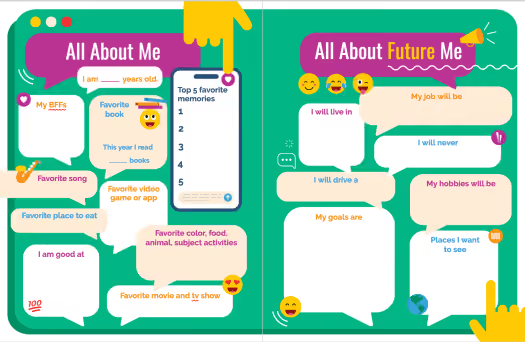
Drop-in yearbook spreads, such as about me pages make it effortless to complete the year's story. You can customize the questions and prompts on these fully editable yearbook templates and give students even more space to share their POV on the year. If you don't have a spread to fill, consider adding a sidebar so students can react to campus happenings.
2. Spirit quiz
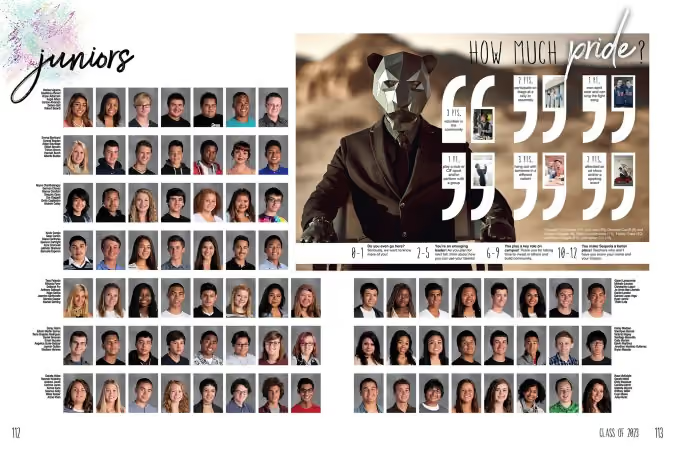
When Sequoia High School had over half a page to fill in their junior section, they added a teen magazine-style quiz. This spirit self-assessment featured eight additional students plus the school mascot while showing off what is uniquely Panther programming.
Make it your own
For your spirit quiz, determine which activities and behaviors define your student body and assign a point value. For example:
- Owning spirit wear +1
- Participating in a club +2
- Attending a musical or a sporting event +3
- Knowing the lyrics to the fight song or alma mater +3
- Serving the community+3
Use the scoring to affirm your community, even if it's a one or two. A simple "we want to know you more" will go far for students trying to find their way.
3. Then and now
We’ll save the yearbook-as-public-record soapbox for another blog. Know this: anniversary years are a great time to reflect on where your school community has been and where you are headed. Schools also use building projects, campus splits, and expansion projects to add reflective photos and copy to their yearbook pages. Does this sound overwhelming? A show-stopper spread in your theme copy or your people section is all you need.
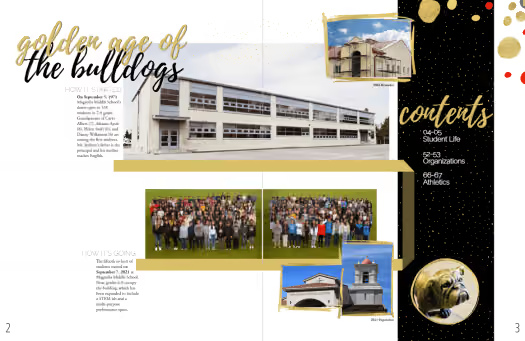
In addition to featuring changes in the building, you can write about or share photographs from:
- Teachers and coaches who are alumni
- Current students of alumni
- Famous alumni (ICYMI: alumni are a huge resource)
- The local historical society
- Past yearbooks
- Blueprints
4. Pet spread
If you’re new to crowdsourcing, or in need of additional coverage, start with a pet spread. If we’ve learned anything from #caturday and #dogsofinstagram, it’s that sharing pet photos brings us joy and is a natural part of our culture. Case in point, when our design team asked the Treering staff to submit photos of their children and pets to use in sample spreads, the latter had nearly twice the submissions.
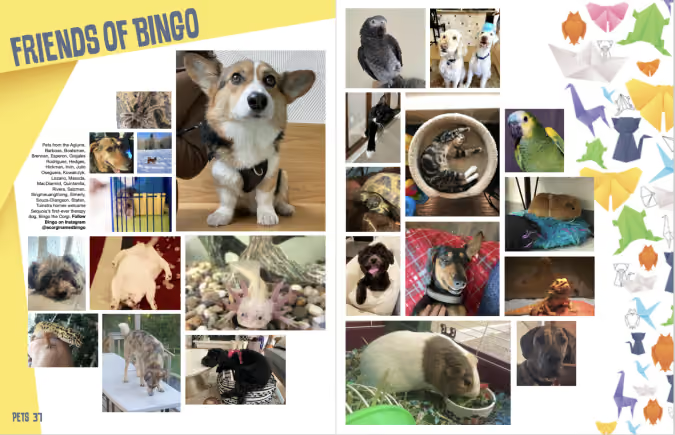
When your students crack their yearbooks open in five or 15 years, the sight of their furry, feathered, or scaly friend beside their artwork and activities truly captures a moment in time.
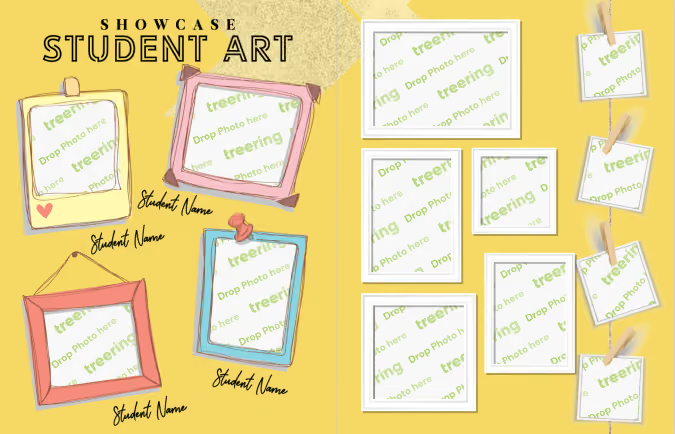
5. Art showcase pages
Student contributions extend beyond the field, club meetings, and stage. Those creative moments in the studio or during classroom art time belong on your yearbook pages. Also, like a pet spread, an art spread is a way to include those camera-shy students.
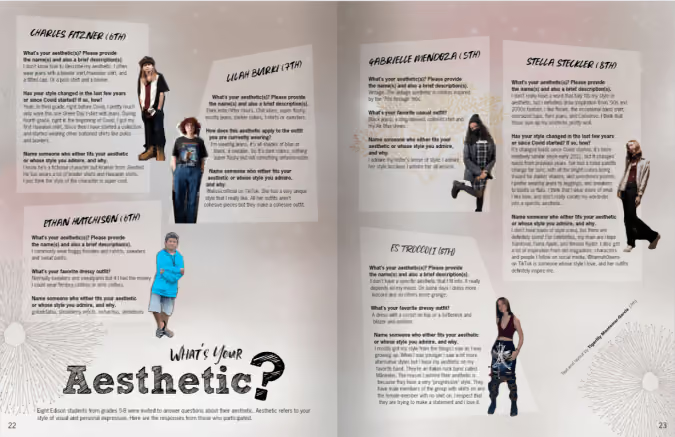
6. Fashion page
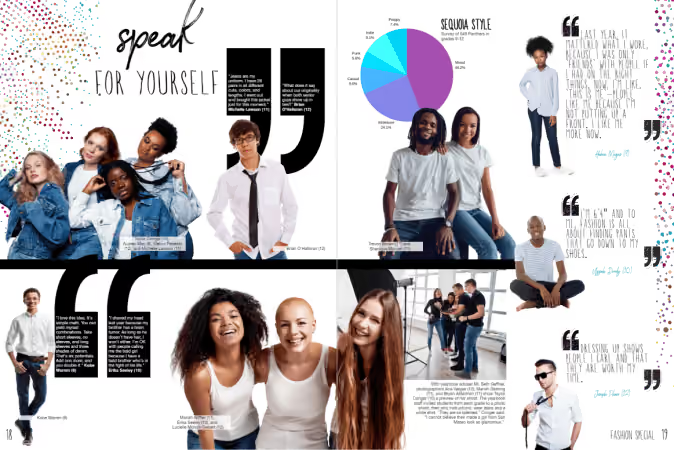
Expression isn’t limited to canvas and ink: Yearbook Hero Grace Montemar said her school included a fashion spread because it “allowed Yearbook Club to spotlight classmates from various grades whose fashion sense stood out from the crowd.” Featured students expressed their style and their inspiration with interviews.
We love how this school asked students from each grade level to come to the photoshoot in a white shirt and jeans.
Do you have more easy ideas to fill pages? Share them via social and tag us!
3 questions about school anniversary yearbooks
How to capture a milestone year in your campus’ history frequently pops up in adviser chats. Yearbook Hero Beth Stacy said her team “linked the past to the present” with their 75th anniversary yearbook. That’s the goal.
1. What’s the best way to show school history in an anniversary book?
Anniversary books don’t have to deviate from your normal yearbooking protocol. It can be minimal, such as in a 40th anniversary book, asking students where they want to be in the next 40 years. Or devoting a spread to a list of 100 things to love about your school in its 100th year (remember to include alumni). Or even showing photos of teachers on the staff page from the year the school was founded.
The ideas below take up a spread or two, so your focus can be the history currently written in the year at hand.
School Timeline
Schools commonly create a timeline outlining specific milestones and achievements. For Rock Academy in CA’s 15th anniversary, yearbook creators featured two pages of school history with old photos of current students.
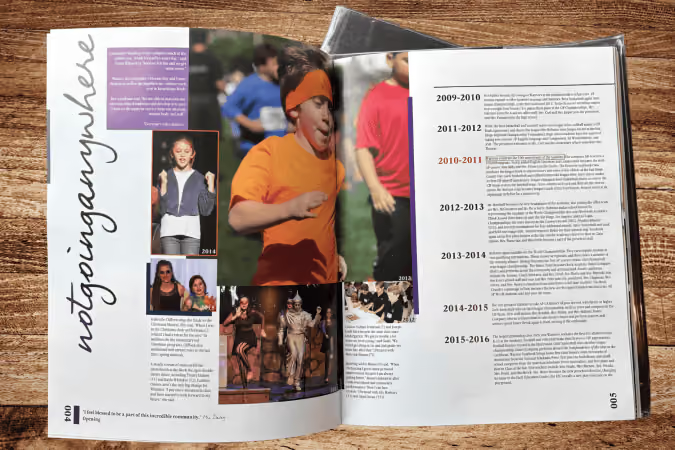
The timeline included when faculty members joined, the expansion of course offerings, and photos of the first-ever graduate. Old photos had the year on the bottom right corner to denote the past from the present. They continued this trend on divider pages.
Cover the years
When Wayne High School in OH published its 75th yearbook, the editorial team created two spreads showing the school's history through their yearbook covers. The team at Wayne worked with the alumni association, the local historical society, and the school archives to find most of the yearbooks.
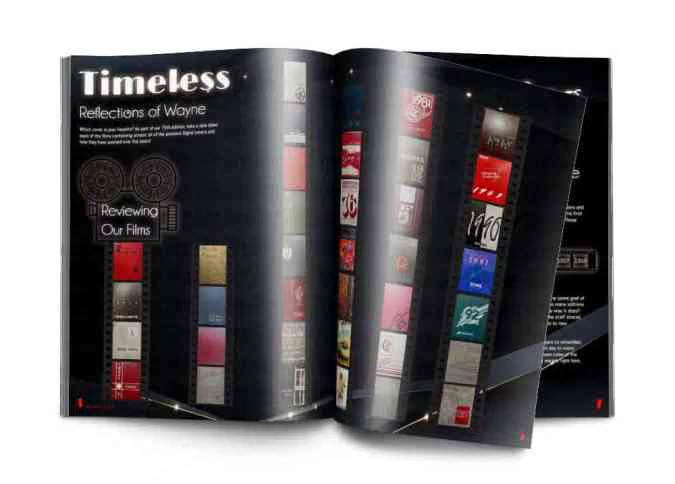

Then and now
(Side note: this would make a great anniversary yearbook theme.)
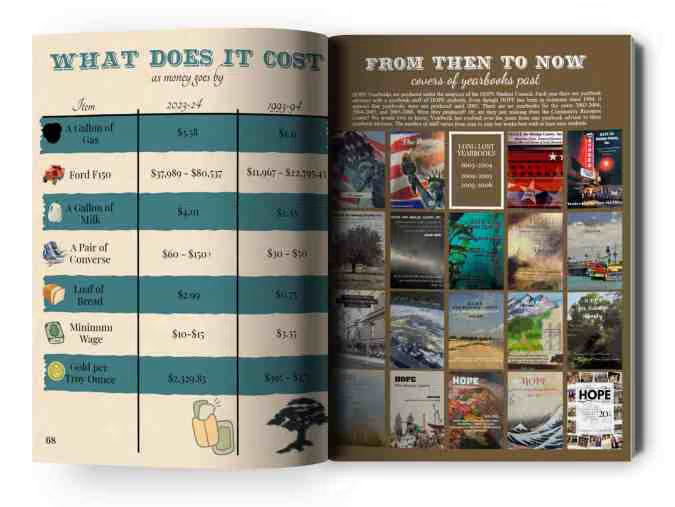
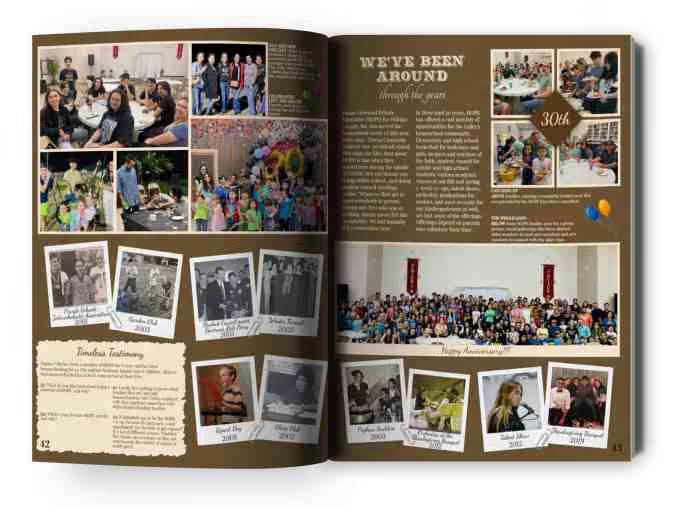
The team at H.O.P.E. in TX also took a trip to the yearbook archives. They scanned old photos from previous books to do side-by-sides with their present counterparts. They also researched the cost of goods from 30 years ago to show life off campus.
Adviser Rita Johson's team also interviewed alumni from the first graduating class and pictured previous advisers in the colophon. She said this was the first year they created a style guide; the yearbook design process evolved from more of a scrapbook to using mods. The team enjoyed exploring the school archives and found 19 yearbooks for the school's 30 years.
Pro tip: Save yourself the scanning. If you’ve been with Treering for multiple years, your yearbook covers and photos are in your yearbook account.
2. What’s a “good” theme?
Well-executed themes cover the school year both verbally and visually. It shows and tells. In a milestone year, like your school’s 50th anniversary, it may be tempting to try and carry this concept through the entire book. Full stop. Unless the winning point guard from the 6th grade basketball team is currently coaching his great-grandson, resist the urge to make your anniversary the yearbook theme. This year (the buyers!) will always be the primary focus.
Verbal theme ideas
Because yearbook creators love the look, we’re starting with the “sound” of the theme. Headlines, theme copy, and spin-offs should reflect your yearbook’s theme.
Evergreen Anniversary Theme Ideas
- Construction-focused: “Built to Last” or “Foundation for Tomorrow”
- Timeline focused: “Our Journey Here,” “Milestones Marked,” and “Then and Now”
- Younger school: “The Wonder Years”
- Older school: “Timeless”
Year-Specific Theme Ideas
- 10-20-30, etc.: “Decades of Excellence”
- 15: “Time to Shine”
- 50: “Golden Moments”
- 100: “A Century Strong”
Visual theme considerations
Align your theme’s aesthetic with the verbal tone. Taking a page from my junior year, the theme “Reflections” should have some mirroring in the graphics, if not some shine on the cover.
Traditional anniversary gifts—a list that dates back to the 19th century—prescribe the following:
You can easily add such elements to your cover finish. Bringing your “golden anniversary” to life can be as simple as adding gold foil. Treering also offers silver foil and clear UV embossing.

Inside your yearbook, you could (choose one!)
- Denote old photos by making them black and white or using a Polaroid-style frame (like HOPE did)
- Hide 20 pictures of your mascot (if it’s your 20th)
- Use blueprints or construction photos for a significant building project
3. When should I do an anniversary yearbook?
We see anniversary books for 10-100 years, and everything in between. The caveat here is that if your school is doing nothing, why would the yearbook? Align with your school community to get the final answer on this one.
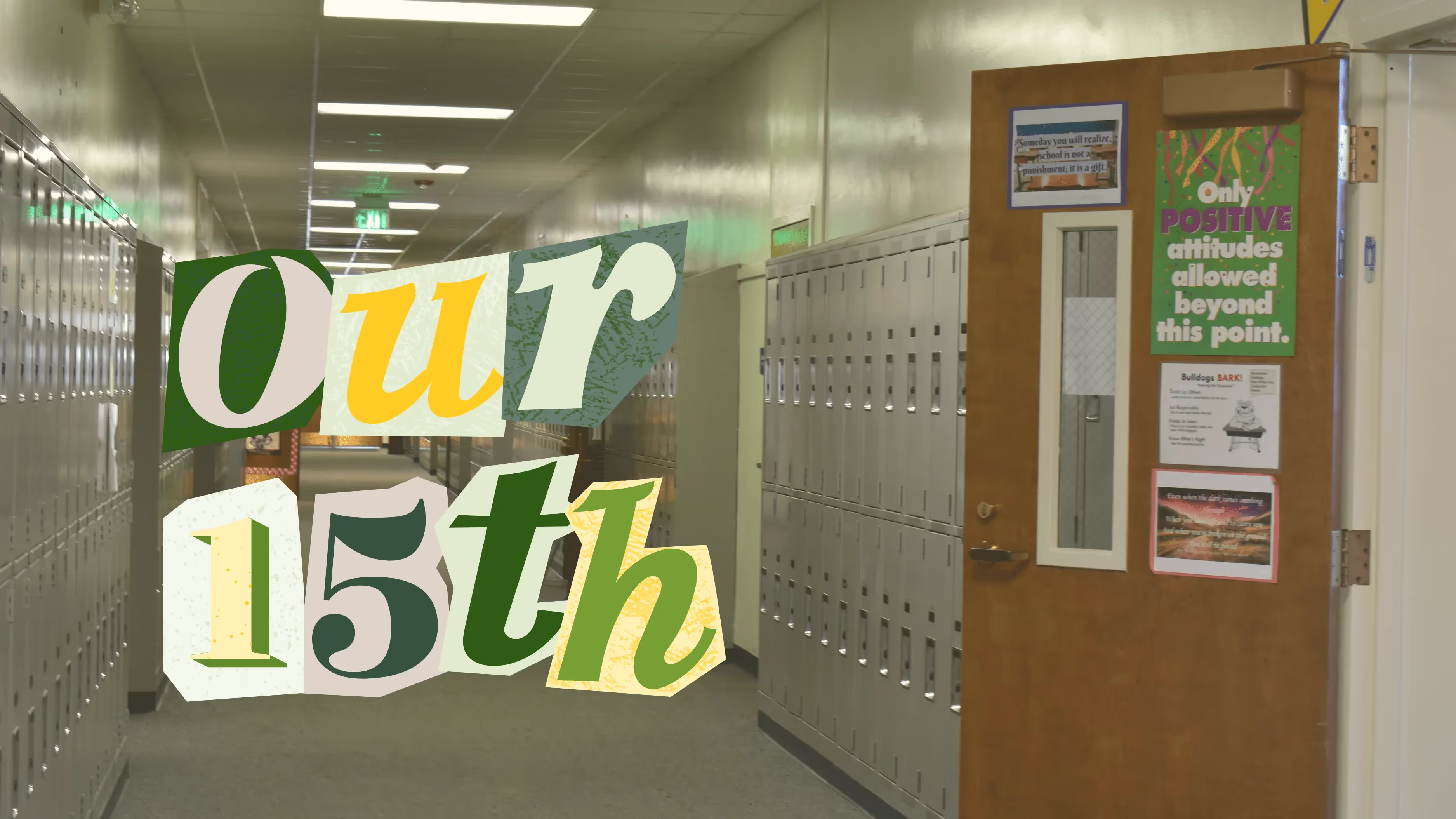
Getting personal: Treering’s 15th anniversary book
As Treering’s 15th year closes, we created our first-ever anniversary yearbook. Our staff took yearbook photos on the conventional blue background. As a cross-functional team, yearbook creators interviewed staff members and collected photos of people in the home office as well as remote teammates’ home offices.
Unlike a school where students promote and graduate, many staff members are in their second decade with the company, and two of the founders are involved in the day-to-day. The history section features photos of the early offices and staff, the original 44 schools, and a history of Treering-produced theme art. It is heavy on nostalgia.
We look forward to celebrating many more milestones with you.
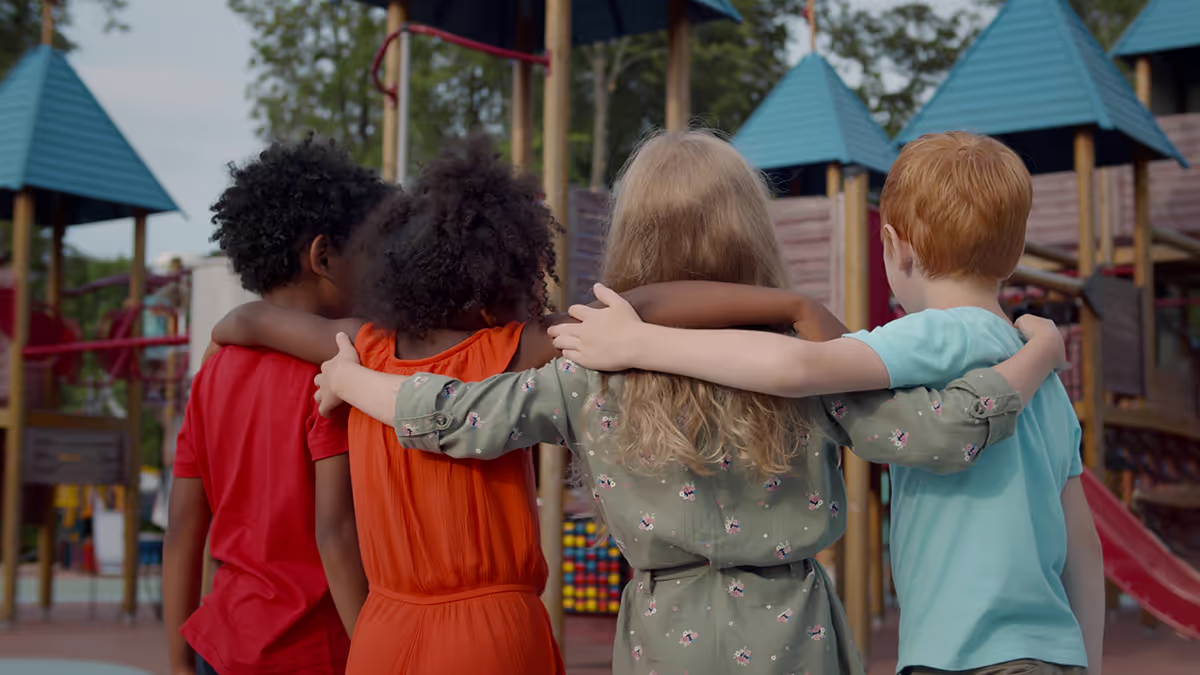
Covering natural disasters in your yearbook
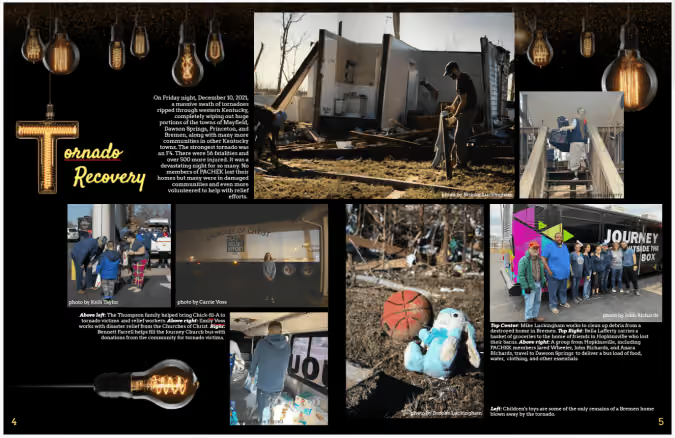
As sad as it is, a lot of communities experience natural disasters, and their people must come together and rebuild. Sometimes it can be a struggle as a yearbook adviser, student editor, or team to decide whether or not to capture this historic event in your school’s yearbook, especially if you have younger students who may not fully grasp what happened. To help alleviate some of the back and forth and uncertainties, we’ve laid out a guide of best practices when covering natural disasters in your yearbook.

Are natural disasters yearbook-worthy?
Including current events is typically a staple for every school’s yearbook, since it is essentially a snapshot of what life was like that year. However, determining the best way to cover natural disasters, which are also considered events, isn’t always the first thing that comes to mind for yearbook editors. Or the easiest. And it’s not something for which one can completely prepare. Natural disasters can shape a school year and have an impact on everyone. Because of this, it is worth including it in the yearbook. It’s important to find uplifting ways to cover these stories when interviewing school members while respecting the boundaries of those who were impacted.
The right words and tone can emphasize how a school showcased perseverance in the face of a tragedy.
Include accurate and approved information in your coverage
Be it wildfires, tornados, hurricanes, or earthquakes, it’s critical to provide accurate information about the event. When looking back at a yearbook years from now, you don’t want the wrong date, for example, to be in print. The goal is for students to be able to look back to remember this part of their history. And ideally, the way it’s covered in the yearbook can show how the school and community overcame the crisis.
Unless you’re lucky enough to have a copyright lawyer on your yearbook committee, it’s critical to understand the basics of trademark and copyright laws when deciding on if/when to use professional photos to cover a natural disaster. You always want to make sure it’s an image you are allowed to use and that it’s free to the public. If this seems like something you don’t have time to research, instead it might be worth considering stock images that are available online, licensing images from your local newspaper, or using—with permission—photos your community has captured.
Along with photos, you should also consider the statistics to highlight. It’s important to remain sensitive and not include mentions of a death toll, for example. Instead, you can focus on other hard facts like the date(s), time, location, the scale of the natural disaster, etc. in your yearbook. If your school community collected donations, include those numbers.
When it comes to deciding on what information to include, a great tip is to make sure that your yearbook committee has an editorial policy in place that can be shared with the community. Covering any kind of crisis can be difficult, and some may always disagree with the way you did it, so it’s best to have a written policy so that teachers, students, and parents can be aware of how the yearbook team will plan to cover a crisis like a natural disaster or a death in your school community. Get your administrator's signature on it.
Lessons students can learn from natural disasters
A tragedy is not something anyone can overcome easily. It’s worth highlighting the hope of people within a community when they’re facing hardship together. Experiencing something of this nature becomes a part of one’s story and while it may take some extra dedicated time to determine how to showcase the lessons learned in a positive way, it’ll be beneficial to capture an impactful time such as this in a yearbook.
Interview questions for students and teachers impacted by disasters
- How did the [natural disaster] impact the community?
- What was, or is currently, being done to help rebuild?
- Are there any stories you’re comfortable sharing about the [natural disaster’s] personal impact?
- Where were you and what were you doing as this event unfolded?
- How has the [natural disaster] impacted how you view your day-to-day life at home and at school?
- What advice would you give to students who may face a similar natural disaster crisis in the future?
- What are you grateful for after this?
- What changes did you see within the community during and after this event?

How to create interactive yearbook pages
Adding an interactive element to your yearbook pages can increase engagement and personalization in a culture measured by double taps and shares. Interactive yearbooks can have modules or spreads where students can record their ideas or engage with content. (And if you know anything about Treering, we’re all about making yearbooks as unique as your students.) Below are four ideas, from drag-and-drop solutions to those requiring a bit more delegation (wink) for your yearbook.
Interactive = personal
The most hands-off way to help others interact with your yearbook is Treering’s custom pages. These two free pages in every yearbook are prime real estate for artwork, celebrations, firsts (lost tooth, car, homerun, etc.), and what matters most to each family. Knowing they are creating a keepsake, many parents opt to add more pages.
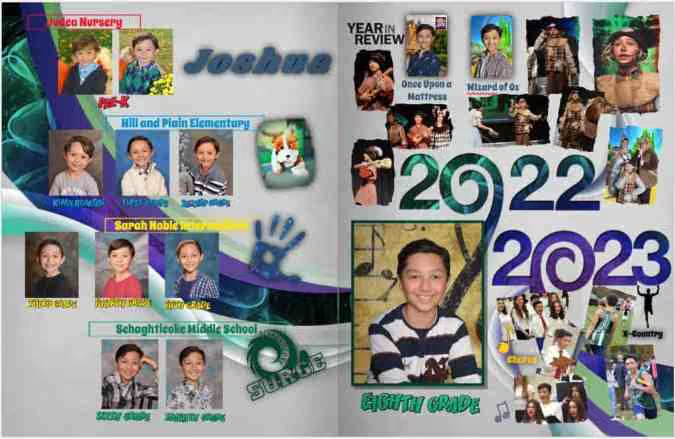
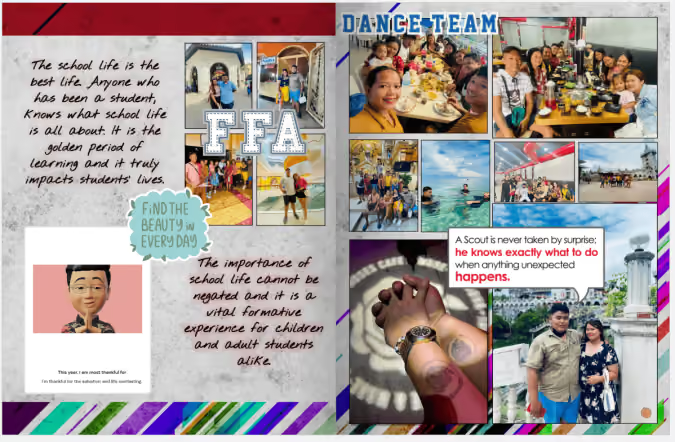
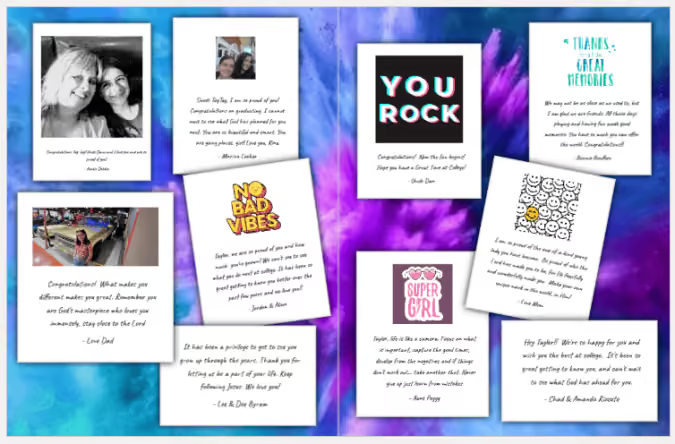
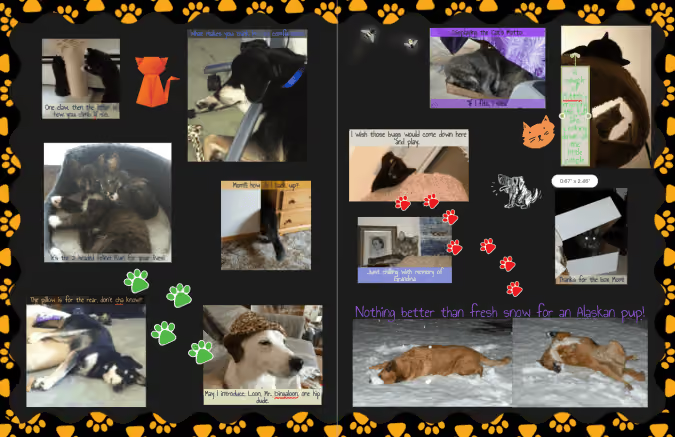
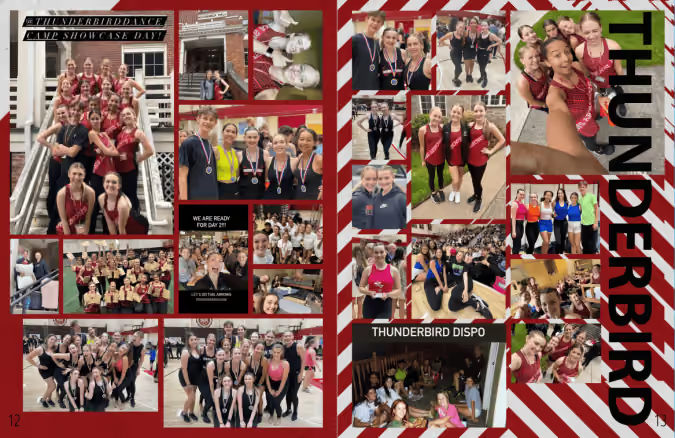
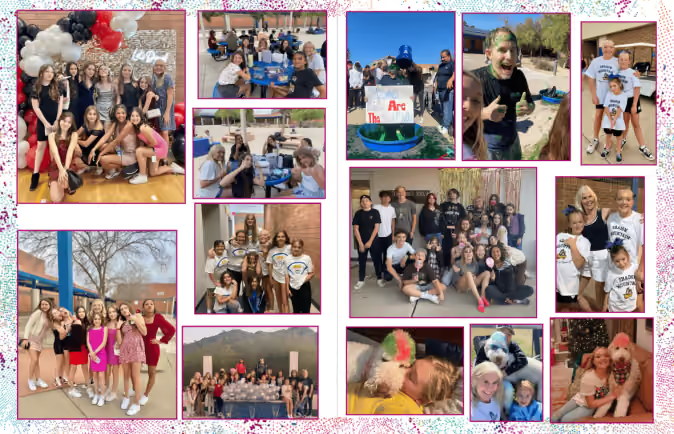
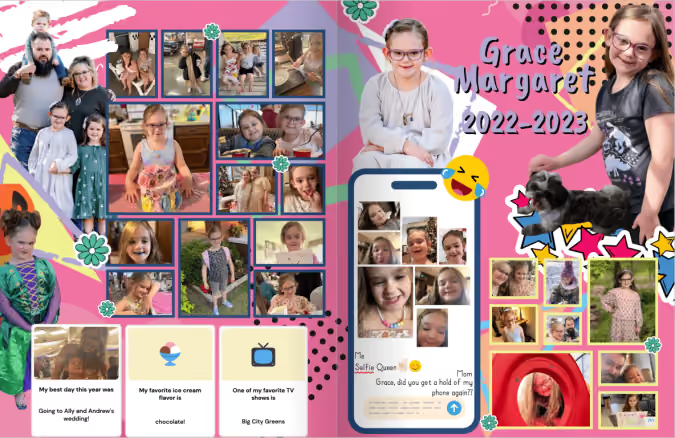
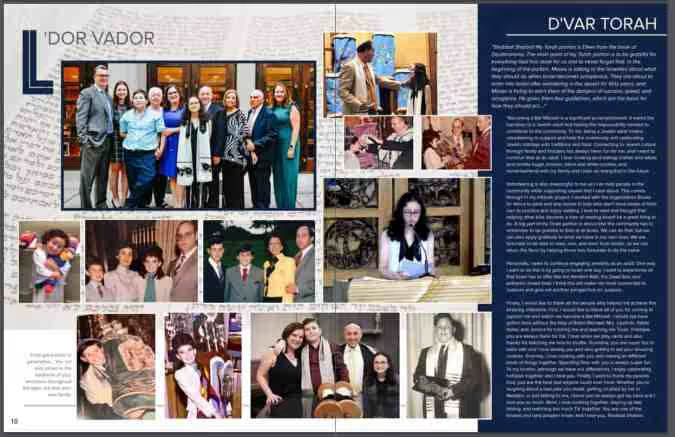
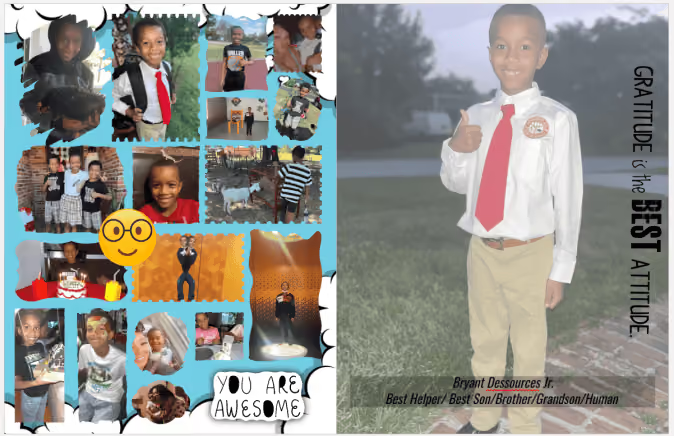
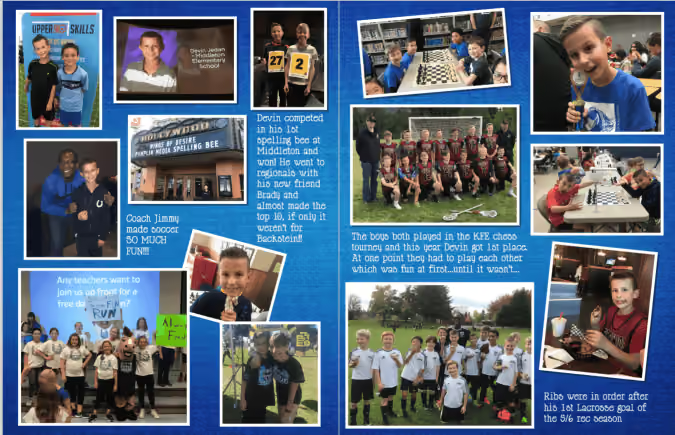
These custom page examples from the Treering team include non-school sports, pets, milestones, and family trips.
All about me pre-designed pages
While seeing all that our school community achieved in a year gives us the feels, adding opportunities for students to share their take captures a deeper moment in time. It shows students how they contribute to the whole with their unique take on the school year. Adding an All About Future Me component allows students to dream. (Moms, it also gives us something to read aloud at their graduation, “Yes, Erikson, you really did aspire to be an underwater ninja.”)
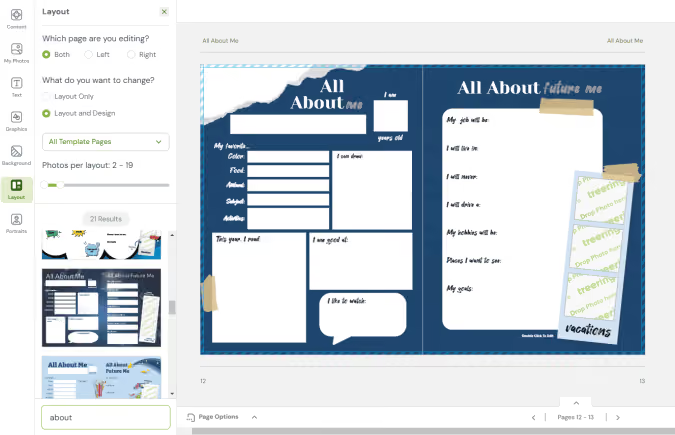
Pro tip: many Treering themes have these templates ready for you to drag onto a page.
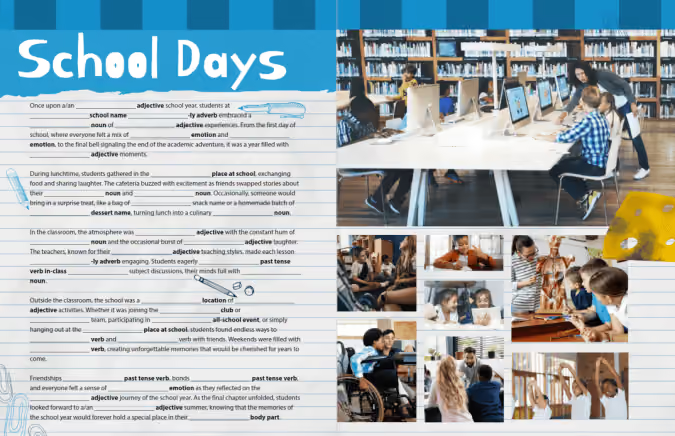
Fill-in-the blank stories
Part 80s nostalgia, part English teacher ploy to get us to know our parts of speech, fill-in-the-blank stories can range from nonsensical to [fill in the blank]. 😉
We created one you can copy and paste for your yearbook.
Puzzles
Including puzzles in a yearbook enhances personalization because they can play with words, images, and situations unique to your campus, fostering a sense of ownership. Simultaneously, these activities bring additional engagement into the yearbook, making the publication more dynamic. You can choose to add content with words and pictures.
Word puzzles
Word searches, crossword puzzles, and the like add an entertaining interactive break from traditional pages. Additionally, for younger students, they can be a means to involve family members who may enjoy solving the puzzles with their child, creating another shared yearbook experience.
Include things in your puzzles such as school subjects and the
- Mascot
- School address (street and city)
- Special events or all-school activities
- Principal’s last name
- Names of clubs, teams, or electives
An online puzzle maker can help you customize an interactive puzzle.
People matching
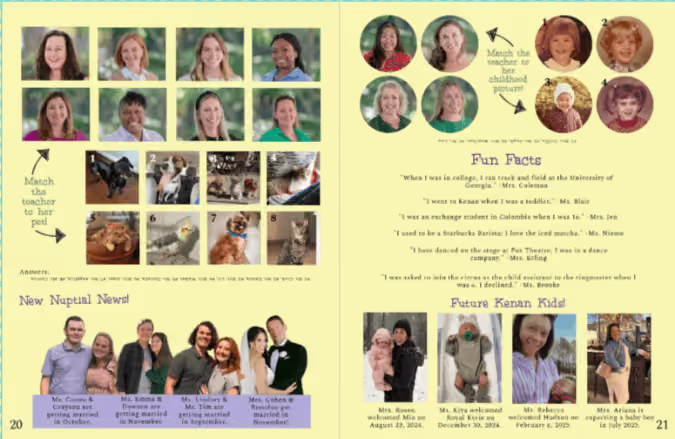
More fun than a history quiz, a yearbook matching module is a way to use your interactive content to increase coverage. Answers can share a page with the colophon.
Match:
- Students to cars
- Baby photo to the students or teacher
- Teachers to their first job
- The cleat to the sport
- The fundraising total to the class
The easiest ask: pets.
Side note: maybe I should have titled this, “Gamify your yearbook.”
I spy
There are two takes on this:
1. Search for objects such as eight basketballs, 14 pencils, and five nets. These items already exist within a section or the yearbook as a whole; you're just asking the student body to take a closer look.
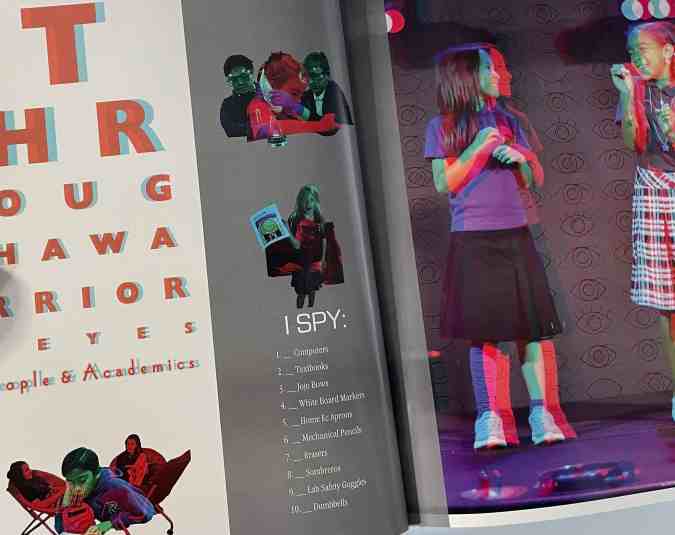
2. Find a person. This is the most labor-intensive: hide a COB of your mascot throughout the yearbook. (Yearbook Hero Katie Parish had a great take on this.)

Adding one or all four of these interactive yearbook page ideas gives students a place to reflect, share their “voice,” and foster a sense of community ownership of your collective narrative.

Create a quick, easy, and beautiful elementary school yearbook
With most of the school year in the proverbial book, we are counting down until summer vacation. End-of-the-year celebrations aren't complete without a yearbook. If you're the one wearing the yearbook coordinator crown, it's time to circle the wagons and quickly create your elementary school yearbook without sacrificing style. We have live webinars to help jumpstart your second semester.
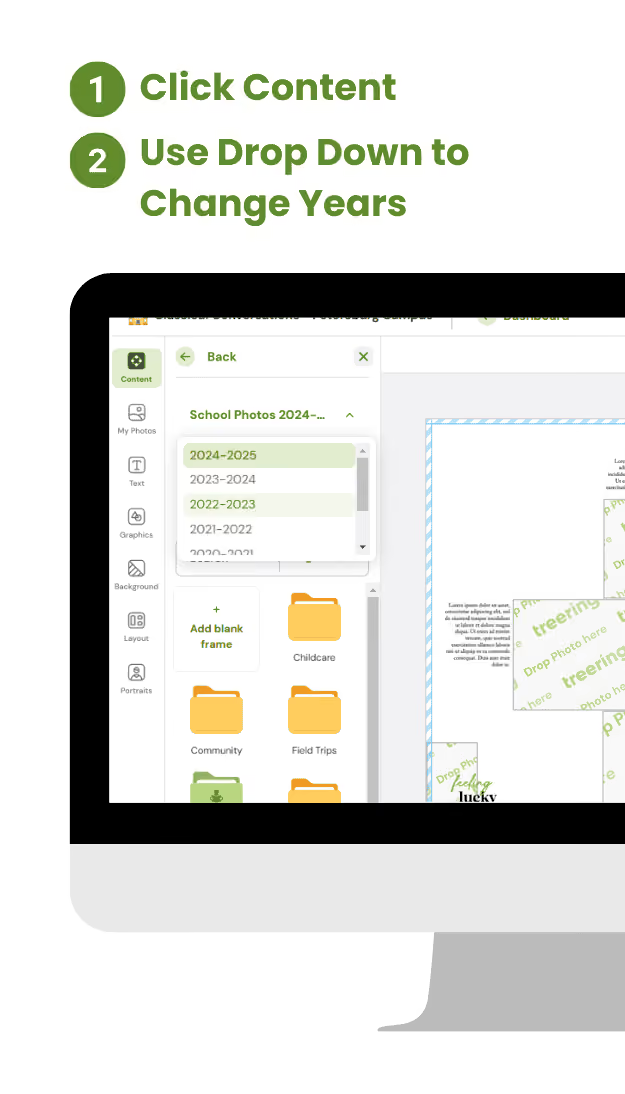
Step 1: upload your student roster
Your first step is a quick visit to the front office (remember to bring some lattes) to get a community and student roster. This seems tedious. It will save you hours if you do this first. You will easily be able to
- Tag to ensure inclusivity or to create an index
- Start marketing and selling your book
- Receive your yearbooks sorted by your choice of grade, teacher, or last name which will save you tons of time once they arrive
(We promise, you'll thank us later.)
Step 2: get the word out
With an updated student roster, you can now effectively communicate with your community and launch marketing campaigns that support yearbook building and orders. Examples of communication that will help you build a better book include emails asking for photos, how to purchase books, and special features like creating personalized pages and showing your students/parents how to create e-signatures.
If you really want to ramp up sales and raise awareness of your yearbook project and photo needs, use this month of Instagram, Facebook, TikTok, and Twitter content. There's also a full marketing module in our free yearbook curriculum.
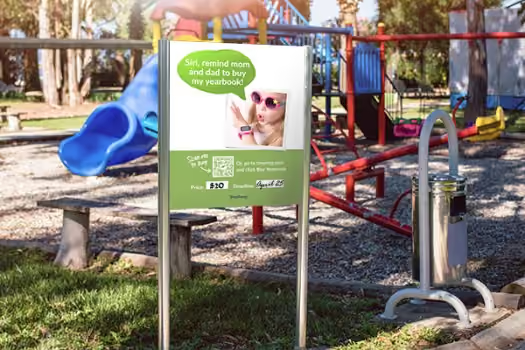
Step 3: collaborate with your community
Following strong communication, you are set up to collaborate on the yearbook with ease. Crowdsource photos from school staff, other parents, coaches, and students.
When possible, assign class pages to others. No yearbook coordinator is an island (or something like that). By building a team, you'll capture more, include more, and stress out less!
Step 4: upload your students' portraits
Whether your elementary school was able to take professional portraits, or you are sourcing portraits from parents, upload these to your yearbook next. Your yearbook provider should have a solution for adding these to your book. You can even use these yearbook spreads to add more content.
Step 5: build your book
Now that you’ve connected with your community and begun sourcing ideas and visuals for your yearbook, you’re ready to select and set up your book themes and styles. In addition to designing your own themes, Treering offers a free library of professionally designed themes. Each theme package includes layouts, font pairings, and graphics to tie your look together. You can also 100% customize your own.
Set spreads aside for
- School events such as fun runs and book fairs
- Sports (If your school doesn't have teams, crowdsource photos of students on their outside sports team)
- Holidays
- Trends
- Clubs
- Class favorites
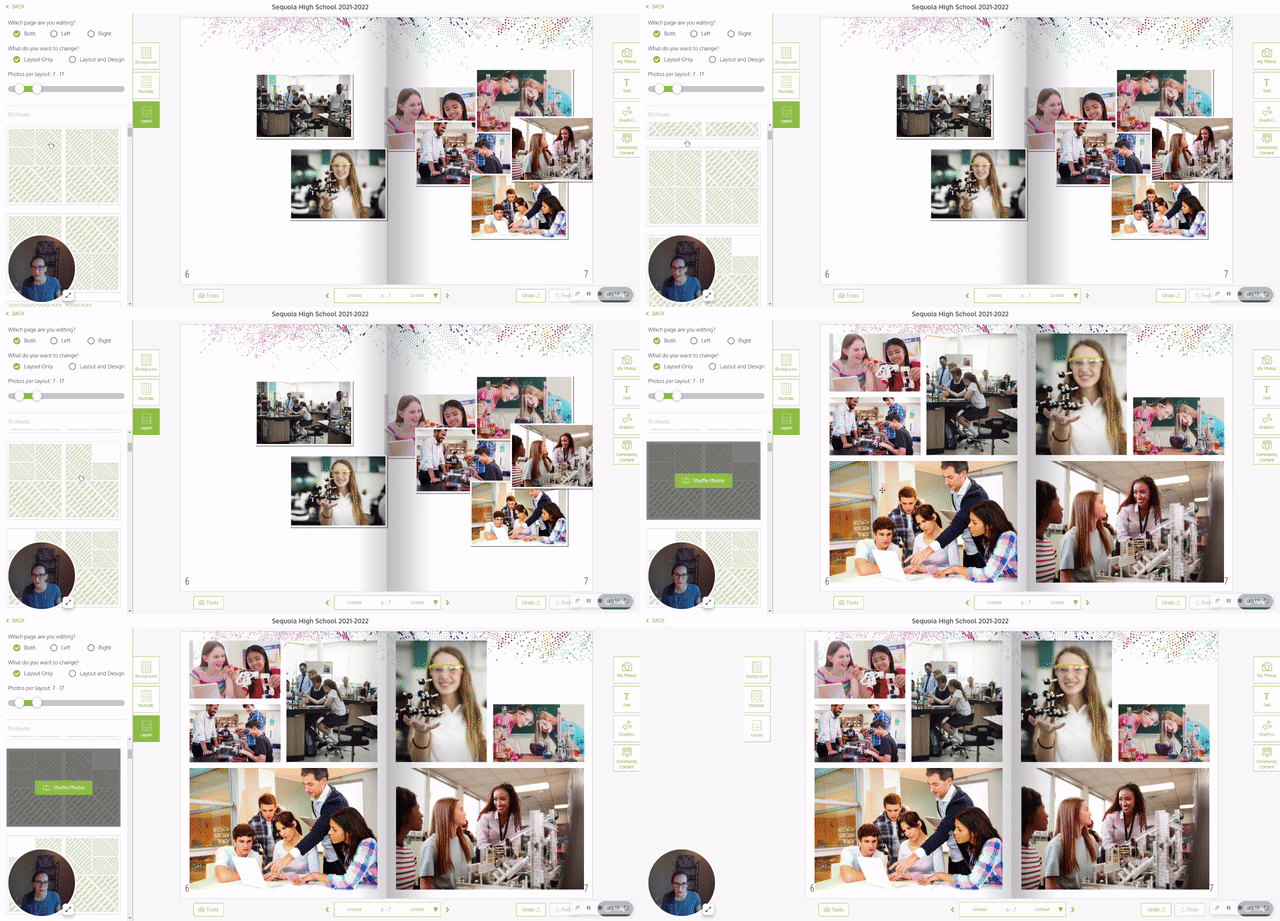
Build a beautiful yearbook with features like auto-page layouts that magically lay your photos out beautifully on a spread or pre-designed pages that cover the Best of the Year and Year in Review plus student-generated content through fill-ins for a quick elementary school layout.
Step 6: set your yearbook to print ready!
Drop the yearbook and walk away. In all seriousness, hit “print-ready” to send your files to the printers and, if you're using Treering, you'll quickly have your books in hand in three weeks or less! If for any reason you want a little more time, it’s easy to adjust print-ready deadlines too. As the yearbook coordinator, you're in charge!
Step 7: distribute the yearbook and celebrate!
All this work is worth celebrating! Work with your parent group to host a yearbook signing party. It doesn't need to be fancy or cost you additional money; this could be something special like
- Playing music at lunch
- Offering a jeans day to yearbook buyers if you're a uniform school
- Allowing yearbook purchasers to bring a stuffed animal to school
- Setting up signing tables at a year-end school event
QR Code is a registered trademark of DENSO WAVE INCORPORATED.

48 questions guaranteed to get teachers to open up during yearbook interviews
We think that teachers should always be treated like the rockstars they are. But that’s a double-edged sword. Because of their school “celebrity” status, we can sometimes get a little tongue-tied when it comes time to snag some quotes.
So if you’ve got a mod that needs some teacher insight, a spread offering a look ‘behind the curtain’ about teachers, or if you’re writing an article on a specific teacher and are looking for some pizzazz, you’ll need to ask some great questions. And we’ve got just the list.
Set up a time for the interview, take a moment to brush up on your interview skills, and then take the bull by the horns with these quote-baiting questions for teachers.
About life outside of school
- What is one of your hidden talents?
- What would the students be surprised to find out about you?
- What’s a typical Saturday night like for you?
- How often do you accidentally start speaking Spanish at home? Lecturing about fractions? Correcting grammar? [personalize to their subject].
- What are some pets you’ve had or would like to own?
- What is your dream vacation?
- How do you spend your summer breaks?
- What are your “trapped on a desert island” books or movies?
- What would your last meal be?
- What can you cook to perfection? Are you willing to share the recipe?
- If you won the lottery and decided to give up teaching, what would you do instead?
About school life
- What are some traditions or superstitions you have for the First Day of School?
- What makes a ‘good day’ at school?
- How do you show your school spirit?
- What accomplishment fills you with pride so far this year?
- What is your favorite dish from the cafeteria?
- What sort of morning routine do you have to get jazzed for class?
- How do you keep things fresh? [particularly good for seasoned teachers]
- What inspires you?
- How does technology make teaching more simple or difficult?
- Are there any embarrassing teaching moments you’re willing to share? What are they?
- What’s the best/worst thing about being a teacher?
- In which other teacher’s class would you like to enroll, even for a day? Why?
About the students
- What current trends are baffling to you? Why?
- So many students admire you. How do you make those connections? [*note: question should only be asked if the teacher is universally known for making great student connections]
- What differences do you see in your morning students versus the afternoon classes?
- If you could pass on any wisdom to your students, what would you share?
- How do you remember all of your students’ names?
- What’s a school sport or activity you enjoy watching?
- If you could take the students on a field trip to anywhere in the world, where would you take them?
- Why do (or don’t) you friend former students on Facebook?
Along the lines of a specific article or theme
- What kind of driver were you when you first got your license?
- If you were to be given a superlative when you were in school, what would it have been?
- Our yearbook’s theme this year is [....], how do you work to bring that to life in everyday classes?
- What song should students listen to when doing work for your class?
- What is your first memory from school?
- When or why is (or isn’t) a picture worth a thousand words?
- How do you think students will remember you and your class?
About nothing—Just for kicks (or mods)
- How long would you survive a zombie apocalypse? Why?
- In which Hogwarts house would you be sorted?
- If you could grow up in any decade, which would you choose?
- What are your thoughts on astrology? Do you know your sign?
- What are your must-have smartphone apps?
- Did you see the new Star Wars on opening night? What memories do you have from the first movie you ever saw in theatres?
- Is there a quote or saying that you live your life by?
- What would your perfect party look like?
- What is your spirit animal?
- What song do you know all the lyrics to?
And there you have it—48 yearbook questions that you can choose from to build an interview with a teacher. It’s important to remember that an interview is a conversation. Keep it natural, and use your time wisely. It’s better to get five quality responses instead of a dozen one-word answers. If you see a hook, run with it. Don’t be afraid to veer a bit off course when the opportunity presents itself. Wherever the conversation goes, these questions are a great start to an intriguing spread or mod, and can add some wonderful insight from your teachers to this year’s book.

23 yearbook hacks for 2023
Forget resolutions, it's time to get to work. Our staff brainstormed the top yearbook hacks you can use at any stage in the yearbook creation process and packed this blog with videos, how-tos, and examples. Use the quick links below if you need to jump to a specific area.
Yearbook design hacks
Designing a yearbook is much more than just putting pictures on pages. Intentionality, storytelling, and branding are included. The following time- and sanity-savers will help you progress in your role as editor, adviser, coordinator, or yearbook fan girl.
1. Auto layout
What if you could just drag the photos you want to use on a spread and they would magically be organized and re-sized? Voilà!

The best part? Everything is still fully editable, so if you need a starting point, you can continue to build your spreads with more photos and text, swap our images, and change the color of the elements.
2. Color picker
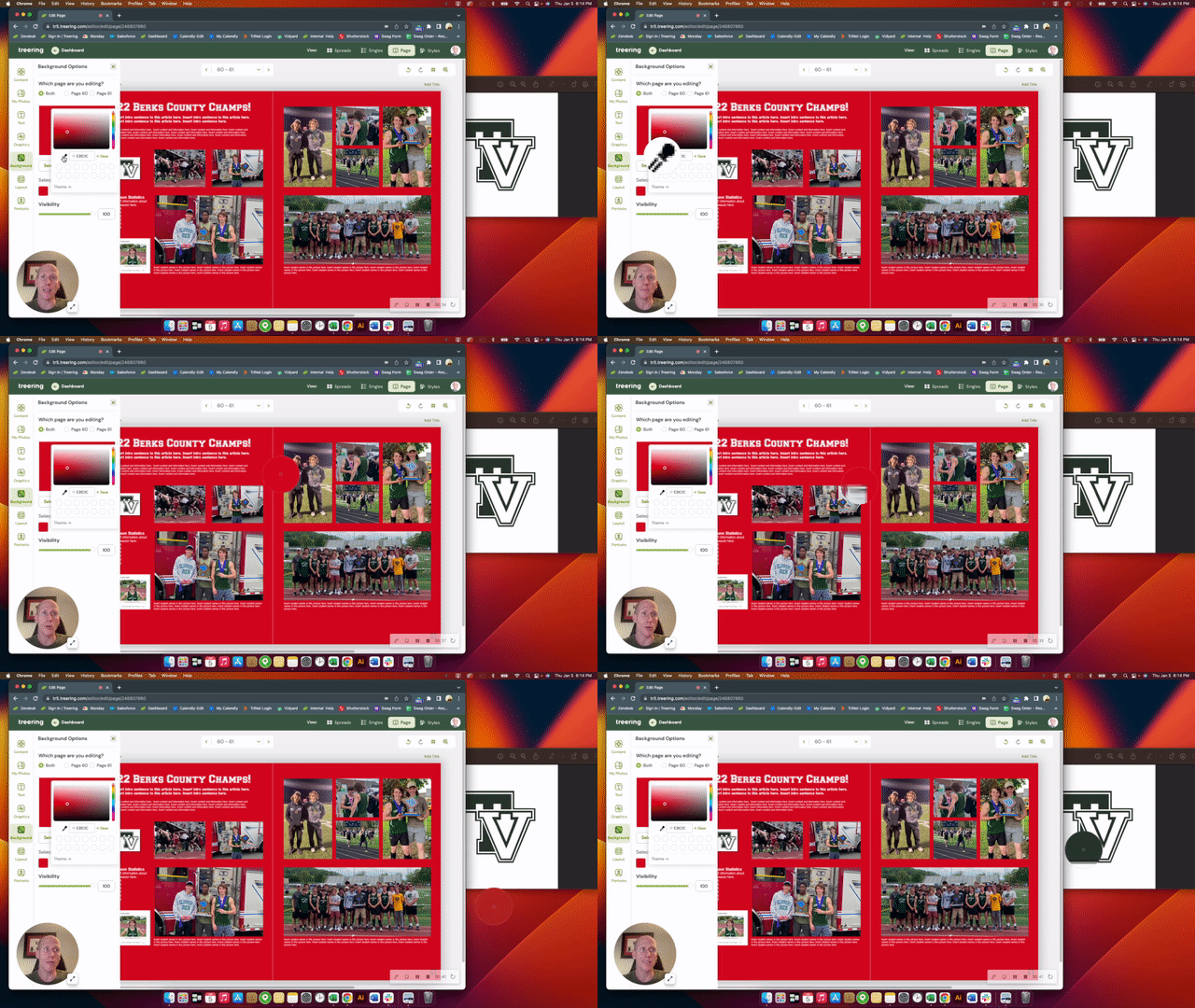
You can pull the exact color from any picture to add to your design. This builds the yearbook’s visual cohesiveness because you can pull from photos or graphics to create your custom palette.
3. Layers in design
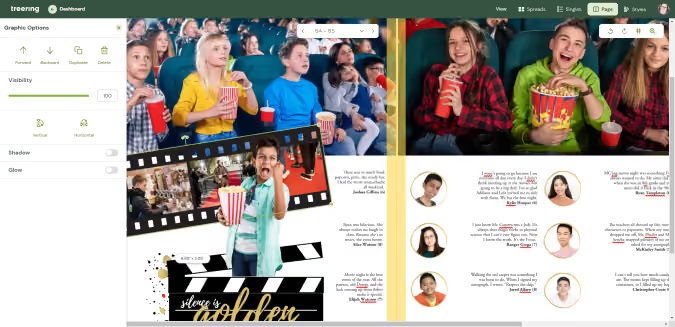
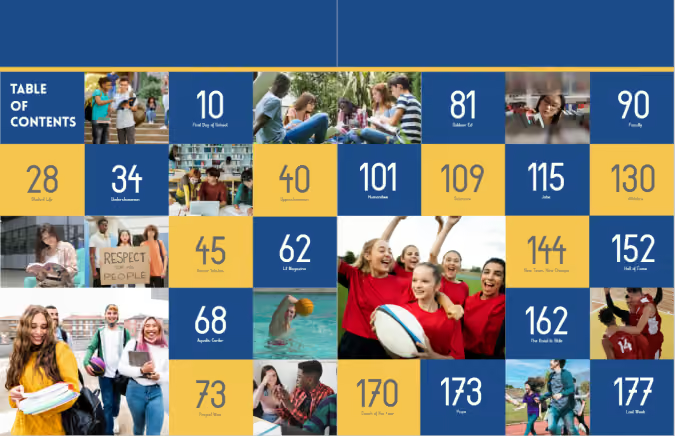
Up your design by using layers to arrange photos, images, and text. In the examples below, you'll see graphic elements used as photo frames (movie night spread) and editable shapes used to organize content (table of contents). Using the forward and background tools in the options panel can help you arrange elements.
4. Custom pages
Schools are used to offering senior ads as a way to congratulate students. Treering schools take it a step further and allow every family to tell their story with two free custom pages (and the option to add even more).
5. Missing portrait hack
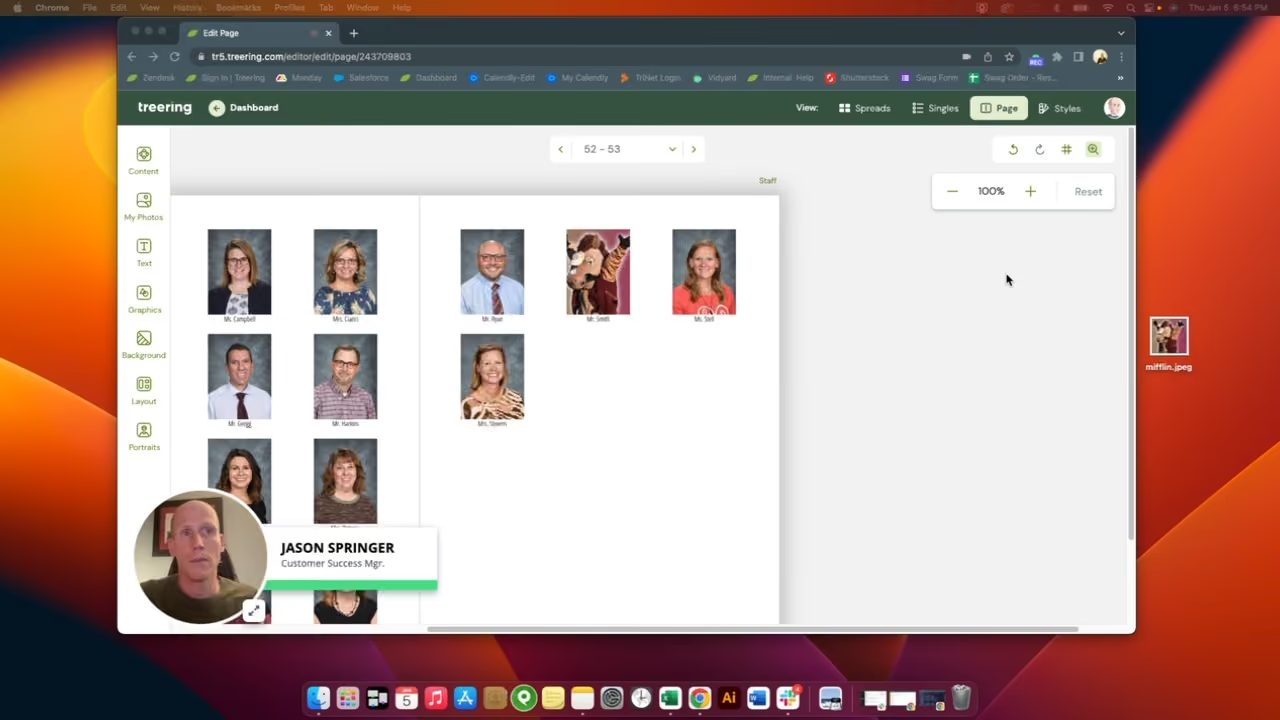
"Picture day is the easiest day of the year," said no adviser ever. As hard as we work to make it a flawless experience and to capture every student and staff member, perfect attendance is out of our control. One way we love to see people included in their respective sections is by flowing them in with this spirited touch.
6. Advanced portrait settings
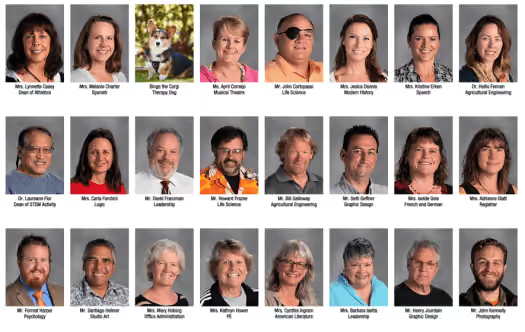
Another hack for your people section is included with the advanced portrait settings. Subtitles are a simple way to add marks of distinction such as student activities and honors as well as staff department or job titles. Other advanced portrait settings include spacing and sizing options.
7. The magical shift key
Shift your process for aligning and rotating objects.
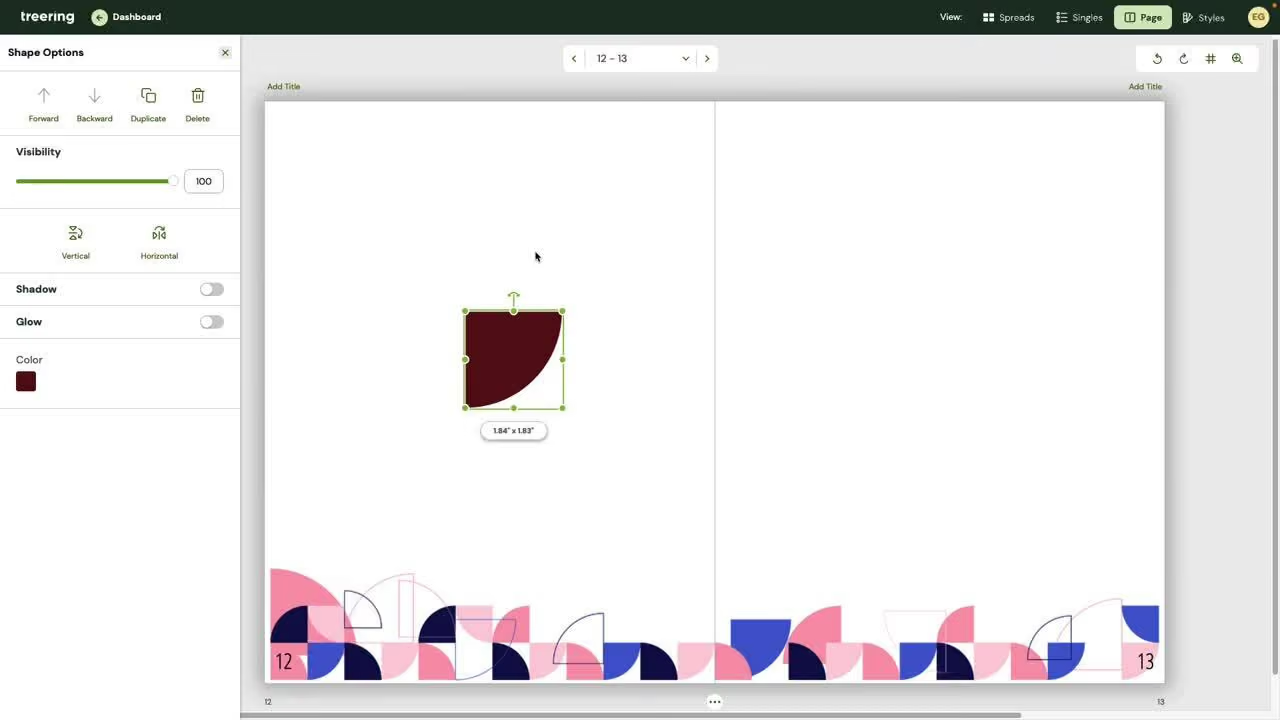
8. Printed proof
A printed proof is an exact copy of your yearbook, and every school gets one free. Use your printed proof to
9. Picking favorites—it's OK!
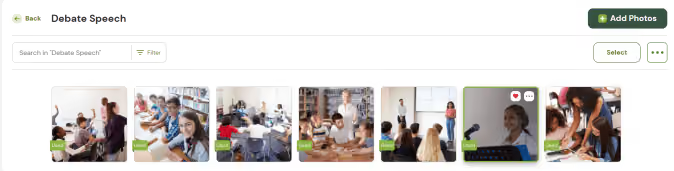
"Liking" graphics, backgrounds, and photos makes it easier to find them to add to yearbook spreads. To use your hand-picked collection in your book, filter by "My Likes" and "Team Likes" in the drop-down.
10. Pre-designed pages
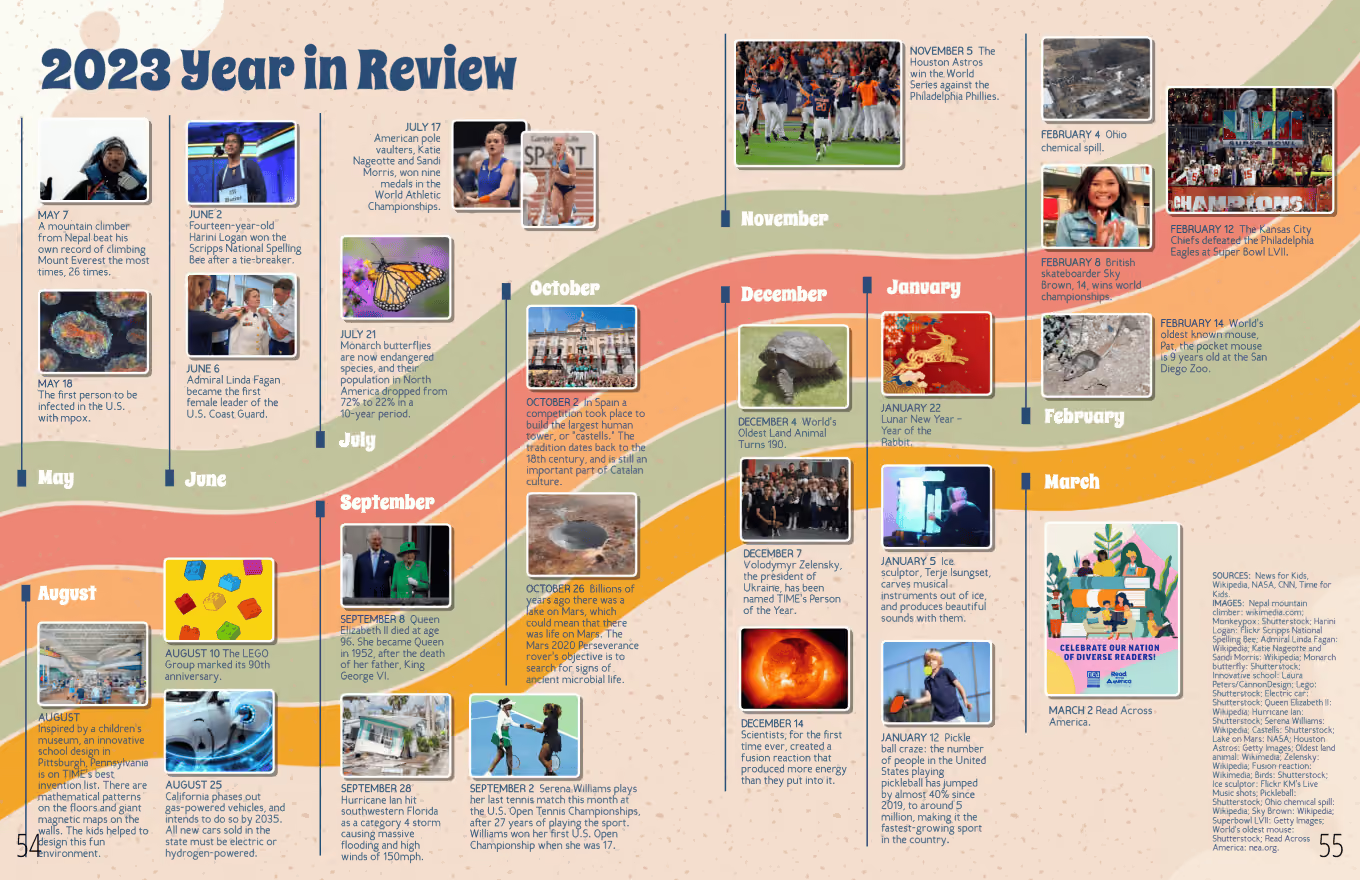
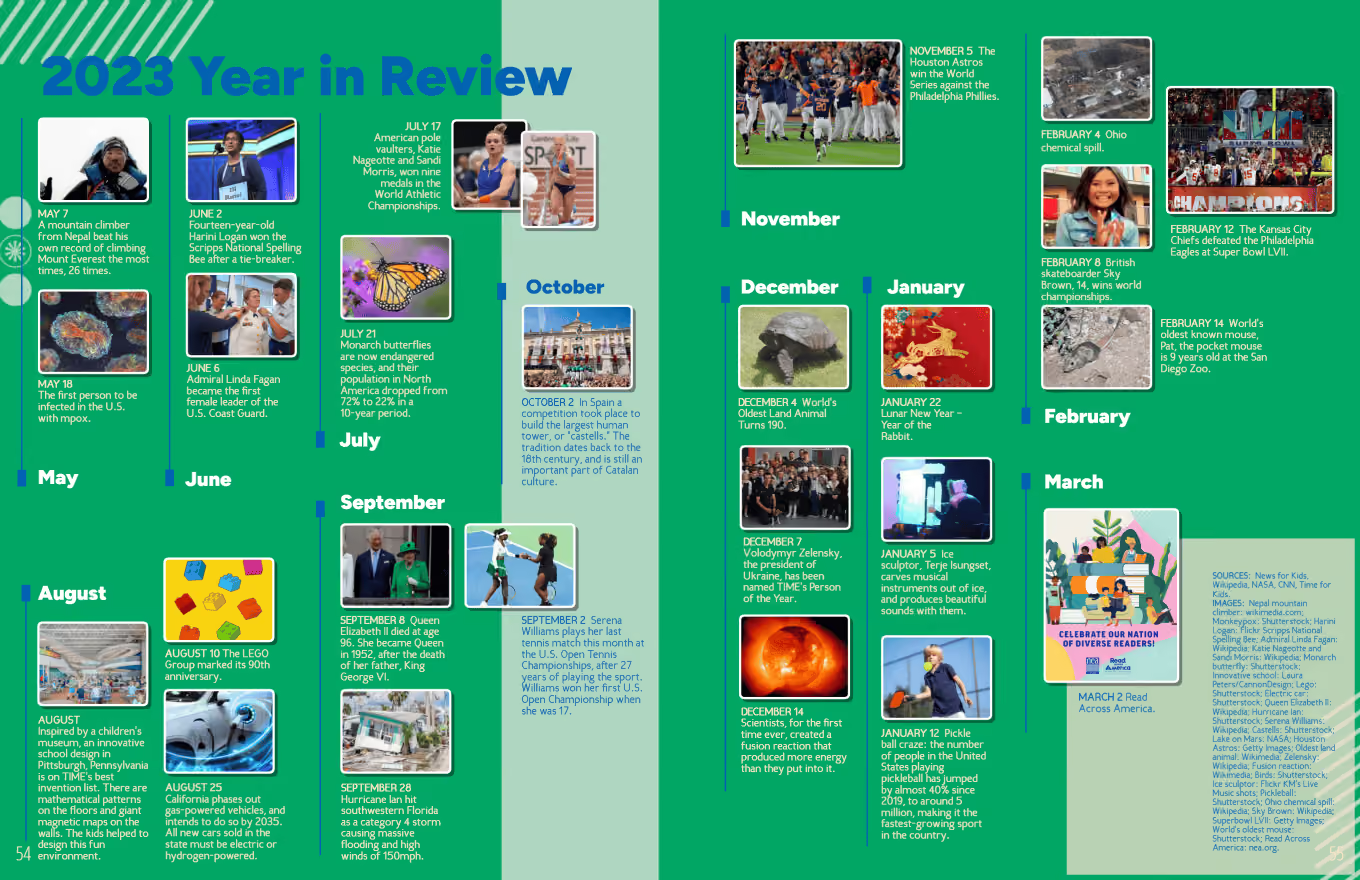
Annually, Treering publishes elementary and middle/high school "Year in Review" and "Best of the Year" Pre-Designed yearbook spreads. These spreads include noteworthy highlights from pop culture and current events, and like all things Treering, these pages are editable so you can choose to replace the content with your own. Some communities prefer school or local election news, campus trends, or athletic records. Pre-Designed pages which include mention of our philanthropic partner, Sandy Hook Promise, are also available as well as about me, art gallery, and puzzle pages.
Get more people in the yearbook
The best practice for yearbook coverage is to ensure each student is in the yearbook three times. Think one photo in each section: portrait, classroom, and activity.
11. Crowdsourcing features
Treering’s crowdsourcing tools include integrations with Facebook, Instagram, and Google Drive as well as shared photo folders. Teachers, parents, and students can email photographs from their devices directly to event folders in your school account.
According to adviser Lauren Casteen, Yearbook Hero and leader of Treering’s Teaching Yearbook cohort, there are four reasons to crowdsource content:
12. Monitoring coverage
A big question we hear is, "Why would you want to tag student names when we're not doing an index?" Since our job as advisers is to cover all the students on campus, tagging is one way to track how many times students appear in the yearbook. It also helps you find out who is missing from your pages and craft strategies to include them.
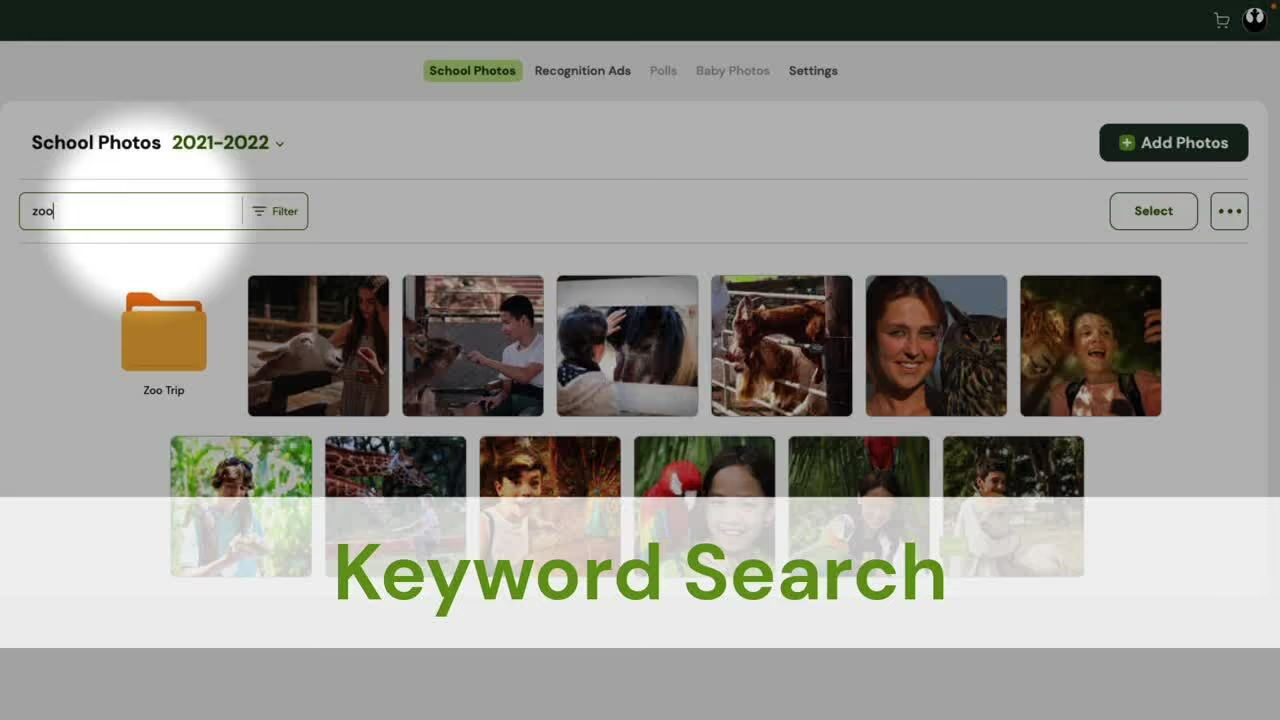
13. Keyword tagging
By using keywords such as event names and topics (e.g. AP Lit), your search just became that much more powerful, and the English folder less intimidating to navigate.
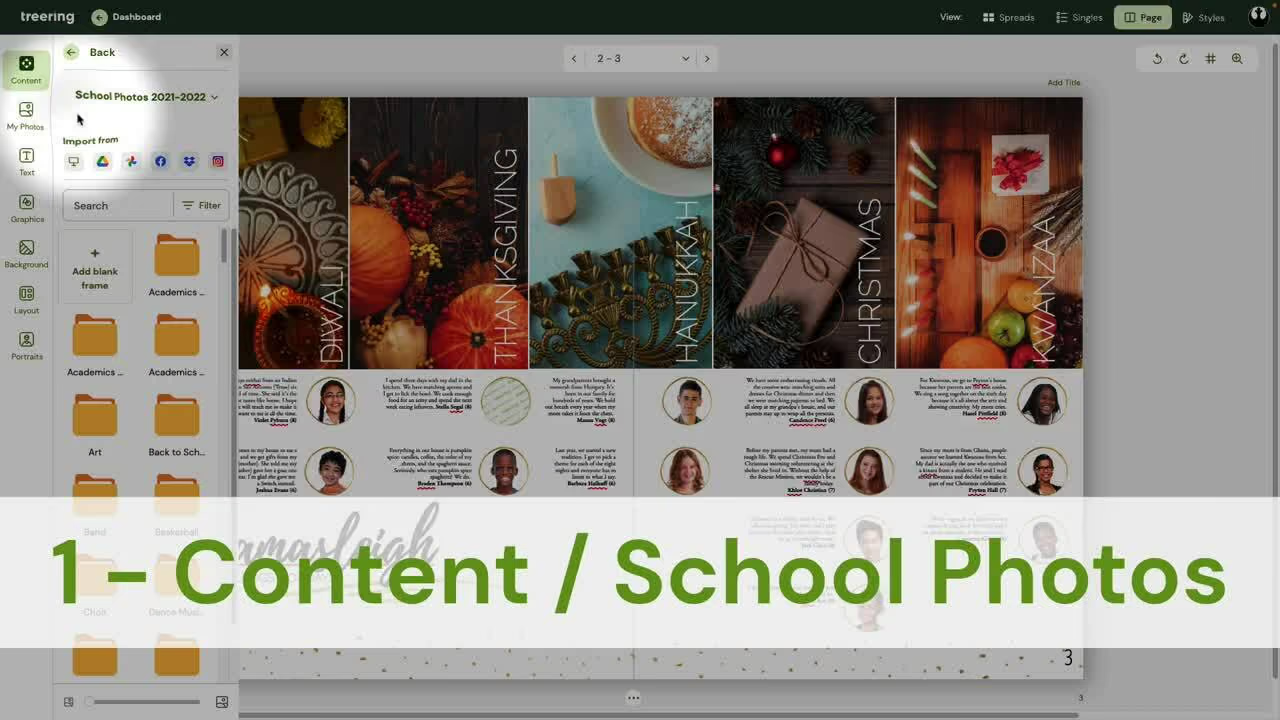
14. Find Carmen San Diego
Tagging by student name helps you easily find students within your web of folders.
15. Polls
Create polls to give a snapshot of the student body's preferences. Treering's software even makes the graphs for you. Expand on this or that-style questions or multiple choice ones by interviewing a respondent for more detail. You may be surprised why your star soccer player is a cat dad.
Marketing tips
The second semester is when we see surges in book sales. Here are some hacks to get more yearbooks in more hands.
16. Free yearbook flyers
The price is right. So is the message.
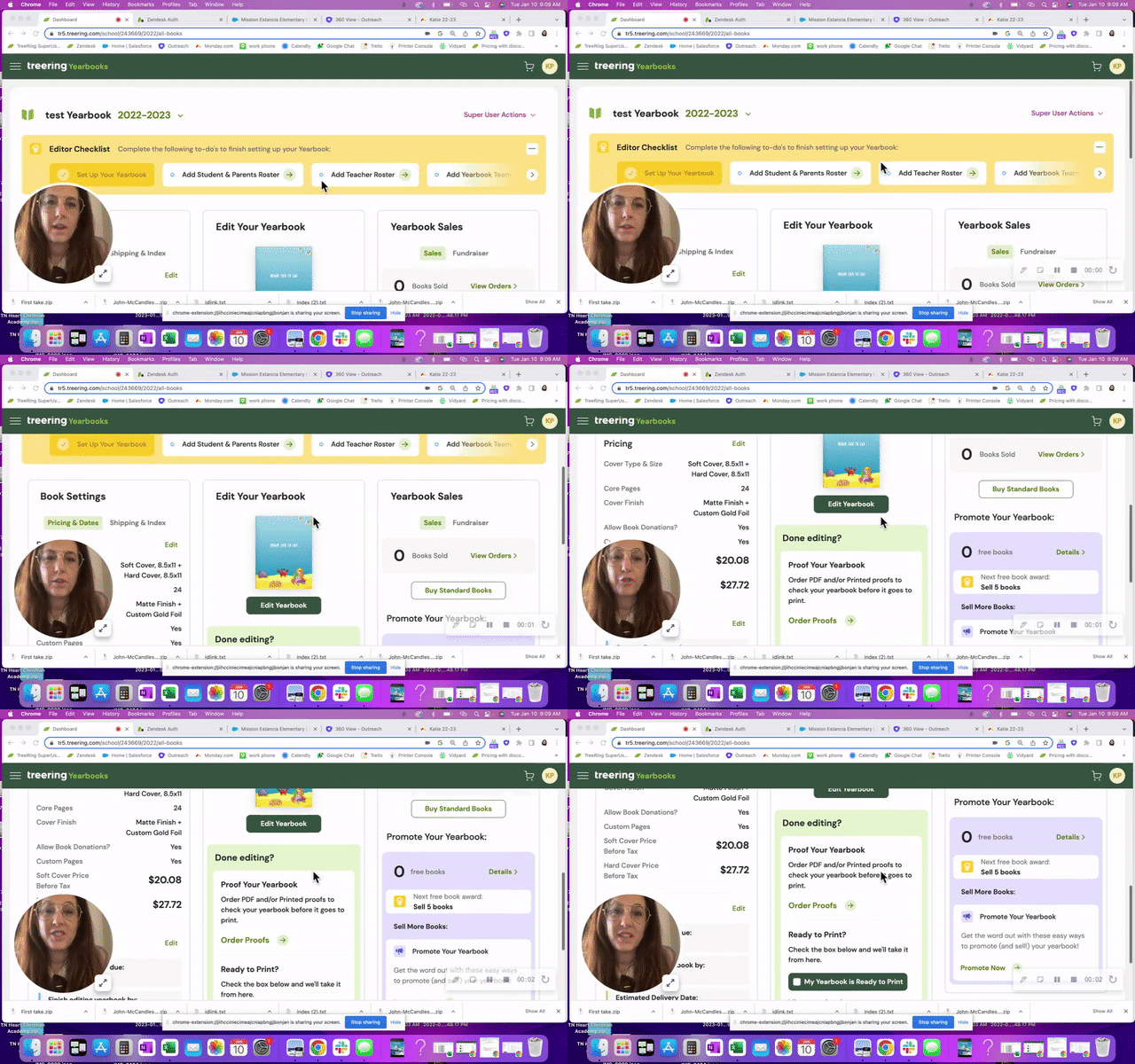
17. Use your printed proof as social proof
Social proof is one way you can positively encourage others to support your program by buying a yearbook.
Hacks for yearbook advisers
All of the above definitely apply to yearbook advisers and coordinators, and here are few extras because you are our people.
18. Free webinars: Yearbook Club
A yearbook adviser PLC? Live yearbook training? Technology pro-grow? However you want to sell it to your admin, we have it. And it’s free.


19. Styles
By establishing photo and text styles early on, you create a cohesive look for your yearbook. Because the font library continues to grow, it's nice to set some limits, especially with emerging designers!
20. Portrait proofing with PDFs
Printing PDF proofs from the editor dashboard as soon as you get your portraits flowed is one quick way to ensure accuracy. Distribute them to the office staff and classroom or homeroom teachers for a double and triple check.
21. A list of evergreen content
Evergreen content for yearbooks is a collection of interview questions, infographic topics, and story ideas that can be used throughout the year. While we want to have a yearbook that reflects the current year and trends, having a timeless collection keeps your students working on interviews and photography and provides material to fill in on portrait pages, sports sections, and even in the index.
22. Supplemental books
Sometimes club sports, special events, and alumni need a little extra. You can still attach a fundraiser, take advantage of our free design software, and enjoy all the other perks of making a Treering book: no minimums and a three-week turnaround from the day you submit.
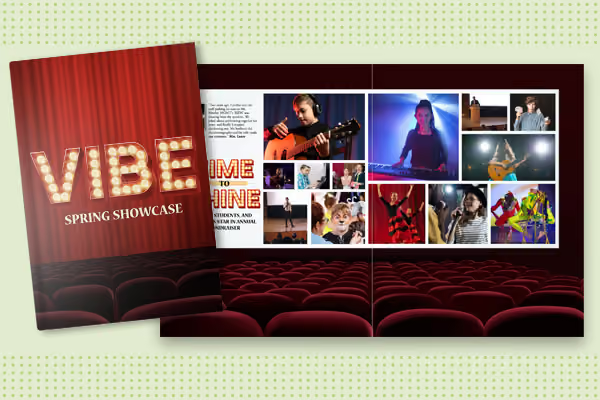
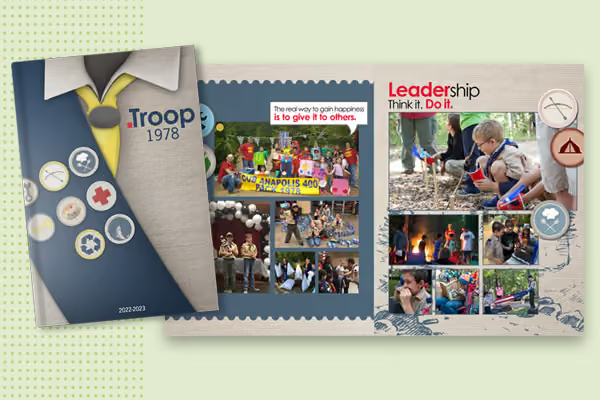
Treering’s printed books for family reunions, church or neighborhood directories, scout troops, sport associations (rodeo, mountain bike, cheerleading, gymnastics), 4-H, school auctions, cookbooks, performing arts studios, first responders, and more.
23. Yearbook hack central: Treering blog
(Shameless, we know!) We're glad you're here and hope you find more yearbook hacks by searching the blog or signing up for notifications when we post new content.

Our staff's favorite covers from 2022
In the yearbook world, judging a book by its cover sounds harsh, yet it is our reality. It's a super important piece: the cover holds the book together while introducing the theme and its visual elements. We also use the cover to promote yearbook sales. Because of this, our staff gets pumped when we work with schools to take their cover from ideation to completion. Together, we grabbed our favorite covers and compiled a handful to inspire others with their displays of school spirit, artistry, and thematic elements.
Our favorite covers started with developed themes
We love a great yearbook theme (frankly, that's why we offer 300+ to users). A developed yearbook theme builds on what's trending on campus, such as new construction or an all-school volunteerism initiative. It inspires spin-offs, headlines, and coverage. It tells the story of this year.
Epic themes and epic covers
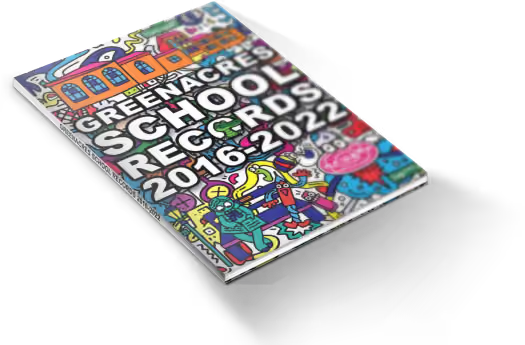
Scarsdale, NY's Greenacres Elementary School used school and world events to guide theme copy in their book. Over five spreads, they detailed the highlights of the class of 2022's journey on campus from their days in kindergarten during the 2016 school year to the move to middle school. Each fifth grader's portrait is paired with their kindergarten one.
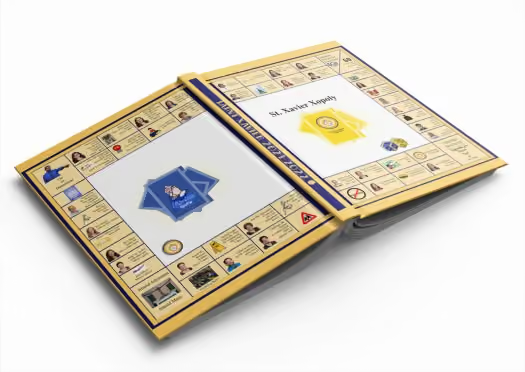
We first saw St. Xavier Catholic School in Juction City, KS's yearbook cover when the team entered the #TreeringMemoriesMatter Contest. By creating St. Xavier Xopoly, the team demonstrated the strong culture on campus. On the dividers, they used game-like spaces to continue the theme. We never smiled so much over being sent to detention.
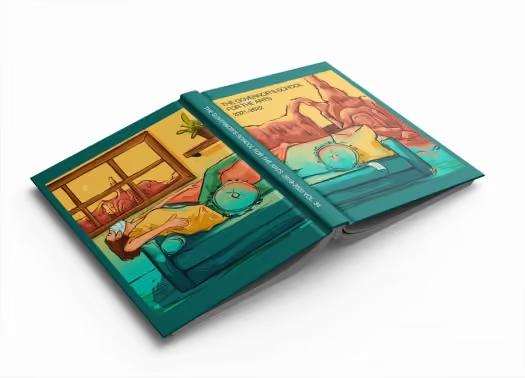
Virginia's Governor's School for the Arts combined travel and the pandemic into their student-designed cover art. Inside, the dividers combine the pen and ink aesthetic from the cover with photo collages created by digital artists on campus, taking us on a voyage through a year of development and discovery.
Why we love yearbook cover contests
Cover contests are popular with elementary and middle schools. They unite the student body around the yearbook theme or the school's mascot (more on mascots below). Besides gathering original art from campus creators, it's a marketing tool to sell more yearbooks.
2 Cover contest winners
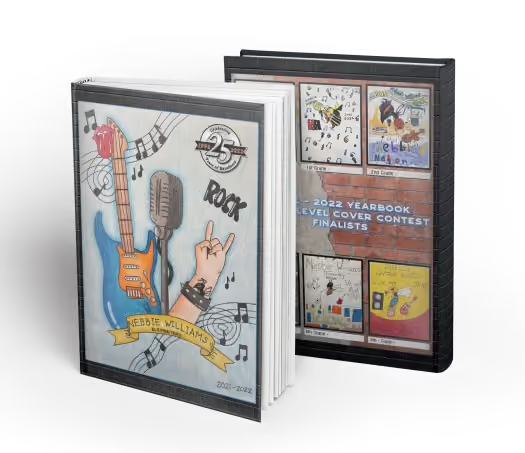
Nebbie Williams Elementary from Rockwall, TX chose the Presley yearbook theme by Treering Yearbooks and used its rocking graphics to inspire the art direction. A sixth grader designed the winning cover for the 25th anniversary book and runners-up appear on the back.
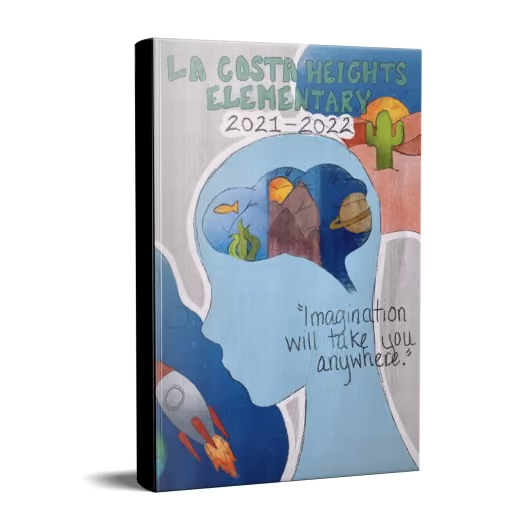
Another original art plus Treering Yearbooks theme book that caught our attention was La Costa Heights Elementary from Carlsbad, CA. The parent-led yearbook team selected the "Dream Big" theme and filled the yearbook with inspirational quotes. They revealed the theme to the students on campus when they launched their yearbook cover contest and the students interpreted it in their submissions.
Spirit book covers
We call mascot and school color-centric yearbooks "spirit books" because they tell the story of the year wrapped in school elements. Some schools create an iteration of their mascot each year on the cover, others do it to celebrate anniversary years or big moves.
POV: mascots
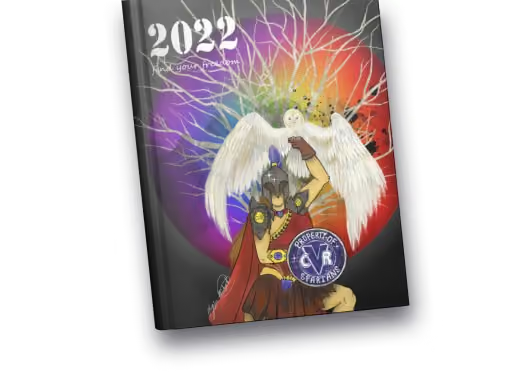
The cover is a show-stopper, and the story behind the yearbook makes Chateauguay Valley Regional High School in Ormstown, Quebec, Canada more than a favorite: the team there is why we do what we do. When the school year began, there was not going to be a yearbook, so a group of students stepped in to create and promote it. (We're not crying either!)
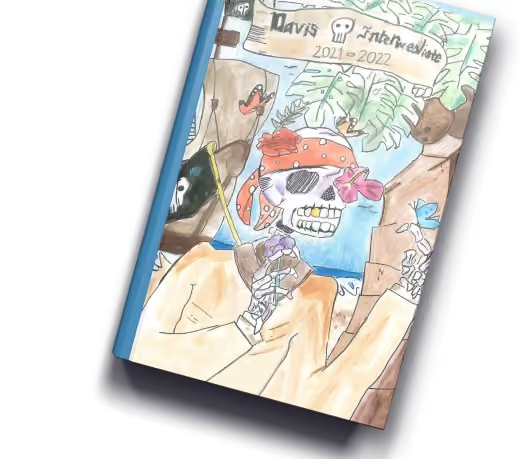
Davis Intermediate serves fifth and sixth graders in Wylie, TX. The school’s motto is "A marauder… a swashbuckler searching for the greatest treasure of all… the treasure found within!" This cover contest winner encapsulates yearbook gold.
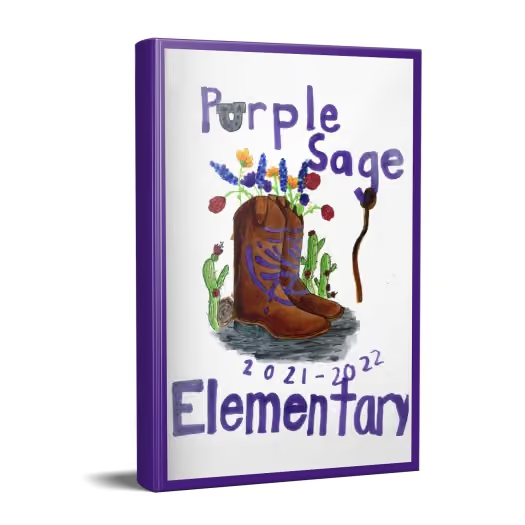
In Austin, TX, Purple Sage Elementary used art class to facilitate their annual cover contest. The art teacher brought in old yearbooks for students to look at, taught lessons on how to draw the mascot, and explained the concept of a yearbook to younger students. The Purple Sage faculty selected the winner from 48 entries: the top vote recipient is on the front, second place on the back. The ten finalists appear on the title page.
The value of student-driven yearbooks
The common element: our favorite yearbook covers began with a student-created piece. Student Emma Lorenz from Haywood High School in Hayward, CA said, "Seeing my own art be a part of my school's history feels like a dream. I'm always on a journey to improve my art and I can't wait to one day look back at this cover."
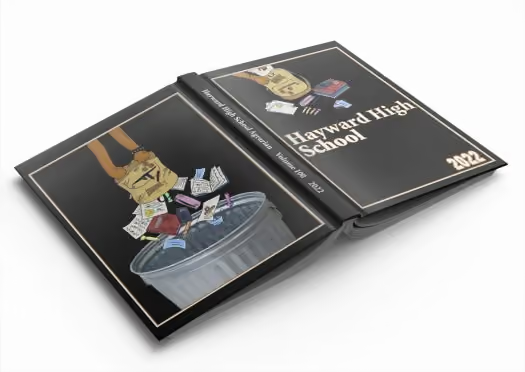
What will your students create this year?

The only yearbook timeline you'll need
Project manager. Social media marketer. Volunteer luncheon coordinator. Teacher liaison. Journalist. School historian. Memory maker. Yearbook coordinators wear all these hats and more! Below, we’ve taken one thing off your to-do list and compiled all the things on the definitive yearbook timeline so your planning and production resources are in one place.
When Last Year's Book is Complete...
Don't freak out. Keep scrolling if you were just handed the reins to the yearbook.
Fall
If there's one thing we hear from advisers around the globe, it's that they wish they started earlier! And while we can’t give you the gift of time, we can hook you up with some ideas to save you some.
Create a Plan
(Note to self: planning and controlling are two different things.)
It's impossible to think about yearbooks without considering yearbook themes. Whether you use a pre-designed one or create your own using Treering's design application, make sure it tells the story of your school this year.

Gather the school calendar, and PTA-sponsored events, previous yearbooks, and, with your team, start your ladder. This will be the overarching plan for the year(book). Your yearbook details should align with your ladder.
From there, add your team, create shared folders, and decide how to assign spreads. You’ll want to schedule follow-up meetings and track progress on this timeline.
Pre- and post-event check-ins ensure expectations are set and met.
Tweet
Start Marketing
When we think of marketing, we think of yearbook sales. It’s so much more. Your marketing plan should include
- Crowdsourcing efforts
- Yearbook staff recruitment
- Yearbook sales
No one will know what you do (create the most epic yearbook ever), what you need (photos, photos, and more photos), and how they can be a part of it (upload photos, join the team, host a party) if you don’t tell them.
Back to school is the ideal season to begin selling your yearbooks for two reasons: early discounts and the opportunity to earn free yearbooks. We’ve created a marketing plan template so you can stay organized.
If you are using your yearbook as a fundraiser, once again, work backward from your goal. For instance, is the PTG trying to earn money for more books in the library or playground equipment? Is your yearbook team trying to invest in new equipment? How much per book is needed to earn that amount of money?
Gather Content
August through November offer myriad opportunities to capture content and begin building your book:
- Student orientation
- First day
- Halloween
- Yerdsgiving
- Classroom shots
- Homecoming
- Spirit week
- Fall sports

Seize the [Picture] Day
Portraits comprise 40-60% of the average yearbook. If you aren’t on a first-name basis with your school photographer, it’s time to change that.
Touch base with your photographer and double-check they will export the photos in PSPA format (this is industry standard, but not everyone uses it) and confirm how they will deliver them to you. Copy your picture day coordinator on all correspondence (and offer up this professional school photographer's advice).

Winter
When you hit winter on the timeline, there is a shift at school: everyone becomes vacation-focused, and the list of things to do multiplies. (Late to the party? We have you covered with our yearbook quick start guide.)
Stay the Course
By now you have a rhythm: Your team has their assignments and together you’re tracking progress. Fall event pages are drafted and in the yearbook. Portraits should arrive momentarily. You follow up every event with an ask for additional POVs.
Begin Proofreading
Treering Yearbooks allows you to download a PDF proof of your book throughout the design process. Here’s how we use them:
- Hand our portrait pages to teachers to help verify names and classroom placement
- Project pages and evaluate them as a team
- Track coverage
- Post sneak peeks on campus
We have a whole module in our free yearbook curriculum on editing.

Cover Year-End Festivities
Fall and winter are the seasons for Bodhi Day, Christmas, Diwali, Kwanzaa, Hanukkah, and Thanksgiving. Consider adding family celebrations to your coverage timeline as well as class parties.
Inspire Generosity
‘Tis the season to be selfless! Treering’s donation option makes it easy for families to gift yearbooks to the school. Advisers and coordinators then share the love by distributing yearbooks to those in need or gifting them to staff members.
Spring
It’s time to spring into action and finish the book! (Heads up: it’s also time to get those yearbook spreads and personalized pages ready for Treering Yearbooks’ spring contests.)

Finish Strong
If winter was the season everyone is ignoring you, in spring, everyone has questions. Can I have more time? How do I get my photos in? How do I buy a yearbook?
Some easy ways to help save your sanity are:
- Be proactive and share the personalized pages tutorial online (seasoned advisers hold their own training session).
- Use templates or the auto page builder to start your layouts. You can always modify them.
- Make sure all teachers and the front office staff have the ordering info. You may even want to share a QR code for them to place in newsletters.
- Add Year in Review and Trend pages
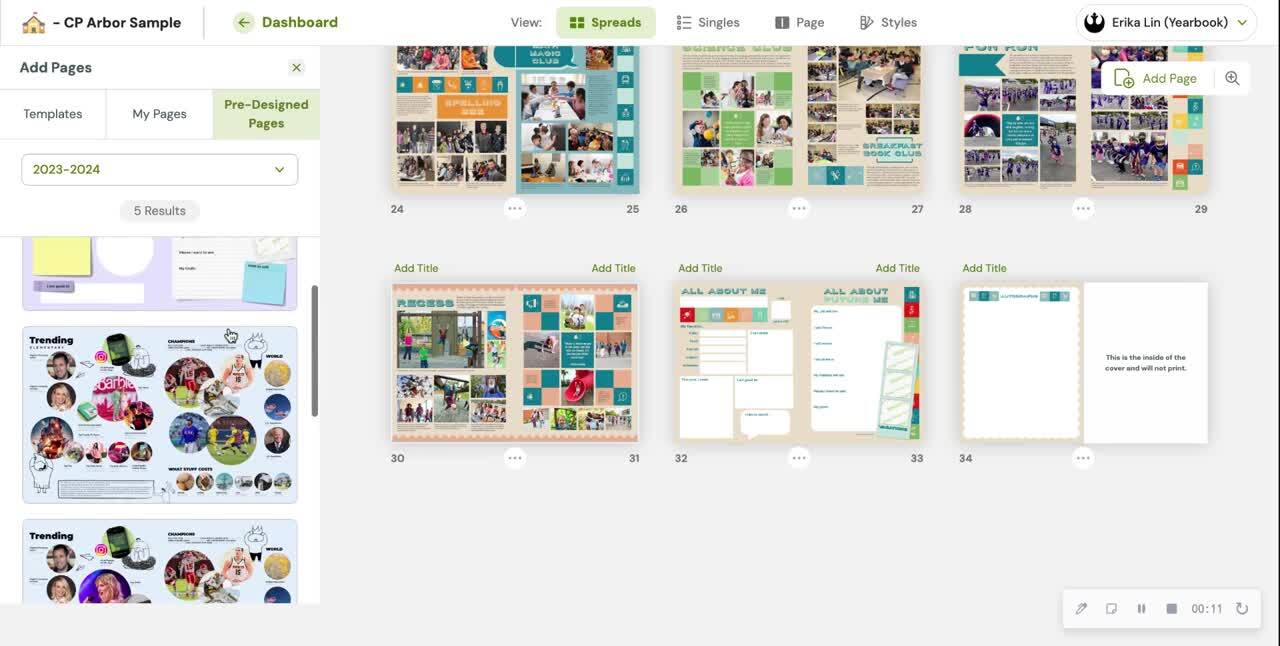
Let It Go... and Celebrate!
Before you hit print ready, ask yourself:
- Do we need to order extra books? (Some schools like to keep a copy in the library.)
- How do we want our books sorted?
- Where should our books be sent?
- When will they arrive and do we need expedited shipping?
Summer
High five! You did it!
QR Code is a registered trademark of DENSO WAVE INCORPORATED.
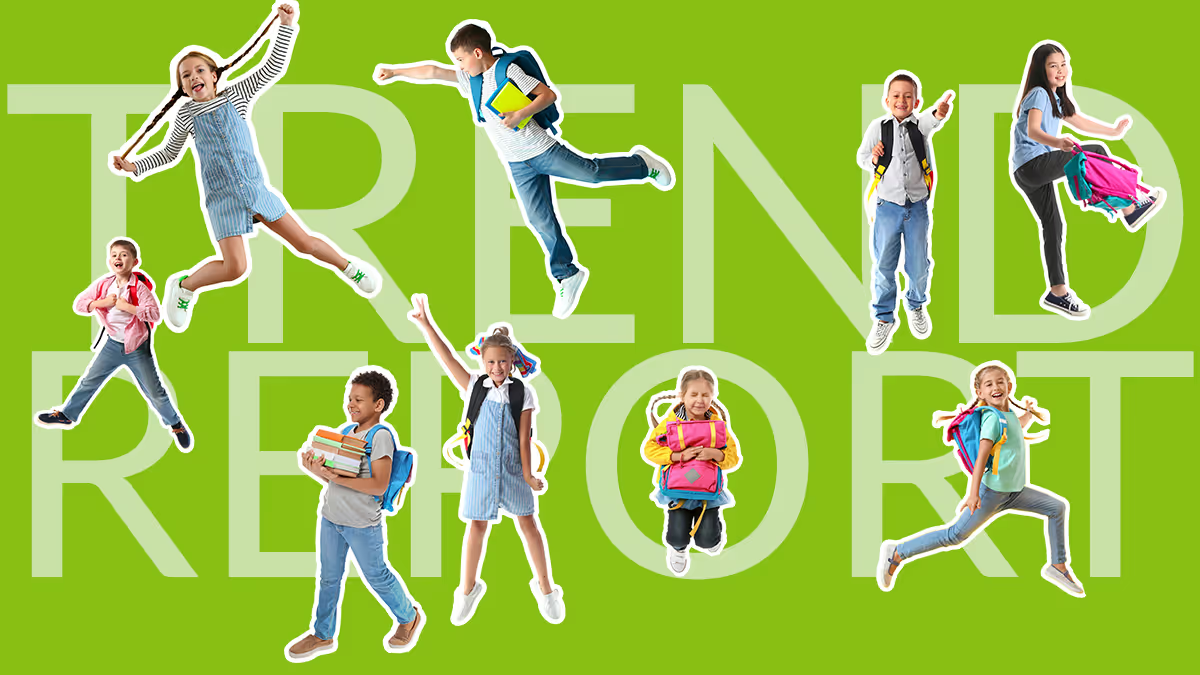
Year-end trend report
This is the time we often find ourselves reflecting on moments or trends that defined the year: countdowns dominate TV and radio, your Insta feed is filled with top nine collages, and influencers hype up-and-coming trends. Because the yearbook has the potential to be a campus influencer, below are just a couple of things to consider documenting in yours so students can look back and reminisce. It's easy to add trends and events that defined the year in the definitive archive of academia: your yearbook.
Current events
Add a trend timeline or spread so students can remember historic events, recall how most students chose to tuck in their t-shirts, or laugh at the social media craze during that time.


When it comes to including historic events to include in your school’s yearbook, it can be overwhelming about which ones to choose. When considering a year-defining moment, consider the impact it had on your local student body.
Natural disasters are also worth including in your year-end coverage. However, editors must do so while also keeping the sensitivity of the issue in mind. Did your school set up a donation drive to help victims of a tornado or hurricane that devastated another area of the country? Was your campus directly impacted?
Finding a local angle is a technique journalists often use when deciding how they plan to cover a specific event and it’s a tool yearbook editors can use as well. After all, you are a journalist who is documenting each school year!
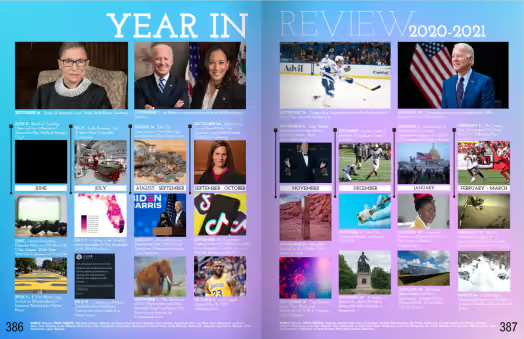
Fashion trends
Historic moments aren’t the only element that defines a school year. Fashion is another key component that can help illustrate a certain time period as many students use this as an outlet to express themselves. To help determine the latest trends, a great first step is turning to Pinterest or Instagram. From there, have your yearbook staff find students who emulate some of those fads.
You could also assign an Outfit of the Day (#OOTD) photographer to capture students walking into school. Then, in your yearbook, you could feature seasonal styles. (Parents also love to submit these photos, so ask away!)
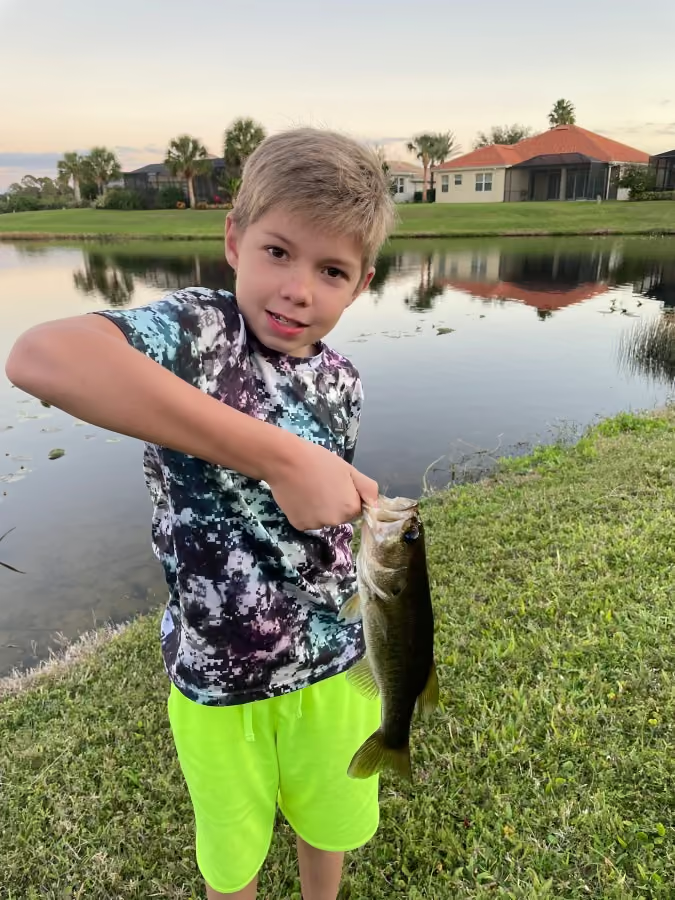
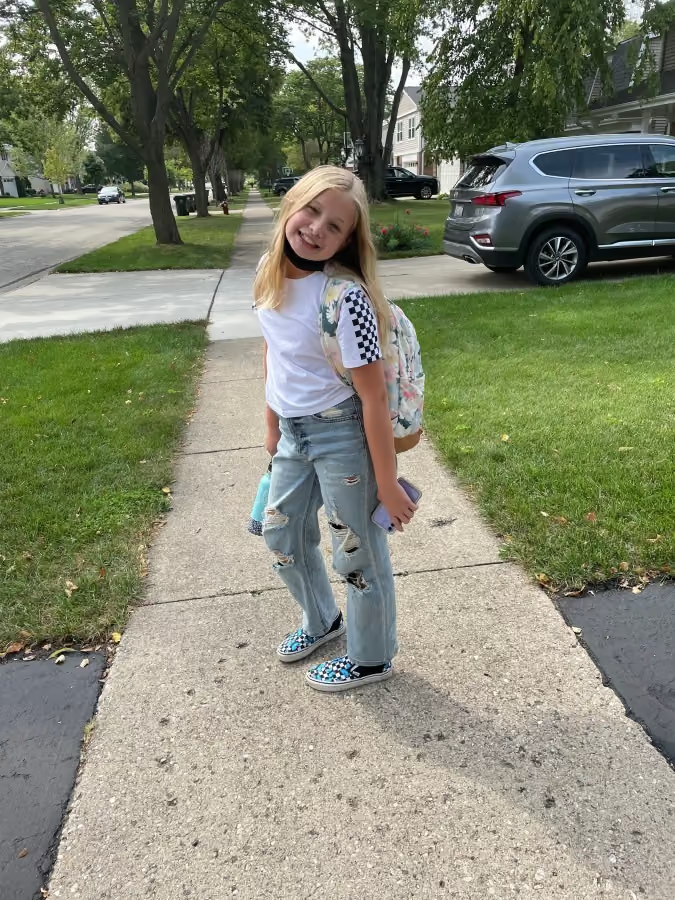
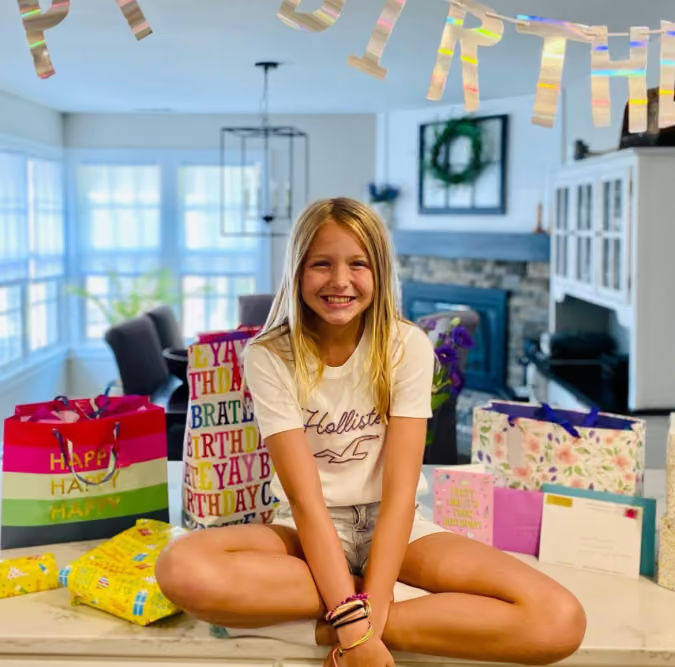
If you do a more traditional fashion spread, be sure to include:
- Mom jeans
- Chunky soled shoes, especially Dr. Martens
- White shoes
- Athletic gear
- Graphic Ts
- The return of the mullet
- Bucket hats (which we hear will be "out" come summer)
- Over-sized sweaters
- 90s style: neon, flannel, wide-legged pants
- Friendship bracelets
Social media trends
In addition to fashion, you can also consider incorporating social media trends that were popular over the past school year. Who knew TikTok would take off like it did? Remember when customizing your background and picking out songs for your MySpace page was all the rage? We do! Be sure to include some of the dances, trends, or popular songs students may be using on their own TikTok pages.
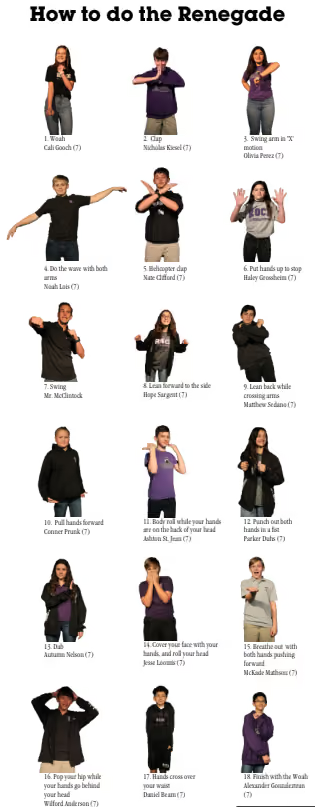
Students will love looking back at these memories 10 years from now, and their kids will love it even more!