.svg)


June 16, 2026
2
Min Read Time
Treering’s annual design contest celebrates the creativity, storytelling, and talent that make yearbooks meaningful. This year, we combined the contests for cover, custom pages, and spreads, creating our biggest challenge yet.
Your response was incredible.
Three groups of judges evaluated over 1,000 entries from parents and school leaders for
Many yearbook creators define theme as an aesthetic. We believe they are both visual and verbal. The strongest entries didn’t just look beautiful. They captured the spirit of their schools through headlines, repeating visual elements, and coverage.
Bottom line: the spreads in each of yearbooks below reinforce the story that began on the cover.
What impressed the judges wasn’t just the technical execution: it was the discipline.
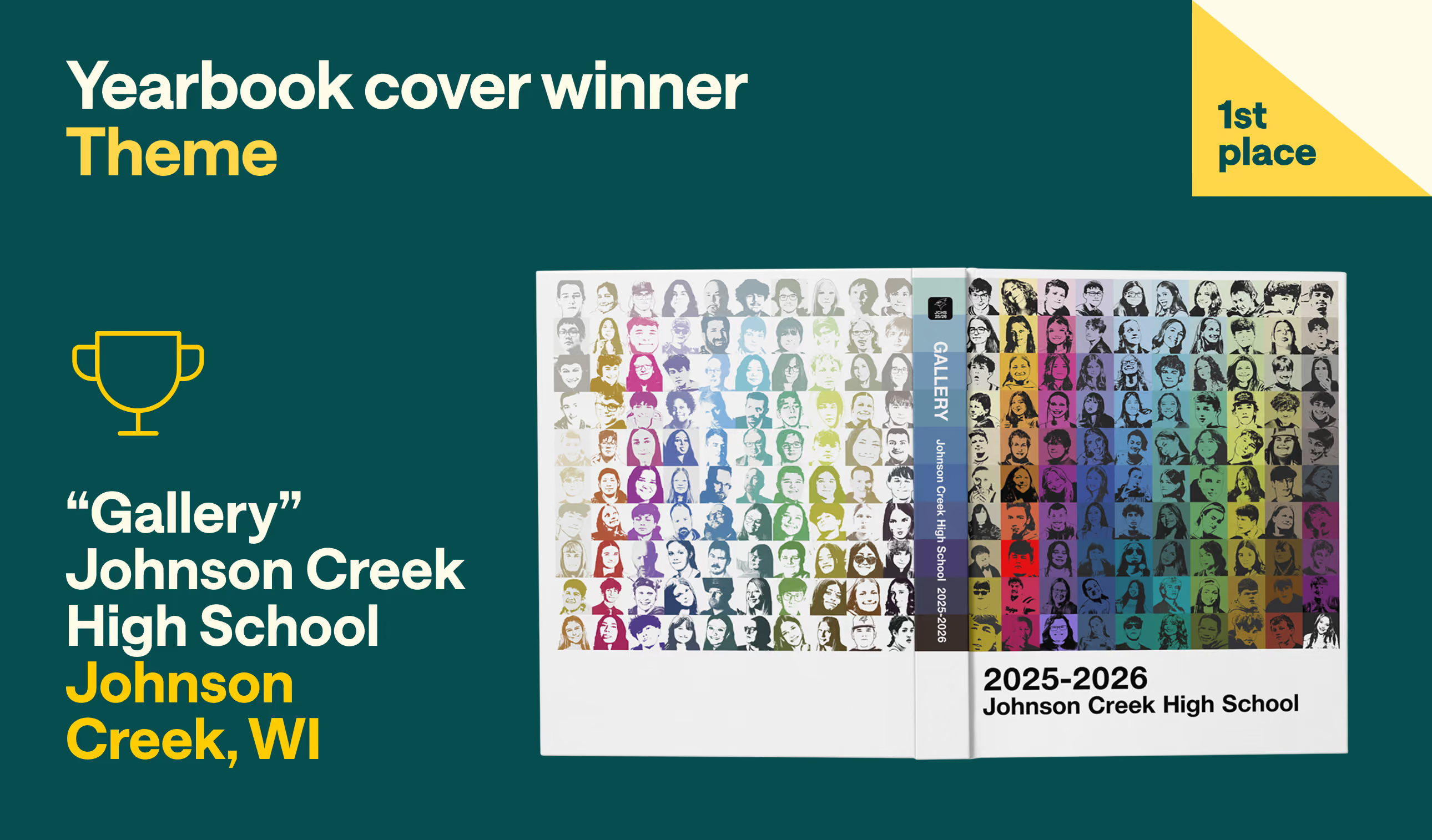
Cover designer, junior Sophia Lawrence, created 200 images by hand. The yearbook team snapped the portraits of students and staff. Lawrence used Photoshop to convert each into a negative image and used the theme color palette to create the front, and reversing the image to create the panels on the back.
The cover features every student and full-time teacher in the school. It took four months and 600 layers to create.
Their “Gallery” theme became more than a visual concept: it became the framework for the whole book. They curated content and framed the highlights of the school year in an exhibition of the Johnson Creek Community.
Each grade had a class color defined by the theme. Standouts, club photos, and athletic features repeated the familiar color chip aesthetic. The yearbook team demonstrated consistency throughout the yearbook and showed advanced photo editing skills without the use of AI.
The bold color creates energy and is balanced by high-contrast black-and-white images, making students the focal point.
Adviser Ryan Molley’s 11 yearbook students do not meet together in a formal class period or club session. Instead, they independently work in his classroom while he teaches his core subjects.
“We are making artifacts that are beautiful,” Molley said.
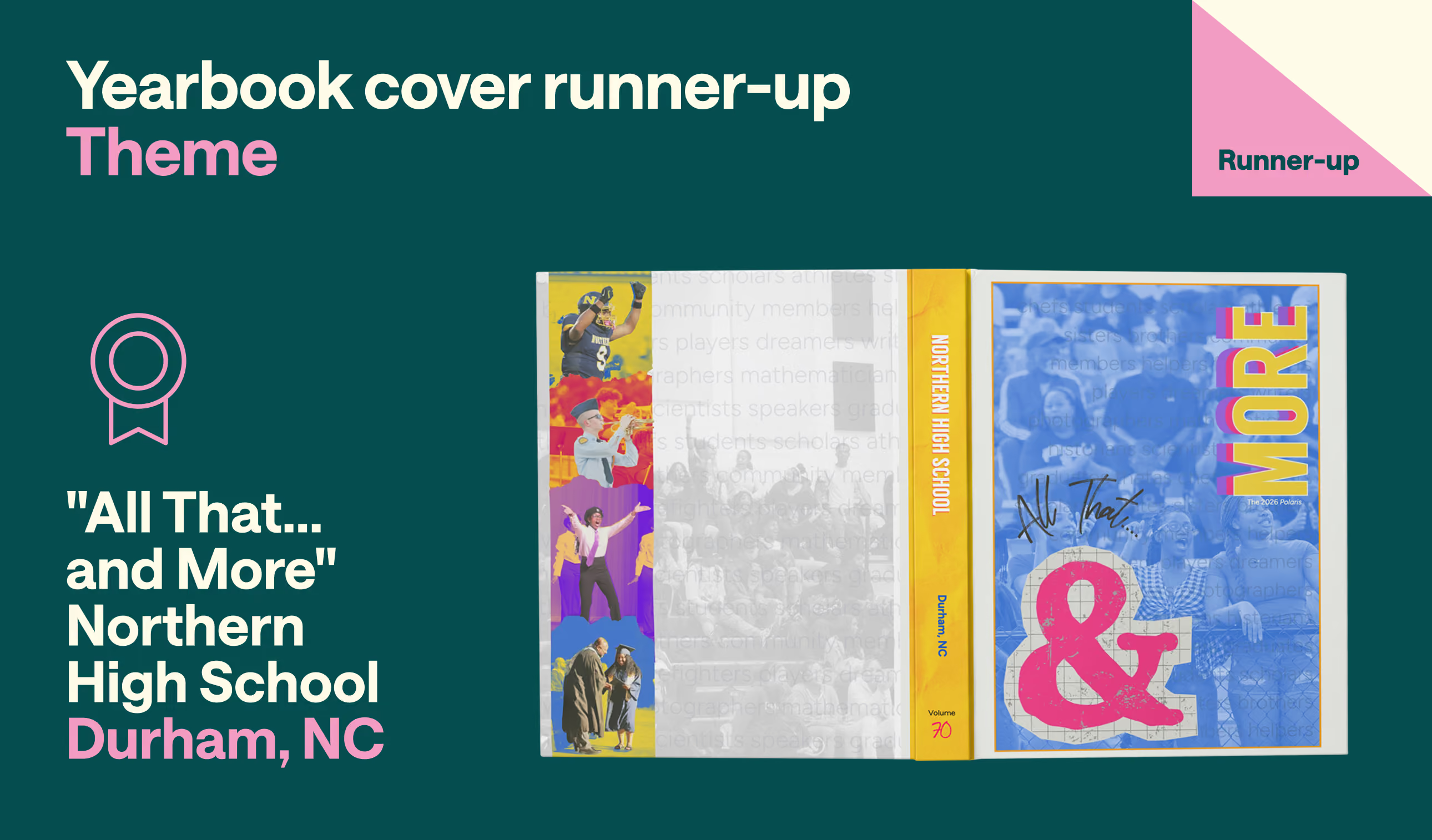
The use of color gives an initial “wow” moment, followed by clear design hierarchy and visual treatment of the ampersand. By using the faces of the students who fill the pages, the cover doesn’t depend on stock images or Treering graphics. The bold text functions like a challenge: open the book and we’ll prove it. (And they totally did!)
Adviser Lauren Casteen and her editorial board brainstormed over the summer to capture the story of who really walks the halls. In their audit, they realized they are surrounded by “Renaissance people” because their classmates are involved in many activities
The four students on the back cover embody this: an every season athlete, an ROTC student in the band, a sorority sister-slash-soccerplayer-slash-dancer, and an early grad.
What a still image does not show: UV gloss text with some of the identities Northern High students hold, such as Theta, historian, graduate, and brother.

The question became: how do we show that? The short answer: maximalism.
They wanted every page to feel full, and Casteen pushed them to have boundaries and remember design rules still need to have a place. The editors responded by researching the maximalist movement and creating a style guide to support “over the top” graphics and layering. They employed
Northern High School's cover is proof that successful yearbook design isn't determined by budget, software, or equipment. It's determined by vision, creativity, and the willingness to keep refining an idea until it works. The result is a cover that feels both ambitious and deeply personal.
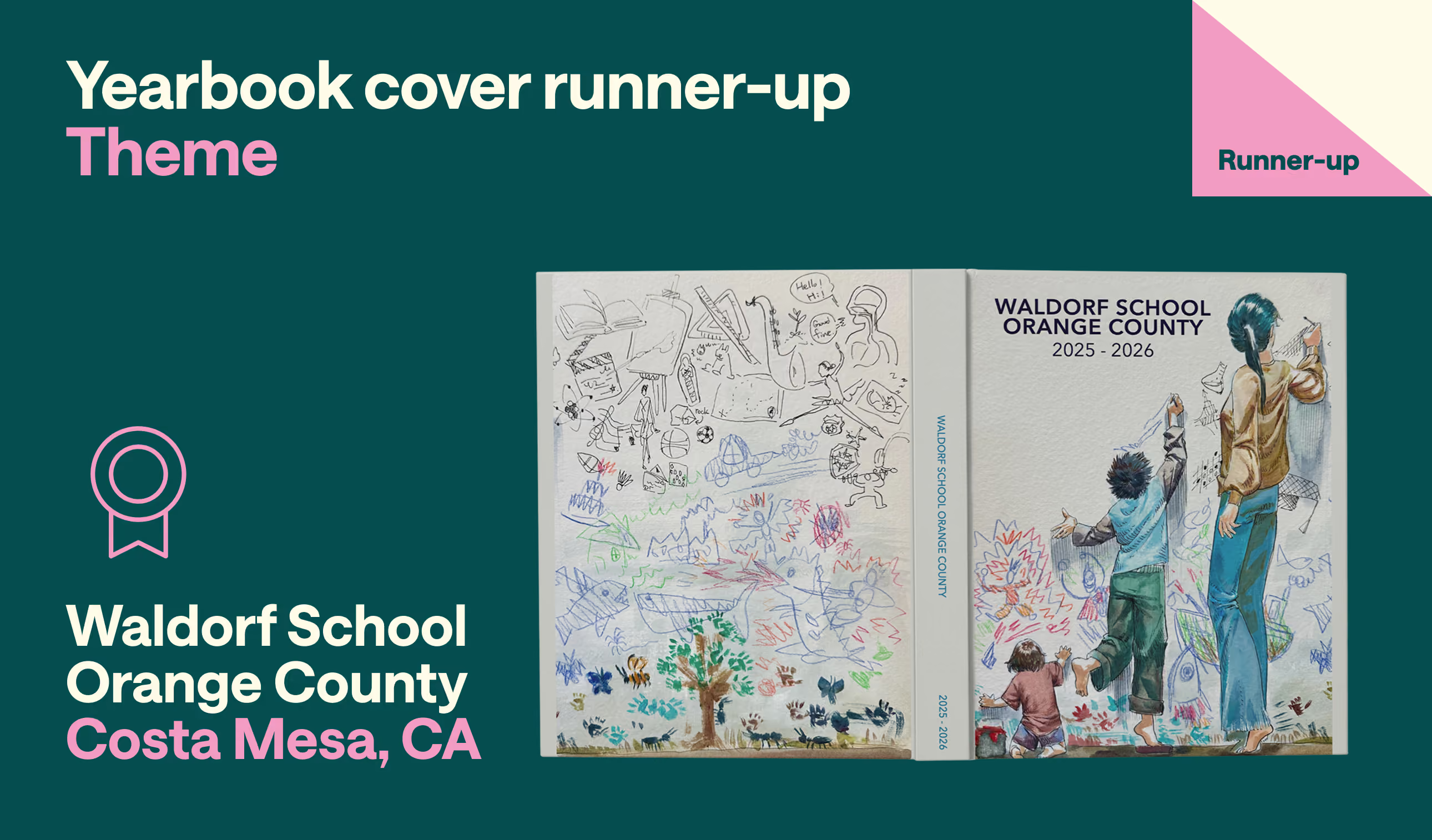
Senior Doris Zhang created the cover depicting a toddler, child, and teen doodling. There are fingerpaintings, eraser marks, and hatching. On the first few passes, the judges thought it was a composite of multiple classes rather than a single student’s creation.
We were never so glad to be wrong.
“[Zhang’s] concept, design, and execution of the 2025–26 yearbook cover stand as a shining example of the lasting impact that artistic integration can have on a student’s confidence, vision, and relationship with art,” adviser Kathy Christian said.
The spreads within begin with parent-infant classes, progress through elementary, middle, and high school grades, and finish with the faculty guides. The organization itself mirrors the journey Zhang began in the cover.
“Yearbook is a visual showcase of what students do, not what students do best,” said Christian, who recognizes the challenges of creating a yearbook for an audience that runs from infancy to 12th grade.
The yearbook editorial team completes eight passes of the book to ensure students are in their class portraits and have their art showcased. Their goal is to showcase the journey of progression over time.
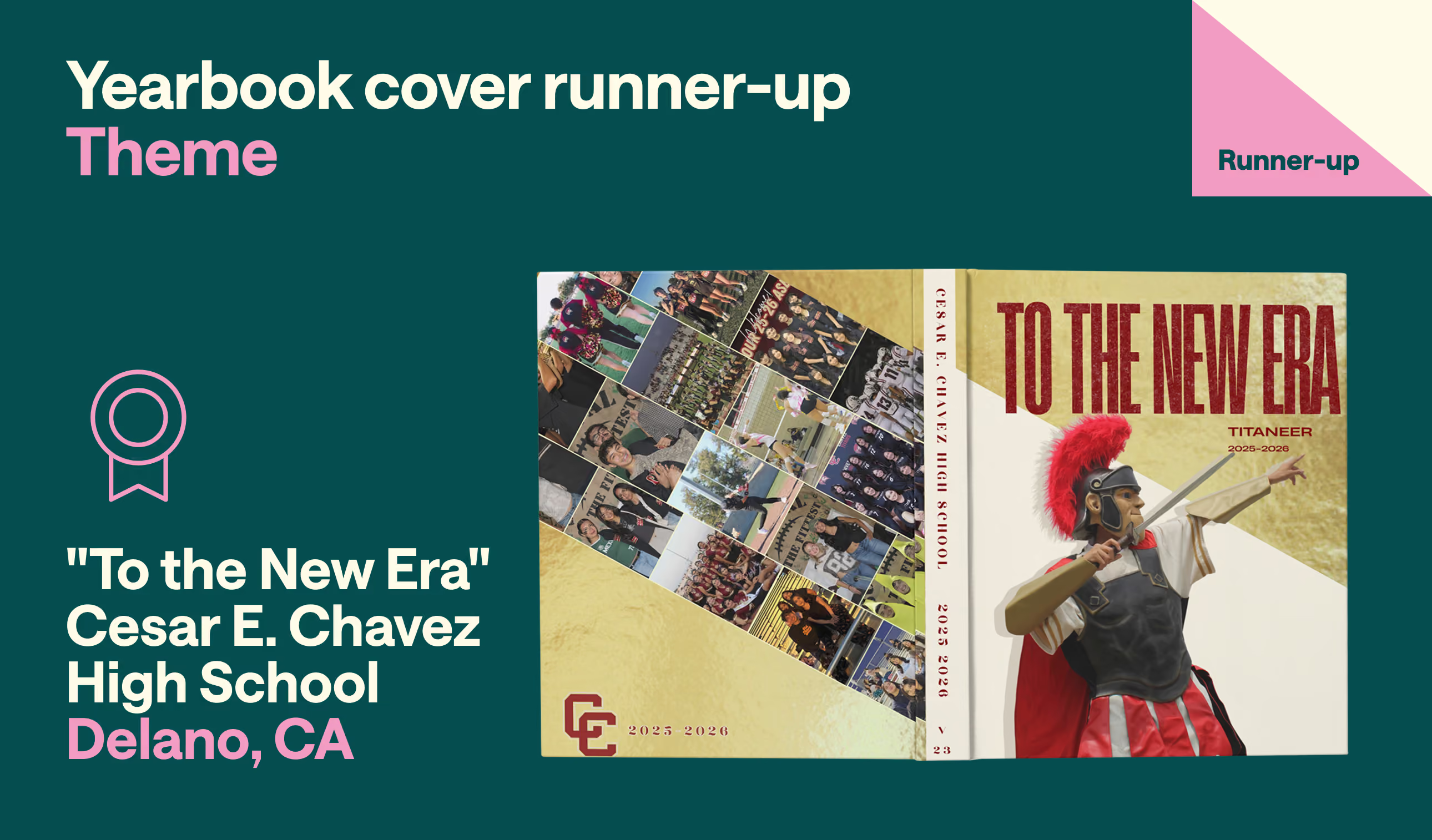
Adviser Karen Hernandez said she didn’t know where to begin as a first-year adviser. The students came up with theme projects which they pitched to the class. The top four went on a Google Form and “To the New Era” won.
At the time, the concept was difficult to develop. They wrestled with it and eventually changed the yearbook theme to “Off Script,” which visually had a 90s ‘zine aesthetic.
Mid-year, they got the news: the school will be renamed for the 2026-2027 school year. Again, they pivoted. The news became the catalyst for their original theme: now, there was a story.
“This is a send off,” Hernandez said.
The winning cover submission was the fourth iteration, and featured some of the original concepts, including the mascot photo which a yearbook student took.
Judges praised cover elements such as the diagonal bar projecting upward movement, school colors, and the gold leaf, all of which appear throughout the book—even the index is stunning and connects to the cover.
Visually, it was a celebration of Cesar Chavez High School’s community. And that won’t change with a new name.
As you can see, the judges consistently rewarded authentic representation over decoration and storytelling over trends. We are proud to showcase the top entries to represent the creativity, passion, and student-centered connections that preserve school memories beyond a social feed.