.svg)

Yearbook Heroes
Looking for inspiration, design tricks, how to make a great cover, promoting your yearbook and engaging your community?
Most recent
Yearbook Hero Mike Meloney didn’t have time to do the yearbook
Treering Yearbook Heroes is a monthly feature focusing on yearbook tips and tricks.
When Mike Meloney showed up to enroll his eldest son in kindergarten, the principal gave him a hero’s welcome because he was the school's yearbook coordinator. Except Meloney didn’t know he had the job.
How did you get "voluntold" to be the yearbook chair?
My sister works for Treering, and she was helping schools in San Diego make the switch from other publishers. When she called McKinley, Kristie not only sold them on Treering but also on me. She said it would be a great way to connect with the community and engage.
I told her I didn’t have time.
Four years later, you’re still doing the book. How did you help build a yearbook culture at McKinley?
I learned to get organized early. Even without photos, you can still do a ton of work on day one of school to make the rest of the year easier: label every page on the ladder and then make a shared Google folder for each page. Get those shared folders to every teacher, event coordinator, and committee involved. Send reminders once a month to share pics.
It's really been profound to go and take the photos, lay out the book, and help with the sales. When I show up, students say, "Hey, it's the yearbook guy."
Then, at the end of the year, when you give them out, and everyone's just googly-eyed about the year, they have this warm book in their hands. They sign it. It's just so special. And the memories that we make are—I hope—lifelong.
I have about five books left in me. My youngest is now in kindergarten.
What kinds of things do you do at the signing party?
It's all about reflection. One year, we had ice cream—as long as sugar's involved, kids are more engaged.
It's just a special time to be together, really reflect on the year, laugh, and share stories.
Custom pages are a big deal at our school. One person puts in 100, but many folks just do the two pages for free. The more I share about it, the more people get engaged.
At first, there's always the worry about the pages appearing in everyone's book. I tell them, “No, this is just your book that gets those pages.”
Once folks learn how easy it is to make them, they just go to town.
What do your kids think about being the ”yearbook guy?”
I have a unique connection with them and with the community. My kids are fully supportive. They're very critical at the same time. They'll come over and see the book-in-progress and say things like, “That doesn't go there” or “I don't like it.” And if I ever have a question about something, they just answer it.
So, in some sense, they're part of the committee.
What is something special you’re doing this year?
It’s the centennial year. The school opened in February 1925, and now, 100 years later, we're going from the Cougars to the original mascot, the Magpies. We also have an aerial drone shot of the kids lined up in the number 100.
The kids got together to research and interview some folks who were around in the school 60 years ago. They found these folks still living in the community, found old pictures, and made an exhibit.
Next month, there will be a centennial-themed scavenger hunt and, later, a variety show called “A Hundred Years of Stars.”
It’s a special year.
Any final thoughts?
You don’t need to carve out huge amounts of time to focus on making the yearbook, especially in the spring when there is a lot of content and you just have to layout pages. Do one to five pics while your kids are lackadaisical about getting their shoes on. Every moment in the Treering app is a chance to crop, zoom, and make it nice.
Yearbook hero Beth Stacy writes history
Treering Yearbook Heroes is a monthly feature focusing on yearbook tips and tricks.
Like many of us, Beth Stacy didn’t set out to be a yearbook adviser. As a special education teacher, she focused on reading intervention and built her reputation as a writing pro and Read 180 instructor. After moving from Florida to Ohio, her new principal asked her to co-teach the yearbook class because she wanted it to be more journalistic. The program was already under scrutiny: the district, concerned over a debt-burdened program, was ready to shut things down. In 2017, the team at Wayne High School moved to Treering, reducing the financial burden on the school and the stress of deadlines for the advisers.
Co-advising sounds like a dream. How do you make it work?
The business teacher and I share responsibilities. She and I split the class on Tuesdays and Thursdays. She focuses on visual skill development and marketing while I teach writing and interviewing.
During the first quarter, the four seniors lead teams. They divide the sports spreads and divvy up tasks. Within their teams, they choose how to break up tasks. For example, there are 92 band members and 32 Warriorette and they have to interview them all. That team assigned instrument groups to each team member (woodwinds, brass, etc.).
Second quarter, students determine if they want to work with a partner or solo for their next spread. As the year progresses, they grow more independent.
With a school of 1800, how do you ensure coverage?
We do a big book–250 pages. Also, we use the index report to identify students who are not in the book and brainstorm open-ended questions for student profiles inspired by Humans of New York. These Humans of Wayne profiles undergo a revision and editing process before going in the book and on the Signal’s Instagram.
Because we include prom, graduation, and our track team, from which members compete each June at the state finals and potentially at nationals, Wayne High School is a fall delivery school. For the first time, we are going to use Treering’s ship-to-home option so we don’t have to plan distribution during the summer for open house.
It’s the 75 anniversary this year for their yearbook–what are you doing to make it special?
My students are finding ways to link the past to the present. One of my editors created two spreads using the previous covers. We are missing ten years and working with the alumni association and hopefully the historical society to track them down.

The first yearbook has a write-up from the original editor. We will honor the previous teams who established and maintained the yearbook tradition as well as legacy athletes since we are a big sports school. Our head football coach is a first-generation Warrior and his son is a senior. Nearly two dozen members of the faculty are alumni and will appear with their senior yearbooks.
Teaching yearbook is such a different experience than being on staff as a student. I absolutely love it, but it is one of the most fun yet difficult classes I've ever taught!
Yearbook Hero TJ Soffera
Treering Yearbook Heroes is a monthly feature focusing on yearbook tips and tricks.
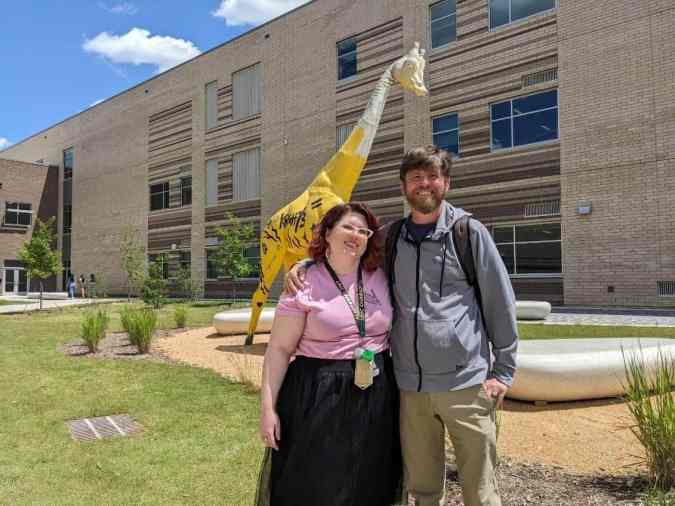
As Treering’s Yearbook Jedi, TJ Soffera helps schools escape the dark side of contracts and order minimums. While his business cards say, “Regional Sales Manager,” parents at his son’s former elementary school—we’ll get to that in a bit—know him as the yearbook guy. He joined the PTA to spend time on campus with his boys and intentionally be involved in their lives.
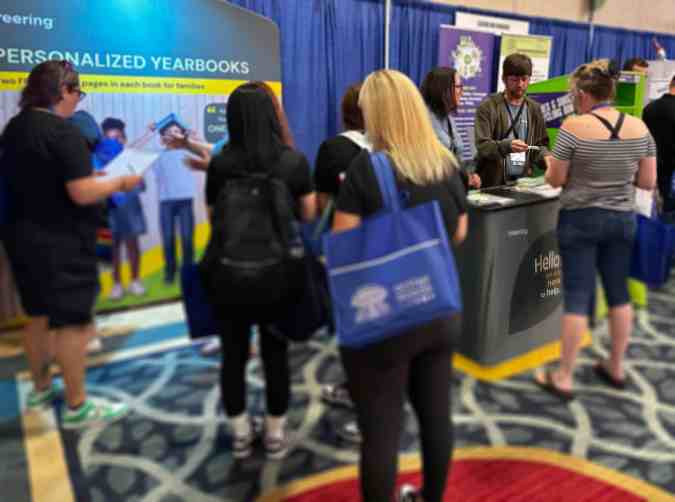
What is it like seeing the yearbook from both sides: creator and publisher?
As the yearbook guy, I love getting parents excited about the custom pages. They allow kids to tell their own stories and capture their unique experiences. I include personal touches in my children's yearbooks, like photos from trips and soccer games. Looking back at them, we can say things like, “That was second grade when we went to Colorado.” That's what's special to me about the books and their longevity.
On the flip side, I just love helping people. I love making their lives easier. So many schools that made the switch are debt-free, and it takes away so much stress.
Through the sales process, I've built countless relationships. Three people on my team once were parent volunteers I did a software demo for. It’s important for customers to see we are real people. We, too, are volunteering and working. It builds empathy.
Talk to me more about making lives easier.
Last year, I put the wrong year on the spine of the yearbook. The support team helped me fix it, order a corrected copy, and send it to the newly retired principal.
Mistakes can be corrected, and missing students can be added even after the initial submission. I really do believe this means the world to not only the kids but even more to the yearbook adviser. The person who made the mistake is kicking themselves, and we’re over here going, “No big deal.”
Level with me: why are you still doing the yearbook at a school your kids no longer attend?
Treering’s software is so easy that I don't need much help with it. Really. As long as you have pictures, you can make a book.
I am working to transition out of the role. I put myself in this position because I enjoy it, and the PTA president is great and helps me out. Together, we’re recruiting other parents to help with specific grades so someone can take over next year.
Yearbook heroes Izzy and Lila resurrect a yearbook program
Treering Yearbook Heroes is a monthly feature focusing on yearbook adviser tips and tricks.
This year we at Treering called on all our schools’ parents, teachers, and students to nominate yearbook heroes in a first-ever peoples’ contest: #YearbookHero. The yearbook callout contest was prompted by our empathy and true appreciation for our yearbook editors.
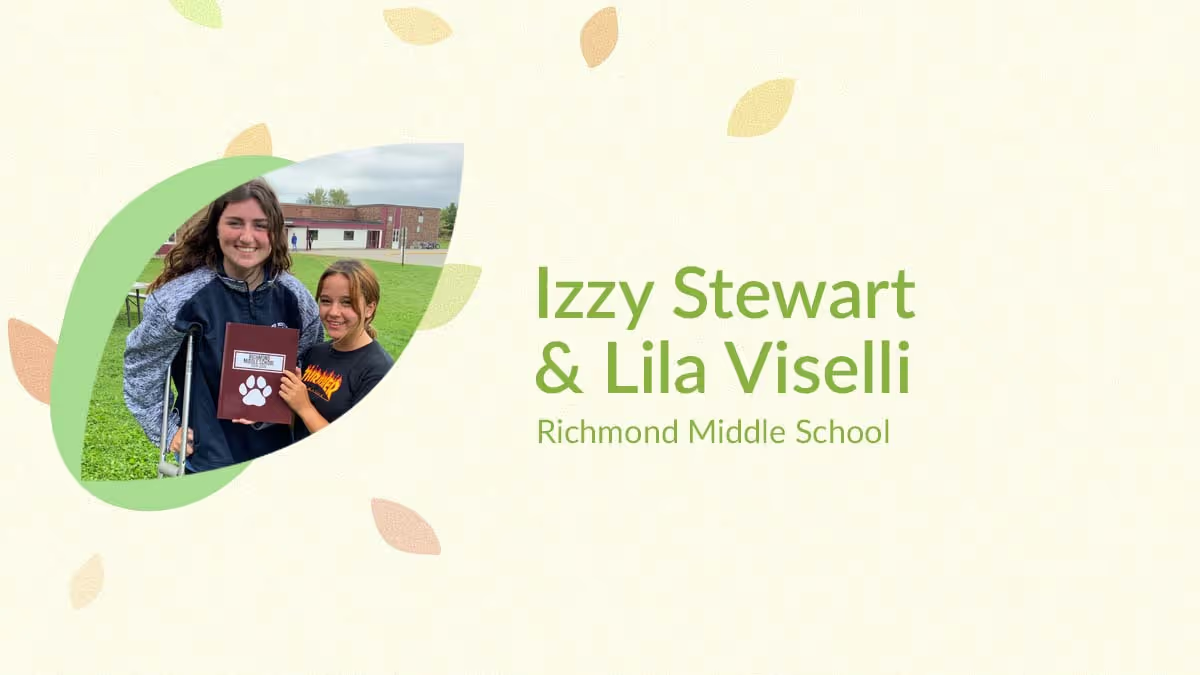
Students Izzy Stewart and Lila Viselli from Richmond Middle School, located in Richmond, Maine won first place in the middle school division of our nationwide contest; they were nominated by their adviser Becca Redman for their work in restarting the yearbook after a six-year hiatus—even when the pandemic hit and the girls had to work on the yearbook from home!
What does it mean to you to be Richmond Middle School’s Yearbook Heroes?
We all think it’s important to get recognized for the work you’ve done when the opportunity presents itself! And in this case, it was Treering’s #YearbookHero Contest. It was quite the surprise to get awarded for the yearbook, and it feels great to be recognized for all of the work that was put into it.
What was it like to bring the yearbook back after six years?
We were thrilled to bring the yearbook back and learned so much as a team - about design, collaboration, communication and time-management. It was a really rewarding experience that hopefully will help students in their other activities and classes. I think it would have been exciting under any circumstance, but we all felt even more satisfied with our work because we put it together during a pandemic, when we were all at home. We had to be creative. I think last year's book reflected lessons we learned the first year, and we see the book getting better with every edition.
How did you gather photos when you were at home? How did you involve and motivate your classmates to contribute to the yearbook?
Ms. Redman: I sent a LOT of emails and contacted parents on Facebook to ask permission to use their photos of school activities in the fall, and to contribute to the quarantine collage. At one point I also gathered the entire team of middle school teachers in a Zoom meeting and took a screenshot of all our smiling faces. It was captioned with a "We Miss You" message. I think that was special for the students, and will definitely be a memento from an unprecedented year.
Izzy and Lila: When we were at home, we’d email a lot of people consistently, including classmates and coaches, in order to motivate them to send us pictures. We also contacted parents to see if they could send us pictures that they’d taken of students and events.
Ms. Redman, how is Richmond Middle School’s Yearbook Club going?
This year, things are going really well! We are still in the planning stages, but definitely learning from the past. For example, after taking photos during Spirit Week and Halloween, we created those pages immediately at the following meeting. I’m sure this will pay off in the spring. One of our past mistakes was definitely leaving a lot of the actual book editing until the end. I'm glad to have a lot of 6th graders expressing interest in the club this year and hopefully they will stay with the club through middle school and be leaders in the future.
I am also lucky to have some really proactive team members who take initiative to take photos during important events—I don't need to remind them! Since Izzy and Lila have graduated from 8th grade, they are definitely missed this year! With that said, I have plans to bring them on board to come and help me teach the current middle schoolers a few key Treering skills. We’ll be working on portraits soon, so that’s definitely something we’ll be focusing on with Treering in the near future.
Izzy and Lila, now that you’re in high school, what advice would you give younger students who are involved in the yearbook?
Never give up and push through obstacles the best that you can. It’s always ok to ask questions and get help! For us, it was very rewarding in the end to bring back the yearbook by using Treering and for everyone to give us positive feedback. It feels good to leave middle school knowing that we brought the yearbook back and left them with a solid foundation to build off of this year and for years to come.
Yearbook Hero Allyson David
Treering Yearbook Heroes is a monthly feature focusing on yearbook tips and tricks.
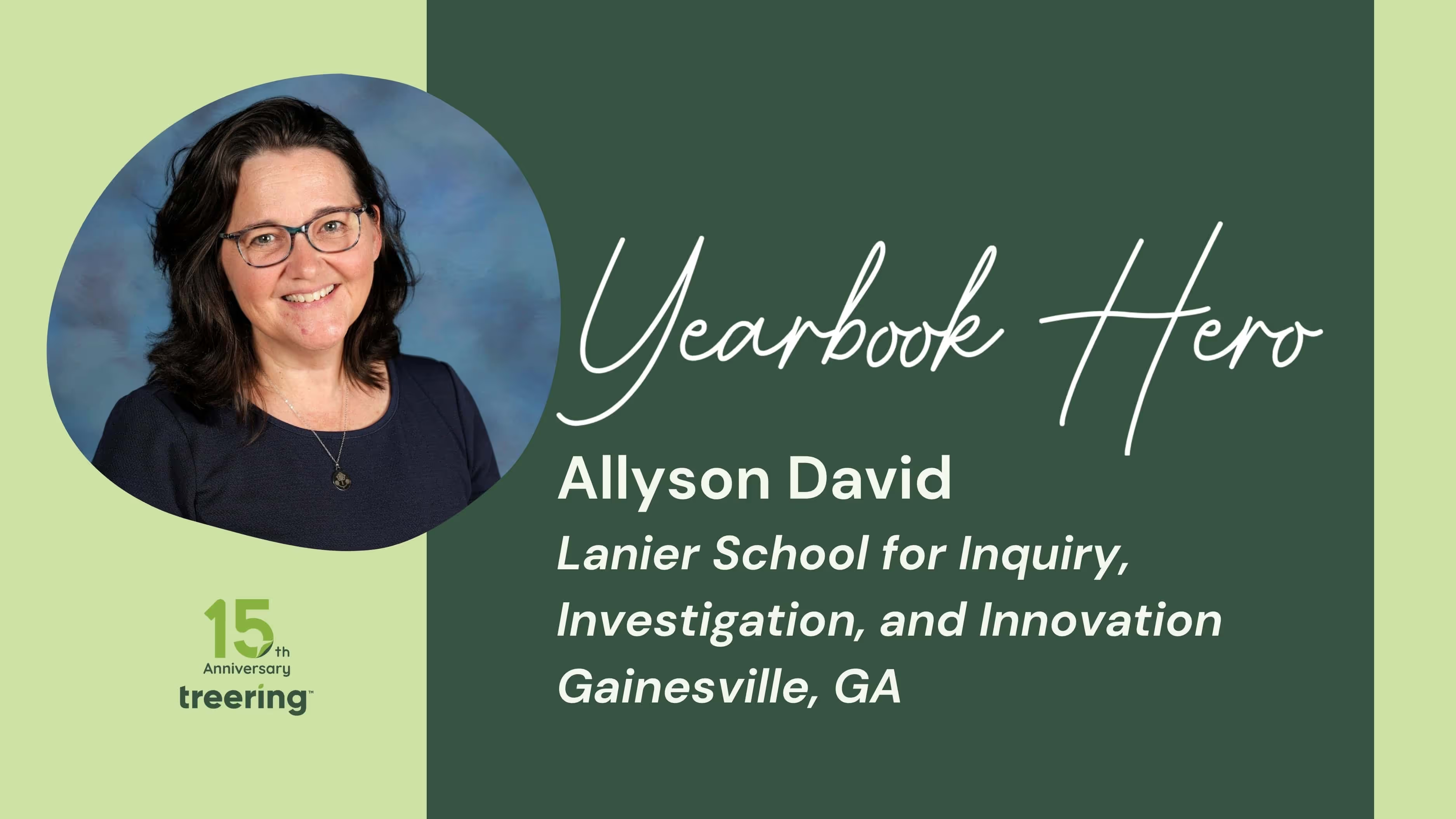
While at her desk in the library, media specialist Allyson David overheard the yearbook planning among the voluntold team. She asked to help. At the time, excess yearbooks filled a storage room at Lanier School for Inquiry, Investigation, and Innovation, and the school was losing money.
How did you turn things around?
My sister is a high school yearbook adviser, and she told me to look into Treering. After I received my sample, I took all the selling points to my admin. I told him we won't have boxes of leftover books, families can customize a couple of pages in there, and we can even integrate a fundraiser. It was a no-brainer: we went from losing money to making a profit.
You went from being on a yearbook team to managing the project solo.
As a media specialist, it naturally works; this is what we do. Since we are a Google school, teachers put pictures in a shared folder on Drive, which seamlessly integrates with Treering’s software. We have pictures throughout the year that I pull from to put in the yearbook.
I start designing with our fifth-grade ads. We sell quarter-page recognition ads to parents, grandparents, and extended families. Then I flow the portraits. The remaining pages go to school events.
Tell me how you come up with your yearbook theme.
The yearbook theme is based on the teacher of the year. This year, it’s cactuses. The teacher of the year this year is a SPED teacher whose classroom is decorated with cactuses. When I asked her why, she said, “Cactuses are resilient, and my kids are resilient. Both have to show up and be determined to thrive.”
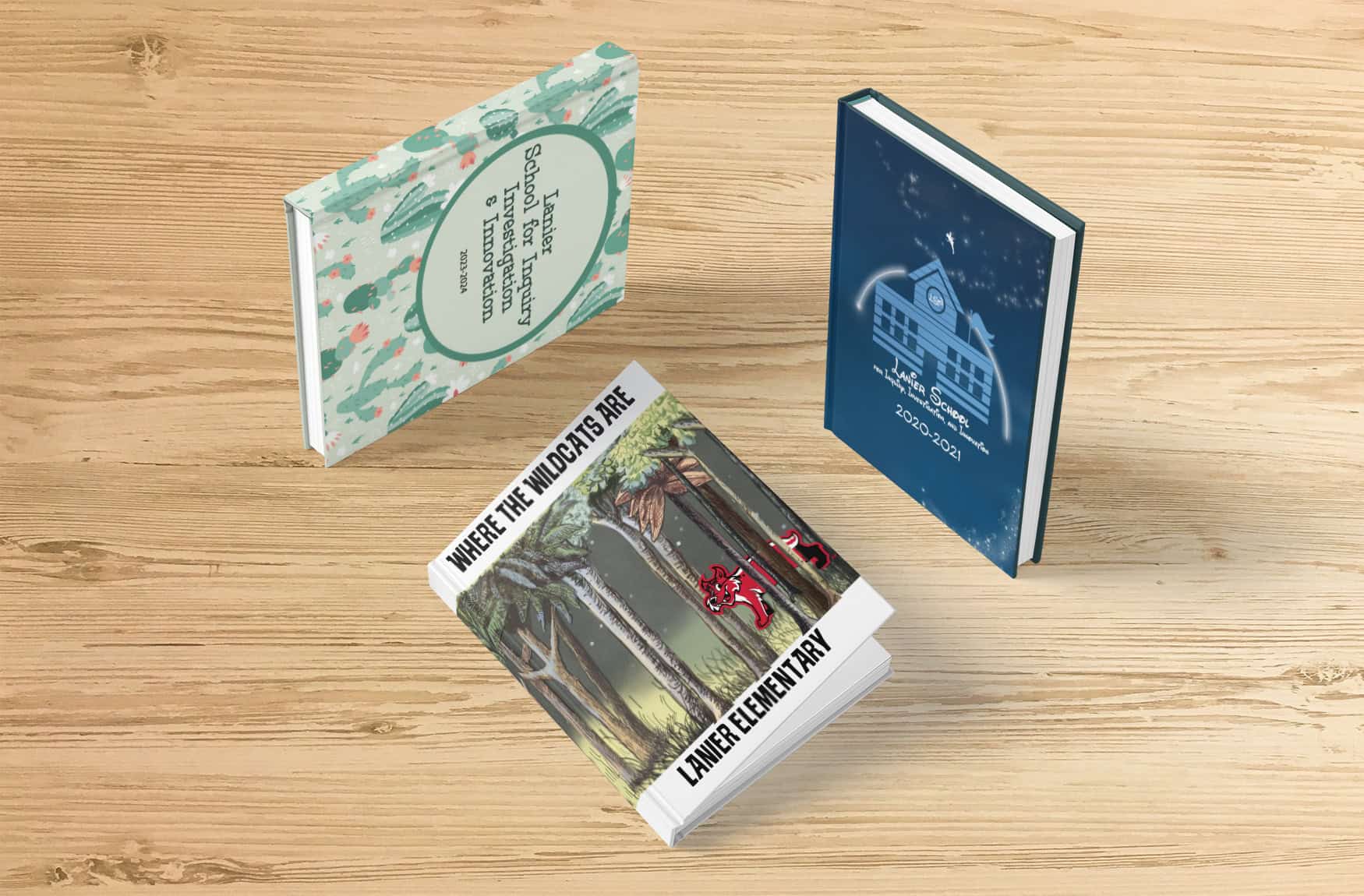
I reveal the theme at the beginning of the year and put the cover on all the flyers and promo materials. It helps with sales: after the reveal, I get a surge. Now, we don't reveal anything else that's in it; they'll just see the cover, but they don't see any of the spreads or anything until it comes out.
You love the Treering themes!
My favorite one was when I made “Where the Wildcats Are.”
When we were using the other company, I would get frustrated every time I opened their design program, and I didn't look forward to working on the yearbook. With Treering, I see a theme I really like, and I envision this spread is going to look this way. It's exciting to go in there and actually see it come together. Treering is so much easier to use to resize pictures and change the shapes of graphics.
Something else I love about Treering is I have until April to get it together. Before, with our other company, I had to finish the yearbook in January. We have a signing day in May after lunch, so I get to hear what the students say about the book. Most of them don’t know I‘m the one who puts it together.
You’re the unsung yearbook hero.
I'm proud of that book; it doesn't bother me that they don't realize that I do it.
Yearbook Hero James Costa masters middle school
Treering Yearbook Heroes is a monthly feature focusing on yearbook tips and tricks.
Yearbook Hero James Costa moved from the Boston newsroom to the middle school classroom. Taking his skillset in graphic design and desktop publishing to yearbook production, Costa started as the yearbook adviser in November of 2023. Already months behind, he worked to collect photos, design pages, and create a visual look by himself. (Wait until you see the cover below.)
Now in his second year as a yearbook creator, he has moved from the campus’ Digital Learning Specialist to teaching five preps as a Tech Ed instructor. Combining his ten years of scaffolding instruction plus the experience of creating the book solo, Costa developed a team structure and workflow so students could help. Under Costa’s leadership, the members of Merrimack Middle School’s first-ever yearbook club are learning design, marketing, and the business of yearbooking.
There are no grades when you do a club. How do you keep students on task?
I understand certain students' strengths and try to encourage and empower them for that. They all have specific jobs. For example, I have a student editor who is detail-oriented. After a big photo dump in our Google Drive, she’ll organize all the photos into folders and delete duplicates. She has an assistant editor to help.
There’s also a yearbook club secretary, treasurer, and communications and outreach director.

Starting in January, Costa and the street team released a monthly yearbook spotlight. They tease the theme, provide ordering info, and hype custom pages.
My superlatives coordinator is in charge of all things superlatives: making the voting form, taking pictures of the winners, and designing the spread. This is the first time we’ve done superlatives.
Some students are more into design and are on the design team creating spreads. We also have a street team that checks out cameras and photographs events.
I instruct them as much as I can in a whole-group setting, and they also need a lot of one-on-one attention. We have about eight consistent kids.
That sounds incredibly organized. What tasks are currently on your team’s to-do list?
This year is inspired by music. We’re using “Wrapped” and working out how to incorporate elements such as “This or That?” (Olivia Rodrigo vs. Sabrina Carpenter, pop vs. rap). Right now, we're in the stages of just kind of building the ladder and collecting a ton of pictures.
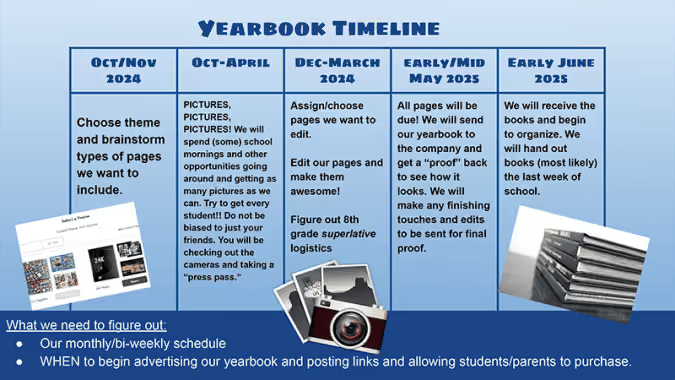
We're just seeing how it evolves and seeing what the layouts give us. I think it's going to be much different from last year's from a design perspective, hopefully, a little cleaner. I had a lot of collages that were kind of just pictures thrown together, but I know the kids like the layouts a little bit more.
Many of us on staff are in love with the “8-Bit” book you created last year. How did you carry it out?
The funny thing about 8-Bit is that I'll show teachers, and they respond, “It's like Mario,” and the kids see it and say, “It's like Minecraft.” So you see that big division in the generations.
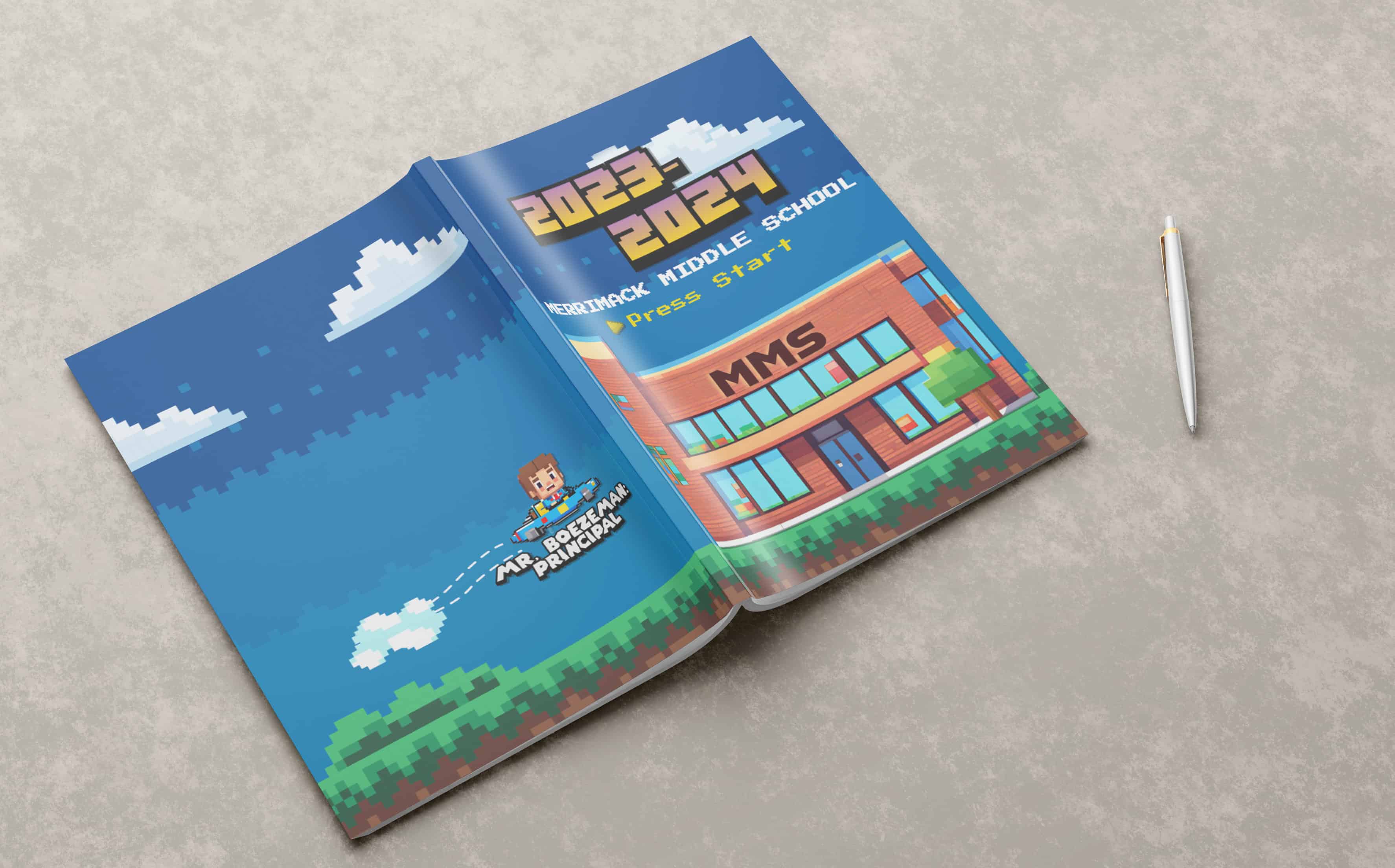
I started with the Treering theme backgrounds as inspiration. On each spread, you see an 8-bit avatar of a teacher. I made those with AI; it was a lot of work word-smithing the prompts to get them to look exactly like the teachers, but that was a lot of fun.
It sounds like fun is a core value of the Merrimack team.
I'm going to give the kids a big shout-out. If I have a tough week, and our yearbook meetings are Friday afternoons, I leave feeling like I had a great day.
Yearbook hero Jill Sundgren crowdsources a yearbook
Treering Yearbook Heroes is a monthly feature focusing on yearbook adviser tips and tricks.
This year we at Treering called on all our schools’ parents, teachers and students to nominate yearbook heroes in a first-ever peoples’ contest: #YearbookHero. The yearbook callout contest was prompted by our empathy and true appreciation for our yearbook editors.
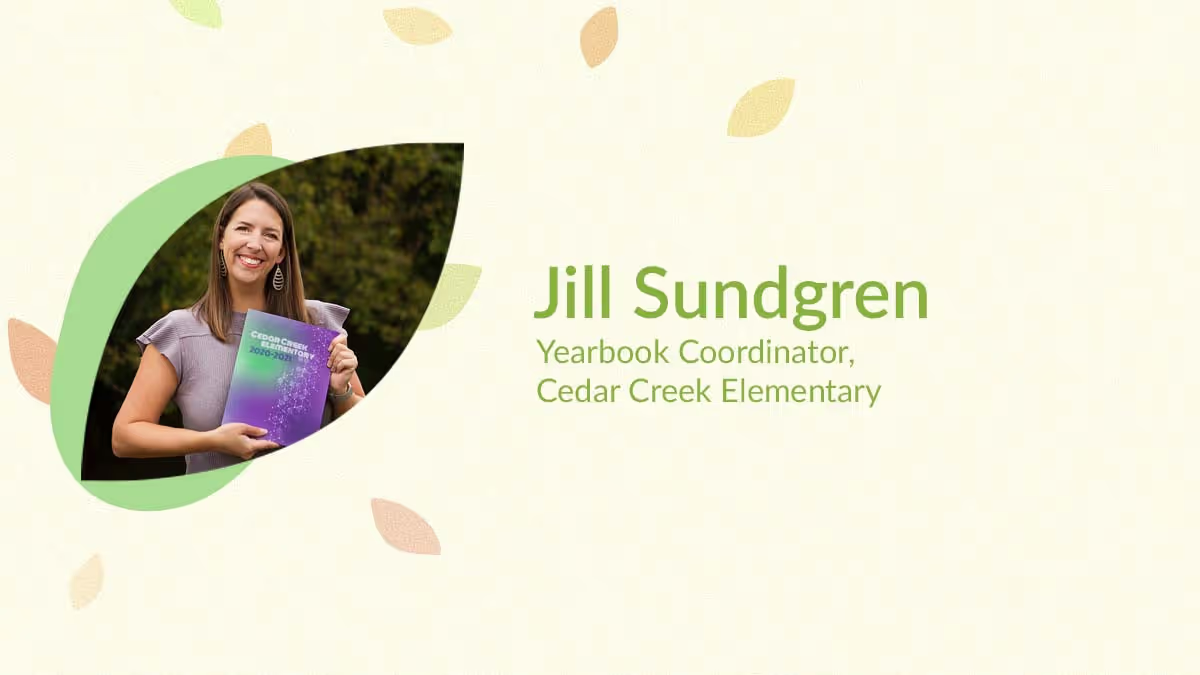
Jill Sundgren of Cedar Creek Elementary School, located in Olathe, Kansas won first place in the elementary division for the nationwide contest; she was nominated by parent and PTO president, Barb Hendricks, for spearheading the school’s yearbook and inspiring a yearbook committee to work collectively and creatively to capture and preserve the important stories of the year—even when parents weren’t allowed to be on campus!
What does it mean to you to be Cedar Creek Elementary's Yearbook Hero?
I am so honored (and a little shocked) to be named Cedar Creek's Yearbook Hero. But I do feel like this honor really should be extended to my entire committee. This yearbook was definitely a team effort from the design to the brainstorming of pages to layouts to photo gathering. It's so sweet that I am being recognized, but as I'm sure you all know, a yearbook is a huge undertaking and I don't do it alone! I think it's amazing that Cedar Creek is getting recognized for our efforts and creativity because we really do have such an awesome community of parents who make this all possible.
I especially want to thank Barb Hendricks for nominating me and getting me involved in the yearbook in the first place. I absolutely love being involved in the yearbook committee and can't wait to see what this year has in store for us. I think we learned a lot creating the yearbook last year and we are going to try and incorporate some of the ideas that came out of it into future books. I'm hoping to keep up the momentum and produce an even better product this year!
How have you been getting photos when parents aren’t permitted on campus?
Being unable to set foot on campus last year was certainly an obstacle, but with the help of our amazing PTO members, school staff, yearbook committee and community of parents, we were able to still capture the year in a holistic way.
First, we had to get creative on the types of pages we wanted to showcase. A lot of the programs and activities that we normally feature weren't happening last year, so we had to look at some things that happened outside of the school walls to fill the yearbook. We featured seasonal pages (summer, fall, winter and spring activities), sports teams and remote learning, among other activities. Our PTO has a private Facebook page where we solicited photos for some of these activities from parents - and our parents sure did deliver!
Our school still tried to make the year fun by continuing spirit weeks, outdoor photo ops and off-campus activities (for instance, our father/daughter activity was an in-home movie night); so again, we asked parents to snap photos prior to school of their kids dressed up and share with our team. Our principal also let us take photos (outside and masked) as kids arrived at school so we could fill in some holes for our dress-up spirit days. And, of course, we enlisted the help of the teachers to try and capture some photos inside the classroom as well. This all resulted in showcasing our year in and outside of school.
Our ultimate goal was to show that while the pandemic may have changed our way of living, it didn't damper our spirits or ability to have some fun!
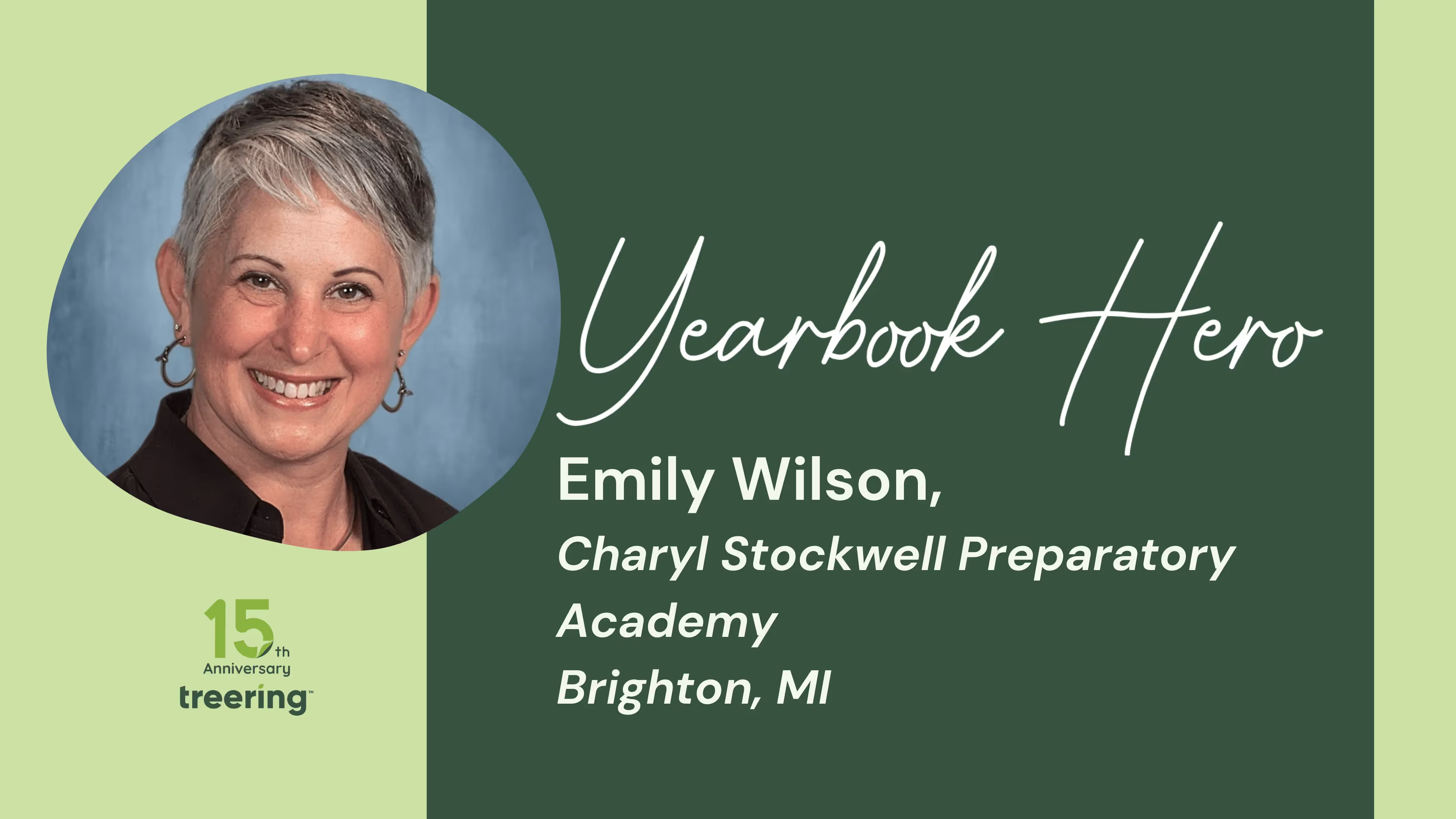
Yearbook Hero Emily Wilson’s lessons learned and achievements earned
Treering Yearbook Heroes is a monthly feature focusing on yearbook tips and tricks.
Uncertainty. That was the word of the year in 2020. Just two weeks before the school year began, Emily Wilson unexpectedly stepped into the role of yearbook advisor.
At the time, Charyl Stockwell Preparatory Academy (CSPA) was one of the few in the area offering both in-person and virtual classes. Like many, they faced challenges: masked students and staff, strict social distancing, limited outside visitors, and restricted volunteer involvement. These constraints forced a complete reevaluation of traditional yearbook creation methods.
To meet these challenges, the school switched to Treering, drawn by its intuitive software, online support, and the ability to crowdsource photography—a feature that became essential with reduced staff and student participation. Now, five years later, the school is producing its fifth yearbook using Treering.
How did you become the Yearbook Adviser?
Before becoming the yearbook advisor, my career focused primarily on teaching English, literature, and creative writing. Journalism and yearbook production were never areas where I expected to excel, but I always admired our previous advisor for the award-winning program she built. Her accolades still hang in our hallway, a constant reminder that there is always room to grow. Over the years, I’ve gained confidence as an advisor, building relationships with our student staff, and producing yearbooks we’re proud of. The experience has been transformative for both me and my students.
How has your involvement with your state’s journalism association impacted your skills and opportunities in the field?
In 2022, I was honored when the Michigan Interscholastic Press Association (MIPA) invited me to serve as a judge for their yearbook competition. It was a valuable opportunity to see what award-winning yearbooks looked like up close and personal, and it gave me insights into how our own yearbook could evolve. To my surprise, we were much closer to hitting the mark than I had anticipated. That experience gave me the courage to submit our book for critique, and we anxiously awaited feedback from MIPA.
After three long months, the results came in: we had earned a Bronze award for our 2024 yearbook, with a commendation for excellence in photography. The recognition was a testament to my students’ hard work and dedication. But what stood out most to me was their reaction. Rather than getting too comfortable with their achievement, students immediately started thinking about ways to improve for next year.
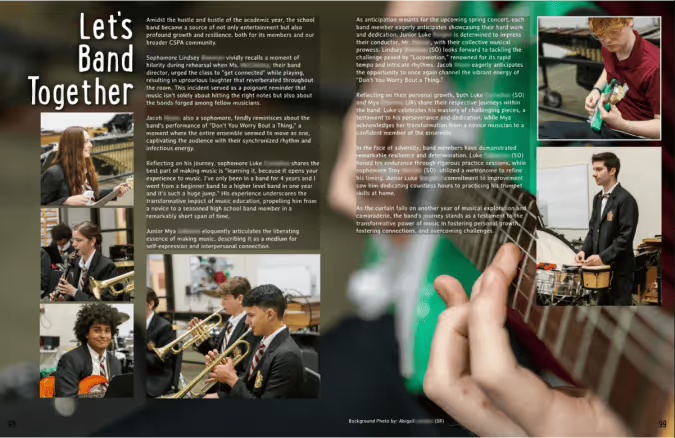
One of my editors-in-chief said, “We were only 47 points away from earning a Silver Medal,” and immediately began brainstorming ways to improve. That mindset—that focus on what we can achieve next—is what makes this journey so rewarding.
Let’s talk about that critique. How did it benefit your team?
One of the most valuable aspects of submitting our yearbook for critique is the detailed feedback we receive, which helps us grow. We are focusing on a unifying concept and improving coverage.
To be more competitive, we need to create more original graphics and artwork for the yearbook rather than relying on pre-made designs. Fortunately, Treering’s platform makes this process straightforward. For instance, last year, one of our International Baccalaureate Art students designed the cover art, which we seamlessly integrated as the background for the cover.
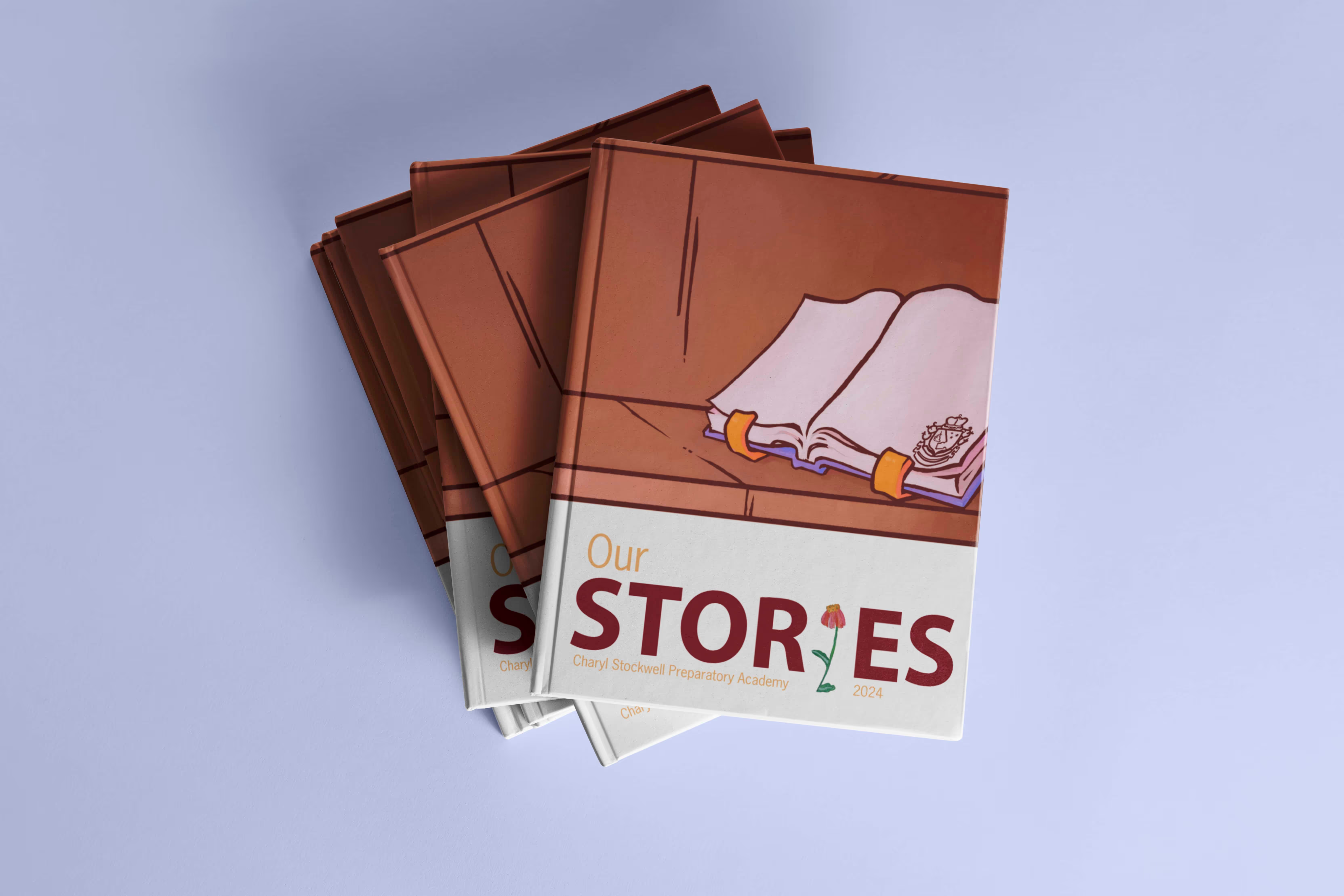
Additionally, we learned that carrying the theme throughout the book is essential—right down to the headlines and titles. Last year’s theme was “Our Stories,” but we could have done more to tie the theme together by using idioms or expressions related to storytelling across different sections of the book.
Design consistency is one of the easiest ways to make a bigger impact. MIPA suggested that we choose one unifying style for the entire book—colors, patterns, and layouts should be consistent throughout. This allows us to maintain a cohesive aesthetic while allowing for flexibility in layout design.
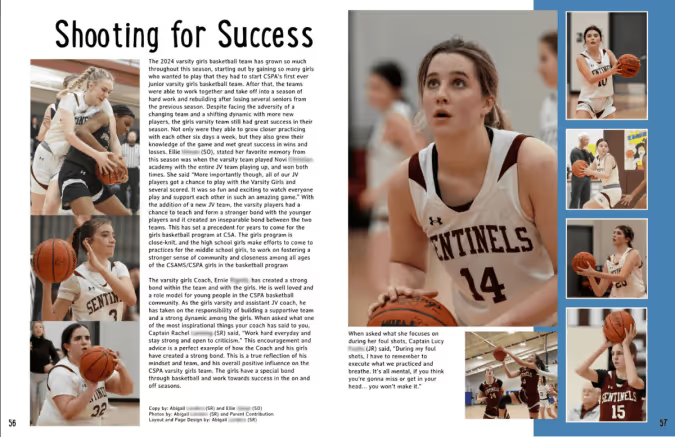
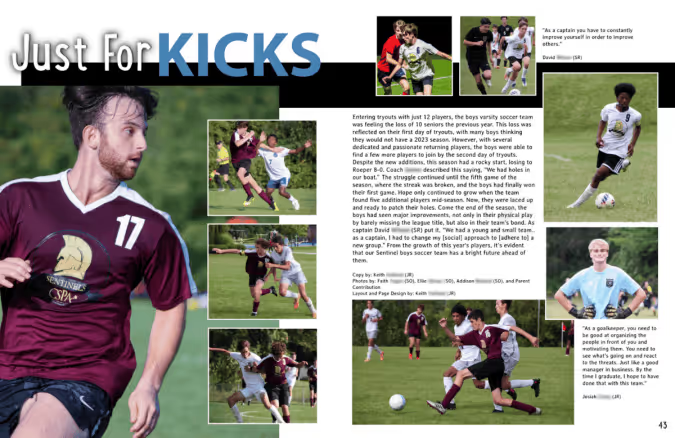
While we did a solid job covering our school’s 11 non-athletic clubs and 17 athletic teams, we need to focus more on individual stories—highlighting specific student achievements and weaving in features that reflect the times, like the cost of living. We’re also working on improving our balance of academic content; as MIPA pointed out, “Not every student is in a club or plays a sport, but every student sits in a desk in class.”
What is your area of strength?
We were thrilled to receive commendations for our photography, an area where we truly excel. Our focus on candid photos and capturing moments of excitement paid off. Moving forward, we’ll continue to refine our photography skills, paying more attention to cropping, editing, and ensuring that photo credits are included on every image.
What will be your focus this year?
Writing is where we have the most room for improvement. Every photo needs a caption, and those captions should follow journalistic writing standards—using active voice, varied sentence structures, and avoiding overly descriptive language like “is running” or “is playing.”
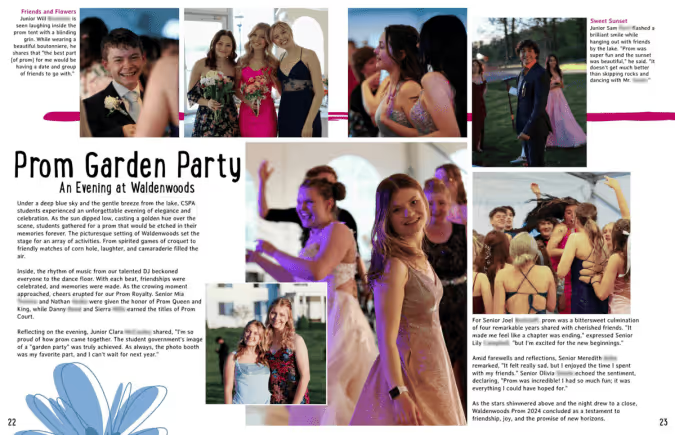
We also need to use secondary headlines to draw readers in and provide additional context. The critique also reminded me that, as an English teacher, I’ve been teaching students to write like English students, not like journalists. This is an area where I plan to invest more time, learning more about journalism standards so we can elevate our writing to meet those expectations.
What is the role of a yearbook adviser at CSPA?
Our yearbook, “The Sentinel,” is a labor of love produced by a small but dedicated team. I advise a staff of four students. We serve a high school with approximately 320 students. Every year, we produce a 150-page yearbook that covers everything from the start of school through prom, delivering it to students during the last week of school.
Additionally, we create a 28-30 page supplemental softcover book for the senior class, which includes coverage of senior-specific events like Senior Sunrise, Senior Awards, and Graduation. This supplement also features graduation speeches and letters from teachers to the graduating class. Design-wise, it complements the theme of the main yearbook. We print the student commencement speech in this supplement.
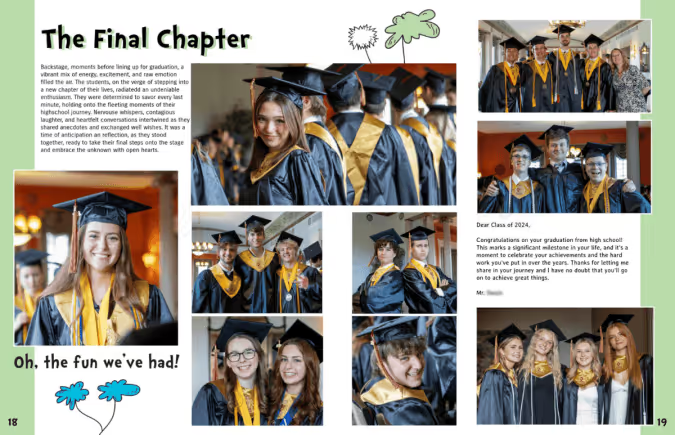
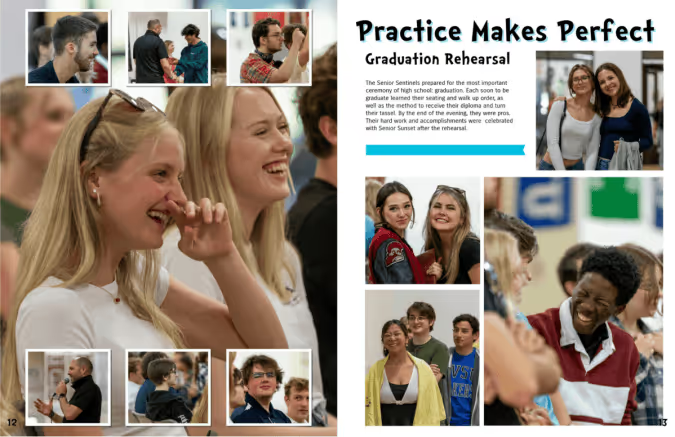
To bring our yearbook to life, we rely on a combination of Treering’s software, Canva, and Adobe Lightroom. Our resources are modest—one laptop, one large monitor, and two Rebel cameras—but we make the most of what we have. Fundraising through Treering has helped us pay for essentials like new camera lenses, a journalism camp for our editors, and lighting equipment for portrait photography. This year, our goal is to raise enough money for a new camera and upgraded lenses to continue improving the quality of our work.
What’s next for “The Sentinel?”
As we look ahead, we’re excited to continue improving. We’re going to hang our Bronze Medal plaque on the wall as a reminder of how far we’ve come, but our eyes are already set on the next challenge. We’ll keep pushing ourselves to tell more meaningful stories, refine our writing, and produce a yearbook that our school can be proud of. Ultimately, it’s not just about winning awards but about creating something our students, staff, and community will cherish for years.